
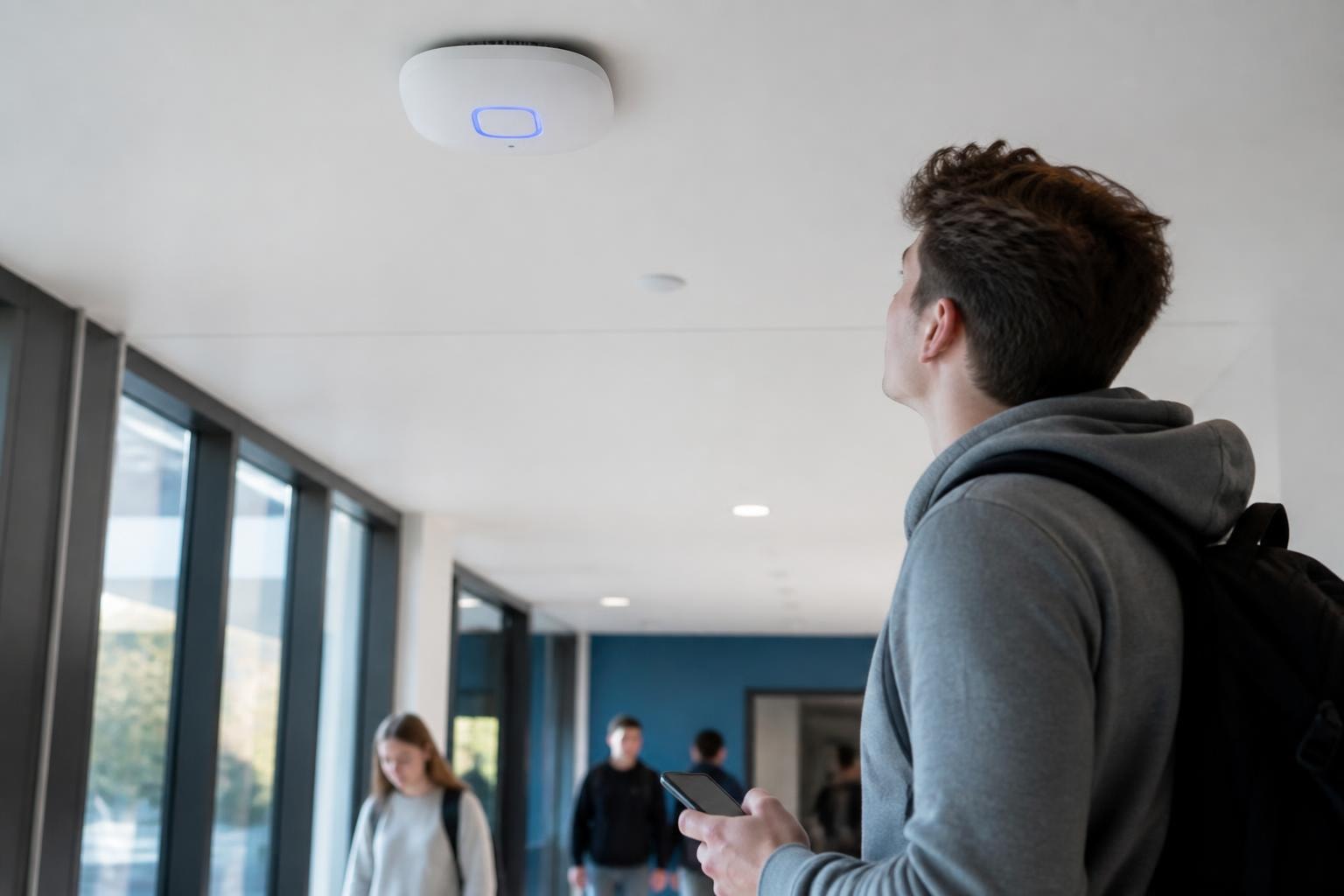
The prevalence of vaping among young adults in UK colleges has reached concerning levels, with institutions scrambling to address the health and safety implications. A college vape detector represents a critical technological solution that enables educational facilities to monitor, identify, and respond to vaping incidents in real time. As colleges face mounting pressure to protect student wellbeing whilst respecting privacy, these advanced detection systems offer a balanced approach to enforcement and education. The implementation of vape detection technology has become not just a matter of policy enforcement, but a fundamental component of creating safer, healthier learning environments across higher education.
Understanding College Vape Detector Technology
Modern vape detection systems function through sophisticated air quality monitoring sensors that identify specific chemical signatures associated with vaping products. Unlike traditional smoke detectors that respond to particulate matter, a college vape detector employs advanced algorithms to distinguish between various airborne substances, including e-cigarette vapour, THC, and conventional tobacco smoke.
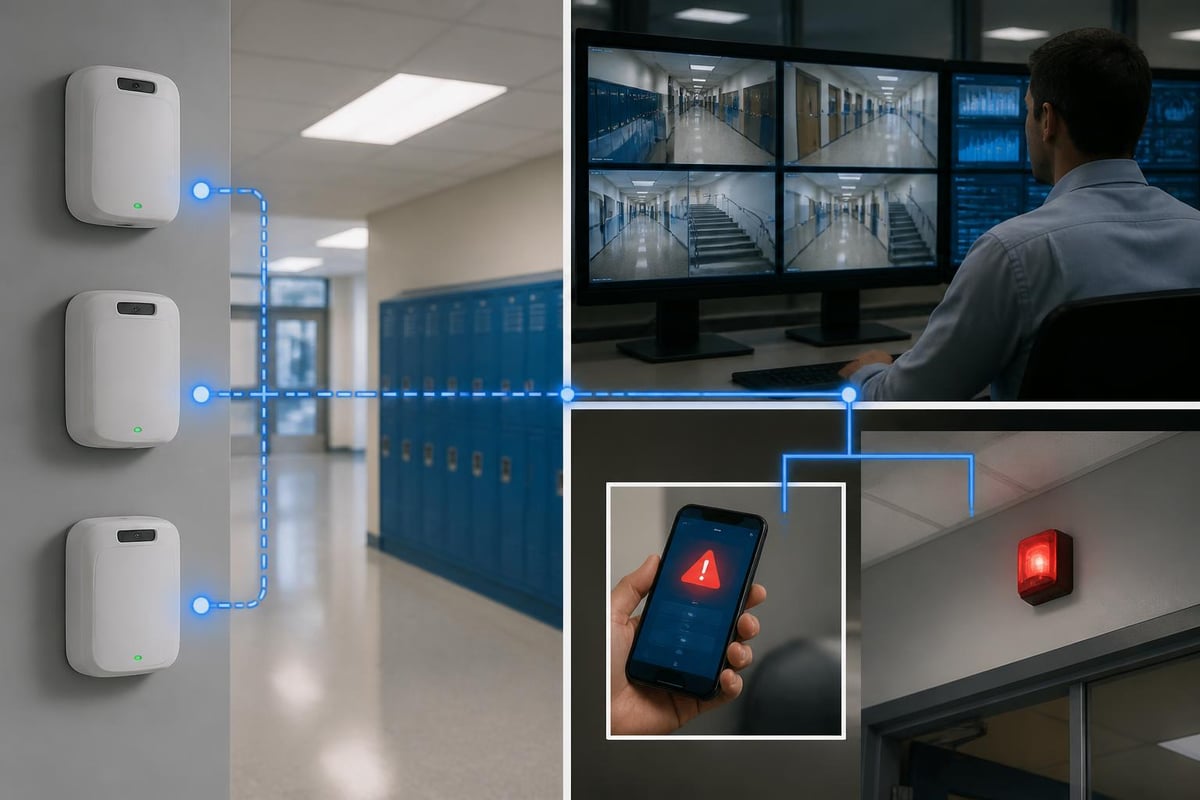
These sensors continuously monitor air composition, measuring volatile organic compounds and particulate concentrations that spike when someone vapes nearby. When the system identifies a vaping event, it triggers immediate alerts to designated administrators through mobile applications, email notifications, or integration with existing security systems.
Key Detection Capabilities
The most effective college vape detector systems offer multi-layered monitoring that extends beyond simple vapour identification:
- Real-time air quality analysis tracking PM2.5 and PM10 particulate levels
- Chemical signature recognition distinguishing between vaping, smoking, and aerosol sprays
- Sound anomaly detection identifying aggressive behaviour or bullying incidents
- Environmental monitoring tracking temperature, humidity, and overall air quality metrics
- Tamper alerts notifying staff when devices are covered, removed, or damaged
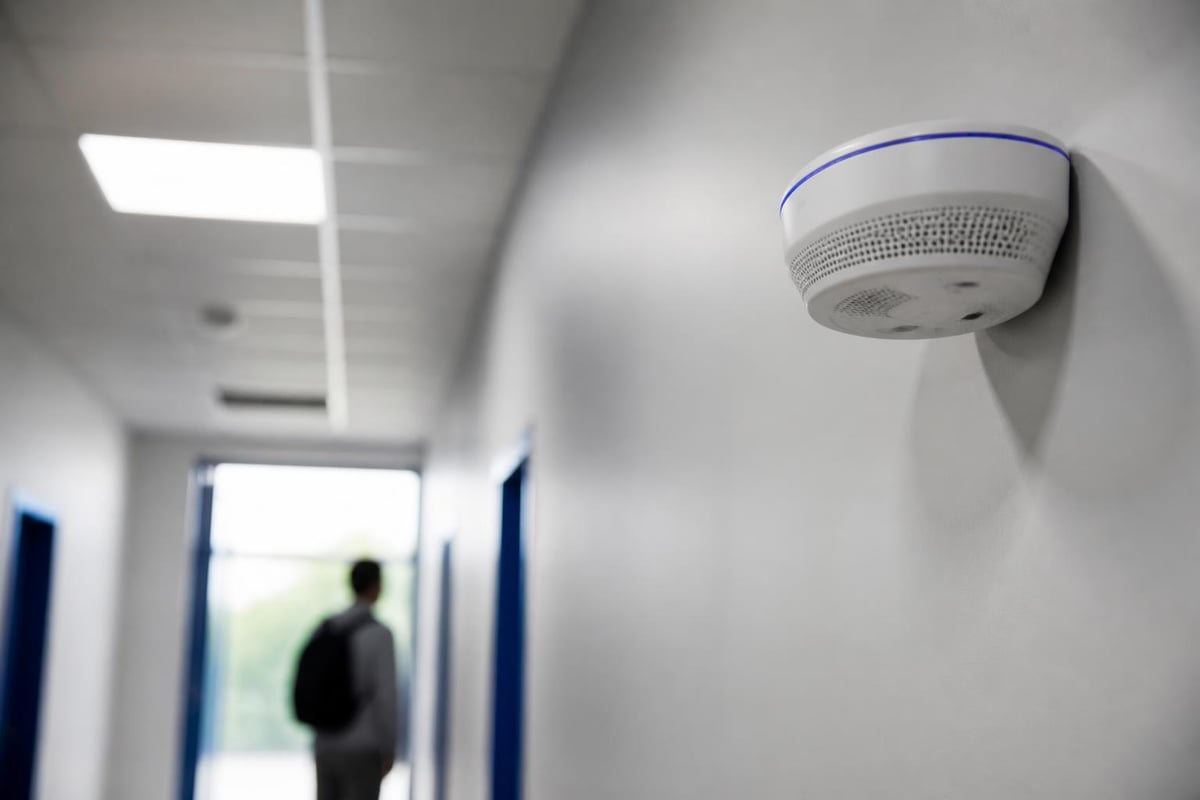
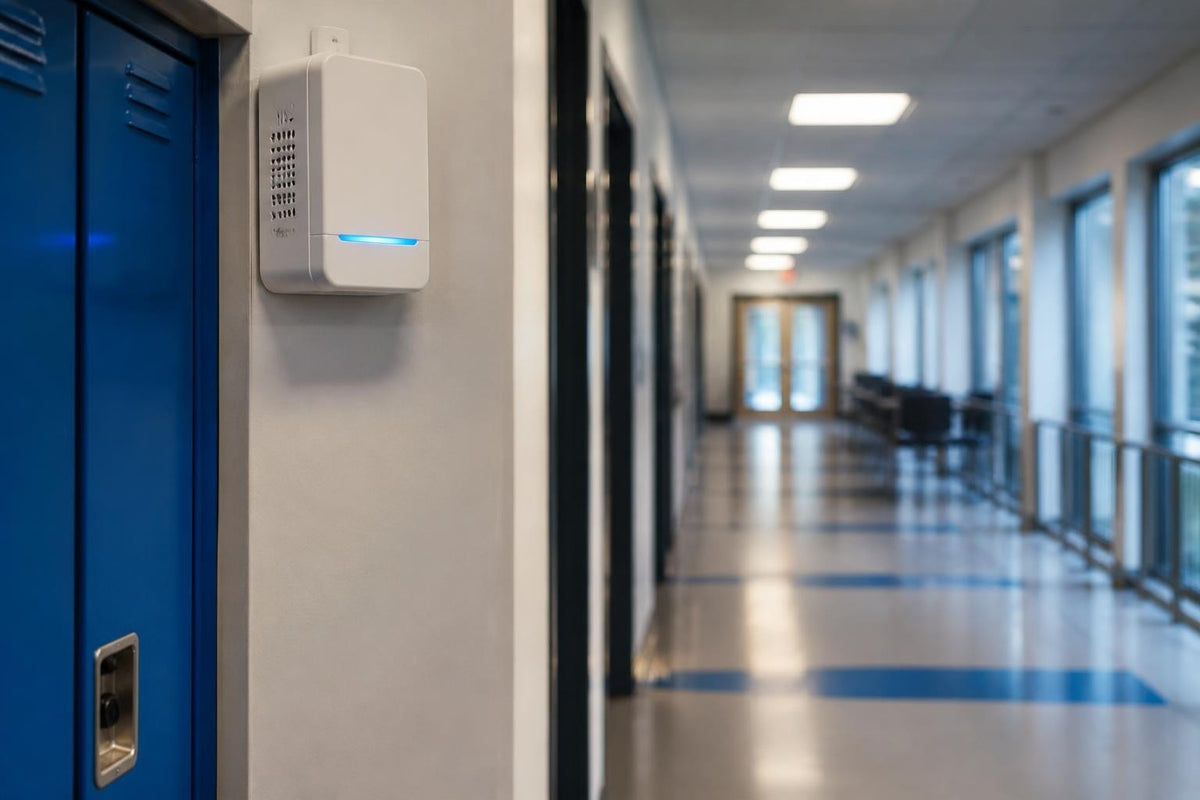
Installation locations matter significantly for detection accuracy. Bathrooms, changing facilities, and private study areas represent the highest-risk zones where students might attempt to vape without supervision. Strategic placement ensures comprehensive coverage whilst maintaining student privacy, as modern vape detectors contain no cameras or recording devices.
The Rising Need for Vape Detection in Colleges
UK colleges face unprecedented challenges as vaping rates among 18 to 24 year olds continue climbing. Recent data suggests that approximately one in five young adults regularly use e-cigarettes, with many beginning their habit during college years. This demographic shift has transformed vaping from an isolated concern into a systemic issue requiring institutional response.
The health implications extend beyond individual users. Second-hand exposure to vaping aerosols affects air quality in shared spaces, potentially impacting students with respiratory conditions, allergies, or chemical sensitivities. Colleges bear responsibility for maintaining healthy environments for all students, staff, and visitors, making proactive detection essential rather than optional.
Financial considerations also drive adoption. Property damage from vaping residue, increased cleaning costs, and potential liability issues create substantial expense. Early detection and intervention through college vape detector systems prove more cost-effective than addressing long-term consequences.
Legal and Compliance Considerations
Educational institutions operate under strict duty of care obligations. Colleges must demonstrate reasonable steps to protect student health and maintain safe premises. As UK school vaping laws evolve to address youth vaping, colleges face similar regulatory expectations around detection and prevention.
| Compliance Area | Requirement | Detection Role |
|---|---|---|
| Health & Safety | Maintain safe environment | Identifies air quality issues |
| Duty of Care | Protect student wellbeing | Enables early intervention |
| Property Protection | Prevent damage | Detects incidents before escalation |
| Policy Enforcement | Uphold vape-free zones | Provides evidence-based enforcement |
Documentation capabilities built into modern detection systems support compliance efforts by creating auditable records of incidents, response times, and intervention outcomes.
Implementation Strategies for College Vape Detector Systems
Successful deployment requires careful planning that balances technological capabilities with institutional culture and student privacy concerns. Colleges must approach implementation as part of broader health and safety initiatives rather than purely punitive measures.
Begin with comprehensive risk assessment identifying high-priority areas based on student traffic patterns, previous incidents, and facility layout. Bathrooms, dormitories, and recreational spaces typically warrant priority coverage, though lecture halls and libraries may also require monitoring depending on institutional needs.
Installation Best Practices
Professional installation ensures optimal performance and longevity. Consider these essential factors:
- Mounting height and position to maximise air flow sampling
- Network connectivity ensuring reliable data transmission
- Power supply options balancing hardwired versus battery solutions
- Maintenance access allowing regular calibration and cleaning
- Integration points connecting with existing security infrastructure
Budget planning should account for both initial hardware costs and ongoing subscription fees for monitoring services, software updates, and technical support. Many institutions find that investing in comprehensive detection systems delivers measurable return through reduced disciplinary issues and improved air quality.
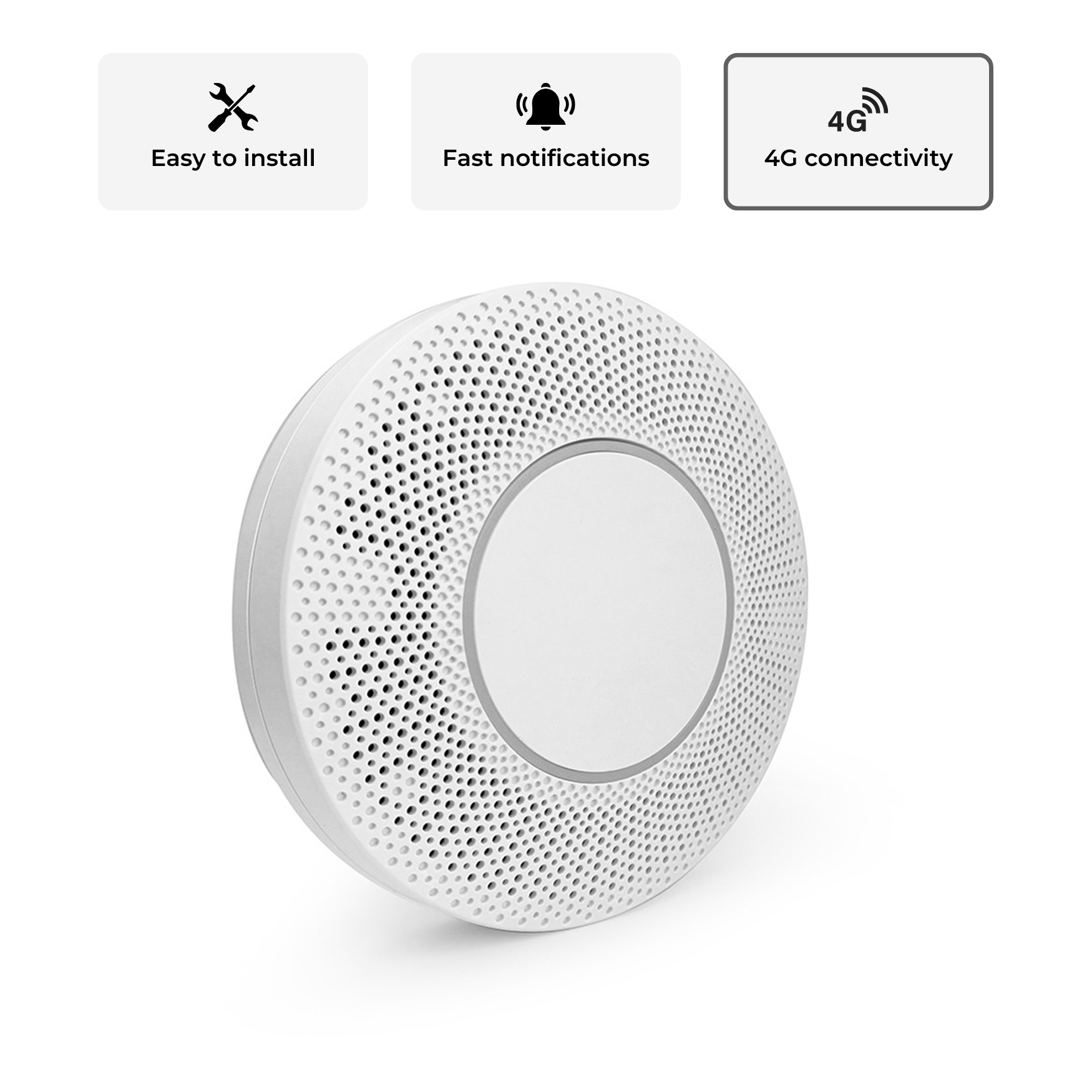
The Vape Detection System from Vape Guardian offers college facilities a robust solution combining advanced sensor technology with intuitive alert systems. With comprehensive monitoring of vaping, drug use, and anti-social behaviour, this technology provides administrators with actionable intelligence whilst maintaining student privacy through non-invasive detection methods.

Balancing Detection with Privacy and Student Rights
Privacy concerns represent the most significant challenge in college vape detector adoption. Students and advocacy groups rightfully question surveillance implications, particularly in traditionally private spaces like bathrooms and changing facilities. Responsible implementation requires transparent communication about what technology monitors and how data is used.
Modern detection systems address privacy through design choices that limit data collection to essential information. Unlike CCTV systems, vape detectors contain no cameras or audio recording capabilities beyond basic sound level monitoring. They identify environmental changes without capturing identifying information about individuals present.
Transparent Communication Strategies
Successful programmes incorporate student input and maintain open dialogue:
- Pre-implementation consultation gathering student feedback on concerns
- Clear signage indicating monitored areas and detection purposes
- Published policies explaining response protocols and disciplinary procedures
- Regular updates sharing aggregate data on detection effectiveness
- Privacy audits ensuring ongoing compliance with data protection regulations
Students respond more positively when they understand detection systems serve health protection rather than punitive surveillance. Educational campaigns emphasising the risks of second-hand exposure and air quality protection help frame detection as community benefit.
Response Protocols and Intervention Strategies
Detection without appropriate response mechanisms wastes investment and undermines programme credibility. Colleges must establish clear protocols defining how staff respond to alerts, ensuring consistent, fair treatment whilst maintaining educational focus.
Tiered response systems work effectively, escalating intervention based on incident frequency and severity. First-time detections might trigger educational conversations with health services, whilst repeated violations lead to formal disciplinary procedures. This approach prioritises behaviour change over punishment.
Staff Training Requirements
Effective response depends on properly trained personnel who understand both technology capabilities and student support principles:
| Training Component | Content Focus | Duration |
|---|---|---|
| System Operation | Alert interpretation, false positive identification | 2 hours |
| Student Interaction | De-escalation techniques, supportive communication | 4 hours |
| Health Information | Vaping risks, addiction support resources | 3 hours |
| Documentation | Record keeping, privacy compliance | 1 hour |
Integration with student support services creates pathways for addressing underlying issues driving vaping behaviour. Many students vape to manage stress, anxiety, or social pressure. Connecting detection with counselling, health education, and peer support programmes addresses root causes rather than merely suppressing symptoms.
Measuring Effectiveness and ROI
Quantifying college vape detector impact requires establishing baseline metrics before implementation and tracking changes over time. Key performance indicators should encompass both detection statistics and broader environmental improvements.
Direct metrics include detection frequency, response times, and repeat violation rates. Declining detection numbers over time suggest successful deterrence, though institutions must distinguish between actual behaviour change and adaptation to detector locations.
Indirect benefits prove equally valuable. Student health surveys tracking respiratory symptoms, air quality measurements showing improved PM2.5 levels, and maintenance records indicating reduced cleaning requirements all demonstrate programme value. Some colleges report significant decreases in vaping-related incidents within months of deployment.

Cost-Benefit Analysis Framework
Calculate comprehensive ROI by comparing total programme costs against measurable benefits:
Programme Costs:
- Hardware purchase and installation
- Monitoring subscriptions and software licencing
- Staff training and administration time
- Ongoing maintenance and calibration
Measurable Benefits:
- Reduced cleaning and maintenance expenses
- Decreased health-related absences
- Avoided property damage and repair costs
- Lower insurance premiums through risk reduction
- Improved student satisfaction and wellbeing metrics
Most institutions find that college vape detector systems achieve positive ROI within 18 to 24 months, with benefits accelerating as detection rates decline and preventive culture strengthens.
Future Developments in Vape Detection Technology
The vape detection industry continues evolving rapidly, with manufacturers developing enhanced capabilities that expand monitoring beyond simple vapour identification. Artificial intelligence and machine learning algorithms improve detection accuracy whilst reducing false positives from legitimate sources like body sprays or cleaning products.
Next-generation systems incorporate predictive analytics, identifying patterns that suggest emerging hotspots before problems escalate. By analysing detection timing, location clustering, and environmental factors, these systems enable proactive intervention rather than purely reactive response.
Integration capabilities also expand, with advanced vape detection technology connecting seamlessly with building management systems, student information databases, and health monitoring platforms. This convergence creates comprehensive environmental intelligence supporting broader institutional wellness initiatives.
Emerging Capabilities to Watch
- Enhanced chemical libraries detecting new vaping substances as they emerge
- Behavioural pattern recognition identifying organised vaping activity
- Mobile app integration giving students real-time air quality information
- Sustainability metrics tracking environmental impact of vaping residue
- Cross-institutional benchmarking comparing performance against sector standards
Colleges planning long-term detection strategies should prioritise systems offering regular software updates and expandable sensor networks. Technology purchased today must adapt to tomorrow's challenges, whether new vaping products, evolving regulations, or changing student behaviours.
Integration with Broader Health Initiatives
Vape detection achieves maximum impact when embedded within comprehensive health promotion programmes. Standalone technology sends mixed messages if colleges simultaneously lack robust education, support services, and policy frameworks addressing substance use holistically.
Successful programmes coordinate detection with evidence-based prevention curricula exploring the facts about e-cigarettes and vaping risks. Students benefit from understanding why institutions implement monitoring, how vaping affects individual and community health, and what alternatives exist for stress management and social connection.
Peer education programmes leverage student voices to shift campus culture around vaping. When respected student leaders advocate for vape-free environments and model healthy behaviours, their influence often exceeds institutional messaging. College vape detector systems support these cultural shifts by making vaping less convenient whilst peer educators address underlying motivations.
Student health services play critical roles providing cessation support for those struggling with nicotine dependence. Detection systems identify students who might benefit from intervention, creating natural referral pathways to counselling, nicotine replacement therapy, and behavioural support programmes. This supportive approach frames detection as care rather than punishment, improving student engagement and outcomes.
Selecting the Right College Vape Detector System
The market offers numerous vape detection solutions varying significantly in capabilities, pricing, and reliability. Colleges must evaluate options against specific institutional needs, considering factors beyond initial purchase price.
Key selection criteria include detection accuracy, particularly false positive and false negative rates. Systems that frequently misidentify legitimate activities erode trust and waste staff time, whilst those missing actual vaping events undermine programme credibility. Request detailed performance data and independent testing results when evaluating suppliers.
Essential Features Comparison
| Feature Category | Basic Systems | Advanced Systems | Premium Systems |
|---|---|---|---|
| Vaping Detection | Single substance | Multiple substances | Comprehensive chemical library |
| Air Quality Monitoring | PM2.5 only | PM2.5, PM10, VOCs | Full environmental suite |
| Alert Systems | Email only | Email, SMS | Multi-channel with escalation |
| Data Analytics | Basic reporting | Trend analysis | Predictive intelligence |
| Integration | Standalone | Security systems | Campus-wide platforms |
| Support | Email support | Phone and email | Dedicated account management |
Consider total cost of ownership over expected system lifespan, typically five to seven years. Subscription models may offer lower entry costs but accumulate higher long-term expenses compared with outright purchase options. Factor in training requirements, replacement sensor costs, and potential expansion needs when comparing alternatives.
Vendor reputation and longevity matter significantly. Choose established suppliers with proven track records in educational settings, responsive technical support, and demonstrated commitment to product development. References from similar institutions provide valuable insights into real-world performance and customer experience.
For UK institutions specifically, prioritise suppliers with local presence offering British standards compliance, GDPR-compliant data handling, and understanding of UK educational regulations. Vape Guardian sensors meet these requirements whilst delivering reliable performance tailored to British educational environments.
Addressing Common Implementation Challenges
Even well-planned deployments encounter obstacles requiring flexibility and problem-solving. Anticipating common challenges enables proactive mitigation strategies that keep programmes on track.
Student resistance represents the most frequent challenge, particularly if implementation lacks adequate consultation or communication. Some students perceive vape detection as excessive surveillance or distrust institutional motives. Address concerns through transparent dialogue, emphasising health protection and community wellbeing over punishment.
Technical issues including false positives from cleaning products, network connectivity problems, or sensor calibration drift can undermine confidence. Establish robust maintenance schedules, invest in quality hardware, and maintain responsive technical support relationships. Document and share lessons learned to continuously improve system performance.
Troubleshooting Framework
When problems arise, systematic approaches identify root causes and implement effective solutions:
- Define the specific issue with measurable parameters
- Gather data on frequency, timing, and location patterns
- Analyse potential causes considering technical and behavioural factors
- Test targeted solutions in controlled environments before broader deployment
- Monitor outcomes to verify effectiveness and identify unintended consequences
Budget constraints sometimes force compromises between ideal coverage and financial reality. Prioritise high-risk areas for initial deployment, demonstrating value before requesting expansion funding. Phased implementation also allows iterative learning, applying early lessons to subsequent installations.
Staff turnover creates training challenges as new personnel require orientation to detection systems and response protocols. Develop comprehensive training materials, standard operating procedures, and refresher programmes ensuring consistent capability across staffing changes. Anti-vaping technology works only when human systems support technical capabilities.
College vape detector technology provides essential tools for protecting student health, maintaining air quality, and creating safer learning environments across UK higher education. When implemented thoughtfully with clear communication, appropriate response protocols, and integration into broader health initiatives, these systems deliver measurable improvements in campus wellbeing whilst respecting student privacy and dignity. Vape Guardian offers proven detection solutions specifically designed for educational settings, combining advanced sensor technology with dedicated support to help colleges address vaping challenges effectively and create healthier spaces where students can thrive.




Share:
Student Safety Technology: Protecting Learners in 2026
Building Management Vape Detector Systems Guide 2026