

Creating a robust vaping policy for schools has become essential as youth vaping continues to rise across the United Kingdom. With recent legislation tightening restrictions on vaping products and growing awareness of health impacts, educational institutions face mounting pressure to establish clear frameworks that protect students whilst remaining practical to enforce. A comprehensive vaping policy for schools must balance deterrence with education, incorporate modern detection technology, and provide clear pathways for support. This guide explores every aspect of developing and implementing a policy that works in real world settings, from initial drafting through to daily enforcement and ongoing evaluation.
Understanding the Legal Framework
Schools operate within a complex legal landscape that shapes how vaping policies can be structured and enforced. Current UK vaping laws prohibit the sale of vaping products to anyone under 18, and educational institutions have the authority to ban vaping on their premises entirely. This legal foundation provides the bedrock for school policies, but institutions must ensure their approaches comply with broader safeguarding requirements and student rights legislation.
Statutory Responsibilities and Safeguarding
Educational settings have a statutory duty to protect student wellbeing, which extends to preventing exposure to harmful substances. When crafting a vaping policy for schools, leaders must demonstrate how the policy fulfills safeguarding obligations whilst respecting proportionality in disciplinary measures. The policy should clearly articulate how it protects both the individual student and the wider school community from the risks associated with vaping.
Documentation should reference relevant legislation including the Children Act 2004, Education Act 2011, and Health Act 2006. These statutes provide the legal authority for schools to regulate student behaviour regarding substances, including vaping devices. Policies gain credibility and enforceability when they explicitly cite these legal foundations.
Core Components of an Effective Policy
A comprehensive vaping policy for schools requires several interconnected elements working in harmony. The most successful policies go beyond simple prohibition to create a supportive framework that addresses prevention, detection, intervention, and rehabilitation.
Clear Definitions and Scope
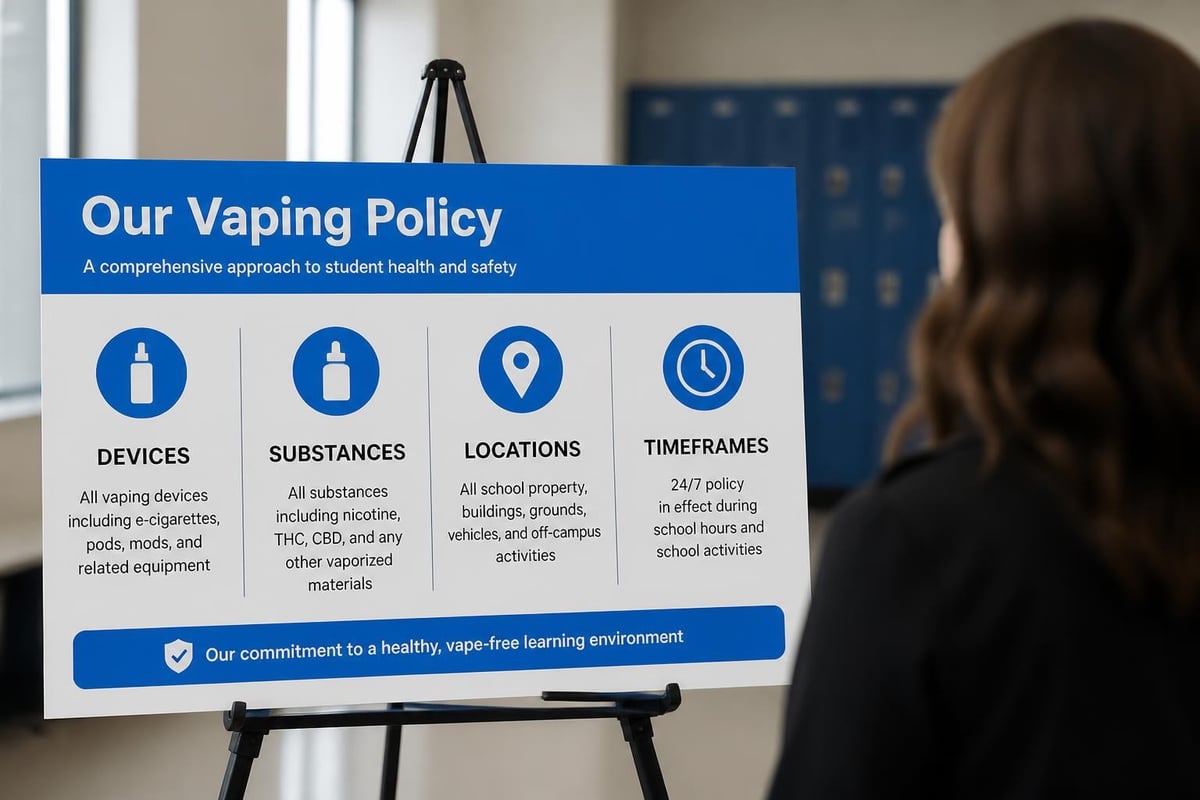
Begin by defining exactly what constitutes vaping within your policy. This should include electronic cigarettes, vape pens, pod systems, and any device designed to vaporize substances. The definition must be broad enough to capture evolving products whilst remaining specific enough to be enforceable.
Essential elements to define:
- Vaping devices and components (batteries, cartridges, e-liquids)
- Prohibited substances (nicotine, THC, synthetic cannabinoids)
- Possession versus use distinctions
- Storage and disposal protocols
- Areas where the ban applies (buildings, grounds, trips, buses)
The scope section should explicitly state whether the policy applies during school hours only or extends to school sponsored activities outside normal times. Many institutions extend coverage to encompass any event where students represent the school, creating consistency and eliminating ambiguity.
Tiered Consequences Framework
Rather than implementing a one size fits all punishment, effective policies employ graduated consequences that escalate with repeated violations. This approach balances accountability with opportunities for learning and behaviour change.
| Violation Level | Consequence | Support Intervention |
|---|---|---|
| First Offense | Confiscation, parent contact, warning | Education session, resources provided |
| Second Offense | Internal suspension, meeting with parents | Referral to support services, risk assessment |
| Third Offense | Fixed term exclusion | Mandatory intervention program, external support |
| Persistent | Behaviour contract or permanent exclusion | Multi-agency involvement, health referrals |
This tiered structure demonstrates fairness whilst making clear that persistent violations carry serious consequences. The parallel support interventions show that the school's primary goal is student wellbeing rather than mere punishment.
Detection and Enforcement Strategies
The most thoughtfully written vaping policy for schools falls short without robust enforcement mechanisms. Traditional supervision alone proves insufficient given how quickly and discreetly students can vape in unsupervised spaces like toilets and changing rooms.
Technology Enhanced Monitoring
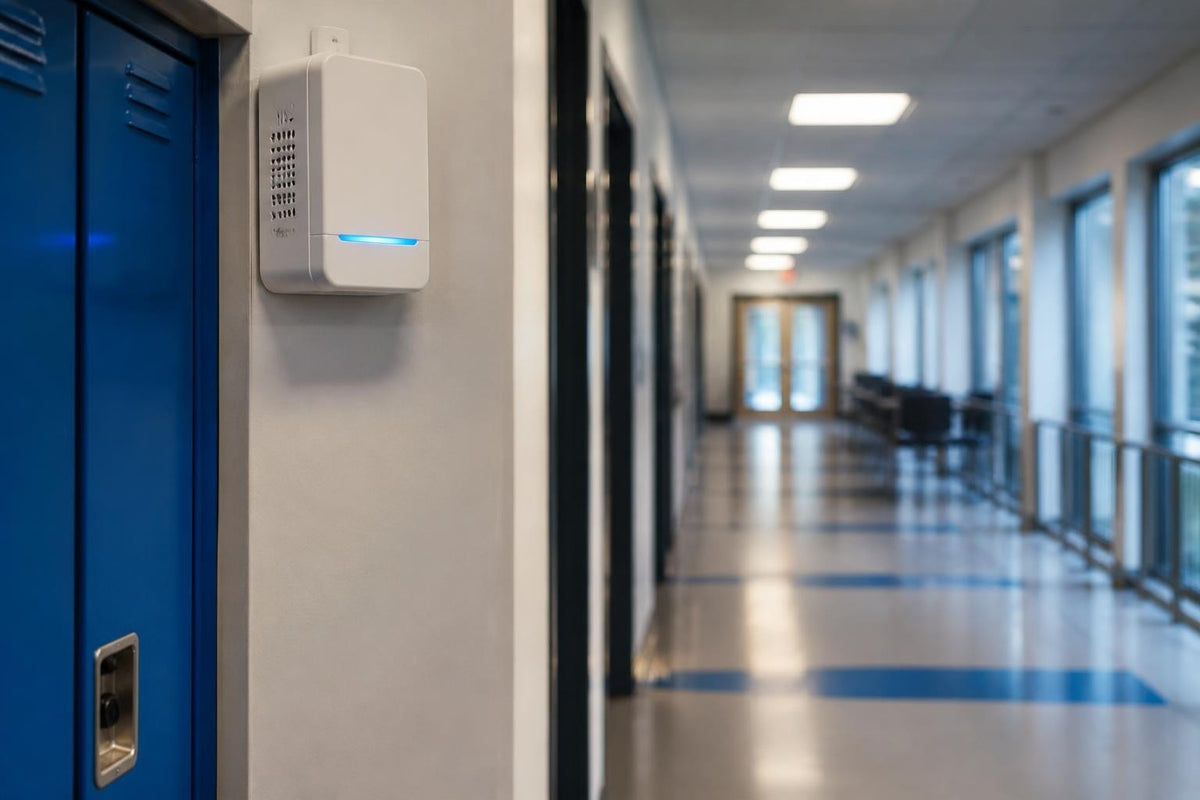
Modern vape detection systems transform enforcement from reactive to proactive. Best vape detection for schools incorporates sensors that identify vaping chemicals in the air and trigger real time alerts to staff, enabling immediate intervention. These systems detect not only vaping but also other concerning behaviours, creating a comprehensive safety solution.
Implementing detection technology demonstrates institutional commitment to policy enforcement and acts as a powerful deterrent. When students know that vaping will be detected almost immediately, the behaviour becomes far less appealing. The technology also generates valuable data about when and where violations occur, allowing schools to target supervision resources more effectively.
Schools seeking to trial this approach can access a free 30-day trial to evaluate effectiveness before committing to full deployment. This allows institutions to gather evidence about the scale of their vaping challenge and demonstrate measurable improvements to governors and parents.

Staff Training and Awareness
Technology alone cannot solve the vaping challenge without properly trained staff who understand both the policy and the underlying health concerns. Every member of staff, from teaching staff to site managers, should receive regular training covering:
- Recognition of vaping devices and behaviours
- Health risks associated with youth vaping
- Proper procedures for confronting suspected violations
- How to access detection system alerts and respond appropriately
- Referral pathways for students needing support
Training should emphasize the distinction between disciplinary action and support. Staff must understand that students who vape often require help rather than just punishment, particularly if they're using vaping as a coping mechanism for stress or peer pressure.
Prevention Through Education
Whilst detection and consequences form essential components, prevention through education offers the most sustainable long term solution. A comprehensive vaping policy for schools should allocate significant resources to educating students about the realities of vaping before they start.
Evidence Based Curricula
Research shows that school based preventive interventions can effectively reduce adolescent e-cigarette use when properly implemented. A systematic review of school interventions demonstrates that programs combining factual health information with social resistance skills training achieve better outcomes than scare tactics or information only approaches.
When selecting educational materials, prioritize resources developed by credible health organizations. The American Academy of Pediatrics curriculum resources provide evidence based tools suitable for various age groups, whilst research on programs like CATCH My Breath offers insights into what makes prevention curricula effective.
Key elements of successful prevention education:
- Start early (Year 7 or earlier) before experimentation begins
- Deliver content regularly rather than one-off assemblies
- Use interactive methods and peer-led components
- Address social norms and misconceptions
- Build refusal skills and coping strategies
- Involve parents through take home materials
Parent and Community Engagement
Students exist within broader ecosystems of family and community influence. Effective policies engage parents as partners in prevention and enforcement. Regular communication keeps parents informed about the policy, helps them recognize signs of vaping at home, and provides resources for family conversations about substance use.
Consider hosting parent education evenings that address common questions: Why do young people vape? What are the health risks? How can families discuss this topic constructively? Providing parents with factual information and conversation frameworks empowers them to reinforce school messages at home.

Implementation and Communication
Even the most comprehensive vaping policy for schools achieves little if stakeholders don't understand it. Implementation requires careful planning, clear communication, and phased rollout that allows the school community to adapt.
Consultation and Buy-In
Before finalizing the policy, conduct meaningful consultation with all stakeholder groups. Students, staff, parents, and governors should have opportunities to review drafts and provide feedback. This consultation process serves multiple purposes: it identifies potential blind spots, builds ownership across the community, and demonstrates that the policy reflects shared values rather than top down imposition.
Student voice proves particularly valuable. Young people can highlight loopholes that adults might miss and suggest enforcement approaches they'd view as fair. When students contribute to policy development, they're more likely to respect and follow it.
Clear Communication Channels
Launch the policy with a comprehensive communication campaign that ensures no one can claim ignorance. Multiple channels reinforce the message:
- Student assemblies with clear explanations
- Letters and emails to parents
- Staff briefings and training sessions
- Posters displayed prominently throughout buildings
- Inclusion in student planners and handbooks
- Website publication with accessible language
- Governor approval and support
The communication should explain not just what the policy prohibits but why these rules exist. When students understand that restrictions aim to protect their health and future choices rather than simply exerting control, compliance improves.
Monitoring and Continuous Improvement
A vaping policy for schools should never be a static document. Regular review ensures the policy remains effective as youth vaping trends evolve and new products emerge.
Data Collection and Analysis
Establish clear metrics for measuring policy effectiveness from the outset. These might include:
- Number of vaping incidents detected per term
- Trends in first time versus repeat violations
- Student self-reported vaping rates (anonymous surveys)
- Reduction in vaping related disruption
- Parent and student satisfaction with policy fairness
Modern vape detection technology generates valuable data automatically, tracking incident frequency by location and time. This information reveals patterns that inform supervision strategies and resource allocation. If data shows most incidents occur between specific lessons or in particular locations, schools can adjust staffing accordingly.
Policy Review Cycles
Schedule formal policy reviews at regular intervals, typically annually. These reviews should examine:
- Whether consequences remain proportionate and effective
- How well support interventions are working
- Emerging vaping products the policy may not adequately address
- Legal or regulatory changes requiring policy updates
- Feedback from staff about implementation challenges
Between formal reviews, maintain flexibility to make minor adjustments as needed. If a particular element proves unworkable or counterproductive, don't wait for the annual review to modify it.
Supporting Students Who Vape
Recognition that some students will violate the policy despite best prevention efforts is crucial. A mature vaping policy for schools incorporates robust support mechanisms for students struggling with nicotine dependence or using vaping as a coping mechanism.
Health and Wellbeing Referrals
Students caught vaping should automatically trigger a conversation about underlying factors. Is the student using vaping to manage stress, anxiety, or peer pressure? Has vaping progressed to dependence? Are there home environment factors contributing to the behaviour?
Establish clear referral pathways to appropriate support:
- School counsellors for stress and anxiety management
- School nurses for nicotine dependence support
- External substance use services for complex cases
- Mental health services where vaping masks underlying conditions
- Family support services when home environment is a factor
These referrals should run parallel to, not instead of, disciplinary consequences. The message should be clear: vaping has consequences, but we're here to help you stop.
Cessation Resources and Programs
While most smoking cessation resources target adults, growing numbers of programs specifically address youth vaping cessation. Schools should maintain current information about local and national resources, including NHS Stop Smoking Services that increasingly support young people trying to quit vaping.
Consider whether your school has capacity to offer structured cessation support internally. Small group programs led by trained staff or external specialists can provide the intensive support some students need. Even brief interventions, such as individual counselling sessions, can increase quit attempts and success rates.
Addressing Unique Challenges
Implementing a vaping policy for schools inevitably encounters challenges that require thoughtful responses. Planning for these obstacles in advance strengthens implementation.
Bathroom and Toilet Monitoring
Toilets represent the most common location for school vaping, creating a significant enforcement challenge. Installing vape detection in bathrooms provides privacy compliant monitoring that alerts staff to vaping incidents without visual surveillance.
When implementing bathroom detection, communicate clearly with parents and students about what the technology does and doesn't monitor. Emphasize that sensors detect chemicals and sounds associated with vaping but include no cameras or audio recording, preserving student privacy whilst enabling effective enforcement.
Off-Site and Residential Trips
Extending the vaping policy to school trips requires additional planning. Trip risk assessments should specifically address vaping prevention, including enhanced supervision strategies and clear consequences for violations that occur away from school premises.
For residential trips, consider whether portable detection devices might supplement supervision. Brief students and parents before departure about policy expectations and consequences, making clear that violations may result in early return home at parental expense.
Parental Resistance
Occasionally parents object to vaping policies, arguing that enforcement overreaches or that consequences are disproportionate. Prepare staff to respond to these concerns professionally, emphasizing the school's safeguarding duties and the well documented health risks of youth vaping.
Documentation proves invaluable in these situations. When the policy cites legal obligations, health evidence, and consultation processes, it demonstrates that restrictions are neither arbitrary nor excessive. Recent research on irreversible harm from youth vaping provides compelling evidence for policy necessity.
Building a Culture of Compliance
Beyond rules and enforcement, successful vaping policies cultivate a school culture where vaping is genuinely viewed as unacceptable by the student body itself. When peer norms shift against vaping, formal enforcement becomes less necessary.
Peer Leadership and Influence
Harness positive peer influence through student leadership programs that promote vaping free lifestyles. Train student ambassadors to deliver peer education, challenge pro vaping messages, and model healthy choices. Research consistently shows that peer delivered prevention messages often resonate more strongly than adult led initiatives.
Consider establishing a student led health committee that addresses vaping alongside other wellbeing topics. When students take ownership of promoting health positive behaviours, the school benefits from authentic youth voice and increased message credibility.
Celebrating Success
Publicly recognize progress in reducing vaping incidents. Share anonymized data showing declining violation rates, celebrate milestones, and acknowledge the collective effort required. This positive reinforcement helps sustain momentum and demonstrates that policies work when the community commits to them.
Avoid approaches that shame students or create an adversarial atmosphere. The goal is a supportive environment where students make healthy choices because they understand and value their wellbeing, not simply because they fear punishment.
Integration With Broader Wellbeing Strategies
The most effective vaping policy for schools doesn't stand alone but integrates with comprehensive health and wellbeing frameworks. Vaping prevention should connect to broader efforts around substance education, mental health support, and healthy lifestyle promotion.
Substance Use Education Continuum
Position vaping education within a developmental continuum that addresses age appropriate substance topics from primary through secondary school. This continuum creates consistency and builds knowledge progressively rather than treating vaping as an isolated issue.
Early years might focus on general health and body awareness, progressing to substance awareness in upper primary, specific vaping education in early secondary, and nuanced discussions of addiction, marketing manipulation, and long term health impacts in later years.
Mental Health and Resilience
Recognition that many young people turn to vaping as a coping mechanism for stress, anxiety, or social pressure should inform both prevention and intervention approaches. Schools that invest in building student resilience, teaching healthy coping strategies, and providing accessible mental health support often see reduced substance use generally.
When students possess robust emotional regulation skills and access to support, they're less likely to view vaping as an attractive solution to life challenges. This preventative approach addresses root causes rather than merely symptoms.
Resources and External Support
No school should feel it must tackle vaping in isolation. Numerous organizations provide specialist support, educational resources, and evidence based guidance for developing and implementing vaping policies.
Health Service Partnerships
Build relationships with local NHS services, particularly school nursing teams and public health departments. These professionals can provide expertise, deliver education sessions, support students with cessation, and contribute to policy development with current health evidence.
Many public health teams actively seek school partnerships for vaping prevention initiatives and may offer funded programs or resources. Understanding the dangers in secondary schools helps frame these partnerships around shared goals.
National Guidance and Frameworks
Several organizations publish frameworks that can inform policy development. The Department for Education provides guidance on student behaviour and discipline that contextualizes vaping within broader conduct policies. Public Health England resources address health messaging, whilst safeguarding bodies offer perspectives on duty of care.
When drafting policies, reference these authoritative sources to ensure alignment with national best practice and current evidence. Policies gain credibility when they reflect sector wide expertise rather than institutional assumptions alone.

Measuring Return on Investment
Senior leaders and governors legitimately question whether resources allocated to vaping policies deliver meaningful returns. Demonstrating value requires measuring both tangible and intangible outcomes.
Quantifiable Impacts
Track reduction in vaping incidents as a primary metric, but also monitor secondary effects:
- Decreased toilet vandalism and graffiti
- Reduced staff time spent addressing vaping incidents
- Fewer parent complaints about exposure to vaping
- Improved attendance among students with respiratory sensitivities
- Decline in fire alarm activations from vaping aerosol
Schools implementing comprehensive policies typically report measurable improvements within one or two terms, with sustained reductions over time as culture shifts.
Intangible Benefits
Some policy benefits resist easy quantification but remain important. These include improved staff morale from feeling supported in enforcement, enhanced school reputation with parents, and stronger safeguarding culture generally. Student feedback often reveals that non vapers appreciate policies that protect them from peer pressure and secondhand exposure.
When presenting to governors or parents, balance quantitative data with qualitative testimonials that illustrate policy impact on school climate and student wellbeing.
Future Proofing Your Policy
The vaping landscape continues to evolve rapidly, with new devices, substances, and marketing approaches emerging constantly. Effective policies anticipate this evolution and build in flexibility to adapt.
Emerging Technologies and Products
Stay informed about new vaping technologies entering the market. Disposable vapes, nicotine pouches, heated tobacco products, and cannabis vaping devices all present distinct challenges that policies must address. Build language into your vaping policy for schools that captures "devices designed to vaporize or heat substances for inhalation" rather than listing specific product types that may become outdated.
Regular horizon scanning through public health bulletins, education sector updates, and enforcement data keeps policies current and effective against emerging threats.
Legislative Changes
Monitor proposed legislation that may affect school vaping policies. Recent developments in UK vaping law demonstrate how quickly the regulatory landscape can shift. Policies should include mechanisms for rapid updates when new laws create additional requirements or opportunities for enforcement.
Maintain communication channels with local authority advisors who can alert schools to relevant legislative changes and provide implementation guidance.
Developing and implementing a comprehensive vaping policy for schools requires sustained commitment, adequate resourcing, and genuine partnership across the school community. The most successful policies combine clear rules and consequences with robust education, sophisticated detection technology, and compassionate support for students who struggle. By addressing prevention, detection, intervention, and support holistically, schools create environments where vaping becomes increasingly rare and students can focus on learning rather than navigating substance pressures. Vape Guardian provides the advanced detection technology and air quality monitoring that transforms policy from aspiration to reality, delivering real time alerts that enable immediate intervention whilst gathering the data schools need to continuously improve their approaches and demonstrate measurable progress.






Share:
Vape Detector Review Guide: Expert Insights for 2026
Vape Detector Cost: Complete 2026 UK Pricing Guide