
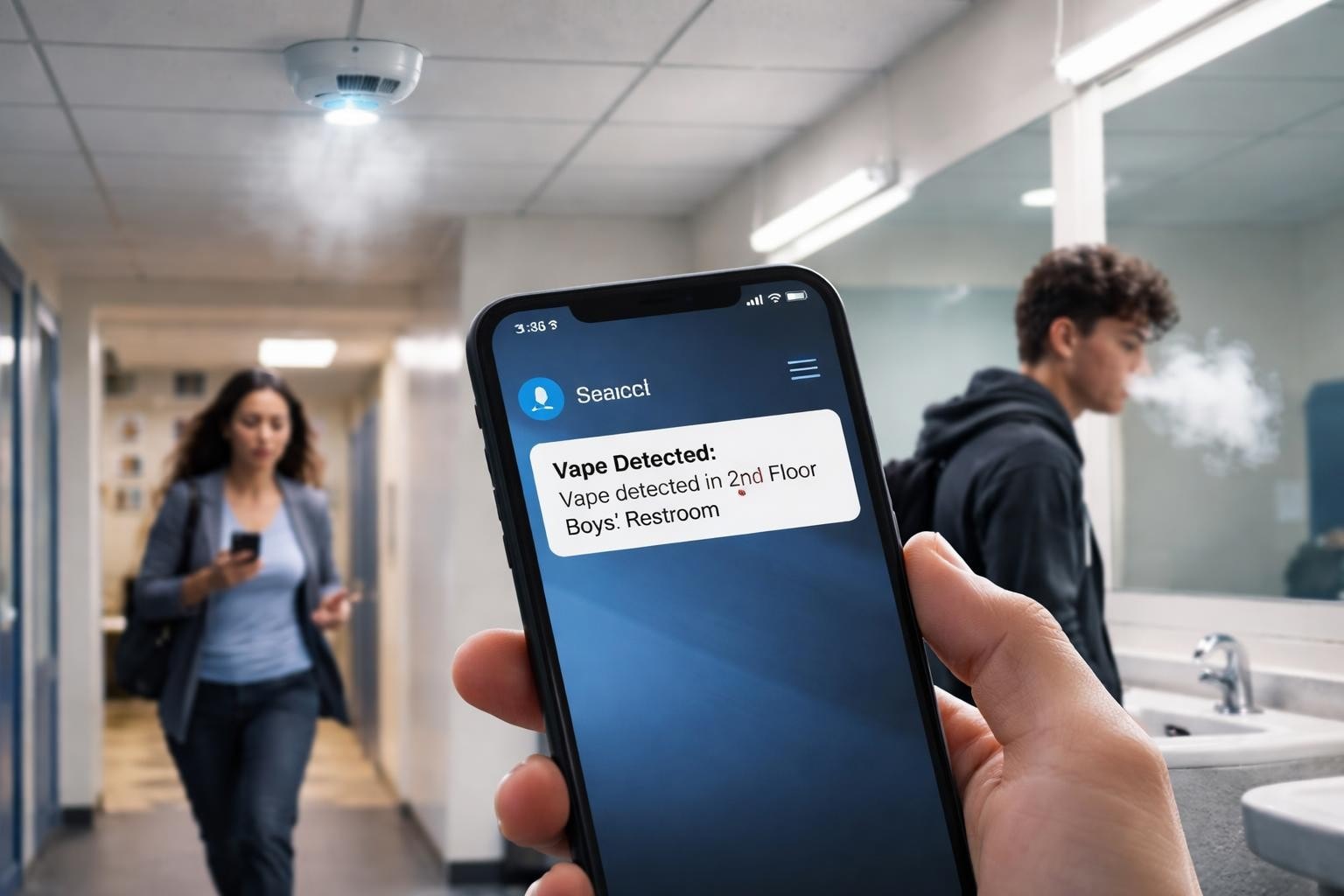
Managing vaping incidents in schools, offices, and leisure facilities requires immediate awareness and swift action. Traditional detection methods often rely on visual observation or delayed reporting, allowing violations to persist unchecked. A vape detector with SMS alerts transforms this reactive approach into proactive protection, delivering instant notifications the moment vaping activity occurs. This technology empowers facility managers, educators, and security personnel to intervene promptly, creating safer environments whilst maintaining compliance with health and safety regulations.
Understanding SMS Alert Technology in Vape Detection
Modern vape detection systems integrate sophisticated sensor technology with communication platforms to deliver real-time alerts. When sensors identify vaping substances, the system immediately processes this data and transmits notifications via SMS to designated recipients. This instant communication loop ensures that responsible personnel receive critical information within seconds of detection.
The technology operates through a three-stage process that guarantees reliability and accuracy:
- Detection Phase: Advanced sensors identify vaping aerosols, THC, and other substances through chemical analysis
- Processing Phase: The system validates the detection, filtering false positives and confirming genuine incidents
- Notification Phase: SMS alerts dispatch automatically to pre-configured mobile numbers with location and timestamp data
Key Components of SMS Alert Systems
A comprehensive vape detector with SMS alerts comprises several integrated elements working in harmony. The sensor unit forms the foundation, employing chemical detection methods to identify vaping aerosols with precision. Connected to this hardware sits the processing unit, which analyses sensor data and determines when alerts should trigger.
The communication module represents the critical link between detection and response. This component manages SMS delivery, ensuring messages reach recipients regardless of their location or device. Most systems support multiple recipients, allowing organisations to notify security teams, facility managers, and designated safeguarding leads simultaneously.
| Component | Function | Benefit |
|---|---|---|
| Chemical Sensors | Detect vaping aerosols and substances | High accuracy with minimal false positives |
| Processing Unit | Validates and analyses detection data | Intelligent filtering reduces alert fatigue |
| SMS Gateway | Delivers instant mobile notifications | Immediate awareness without app requirements |
| Cloud Platform | Stores data and manages configurations | Remote access and historical reporting |
Benefits of Instant SMS Notifications
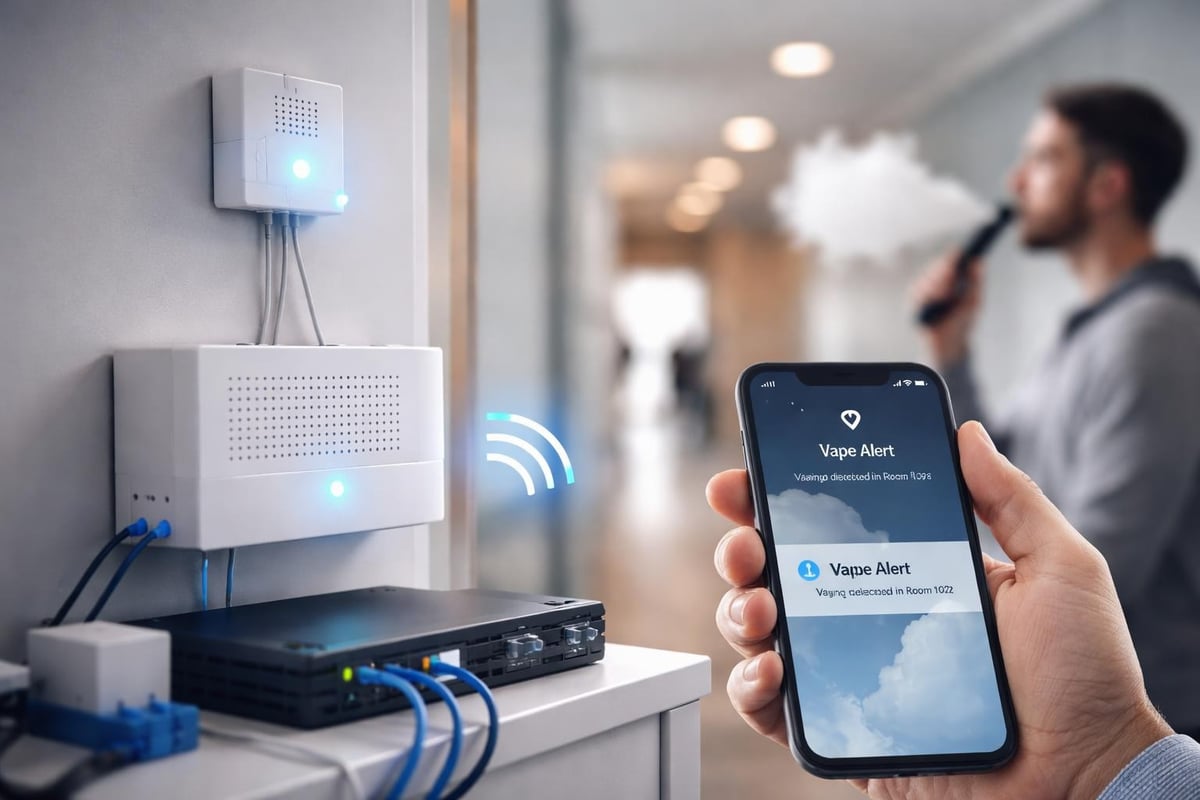
Speed defines the primary advantage of SMS-based alerting. Unlike email notifications that may sit unread for hours or dashboard alerts requiring active monitoring, text messages arrive directly on mobile devices that most professionals carry constantly. This immediacy enables intervention whilst incidents remain active, dramatically improving response effectiveness.
SMS technology also boasts near-universal compatibility. Every mobile phone supports text messaging, eliminating the need for specific applications or smartphone capabilities. This accessibility ensures that all designated staff members can receive alerts regardless of their device preferences or technical expertise.
Response Time Improvements
Organisations implementing a vape detector with SMS alerts report significant reductions in incident duration. Traditional detection methods often involve delayed discovery, sometimes hours after the violation occurred. SMS alerts compress this timeline to mere seconds, allowing staff to address situations before they escalate.
Research indicates several measurable improvements:
- Average response time reduced from 15-20 minutes to under 2 minutes
- Incident duration decreased by approximately 85%
- Repeat offences in the same location dropped by 60-70%
- Staff confidence in managing vaping issues increased substantially
The psychological impact on potential violators also plays a crucial role. When individuals recognise that detection triggers immediate response, the deterrent effect strengthens considerably. Schools implementing vape detectors have observed marked reductions in overall vaping attempts, not merely faster responses to existing incidents.
Configuration and Customisation Options
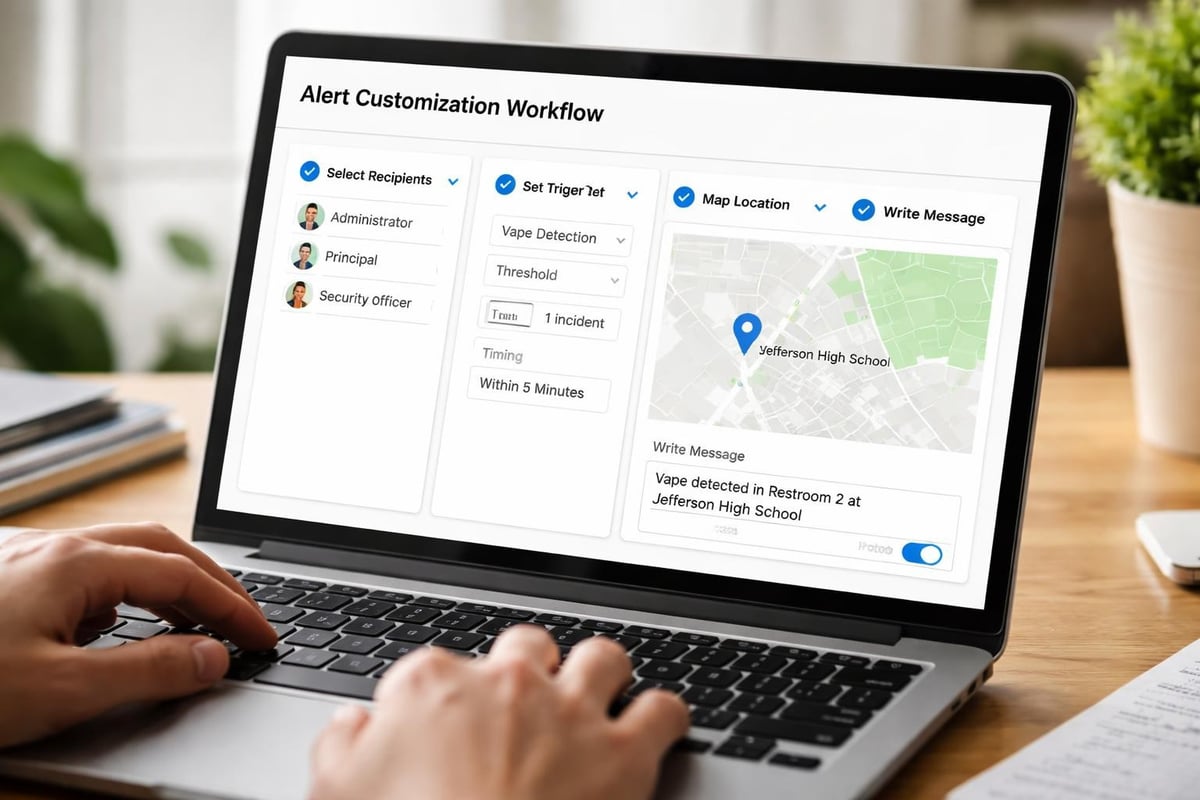
Modern systems offer extensive customisation to match organisational needs and workflows. Administrators can configure multiple recipient lists, ensuring alerts reach the appropriate personnel based on time of day, location, or incident severity. This flexibility prevents alert fatigue whilst guaranteeing critical notifications never go unnoticed.
Setting Up SMS Alert Parameters
Effective configuration begins with identifying who requires notifications and under what circumstances. Many organisations establish tiered alert systems, with security personnel receiving all notifications whilst senior management receives only summary reports or high-priority incidents.
The Vape Detection System allows administrators to define specific alert triggers, including detection sensitivity levels and confirmation requirements. This granular control ensures that the system operates according to each facility's unique requirements and risk tolerance.

Geographic considerations also influence configuration decisions. Facilities with multiple buildings or floors benefit from location-specific alerting, directing responders to the precise area requiring attention. SMS messages can include detailed location information, eliminating confusion and enabling targeted response.
Integration with Existing Security Infrastructure
A vape detector with SMS alerts functions most effectively when integrated into broader security and safety ecosystems. Many organisations already operate CCTV systems, access control platforms, and incident management software. Modern vape detection solutions offer integration capabilities that enhance these existing investments.
When vape sensors trigger alongside camera systems, security teams receive both immediate SMS notification and visual confirmation of incidents. This dual verification strengthens evidence gathering whilst providing context that supports appropriate interventions. Access control integration can automatically log personnel present in affected areas, supporting investigation and accountability processes.
| Integration Type | Capability | Operational Advantage |
|---|---|---|
| CCTV Systems | Automatic camera activation upon detection | Visual evidence and incident verification |
| Access Control | Personnel tracking and area logging | Accountability and investigation support |
| Building Management | HVAC response and air quality monitoring | Automated ventilation improvements |
| Incident Management | Automatic ticket creation and workflow | Streamlined documentation and compliance |
Network and Connectivity Requirements
Reliable SMS delivery depends on robust network infrastructure. Systems typically support multiple connectivity options, including WiFi, Ethernet, and cellular connections. This redundancy ensures alert delivery even if primary networks experience disruptions.
Understanding network requirements proves essential during implementation planning. Facilities with limited cellular coverage may require signal boosters or alternative connectivity solutions. Conversely, organisations with comprehensive WiFi coverage can leverage existing infrastructure, reducing deployment complexity and ongoing costs.
Best Practices for Alert Management
Receiving alerts represents only the first step in effective incident management. Organisations must establish clear protocols dictating how personnel should respond when notifications arrive. Best practice guidance emphasises preparation, consistency, and documentation.
Designated responders should understand their responsibilities before incidents occur. Training sessions covering response procedures, de-escalation techniques, and documentation requirements ensure staff confidence and competence. Regular drills help maintain readiness whilst identifying potential workflow improvements.
Creating Effective Response Protocols
Structured response protocols transform alerts into actionable intelligence. Effective procedures specify who responds, what actions they take, and how they document outcomes. This structure ensures consistent handling regardless of which staff member receives the notification.
Essential protocol elements include:
- Primary and secondary responder designation
- Expected response timeframes for different incident types
- Communication procedures for escalation
- Documentation requirements and evidence preservation
- Follow-up actions and student support measures
Alert fatigue represents a genuine risk when systems generate excessive notifications. Proper calibration and maintenance prevent false positives whilst ensuring genuine incidents trigger appropriate responses. Regular system reviews help organisations balance sensitivity with practical operational requirements.
Data Analytics and Incident Patterns
Beyond immediate alerting, vape detector systems with SMS capabilities generate valuable data for trend analysis and strategic planning. Each detection event creates a timestamped record including location, substance type, and response details. Over time, this information reveals patterns that inform policy decisions and resource allocation.
Facilities experiencing concentrated incidents in specific locations can deploy targeted interventions, from increased supervision to environmental modifications. Temporal patterns highlighting peak violation times enable strategic staff scheduling, placing resources where and when they deliver maximum impact.
Leveraging Historical Data
Comprehensive reporting transforms raw detection data into actionable insights. Administrators can generate reports analysing incident frequency, location distribution, and temporal trends. These analytics support evidence-based decision making whilst demonstrating compliance efforts to regulators and stakeholders.
| Metric | Value to Organisation | Application |
|---|---|---|
| Incident Frequency | Trend identification over time | Policy effectiveness evaluation |
| Location Hotspots | Geographic concentration analysis | Targeted intervention deployment |
| Time Patterns | Peak violation period identification | Strategic resource scheduling |
| Response Times | Staff performance measurement | Training needs assessment |
Many organisations share anonymised trend data with governing bodies and peer institutions, contributing to broader understanding of vaping behaviours and intervention effectiveness. This collaborative approach strengthens sector-wide responses whilst supporting global vape detection efforts.

Cost Considerations and Return on Investment
Implementing a vape detector with SMS alerts requires upfront investment in hardware, installation, and ongoing service fees. However, organisations must evaluate these costs against the substantial expenses associated with undetected vaping, including property damage, health incidents, and regulatory penalties.
Direct cost savings emerge from reduced maintenance requirements in frequently vaped areas. Vapour residue damages fixtures, walls, and ventilation systems, necessitating premature replacement and intensive cleaning. Early detection minimises exposure duration, preserving facility condition and extending asset lifecycles.
Calculating Total Cost of Ownership
Comprehensive cost analysis encompasses hardware procurement, installation labour, network connectivity, SMS service fees, and maintenance contracts. Many providers offer flexible pricing models, including outright purchase, leasing arrangements, and subscription services with inclusive support.
SMS costs vary based on alert volume and provider arrangements. Most systems charge per message sent, though some offer bundled allowances or unlimited plans. Organisations should estimate monthly alert volumes during planning, factoring in seasonal variations and policy changes that might influence detection rates.
The return on investment extends beyond financial metrics. Enhanced safety, improved air quality, regulatory compliance, and stakeholder confidence represent significant value propositions that justify implementation costs. Educational facilities particularly benefit from demonstrating proactive safeguarding measures to parents, governors, and inspection bodies.
Implementation Planning and Deployment
Successful deployment requires careful planning addressing technical, operational, and cultural considerations. Project teams should include facilities management, IT personnel, security staff, and policy makers to ensure comprehensive perspective and stakeholder buy-in.
Site surveys identify optimal sensor placement, considering factors including airflow patterns, physical access, and coverage requirements. High-risk areas such as toilets, changing rooms, and secluded spaces typically receive priority during initial deployments, with expansion to additional locations as budgets permit.
Phased Rollout Strategies
Many organisations adopt phased implementation approaches, beginning with pilot deployments in limited areas. This strategy allows teams to refine configurations, test alert workflows, and demonstrate value before committing to facility-wide coverage. Lessons learned during pilot phases inform subsequent deployment decisions, reducing risk and optimising outcomes.
Staff communication proves critical throughout implementation. Clear messaging explaining the technology's purpose, capabilities, and limitations builds understanding and support. Transparency regarding privacy protections and data usage addresses concerns whilst reinforcing the system's protective rather than punitive intent.
Implementing a vape detector with SMS alerts delivers immediate awareness and rapid response capabilities that transform safety management across educational, commercial, and leisure environments. The technology combines sophisticated detection with universal communication methods, ensuring that responsible personnel can intervene promptly when incidents occur. Vape Guardian provides comprehensive detection solutions designed specifically for UK facilities, offering advanced sensors, reliable SMS alerting, and dedicated support to help organisations create safer, healthier environments for everyone.






Share:
Ceiling Vape Detector: A Complete 2026 Guide
Vape Detector With App Alerts: Real-Time Monitoring