
The rise of vaping in colleges has emerged as one of the most pressing public health challenges facing higher education institutions across the United Kingdom and globally. What began as a perceived safer alternative to traditional smoking has evolved into a widespread phenomenon that affects student wellbeing, campus culture, and institutional compliance. As universities and colleges grapple with this growing concern, understanding the scope of the problem and implementing effective solutions has become essential for creating healthier learning environments.
The Scale of Vaping in Colleges
Recent data reveals alarming trends regarding vaping in colleges. Young adults aged 18 to 24 represent the demographic with the highest rates of e-cigarette use, making college campuses particularly vulnerable to this public health issue.
The prevalence extends beyond casual use. Students often vape in dormitories, lecture halls, toilets, and outdoor gathering spaces, creating challenges for campus administrators who must balance enforcement with student autonomy. Many institutions report that vaping incidents have surpassed traditional smoking violations by a significant margin.
Understanding Why Students Vape
Several factors contribute to the popularity of vaping in colleges:
- Social acceptance: E-cigarettes are often viewed as socially acceptable and less stigmatized than traditional tobacco products
- Stress management: Students frequently cite academic pressure and anxiety as reasons for vaping
- Marketing influence: The tobacco and nicotine industry has successfully targeted young adults through flavoured products and social media campaigns
- Misconceptions about safety: Many students underestimate the health risks associated with vaping
- Peer influence: Campus culture and social networks play a significant role in adoption rates
The WHO report on industry targeting of youth provides compelling evidence of how manufacturers have deliberately positioned products to appeal to younger demographics, creating a pipeline of nicotine addiction that continues into higher education settings.
Health Implications for College Students
The health consequences of vaping in colleges extend far beyond the immediate act of inhalation. Nicotine addiction can develop rapidly, particularly in young adults whose brains are still developing until approximately age 25.
Physical Health Risks
Research continues to uncover concerning physical health impacts:
| Health Concern | Impact on Students | Long-term Consequences |
|---|---|---|
| Respiratory function | Reduced lung capacity, coughing, shortness of breath | Chronic respiratory conditions |
| Cardiovascular health | Increased heart rate, elevated blood pressure | Higher cardiovascular disease risk |
| Nicotine addiction | Dependency, withdrawal symptoms | Lifelong nicotine dependence |
| Immune function | Compromised immune response | Increased susceptibility to infections |
Beyond these direct effects, vaping in colleges also impacts academic performance. Students who vape regularly often experience concentration difficulties, disrupted sleep patterns, and increased anxiety levels, all of which can interfere with educational outcomes.
Mental Health Connections
The relationship between vaping and mental health requires careful consideration. Whilst some students use e-cigarettes to manage stress or anxiety, evidence suggests that nicotine can actually exacerbate mental health challenges over time.
Students struggling with mental wellbeing may benefit from professional support services. Resources such as CopeHouse Collective offer accessible online psychotherapy for young adults navigating the pressures of college life, providing healthier coping mechanisms than substance use.
The American College Health Association guidance on addressing e-cigarette use emphasizes the importance of screening and intervention programmes that address both vaping behaviour and underlying mental health concerns.
Campus Policy Challenges
Implementing effective policies around vaping in colleges presents unique challenges for administrators. Unlike traditional smoking, which produces visible smoke and a distinctive odour, vaping can be more discreet, making detection and enforcement considerably more difficult.
Current Policy Landscape
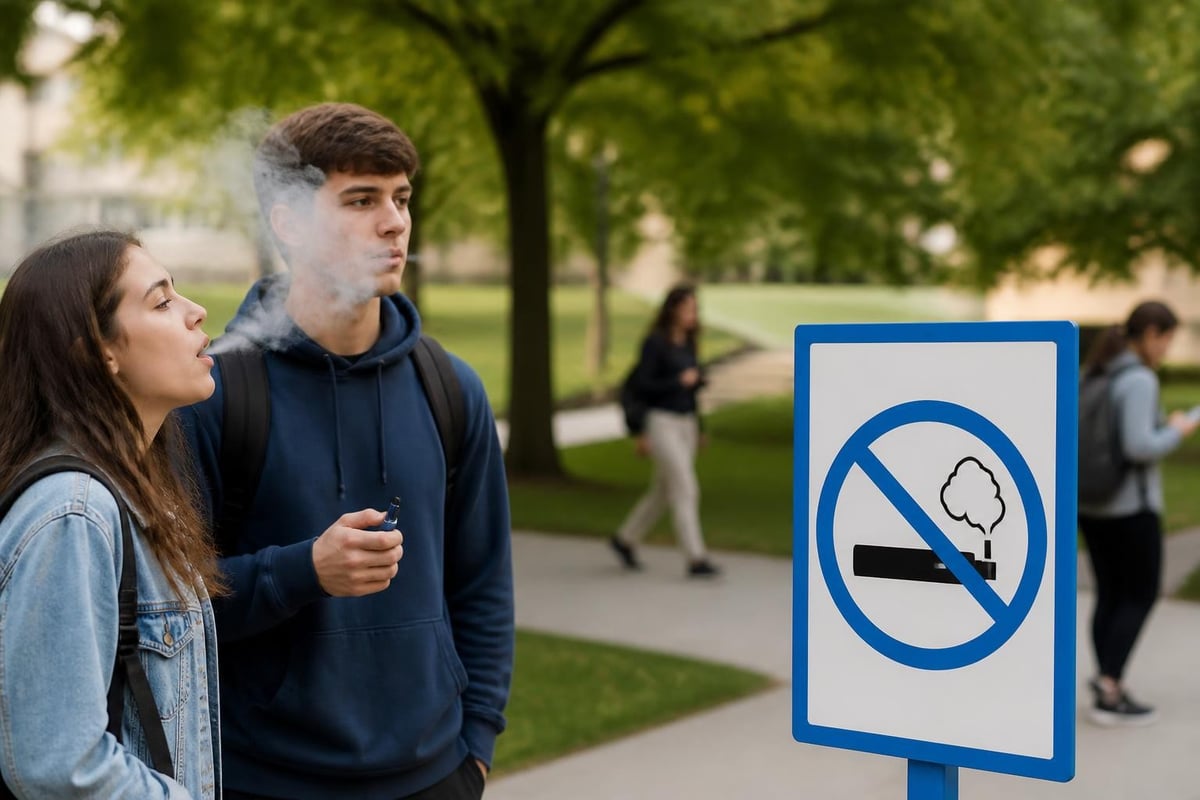
Many institutions have extended their smoke-free campus policies to include e-cigarettes, yet enforcement remains inconsistent. Students often vape in areas where traditional smoking would be immediately noticed and addressed, such as indoor spaces and residential halls.
The American Nonsmokers' Rights Foundation resources document how universities have approached policy development, offering a comprehensive bibliography of effective strategies and common pitfalls.
Key policy considerations include:
- Clear definitions: Policies must explicitly include e-cigarettes and vaping devices
- Comprehensive coverage: Indoor and outdoor spaces should both be addressed
- Consistent enforcement: Rules must be applied fairly across all campus populations
- Educational components: Policies work best when paired with awareness programmes
- Support services: Cessation resources should be readily available
Detection and Monitoring Solutions
Traditional methods of identifying vaping in colleges rely heavily on visual observation and student reports, both of which have significant limitations. Modern technology offers more reliable and consistent approaches to monitoring and enforcement.
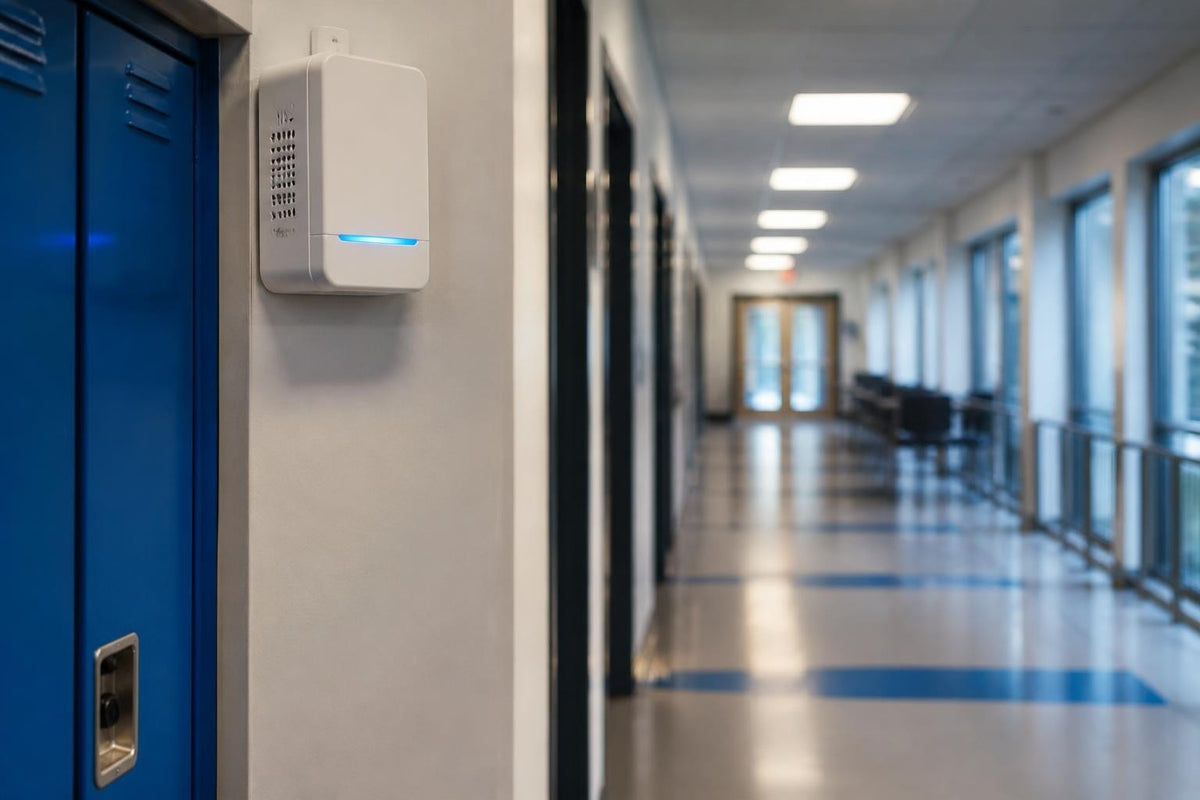
Advanced detection systems can identify vaping activity in real time, alerting designated staff members immediately when incidents occur. These solutions are particularly valuable in spaces where supervision is limited, such as toilet facilities, changing rooms, and residential corridors.
The Vape Detection System represents a comprehensive approach to addressing vaping in colleges through hardware and software integration. By detecting vape substances, as well as identifying other concerning behaviours, these sensors provide institutions with actionable data whilst maintaining student privacy.

Benefits of Technology-Based Detection
Implementing sensor-based monitoring offers several advantages over traditional enforcement methods:
- Consistent 24/7 coverage without requiring constant human supervision
- Immediate alerts that enable rapid response to incidents
- Data collection that helps identify patterns and high-risk areas
- Objective evidence that supports fair enforcement
- Privacy-conscious design that doesn't involve video surveillance
For institutions seeking to understand how detection technology integrates with broader safety strategies, vape detectors designed for education settings provide tailored solutions that account for the unique needs of learning environments.
Creating Comprehensive Prevention Programmes
Technology alone cannot solve the challenge of vaping in colleges. The most successful institutions combine detection with robust prevention and cessation programmes that address the root causes of student vaping.
Essential Programme Components
Effective prevention initiatives incorporate multiple elements:
Education and Awareness
Students need accurate information about vaping risks, delivered through channels they trust and formats they engage with. Peer education programmes often prove particularly effective, as students respond well to messages from fellow students who understand campus culture.
Accessible Cessation Support
Truth Initiative resources for colleges provide evidence-based programmes specifically designed to help students quit vaping. These resources include text message programmes, online tools, and campus-specific initiatives that have demonstrated measurable success.
Environmental Strategies
Modifying the campus environment can reduce vaping opportunities and normalize vape-free spaces:
- Designate the entire campus as vape-free, including outdoor areas
- Remove vaping product advertising from campus venues
- Ensure vending machines do not stock e-cigarettes or accessories
- Create prominent signage reinforcing vape-free policies
- Provide convenient disposal options for students wanting to quit
Engaging Students in Solutions
Student involvement in addressing vaping in colleges proves crucial for programme success. When students participate in policy development and prevention initiatives, compliance rates improve significantly and enforcement becomes less adversarial.
Peer Leadership Initiatives
Training student leaders to serve as health ambassadors creates authentic connections between institutional goals and student culture. These peer educators can:
- Lead awareness campaigns using language and platforms that resonate with students
- Provide informal support to peers considering quitting
- Offer feedback on policy effectiveness and implementation
- Serve as liaisons between administration and student body
Understanding UK vaping laws helps students recognize that campus policies align with broader regulatory frameworks designed to protect public health.
Residential Hall Considerations
Dormitories present unique challenges for managing vaping in colleges. These spaces combine private living quarters with shared facilities, creating grey areas where students may believe vaping is permissible.
| Challenge | Solution | Implementation |
|---|---|---|
| Private space perception | Clear policies covering all residential areas | Include explicit language in housing contracts |
| Limited supervision | Technology-based detection in common areas | Install sensors in bathrooms, corridors, communal spaces |
| Roommate conflicts | Mediation services and room reassignment options | Establish clear procedures for handling disputes |
| Fire safety concerns | Education about fire risks from devices and batteries | Include vaping safety in residential orientation |
Residential life staff require specific training to address vaping incidents effectively whilst maintaining supportive relationships with students. Balancing enforcement with pastoral care ensures students feel supported rather than simply policed.
Staff Training and Response Protocols
Faculty and staff across campus need consistent guidance on responding to vaping in colleges. Without clear protocols, enforcement becomes inconsistent and students may perceive unfairness in how policies are applied.
Developing Response Frameworks
Effective response protocols include:
- Initial contact: Staff should approach students calmly and refer to specific policy violations
- Documentation: All incidents should be recorded consistently using standardized forms
- Graduated consequences: First-time offenders might receive education whilst repeat violations trigger stronger measures
- Referral pathways: Connect students with cessation resources and, when appropriate, mental health support
- Follow-up: Check in with students who have violated policies to reinforce support
Understanding best practices for handling vaping alerts ensures staff respond effectively when detection systems identify incidents.
Measuring Success and Adapting Strategies
Institutions must establish clear metrics to evaluate their approaches to vaping in colleges. Without data-driven assessment, it becomes difficult to justify resource allocation or identify necessary adjustments.
Key Performance Indicators
Consider tracking:
- Incident rates: Monitor the frequency of detected vaping violations over time
- Student surveys: Assess perceived prevalence and attitudes toward vaping
- Cessation programme participation: Track how many students engage with support services
- Policy awareness: Measure student knowledge of campus vaping policies
- Air quality metrics: Use sensor data to evaluate overall campus air quality improvements
The American Lung Association methodology on smoke-free air laws offers frameworks that higher education institutions can adapt to evaluate their own policy effectiveness.
Regular programme reviews should involve multiple stakeholder groups, including students, faculty, health services staff, and residential life personnel. This collaborative approach ensures policies remain relevant and responsive to evolving campus needs.
Financial and Resource Considerations
Addressing vaping in colleges requires investment, but the costs of inaction often exceed the expense of comprehensive programmes. Institutions should view prevention and detection as long-term investments in student health and campus culture.
Budget allocations typically include:
- Detection technology installation and maintenance
- Staff training and professional development
- Educational materials and awareness campaigns
- Cessation support services and resources
- Programme evaluation and assessment tools
Many colleges find that combining resources across departments creates efficiency. Health services, residential life, facilities management, and student affairs can share costs whilst each contributing their unique expertise.
For institutions exploring detection solutions, Vape Guardian provides consultation services to help colleges identify the most cost-effective approaches based on campus size, layout, and specific challenges.
Looking Forward: Emerging Trends and Future Challenges
The landscape of vaping in colleges continues to evolve. New products enter the market regularly, and student behaviours shift in response to policy changes, social trends, and emerging research about health effects.
Anticipating Future Developments
Several trends warrant attention:
Product evolution: Manufacturers continually develop new devices designed to be more discreet or to circumvent existing regulations. Policies must include flexible language that can encompass future products without requiring constant revision.
Regulatory changes: As governments update vaping regulations, campus policies should align with these broader frameworks whilst maintaining the autonomy to implement stricter standards when appropriate.
Research advances: Ongoing studies continue to reveal new information about vaping health effects. Institutions should regularly review and update their educational materials to reflect current scientific understanding.
Technology integration: Detection capabilities will continue to improve, offering institutions more sophisticated tools for monitoring and response whilst maintaining student privacy protections.
Addressing vaping in colleges demands a multifaceted approach that combines clear policies, modern detection technology, comprehensive support services, and genuine student engagement. Institutions that invest in evidence-based prevention programmes whilst maintaining enforcement capabilities create healthier environments where students can thrive academically and personally. Vape Guardian supports colleges in this mission through advanced detection solutions and dedicated expertise, helping institutions protect student wellbeing whilst fostering positive campus cultures.







Share:
Hotel Vape Detection: Complete Guide for 2026
Vaping on Aircraft: Rules, Risks & Enforcement in 2026