
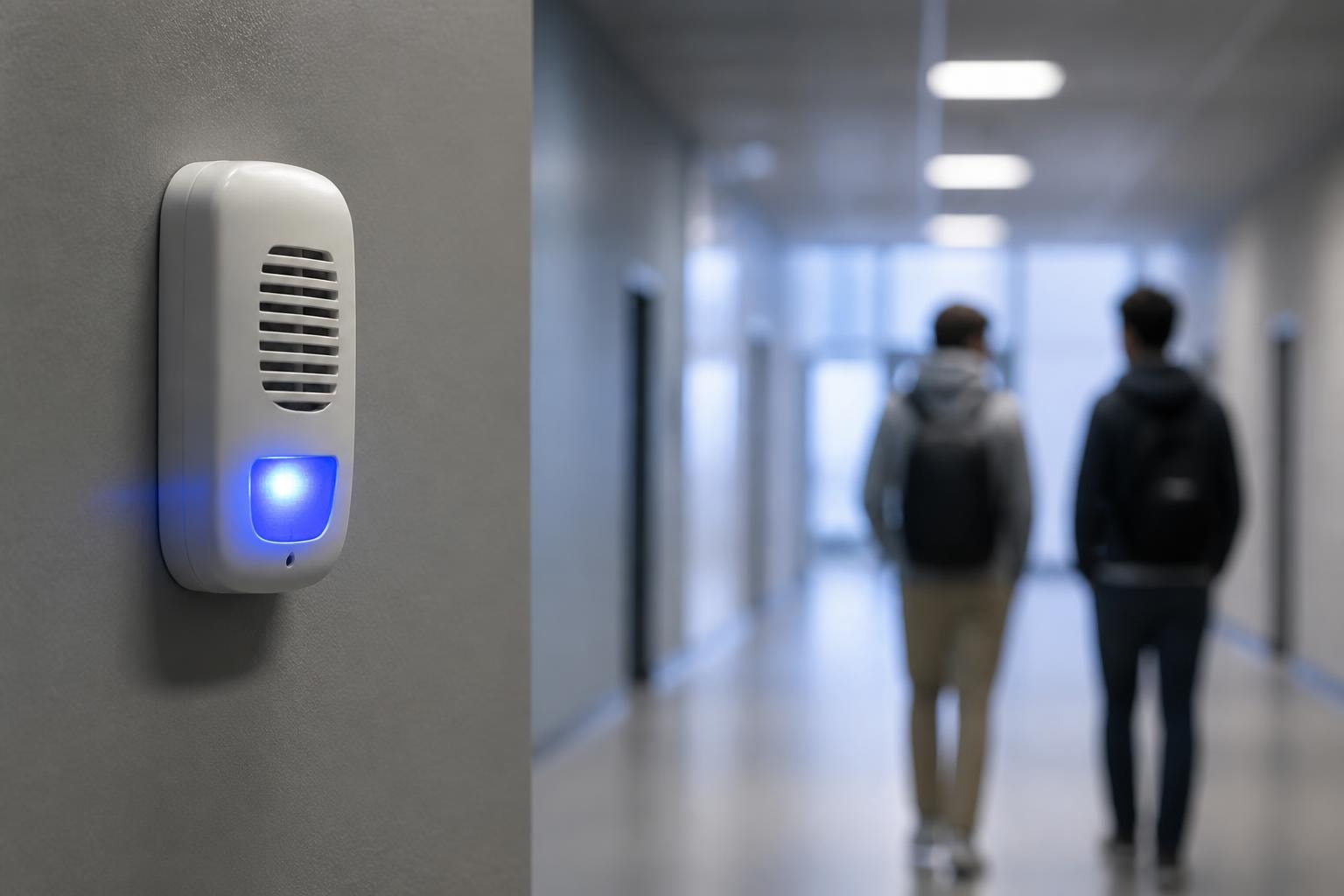
False alarms represent one of the most significant challenges facing organisations implementing vape detection technology. When detection systems trigger alerts from hairspray, deodorant, or cleaning products, they quickly lose credibility amongst staff and diminish response effectiveness. A vape detector with false alert filter addresses this critical issue by incorporating sophisticated algorithms and multi-sensor validation to distinguish genuine vaping incidents from benign environmental factors. This technology evolution has transformed vape detection from a reactive tool plagued by frequent false positives into a reliable monitoring solution that administrators can trust.
Understanding False Alerts in Vape Detection
False alerts occur when detection systems misinterpret non-vaping substances or activities as vaping incidents. Traditional vape detectors often rely solely on particulate matter detection, which cannot differentiate between vapour aerosols and other airborne particles.
Common triggers for false alerts include aerosol sprays, dust from cleaning activities, steam from hot water, and even high humidity conditions. These environmental factors create particulate signatures that single-sensor systems struggle to distinguish from actual vaping events.
The consequences of frequent false alerts extend beyond mere inconvenience. Staff become desensitised to notifications, response times deteriorate, and the entire detection system loses its deterrent effect. In educational settings, this erosion of trust can undermine broader compliance initiatives and create cynicism about technological solutions.
The Cost of Alert Fatigue
Organizations experiencing high false alert rates typically face several operational challenges:
- Wasted staff time investigating non-incidents and documenting false positives
- Reduced response urgency when genuine incidents occur due to alert fatigue
- Decreased system credibility amongst facility managers and frontline staff
- Lower detection effectiveness as users begin ignoring notifications
- Higher operational costs from unnecessary investigations and system adjustments
Research indicates that when false alert rates exceed 30%, response effectiveness drops dramatically. Staff begin treating all alerts with scepticism, which defeats the purpose of real-time detection capabilities.

How False Alert Filtering Technology Works
A vape detector with false alert filter employs multiple verification layers before triggering notifications. Rather than relying on a single sensor type, these advanced systems integrate various detection methods to cross-reference data points and confirm incident authenticity.
Modern filtering technology typically combines particulate matter sensors with chemical detection capabilities. When the particulate sensor detects aerosol presence, the chemical sensor analyses the composition to verify whether it matches vaping substance profiles. This dual verification significantly reduces false positives whilst maintaining high detection accuracy for genuine incidents.
Multi-Sensor Validation Architecture
The most effective vape detector with false alert filter systems utilise at least three distinct sensor types:
- Particulate Matter Sensors: Detect aerosol concentration and particle size distribution
- Chemical Sensors: Identify specific compounds associated with vaping liquids
- Environmental Sensors: Monitor temperature, humidity, and air pressure changes
- Sound Detection: Recognise acoustic signatures from vaping device activation
By requiring correlation across multiple sensor inputs, these systems create a verification framework that dramatically improves accuracy. A genuine vaping incident produces distinctive signatures across all sensor types, whilst false triggers typically affect only one or two sensors.
The Vape Detection System employs this multi-layered approach, combining advanced sensors with machine learning algorithms that continuously improve detection accuracy based on real-world deployment data. This intelligent system adapts to specific environmental conditions, learning to distinguish between routine activities and actual vaping incidents.
Machine Learning Enhancement
Contemporary vape detector with false alert filter technology increasingly incorporates machine learning algorithms that analyse historical detection data. These systems learn from confirmed incidents and false alerts, progressively refining their filtering parameters.
| Detection Feature | Traditional Systems | AI-Enhanced Systems |
|---|---|---|
| Initial Accuracy | 70-80% | 85-90% |
| Learning Capability | None | Continuous improvement |
| Environmental Adaptation | Manual calibration required | Automatic adjustment |
| False Alert Rate | 25-35% | 5-10% |
| Response Time | Immediate (many false) | Delayed validation (verified) |
The machine learning approach allows systems to recognise patterns specific to individual environments. A detector deployed in a leisure facility learns to ignore steam from nearby showers, whilst one in a school adapts to scheduled cleaning activities that might otherwise trigger alerts.
Strategic Placement and Configuration
Even the most sophisticated vape detector with false alert filter requires proper installation to achieve optimal performance. Sensor placement directly impacts both detection effectiveness and false alert frequency, as proper positioning strategies can prevent many common triggering scenarios.
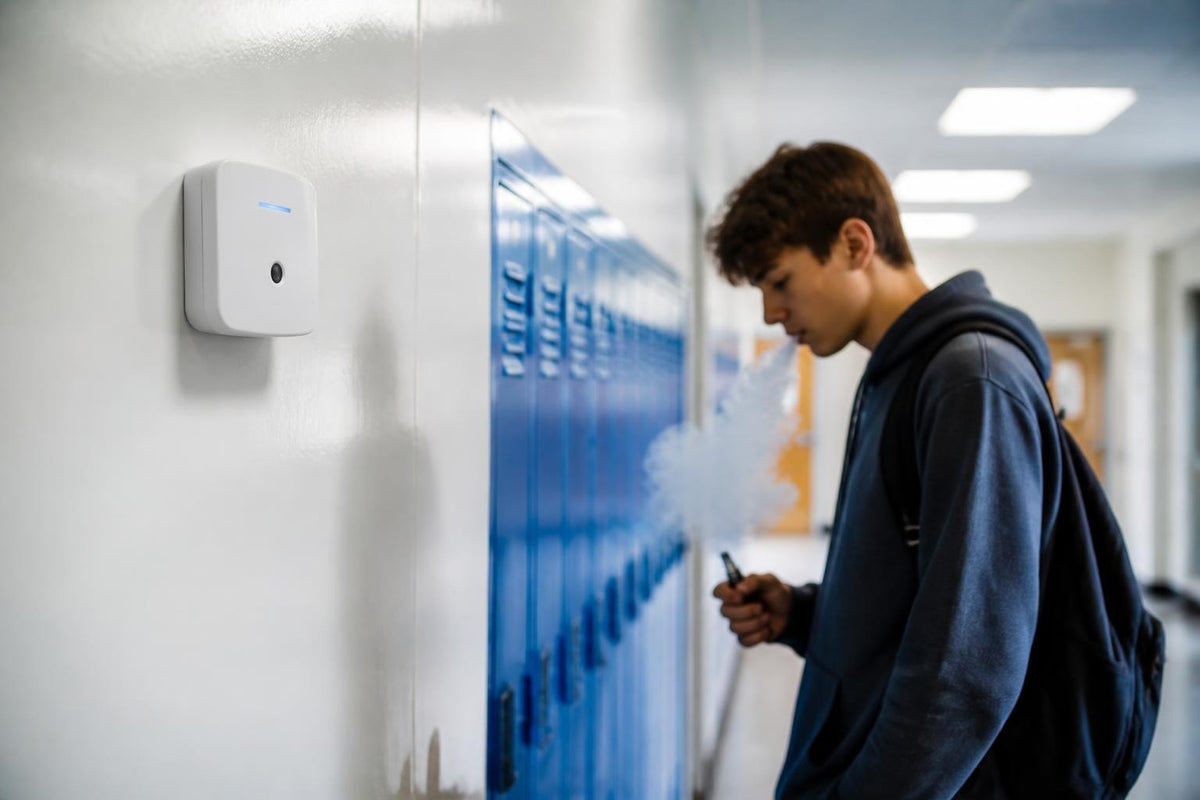
Locations prone to environmental interference should be avoided whenever possible. Installing detectors near ventilation ducts, directly above doorways, or adjacent to bathrooms increases false alert likelihood due to air currents, temperature fluctuations, and legitimate aerosol use.
Optimal Installation Guidelines
Consider these placement factors when deploying detection systems:
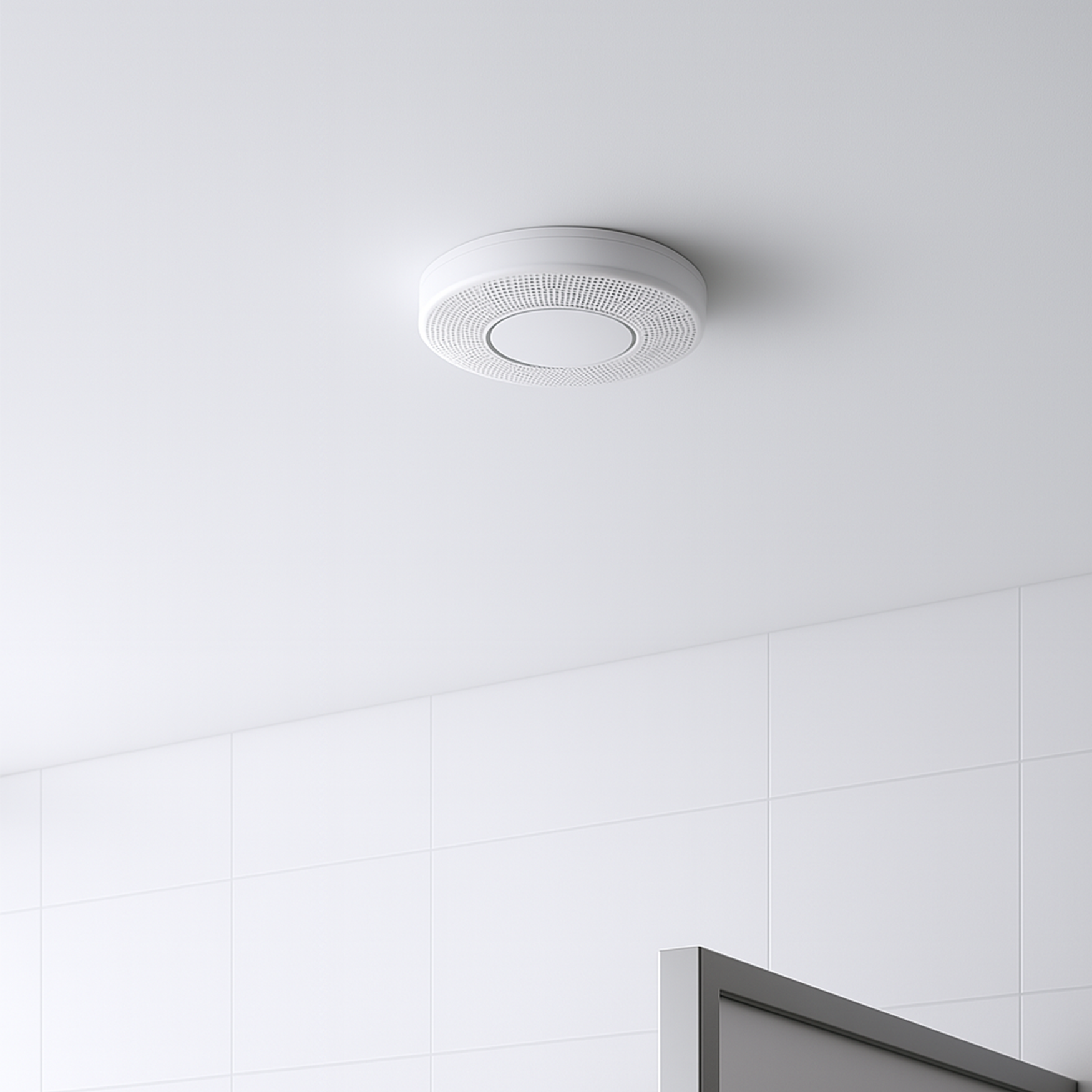
- Ceiling height: Install between 2.4 and 3.6 metres for optimal aerosol detection
- Airflow patterns: Avoid direct ventilation paths that disperse vapour before detection
- Room function: Account for legitimate activities that might trigger sensors
- Traffic patterns: Position sensors where vaping is most likely to occur
- Environmental factors: Consider humidity, temperature, and cleaning schedules
The relationship between ceiling height and detector performance proves particularly important. Mounting too high allows vapour to disperse before detection, whilst positioning too low increases exposure to false triggers from routine activities.
Configuring Alert Thresholds and Validation Delays
A vape detector with false alert filter provides administrators with granular control over sensitivity settings and validation requirements. These configurable parameters allow organisations to balance detection speed against accuracy, tailoring system behaviour to specific operational needs.
Threshold configuration determines the concentration levels required to trigger initial sensor activation. Higher thresholds reduce false alerts but may miss subtle vaping attempts, whilst lower thresholds maximise detection sensitivity at the cost of increased false positives.
Validation Delay Settings
Many advanced systems incorporate a brief validation period before issuing alerts. When initial sensors detect a potential incident, the system waits several seconds whilst additional sensors confirm the presence of vaping-specific signatures.
This short delay-typically between 3 and 10 seconds-allows multi-sensor correlation to occur without significantly compromising response effectiveness. Genuine vaping incidents persist long enough for verification, whilst transient false triggers dissipate before alert generation.
| Validation Delay | False Alert Reduction | Detection Latency | Best Use Case |
|---|---|---|---|
| 0 seconds | Minimal | Instant | High-security environments |
| 3-5 seconds | Moderate (40-50%) | Negligible | General applications |
| 5-10 seconds | Significant (60-75%) | Acceptable | Schools, offices |
| 10+ seconds | Maximum (80%+) | Noticeable | Low-priority monitoring |
Organisations must evaluate their specific requirements when configuring these parameters. Schools might prioritise false alert reduction to maintain staff trust, whilst high-security facilities may accept higher false positive rates to ensure no genuine incidents escape detection.
Integration with Monitoring Platforms
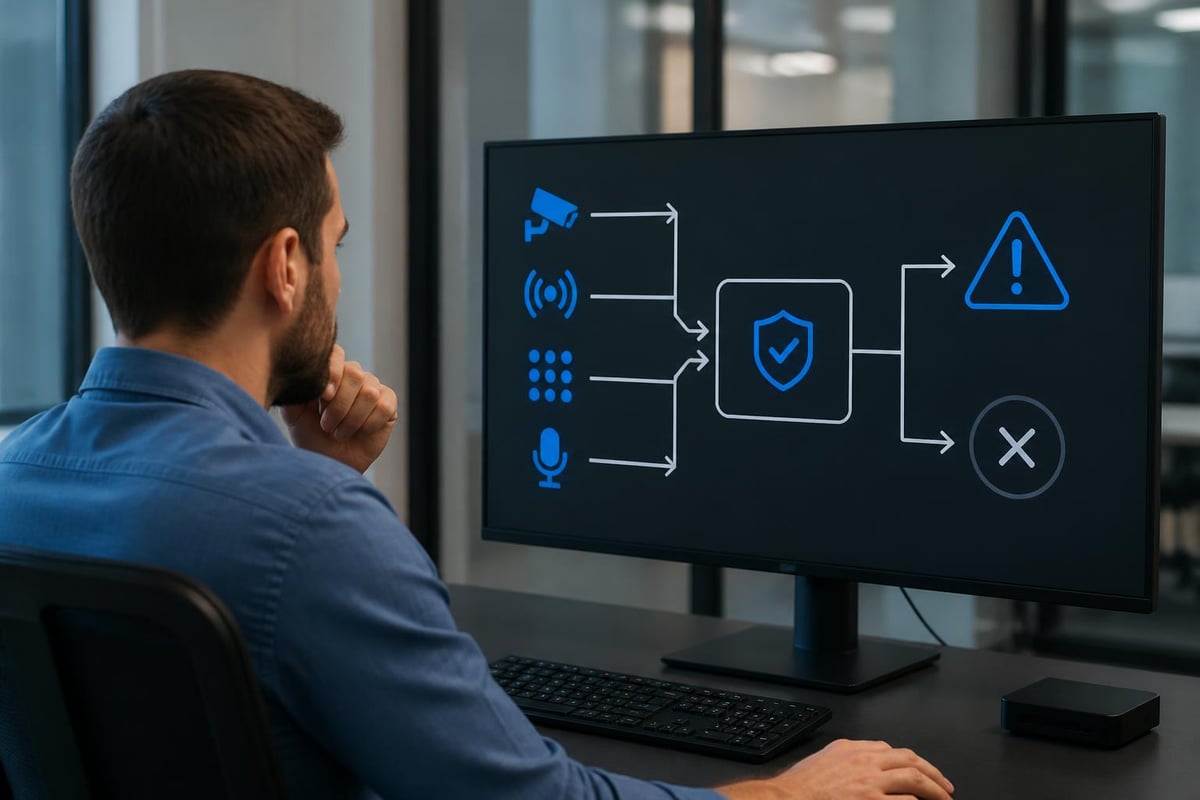
The effectiveness of a vape detector with false alert filter extends beyond the physical sensors to encompass the entire monitoring ecosystem. Modern systems integrate with centralised platforms that provide alert management, incident documentation, and analytics capabilities, as explored in app-based vape detection solutions.
These platforms enable administrators to review detection events, classify alerts as genuine or false, and track system performance over time. This feedback loop proves essential for continuous improvement, allowing machine learning algorithms to refine filtering parameters based on human verification.
Alert Management Features
Sophisticated monitoring platforms incorporate several features that support effective false alert management:
- Alert categorisation: Classify incidents as confirmed, false, or uncertain
- Historical analysis: Review patterns in false alerts to identify systemic issues
- Threshold adjustment: Modify sensitivity settings based on performance data
- Staff notifications: Route alerts to appropriate personnel based on location and severity
- Incident documentation: Maintain comprehensive records for compliance purposes
The ability to track false alert rates across different locations and time periods provides valuable insights. If certain detectors consistently generate false positives, administrators can investigate environmental factors, adjust placement, or reconfigure sensitivity settings.
Environmental Factors and Seasonal Variations
A vape detector with false alert filter must account for changing environmental conditions that influence detection accuracy. Temperature fluctuations, humidity variations, and seasonal factors all impact sensor performance and false alert likelihood.
Winter heating systems often reduce humidity levels, which can affect particulate sensor readings and increase static electricity that disrupts chemical detection. Conversely, summer humidity and air conditioning condensation create moisture that some systems might misinterpret as aerosol presence.
Understanding environmental factors affecting vape detector accuracy enables proactive system management. Organisations can anticipate seasonal challenges and adjust configuration parameters accordingly, maintaining consistent performance throughout the year.
Addressing Common Environmental Triggers
Different environments present unique challenges for false alert management:
Educational Facilities: Chemistry laboratories, art rooms with spray adhesives, and janitorial closets require careful sensor placement and potentially higher detection thresholds to accommodate legitimate activities.
Office Buildings: Conference rooms with presentation equipment, break rooms with coffee machines creating steam, and cleaning schedules must factor into deployment planning, as detailed in guidance for vape detectors in office environments.
Leisure and Retail Spaces: High foot traffic, perfume counters, food preparation areas, and changing rooms with deodorant use all create potential false alert scenarios requiring thoughtful configuration approaches, particularly in leisure and retail applications.
Measuring and Optimising System Performance
Effective deployment of a vape detector with false alert filter requires ongoing performance monitoring and optimisation. Organisations should establish key performance indicators that track both detection effectiveness and false alert frequency.
Critical metrics include total alerts generated, confirmed vaping incidents, false positives, detection response time, and staff verification rates. Tracking these measurements over time reveals trends and identifies opportunities for system improvement.
Performance Benchmarking
Establishing realistic performance expectations helps organisations evaluate system effectiveness:
| Performance Metric | Acceptable Range | Optimal Target |
|---|---|---|
| False Alert Rate | Below 15% | Below 8% |
| Detection Accuracy | Above 85% | Above 92% |
| Response Time | Under 30 seconds | Under 15 seconds |
| Staff Verification Rate | Above 75% | Above 90% |
| System Uptime | Above 95% | Above 98% |
Regular performance reviews should occur monthly during initial deployment and quarterly once systems stabilise. These reviews provide opportunities to adjust thresholds, recalibrate sensors, and address emerging false alert patterns before they undermine system credibility.
Training Staff for Effective Response
The most sophisticated vape detector with false alert filter delivers limited value without proper staff training on alert verification and incident response. Personnel must understand how to distinguish genuine incidents from false alerts and follow appropriate protocols for each scenario.
Training should cover the verification process, documentation requirements, and escalation procedures. Staff need clear guidance on investigating alerts quickly whilst avoiding assumptions about incident authenticity before physical verification occurs.
Comprehensive best practices for handling vaping alerts emphasise the importance of consistent response protocols. When staff follow standardised procedures for every alert, they maintain system credibility whilst gathering data that helps refine filtering algorithms.
Response Protocol Development
Effective incident response protocols typically include:
- Initial Alert Receipt: Staff receive notification through mobile app or monitoring platform
- Preliminary Assessment: Review sensor data and location to gauge incident likelihood
- Physical Verification: Designated personnel investigate the location promptly
- Incident Classification: Determine whether alert represents genuine vaping or false positive
- Documentation: Record findings in monitoring platform for system learning
- Follow-up Action: Initiate appropriate response for confirmed incidents
This structured approach ensures consistent handling whilst providing feedback that improves future detection accuracy. When staff consistently classify alerts, machine learning algorithms receive the training data necessary for continuous improvement.
Advanced Filtering Techniques
Next-generation vape detector with false alert filter systems incorporate increasingly sophisticated filtering methodologies. These advanced techniques move beyond simple threshold-based detection toward contextual analysis that considers multiple factors simultaneously.
Temporal analysis examines detection patterns over time, distinguishing between brief false triggers and sustained vaping sessions. Spatial correlation compares alerts across multiple nearby sensors, using triangulation to confirm incident locations and dismiss isolated false positives.
Contextual Intelligence
Modern systems incorporate contextual awareness that factors in:
- Time of day: Adjusting sensitivity based on when vaping is most likely
- Occupancy status: Correlating with building management systems to confirm room occupation
- Historical patterns: Recognising locations and times with higher incident rates
- Event schedules: Accounting for planned activities that might trigger sensors
- Weather conditions: Adapting to temperature and humidity variations
This contextual intelligence enables systems to make nuanced decisions about alert generation. A detection event in an unoccupied room receives different treatment than one occurring during peak occupancy periods, reducing false alerts whilst maintaining security coverage.
Understanding various factors that trigger vape alarms helps administrators anticipate potential false alert scenarios and configure systems appropriately. This knowledge proves particularly valuable when deploying detection in environments with diverse activities and varying environmental conditions.
Integration with Building Management Systems
A vape detector with false alert filter achieves optimal performance when integrated with broader building management infrastructure. Connecting detection systems with HVAC controls, access management, and occupancy sensors creates a comprehensive monitoring ecosystem that enhances accuracy.
HVAC integration enables systems to account for planned ventilation changes, filter replacements, and maintenance activities that might otherwise trigger false alerts. Access control data confirms whether rooms are occupied, whilst occupancy sensors verify that detected incidents occur when people are actually present.
This integrated approach transforms standalone detection devices into components of an intelligent building system. Cross-referencing data from multiple sources provides context that dramatically improves decision-making accuracy and reduces false positives.
System Integration Benefits
| Integration Type | False Alert Impact | Additional Benefits |
|---|---|---|
| HVAC Systems | 15-20% reduction | Energy efficiency insights |
| Access Control | 10-15% reduction | Incident attribution |
| Occupancy Sensors | 20-25% reduction | Usage pattern analysis |
| Video Management | 5-10% reduction | Visual verification capability |
| Environmental Monitoring | 10-15% reduction | Comprehensive air quality data |
Organisations investing in comprehensive integration typically achieve false alert rates below 5%, significantly outperforming standalone deployments. The additional context enables more confident alert generation whilst supporting broader facility management objectives.
Regulatory Compliance and Documentation
Deploying a vape detector with false alert filter supports regulatory compliance efforts in educational and workplace environments. However, organisations must maintain detailed documentation of system performance, including false alert tracking and resolution measures.
Compliance requirements often mandate demonstration of reasonable detection capabilities without creating disruptive false alarm conditions. Systems with high false alert rates may fail to meet regulatory standards, particularly in educational settings where student privacy and appropriate response protocols receive heightened scrutiny.
Documentation should include installation records, calibration schedules, performance metrics, incident reports, and false alert analysis. This comprehensive record demonstrates due diligence whilst providing evidence of effective monitoring capabilities, particularly valuable for educational institutions facing regulatory oversight.
Future Developments in Filter Technology
The evolution of vape detector with false alert filter technology continues rapidly, with several emerging developments promising further accuracy improvements. Artificial intelligence capabilities expand beyond basic machine learning toward predictive analytics that anticipate false alert scenarios before they occur.
Advanced chemical sensing techniques enable more precise substance identification, distinguishing not only between vaping and non-vaping aerosols but identifying specific vaping liquid compositions. This granular detection capability supports targeted interventions whilst virtually eliminating false positives from common household products.
Edge computing integration allows more sophisticated processing at the sensor level, reducing latency whilst enabling complex filtering algorithms to run locally. This distributed intelligence architecture improves response times whilst reducing bandwidth requirements for systems with numerous distributed sensors.
Implementing a vape detector with false alert filter transforms monitoring from a source of disruption into a reliable compliance tool that staff trust and respond to effectively. By combining multi-sensor validation, machine learning algorithms, and proper configuration, organisations achieve detection accuracy exceeding 90% whilst maintaining false alert rates below 8%. Whether you're safeguarding educational environments, maintaining workplace compliance, or ensuring public space safety, Vape Guardian provides advanced detection solutions with intelligent filtering capabilities that deliver reliable performance you can depend on. Contact our team to discuss how our technology can address your specific monitoring requirements whilst minimising operational disruption.

Share:
Formaldehyde Air Quality Sensor: Complete Guide 2026
Alternative to Triton Vape Detector: Top Options 2026