
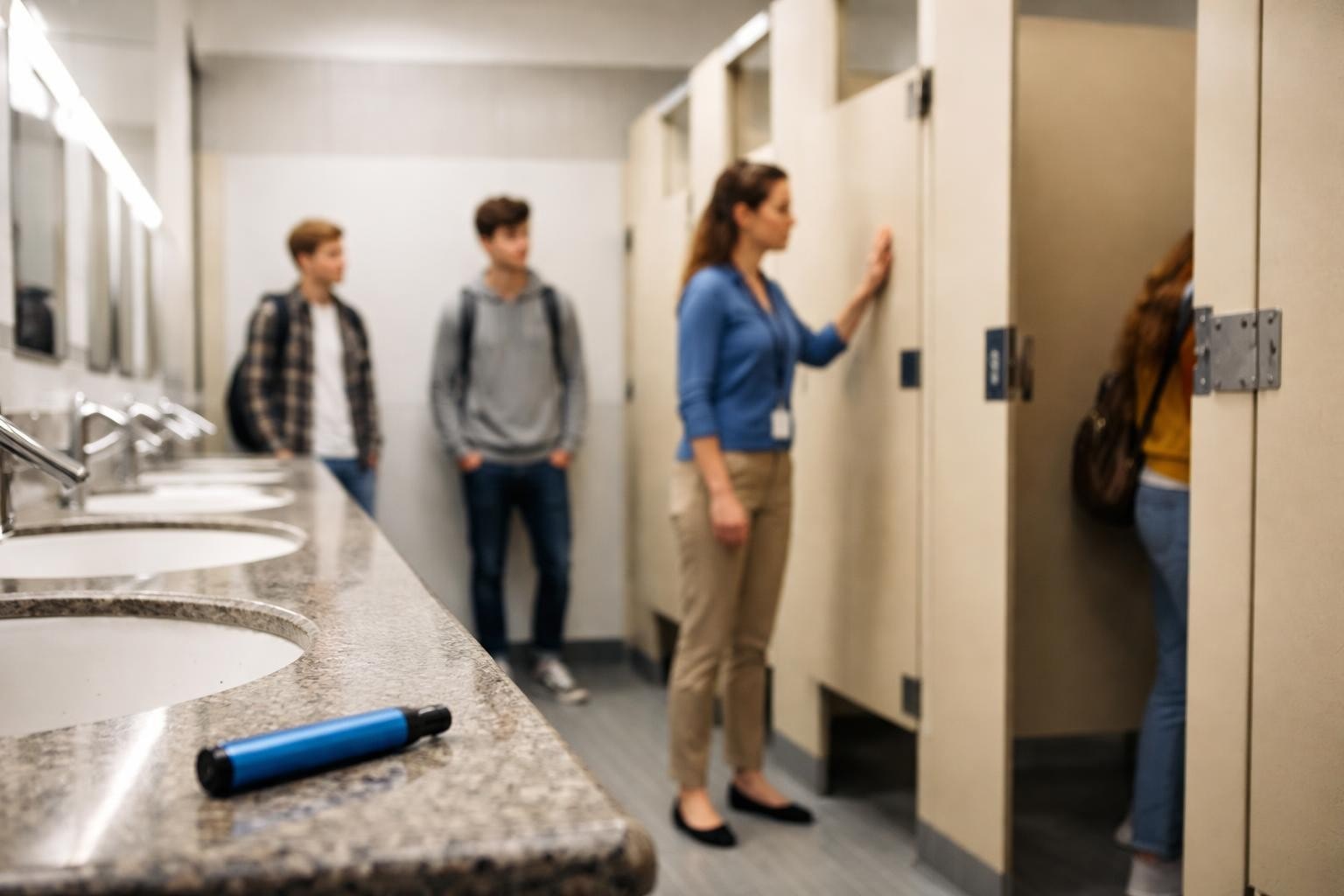
The prevalence of vaping in school toilets has escalated into one of the most pressing challenges facing educational institutions across the United Kingdom and globally. What began as an occasional occurrence has transformed into a daily struggle for schools, with students increasingly using toilet facilities as concealed locations for vaping. This behaviour not only violates school policies but also poses significant health risks, disrupts the learning environment, and creates enforcement dilemmas for educators attempting to balance supervision with student privacy.
The Scale of the Problem
Research reveals alarming statistics about the extent of vaping in school toilets, with studies indicating that 81% of students reportedly vape in these areas. This staggering figure demonstrates that toilet facilities have become the primary venue for underage vaping, transforming essential sanitary spaces into hotspots for prohibited activity.
The prevalence extends beyond isolated incidents. Schools report daily detections, with some institutions experiencing dozens of vaping episodes in toilet facilities each week. The problem affects students across all year groups, though secondary school pupils aged 13 to 16 represent the highest risk demographic.
Why Toilets Become Vaping Hotspots
Several factors contribute to the popularity of school toilets as vaping locations:
- Perceived privacy away from direct adult supervision
- Enclosed spaces that students believe contain vapour clouds
- Regular legitimate access without raising suspicion
- Peer gathering points where social dynamics encourage participation
- Limited monitoring due to privacy considerations
The social aspect cannot be understated. Vaping in school toilets often functions as a group activity, with students congregating during break times and between lessons. This creates a self-perpetuating cycle where the behaviour becomes normalised within peer groups.

Health and Safety Implications
The health consequences of vaping in school toilets extend beyond the individual user. When students vape in enclosed toilet facilities, they expose others to secondhand aerosol containing nicotine, flavouring chemicals, and potentially harmful substances.
Immediate Health Risks
Youth vaping carries particular dangers due to developing brains and bodies. Reports of students collapsing whilst vaping in school toilets highlight the acute risks associated with high nicotine concentrations. A single vaping device can deliver nicotine equivalent to multiple cigarettes, overwhelming young users who lack tolerance.
Secondary exposure presents additional concerns. Students entering toilet facilities immediately after vaping sessions breathe in residual aerosol particles. Research examining how e-cigarettes affect air quality in enclosed spaces demonstrates measurable degradation of indoor air following vaping episodes.
| Health Impact | Short-term Effects | Long-term Concerns |
|---|---|---|
| Nicotine Exposure | Increased heart rate, dizziness, nausea | Addiction, brain development interference |
| Respiratory System | Throat irritation, coughing | Potential lung damage, breathing difficulties |
| Secondhand Exposure | Eye irritation, headaches | Unknown cumulative effects |
Environmental and Facility Damage
Vaping in school toilets creates practical maintenance challenges. The aerosol residue accumulates on surfaces, mirrors, and fixtures, requiring additional cleaning. Some schools report damage to smoke detectors and ventilation systems from repeated exposure to vaping aerosols.
Custodial staff encounter discarded vaping devices, empty pods, and packaging materials. These items pose disposal challenges, particularly given concerns about battery safety and nicotine-containing waste.
The Detection Challenge
Traditional smoke detectors often fail to identify vaping aerosol, creating a significant enforcement gap. Students exploit this limitation, believing they can vape undetected in toilet facilities equipped only with conventional fire safety systems.
Schools face a fundamental dilemma: how to monitor toilet facilities effectively whilst respecting student privacy. Installing cameras inside toilets violates privacy regulations and creates safeguarding concerns, leaving many institutions without viable detection methods.
Technology-Driven Solutions
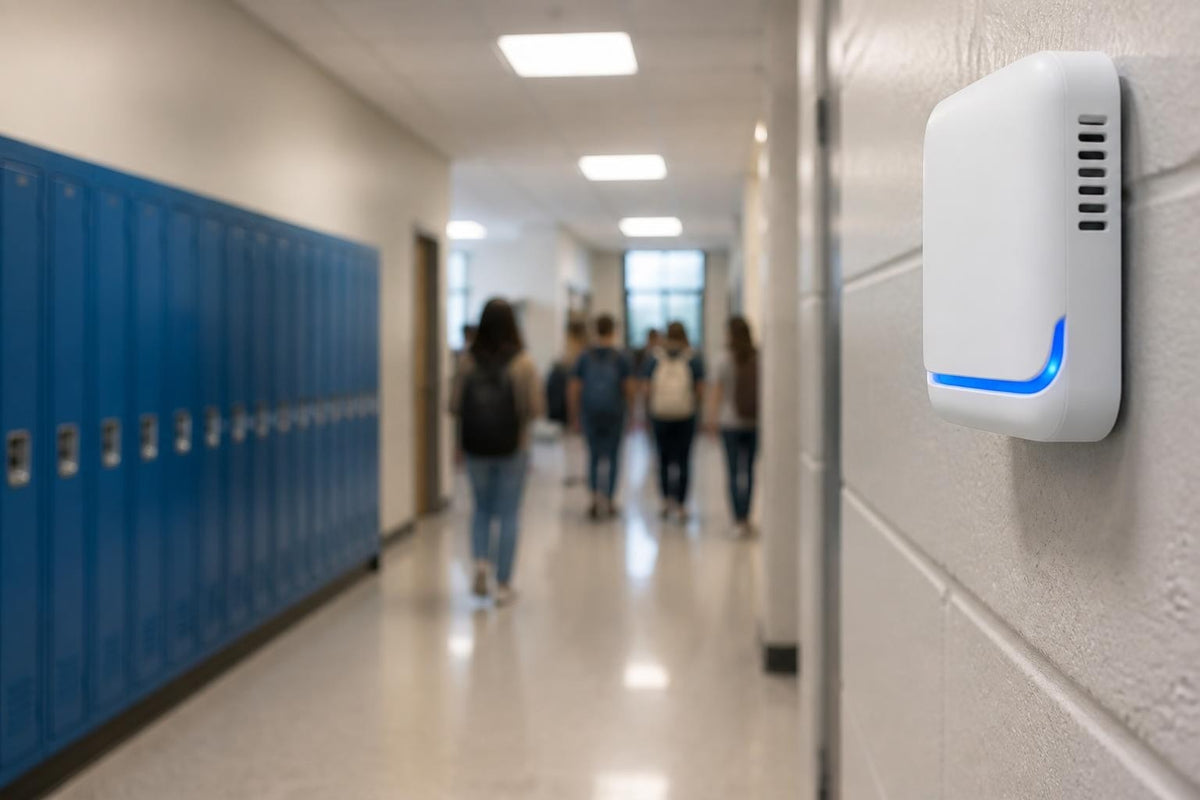
Modern vape detection technology addresses this challenge through specialised sensors that identify vaping aerosol without compromising privacy. These devices detect specific chemical signatures associated with vaping, triggering alerts when incidents occur.
The Vape Detection System represents a significant advancement in this field, combining vape detection with air quality monitoring and the ability to identify other concerning behaviours. Unlike cameras, these sensors preserve student privacy whilst providing real-time alerts to designated staff members.

Advanced detection systems offer multiple benefits beyond simply catching students vaping in toilets:
- Real-time alerts enable immediate intervention
- Data collection reveals patterns and high-risk times
- Deterrent effect reduces incidents through known monitoring
- Air quality monitoring protects overall health
- Multi-purpose detection identifies various safety concerns
Developing Effective Prevention Strategies
Addressing vaping in school toilets requires comprehensive approaches that combine technology, policy, and education. Single-method interventions typically prove insufficient against this persistent behaviour.
Multi-Layered Prevention Framework
Schools implementing successful prevention strategies typically incorporate several elements working in concert. Effective approaches to stopping vaping in school bathrooms emphasise integration across multiple domains rather than relying on isolated tactics.
Policy Development and Communication
Clear, consistently enforced policies form the foundation of any prevention programme. Students, parents, and staff must understand the rules governing vaping, the rationale behind restrictions, and the consequences for violations.
Policies should address:
- Possession and use of vaping devices
- Sanctions for first and repeat offences
- Support pathways for students struggling with nicotine addiction
- Parent notification procedures
- Confiscation and storage protocols
Educational Initiatives
Many students lack accurate information about vaping risks. Educational programmes should deliver evidence-based content about health impacts, particularly emphasising risks specific to adolescent users. Information about how vaping in school toilets affects air quality and exposes others helps students understand the broader implications beyond personal choice.
The Role of Detection Technology
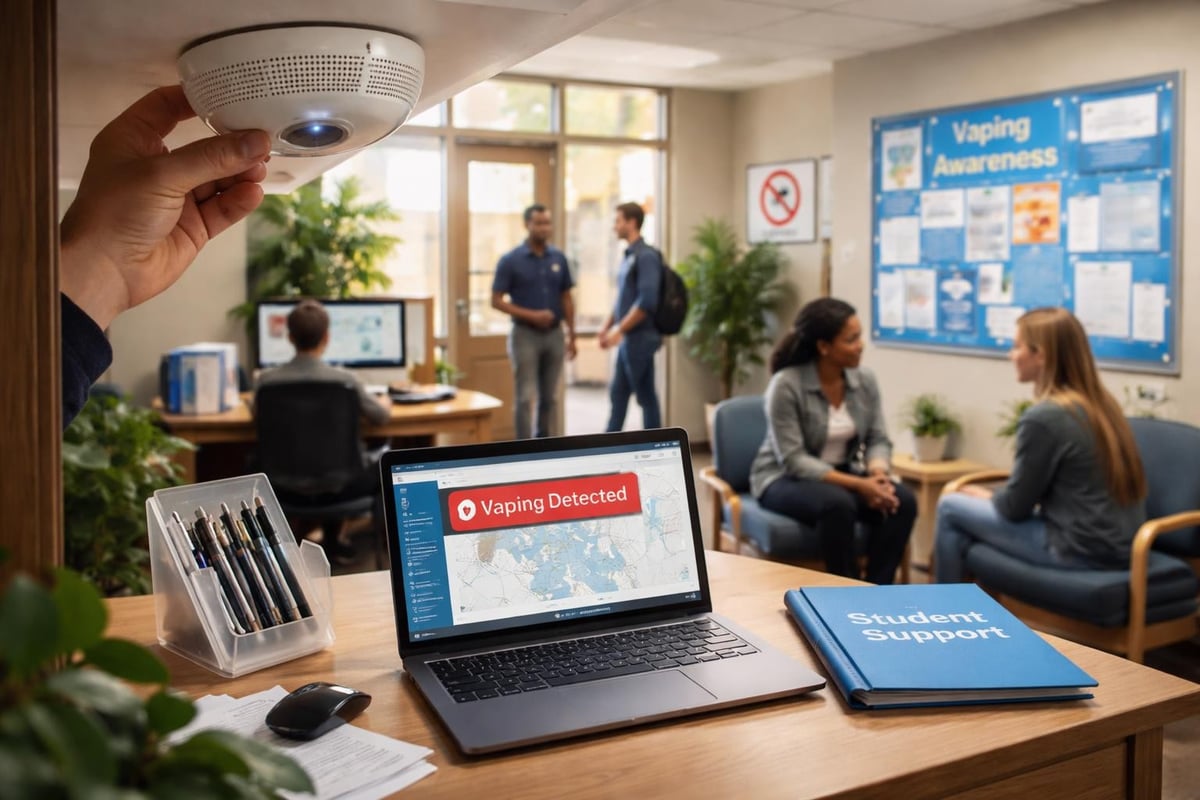
Installing vape detectors in toilet facilities sends a powerful message whilst providing practical monitoring capabilities. Real-time vape detection enables staff to respond immediately rather than discovering evidence after the fact.
| Technology Feature | Prevention Benefit | Implementation Consideration |
|---|---|---|
| Real-time alerts | Immediate intervention possible | Requires designated response personnel |
| Historical data | Identifies patterns and hotspots | Needs regular data review |
| Privacy-conscious design | Maintains student dignity | Requires clear communication about monitoring |
| Multi-detection capability | Addresses various safety concerns | Staff training on response protocols |
Schools implementing detection systems report measurable reductions in vaping incidents. One headteacher observed numerous detections immediately after installation, demonstrating both the scale of the problem and the effectiveness of technological intervention.
Social Dynamics and Peer Influence
Understanding why vaping has become normalised in school toilets requires examining the social factors driving student behaviour. Research shows that vaping has evolved into a social norm among certain peer groups, particularly in locations like school bathrooms where students gather away from adult supervision.
Peer Pressure and Group Behaviour
Toilet facilities serve as social spaces where group dynamics exert powerful influence. Students report feeling pressure to participate when friends vape, fearing social exclusion if they decline. This creates environments where vaping in school toilets becomes an expected group activity rather than individual choice.
The communal nature intensifies the behaviour. Students often share devices, take turns, and encourage reluctant peers to try vaping. This social scaffolding makes intervention more complex, as addressing individual incidents fails to dismantle the underlying group dynamics perpetuating the behaviour.
Breaking the Cycle
Disrupting established social patterns requires strategic intervention. Schools successfully reducing vaping in toilets typically:
- Deploy peer education programmes where students deliver prevention messages
- Create alternative social opportunities during high-risk times
- Identify and support student leaders within vaping-prone groups
- Address the underlying social needs that toilet-based gatherings fulfil
Working with senior leadership teams ensures whole-school approaches that address social dynamics systematically rather than through isolated interventions.
Supporting Students Who Vape
Punitive measures alone rarely resolve vaping behaviour. Students using nicotine products regularly may experience genuine addiction, requiring support beyond sanctions. Schools must balance accountability with assistance, particularly for students displaying dependent behaviours.
Intervention and Support Pathways
Effective student support incorporates several elements:
- Assessment of vaping frequency and dependence indicators
- Parent engagement to coordinate home and school responses
- Access to cessation resources tailored for young people
- Counselling addressing underlying issues driving vaping
- Monitoring and follow-up to prevent relapse
The role of designated safeguarding leads becomes crucial when vaping intersects with broader wellbeing concerns. Some students vape to manage anxiety, peer relationships, or other challenges requiring professional support beyond standard disciplinary processes.
Implementation Considerations for Schools
Schools planning to address vaping in toilets must navigate several practical considerations. Success requires coordination across multiple stakeholders and careful attention to implementation details.
Stakeholder Engagement
Different school roles contribute unique perspectives to vaping prevention efforts. Vape detectors for education settings must accommodate the needs of various stakeholders, from IT managers concerned with network integration to governors focused on policy compliance.
Budget holders need clear information about costs, installation requirements, and ongoing expenses. Maintenance teams require guidance on sensor placement, power requirements, and integration with existing building systems. Teaching staff need training on response protocols when alerts occur.
Legal and Policy Compliance
Schools must ensure vaping prevention measures comply with relevant legislation governing student privacy, data protection, and safeguarding. Detection systems should be implemented transparently, with clear communication to students and parents about monitoring purposes and data usage.
Documentation becomes essential. Schools should maintain records of incidents, interventions, and outcomes both for accountability and to demonstrate pattern analysis driving prevention strategies. This data proves invaluable when reviewing effectiveness and adjusting approaches.
Measuring Success and Adjusting Approaches
Effective vaping prevention requires ongoing evaluation and willingness to modify strategies based on results. Schools should establish clear metrics for success and regularly assess progress against these benchmarks.
Key Performance Indicators
Meaningful evaluation tracks multiple data points:
- Number of detection incidents over time
- Student survey responses about vaping prevalence
- Air quality measurements in toilet facilities
- Referrals to support services
- Repeat offence rates among individual students
- Parent feedback and engagement levels
Declining detection rates might indicate successful prevention or students finding alternative locations. Combining technological data with surveys, observations, and stakeholder feedback provides comprehensive understanding of actual behaviour changes versus displacement.
Continuous Improvement
Schools achieving sustained reductions in vaping typically review approaches quarterly, adjusting based on emerging patterns. Seasonal variations, new product types, and evolving social dynamics require responsive rather than static prevention strategies.
Sharing insights across schools accelerates learning. Case studies documenting successful interventions provide valuable templates for institutions facing similar challenges, whilst highlighting potential pitfalls to avoid.
The Broader Context
Addressing vaping in school toilets exists within larger discussions about youth vaping, public health policy, and school safety. Government research on youth vaping behaviours provides essential context for school-level interventions, highlighting factors driving uptake and opportunities for prevention.
Schools cannot solve this challenge in isolation. Effective responses require coordination with parents, public health authorities, and policymakers addressing youth access to vaping products. Whilst schools manage immediate behaviour within their facilities, broader societal responses to youth vaping determine the overall environment schools navigate.
The normalisation of vaping among young people complicates prevention efforts. When students perceive vaping as widespread and relatively harmless, school-based restrictions face resistance. Educational institutions must therefore combine immediate behavioural interventions with longer-term efforts to shift perceptions and norms around youth vaping.

Resource Allocation and Sustainability
Implementing comprehensive approaches to vaping in school toilets requires resource commitments that many institutions find challenging. Budget constraints, competing priorities, and limited staffing create barriers to ideal prevention programmes.
Cost-Benefit Analysis
Decision makers evaluating vaping prevention investments should consider both direct costs and broader implications. Detection technology involves upfront equipment expenses, installation costs, and ongoing maintenance. However, these expenditures must be weighed against costs of unaddressed vaping: health impacts on students, facility damage, staff time managing incidents, and potential liability concerns.
Schools document time savings when moving from reactive incident management to proactive detection and prevention. Staff previously spending considerable periods investigating vaping reports redirect efforts toward education and support when technological systems provide clear incident data.
Funding Strategies
Schools employ various approaches to fund vaping prevention initiatives:
- Incorporating costs into existing safety and wellbeing budgets
- Seeking grants focused on student health or air quality
- Coordinating purchases across multi-academy trusts for economies of scale
- Engaging parent associations in fundraising for health initiatives
- Partnering with public health departments for shared funding
Multi-academy trusts often achieve better value through coordinated procurement and shared learning across member schools, creating consistency whilst reducing per-school costs.
Vaping in school toilets represents a complex challenge requiring comprehensive, evidence-based responses that balance detection, education, support, and policy enforcement. Schools successfully addressing this issue combine modern technology with clear communication, consistent policies, and genuine support for students struggling with nicotine dependence. If your institution needs reliable solutions for detecting and preventing vaping whilst maintaining student privacy and improving overall air quality, Vape Guardian offers advanced monitoring systems designed specifically for educational environments, backed by dedicated UK-based support to help create safer, healthier schools.








Share:
Multi Site Vape Detection System: Complete Guide 2026
Vape Detector with Push Notifications: Complete Guide