
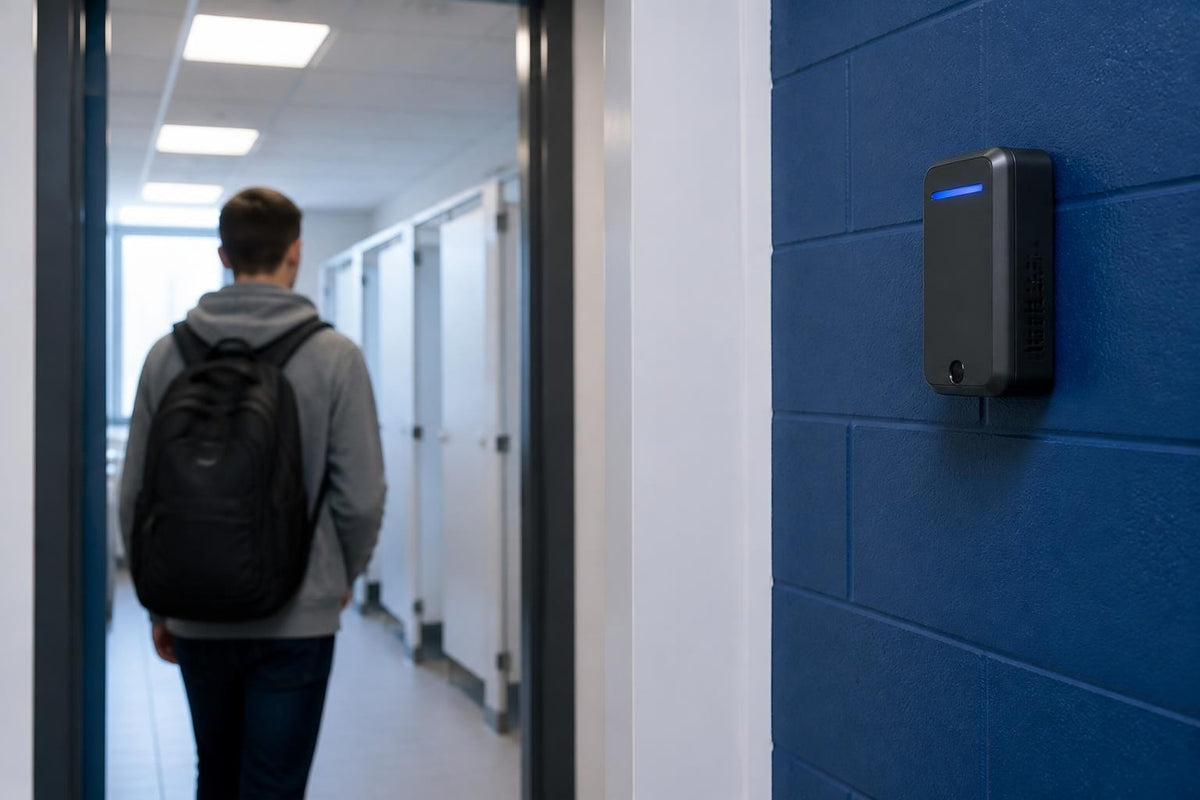
The surge in youth vaping across the United Kingdom has prompted educational institutions to seek technological solutions that balance safety with privacy. Schools face mounting pressure from parents, governors, and public health authorities to address vaping on campus, whilst simultaneously navigating complex questions about student rights, effectiveness, and resource allocation. Vaping detectors for schools have emerged as one tool in this multifaceted challenge, offering real-time monitoring capabilities that traditional supervision cannot provide. This guide examines the practical realities of implementing vaping detection technology in educational settings, from technical specifications to policy considerations.
Understanding the Technology Behind Vaping Detectors for Schools
Modern vaping detection systems operate through sophisticated air quality sensors that identify specific chemical signatures associated with vaping aerosols. These devices analyse particulate matter, volatile organic compounds, and other airborne substances to distinguish between vaping emissions and everyday environmental changes.
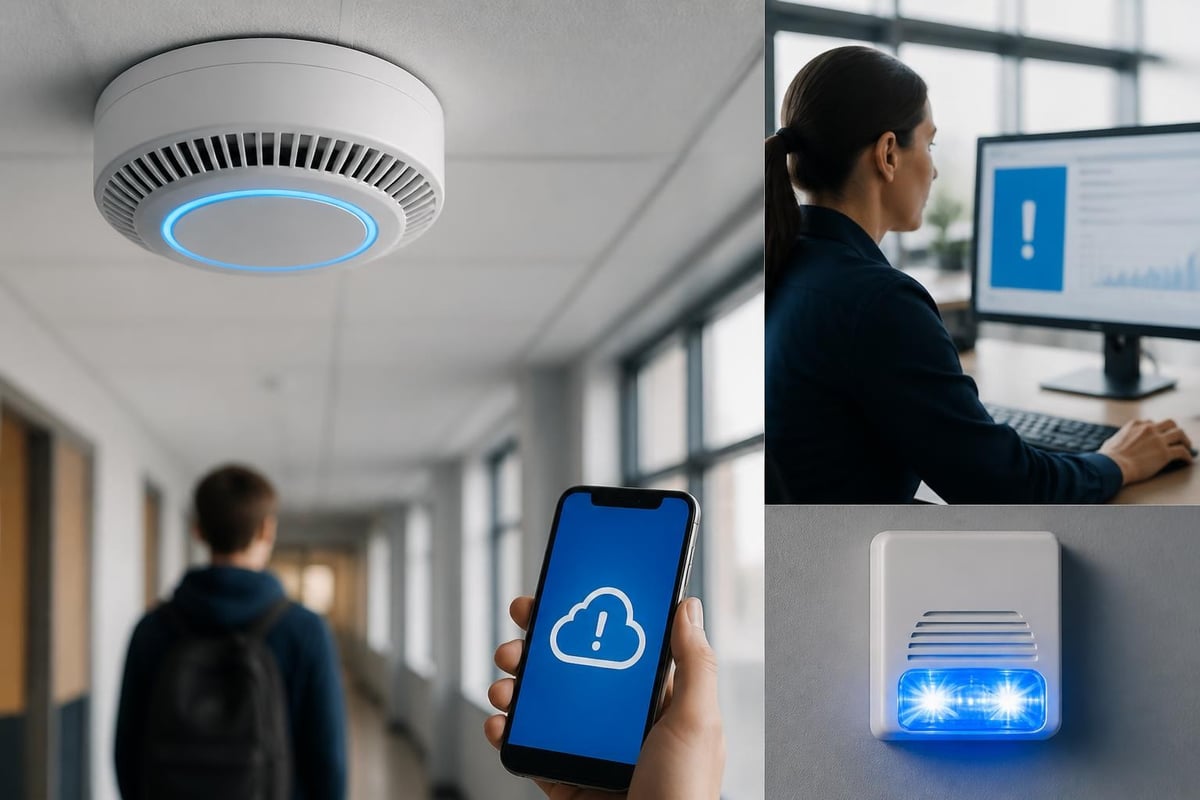
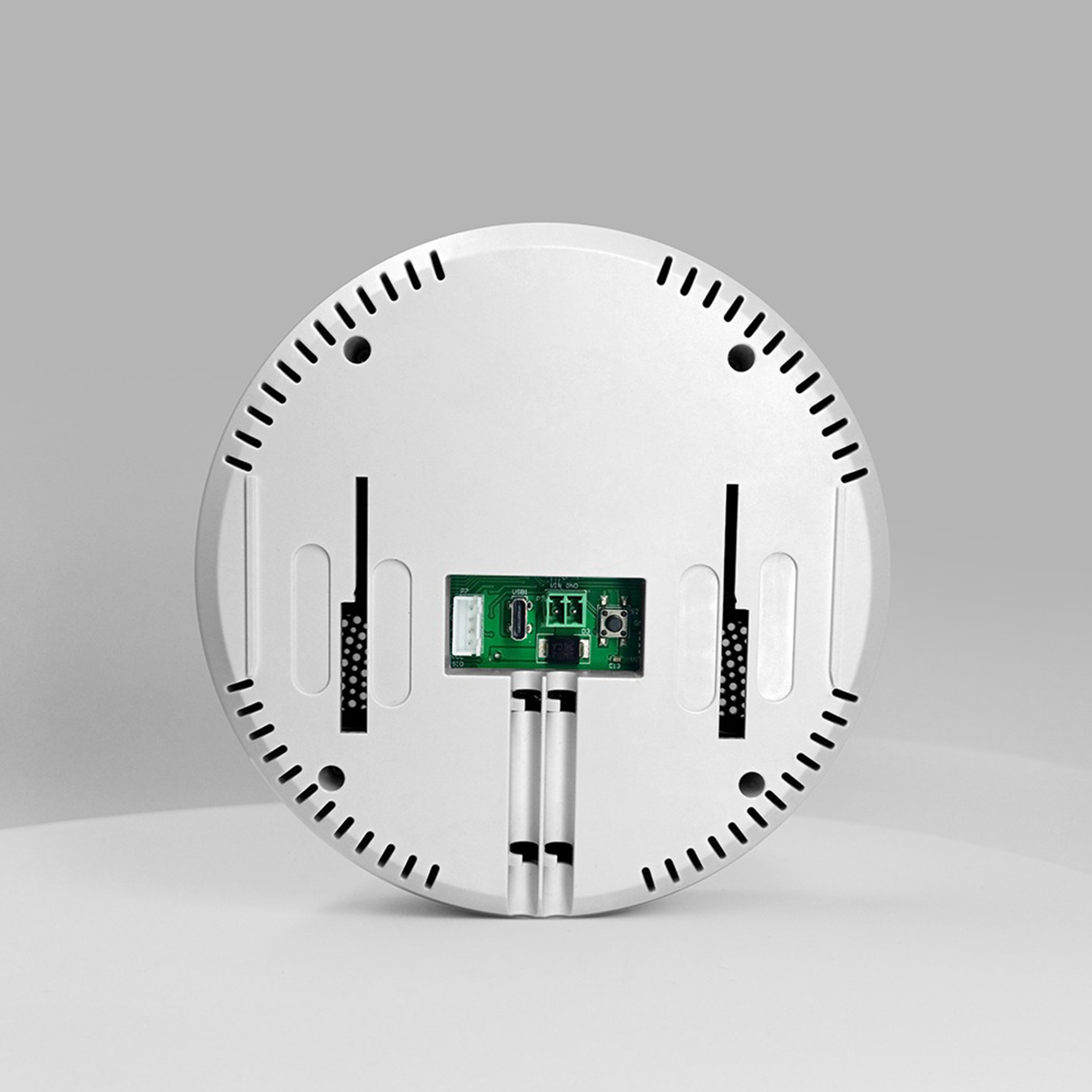
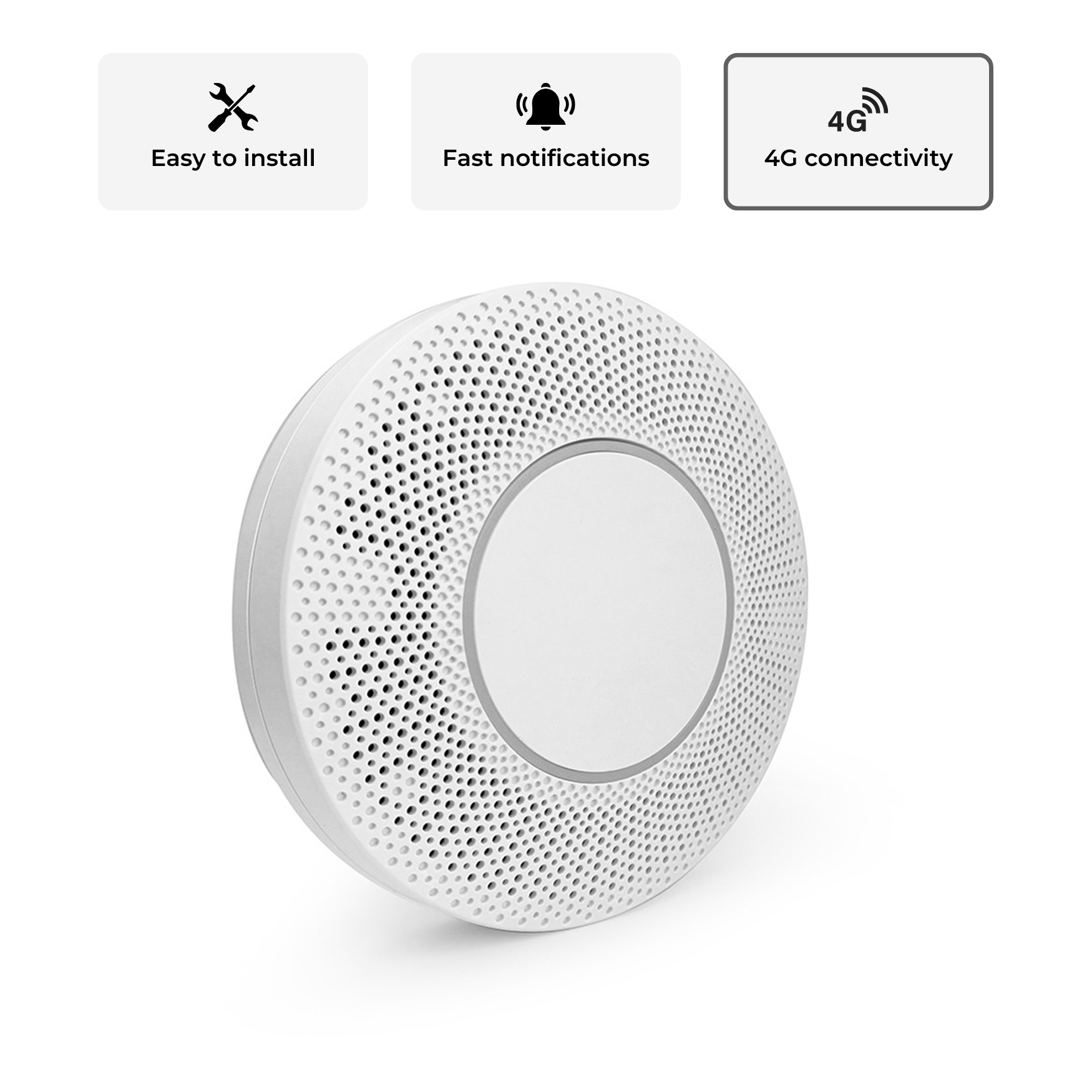
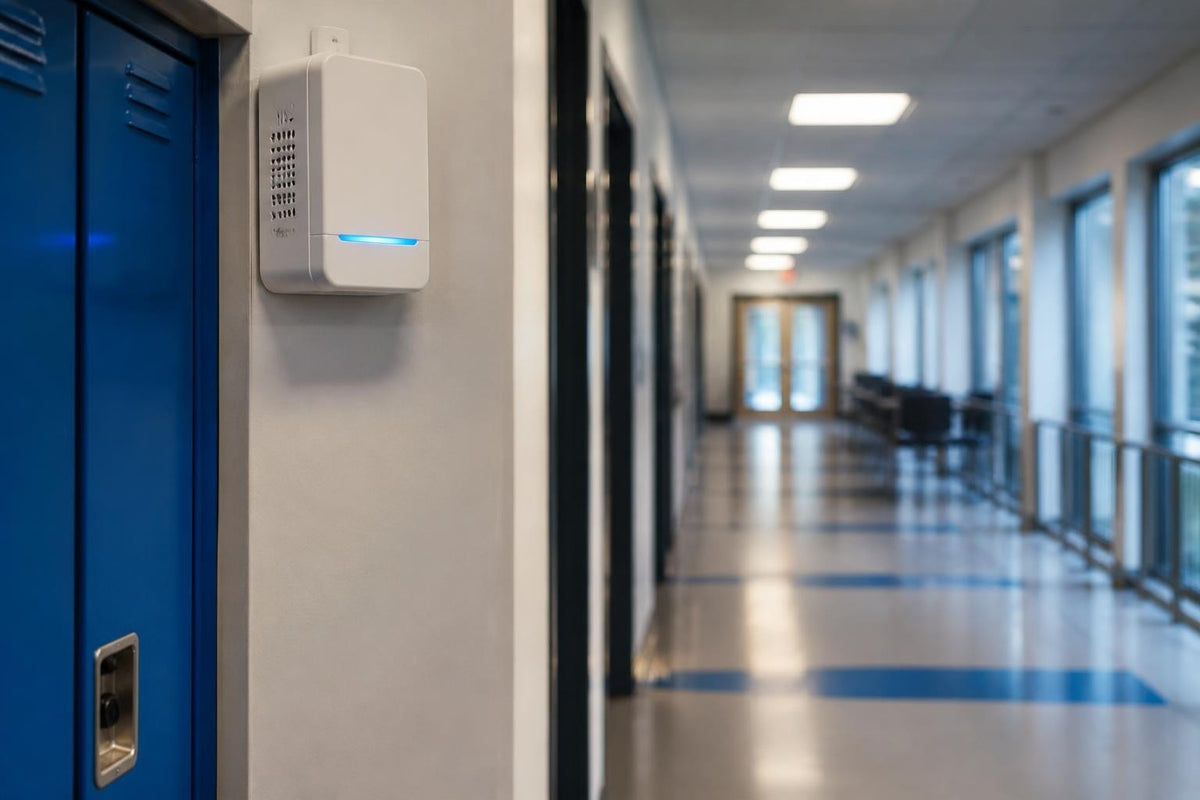
The sensors typically mount on ceilings or walls in areas where visual supervision is limited, such as toilets, changing rooms, and corridor alcoves. When the system detects vaping activity, it triggers immediate alerts to designated staff members through mobile applications, email notifications, or integration with existing security platforms.
Core Detection Capabilities
Most vaping detectors for schools measure multiple environmental parameters simultaneously:
- Particulate matter (PM2.5 and PM10) to identify aerosol clouds
- Volatile organic compounds (VOCs) present in vape liquids
- Temperature and humidity fluctuations that accompany vaping
- Sound detection for identifying unusual activity
- Air quality metrics for comprehensive environmental monitoring
The Vape Detection System combines these capabilities with anti-social behaviour monitoring, providing schools with a comprehensive approach to creating safer environments. This integration means the same hardware can detect not only vaping but also potential bullying incidents or vandalism through acoustic monitoring.

| Detection Method | What It Monitors | Response Time | False Positive Risk |
|---|---|---|---|
| Particulate sensors | Aerosol density | 2-5 seconds | Low to moderate |
| VOC analysis | Chemical compounds | 5-10 seconds | Low |
| Sound detection | Noise patterns | Immediate | Moderate |
| Combined multi-sensor | All parameters | 2-10 seconds | Very low |
Advanced systems learn baseline environmental conditions for each monitored space, reducing false alerts caused by cleaning products, air fresheners, or other legitimate sources of airborne particles. This adaptive intelligence proves essential for maintaining staff confidence in the technology.
Implementation Challenges and Practical Considerations
Installing vaping detectors for schools involves more than simply mounting hardware. Educational institutions must navigate technical, legal, and cultural dimensions that determine whether the technology achieves its intended outcomes.
Privacy and Legal Framework
The UK's Data Protection Act 2018 and GDPR requirements apply to all monitoring technologies deployed in schools. Whilst vaping detectors do not typically capture video or photographic evidence, sound detection features raise questions about recording conversations or identifying individuals through voice patterns.
Schools must conduct thorough Data Protection Impact Assessments before deployment, ensuring that monitoring is proportionate, necessary, and compliant with privacy legislation. The ACLU research on educational technology surveillance highlights concerns that extend beyond vaping detection to broader questions about normalising surveillance in educational environments.
Key legal considerations include:
- Clear signage informing students and staff about monitored areas
- Documented justification for technology deployment
- Regular reviews of data retention and access policies
- Transparent communication with parents and governors
- Staff training on appropriate response to alerts
Technical Infrastructure Requirements
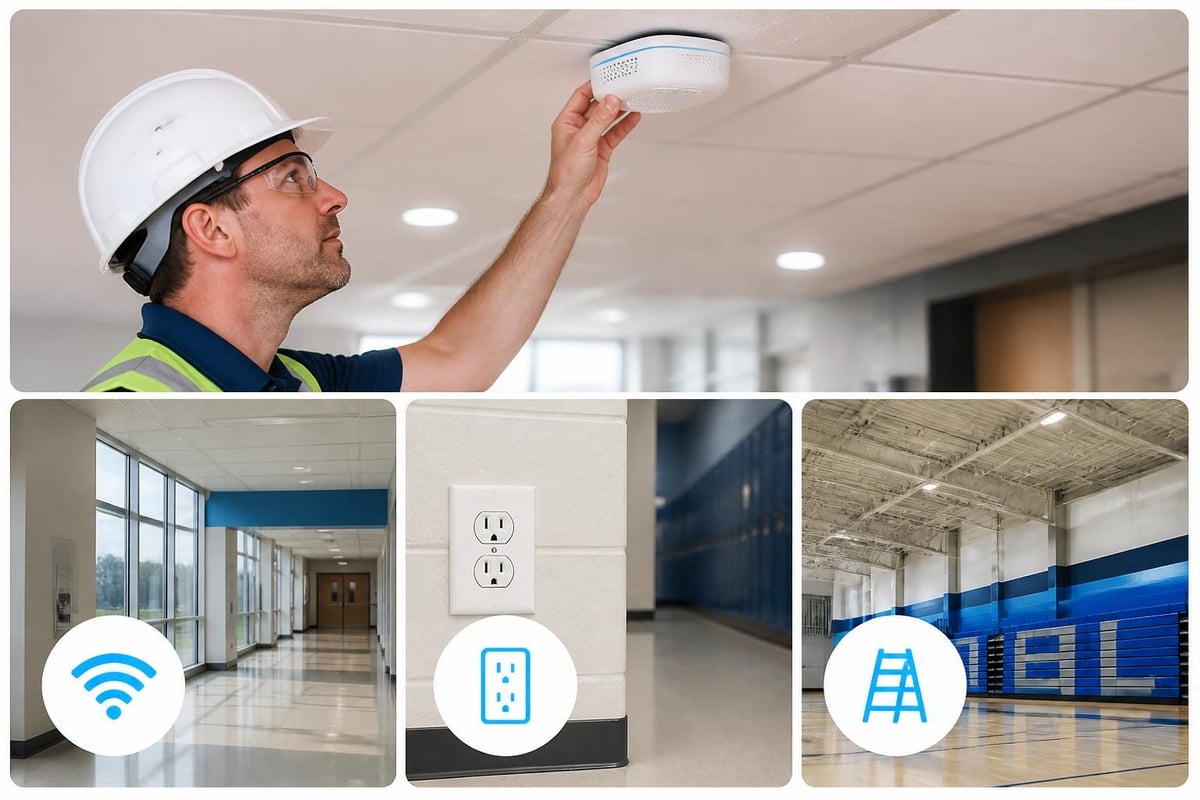
Successful deployment depends on existing IT infrastructure and facilities management capabilities. Most vaping detectors for schools require reliable Wi-Fi connectivity, power sources, and integration with notification systems.
Buildings with concrete construction may experience signal degradation, necessitating additional wireless access points or mesh networking solutions. Older facilities might lack adequate electrical outlets in optimal sensor locations, requiring professional electrical work that increases installation costs.
Evidence, Effectiveness, and Alternative Approaches
The question "do vaping detectors work?" requires examining both technical performance and broader behavioural outcomes. IEEE Spectrum's examination of AI-powered detection systems reveals that whilst sensors reliably identify vaping activity, their impact on overall vaping rates varies significantly across implementations.
Research suggests that technology alone rarely eliminates vaping behaviour. Schools reporting success typically combine detection with comprehensive education programmes, accessible cessation support, and clear, consistently enforced policies. Those treating sensors as a complete solution often experience displacement rather than reduction, with students simply moving to unmonitored locations.
What the Evidence Shows
| Study Focus | Key Finding | Implication for Schools |
|---|---|---|
| Detection accuracy | 85-95% successful identification | Technology performs reliably under normal conditions |
| Behavioural change | 30-60% reduction in monitored areas | Effectiveness depends on complementary interventions |
| Displacement effect | 40-70% of activity moves to unmonitored spaces | Comprehensive coverage and education necessary |
| Student perception | Mixed views on privacy versus safety | Communication and transparency critical |
The Santa Clara County Office of Education guidance recommends that districts carefully consider whether detector investment represents the most effective use of limited resources, particularly when weighed against evidence-based prevention programming and cessation support.
Building a Comprehensive Response
Effective anti-vaping strategies incorporate multiple elements:
- Education initiatives that address health risks, social pressures, and industry marketing tactics
- Support services including counselling and nicotine replacement therapy access
- Environmental design that increases natural supervision without intrusive monitoring
- Policy clarity with consistent consequences and opportunities for behavioural support
- Technology deployment as one component within a broader framework
Schools that view vaping detectors for schools as enforcement tools often struggle with adversarial relationships between staff and students. Those positioning technology within a health and wellbeing framework tend to achieve better outcomes and student cooperation.
Funding, Costs, and Return on Investment
The financial dimension of vaping detection extends beyond initial hardware costs to encompass installation, maintenance, staff time, and opportunity costs of alternative interventions.
Purchase prices for individual sensors typically range from £400 to £1,200, depending on capabilities and vendor. A comprehensive installation covering toilets, changing rooms, and other vulnerable spaces in a secondary school of 1,000 students might require 15 to 25 units, representing an investment of £6,000 to £30,000 before installation and subscription fees.
Education Week's reporting on JUUL settlement funding reveals that many schools have accessed dedicated funding streams for anti-vaping technology, though these resources are not universally available across the UK.
Total Cost of Ownership Breakdown
Initial Costs:
- Hardware units: £400-£1,200 per sensor
- Professional installation: £100-£300 per unit
- Network infrastructure upgrades: £0-£5,000
- Staff training: £500-£2,000
Ongoing Costs:
- Software subscriptions: £50-£150 per sensor annually
- Maintenance and calibration: £100-£200 per sensor annually
- Staff time responding to alerts: Variable
- Replacement units: Budget 10-15% annually
Schools must also consider less tangible returns such as reduced disruption to lessons, improved air quality in shared spaces, and the deterrent effect on vaping initiation. These benefits prove difficult to quantify but factor into leadership decisions about resource allocation.
Comparing this investment to alternatives such as additional pastoral support staff, health education programmes, or environmental modifications provides important context. Many education authorities recommend comprehensive cost-benefit analysis before committing to technology solutions.
Staff Training and Response Protocols
Technology deployment without adequate staff preparation often fails to achieve intended outcomes. Vaping detectors for schools generate alerts that require timely, appropriate responses from educators who may have limited experience addressing substance use issues.
Essential Training Components
Effective staff development programmes address:
- Technical operation including alert interpretation, system management, and troubleshooting
- Appropriate responses balancing immediate intervention with pastoral support
- Legal and safeguarding considerations ensuring compliance with student rights and welfare duties
- Communication skills for discussing vaping with students in non-confrontational ways
- Referral pathways connecting students to cessation support and counselling services
Staff members responsible for alert response need clear protocols that specify actions, timescales, and escalation procedures. Ambiguity about who should respond or what constitutes an appropriate intervention undermines both the technology's effectiveness and staff confidence.
The most successful implementations designate specific team members as primary responders, ensuring consistency and building expertise. These individuals often combine pastoral care backgrounds with technical competence, approaching alerts as opportunities for support rather than punishment.
Integration with Broader School Safety Systems
Modern vaping detectors for schools increasingly function as components within comprehensive safety ecosystems rather than standalone devices. This integration amplifies their value whilst distributing costs across multiple safety and wellbeing objectives.
Many systems connect with existing security platforms, building management systems, and communication infrastructure. When a sensor detects vaping, it can trigger responses across multiple systems simultaneously: alerting designated staff, recording the incident in behaviour management software, adjusting ventilation in the affected space, and generating reports for safeguarding reviews.
Schools already investing in smart building sensors and indoor air quality monitoring find that adding vaping detection capabilities represents a marginal cost increase rather than entirely new infrastructure.
Multi-Purpose Sensor Benefits
| Application | How Vaping Sensors Support | Additional Value |
|---|---|---|
| Air quality management | PM2.5 monitoring for ventilation control | Improved respiratory health for all occupants |
| Incident documentation | Timestamped alerts for safeguarding records | Evidence for serious case reviews if needed |
| Environmental compliance | VOC tracking for regulatory reporting | Demonstrates due diligence to inspectors |
| Behaviour pattern analysis | Aggregated data showing trends and hotspots | Informs targeted interventions and resource allocation |
This integrated approach aligns with recommendations from schools tackling vaping through comprehensive strategies rather than isolated technological fixes.
Addressing Public Health Perspectives
Not all stakeholders view vaping detectors for schools as appropriate or effective interventions. The American Lung Association's position emphasises education and cessation support over enforcement-focused technologies, arguing that detection without adequate support services may increase student distrust and reduce help-seeking behaviour.

Public health advocates stress that vaping often represents a response to stress, peer pressure, or underlying mental health challenges. Technological detection that leads primarily to punishment may address symptoms whilst neglecting root causes, potentially driving behaviour further underground.
Schools navigating these perspectives often adopt hybrid approaches that use detection to identify students who need support rather than simply enforce consequences. This reframing positions sensors as tools for early intervention and resource allocation rather than surveillance and control.
Balancing Detection with Support
Progressive implementations include:
- Automatic referrals to school counsellors or health services following detection
- Restorative conversations focused on understanding motivations and barriers to quitting
- Peer support programmes connecting detected students with trained student mentors
- Family engagement involving parents as partners in supporting behaviour change
- Community resources providing access to NHS stop smoking services and youth programmes
These approaches require more staff time and expertise than simple enforcement but align with schools' broader safeguarding and wellbeing responsibilities. They also address concerns raised by civil liberties organisations about disproportionate impacts on vulnerable student populations.
Privacy, Consent, and Student Voice
The deployment of monitoring technology in spaces where students have reduced privacy expectations generates ongoing debate about proportionality and necessity. Whilst toilets and changing rooms represent common vaping locations, they also serve as refuge spaces where students escape social pressures and academic demands.
Meaningful student consultation before technology deployment rarely occurs, despite young people being the primary subjects of monitoring. Schools that engage student councils, conduct surveys, or facilitate focus groups often discover valuable insights about implementation approaches, communication strategies, and unintended consequences.
Student perspectives frequently highlight:
- Concerns about being monitored in spaces traditionally offering privacy
- Scepticism about whether detection addresses underlying reasons for vaping
- Suggestions for positive incentive programmes rather than enforcement
- Requests for accessible cessation support without stigma or punishment
- Anxiety about false positives affecting innocent students
Transparent communication about what sensors detect, how alerts are used, and safeguards against misuse helps build community understanding. Schools that position detection within health and safety frameworks rather than disciplinary approaches tend to experience less resistance and better cooperation.
Understanding how to stop vaping at school requires acknowledging that lasting behaviour change emerges from intrinsic motivation and adequate support, not simply increased detection probability.
Future Developments and Emerging Trends
Vaping detection technology continues evolving rapidly, with manufacturers developing enhanced capabilities and integration options. Artificial intelligence and machine learning increasingly enable systems to distinguish between different types of vaping devices, identify specific substances, and predict usage patterns based on environmental and temporal factors.
Emerging Capabilities on the Horizon
Enhanced substance identification will allow sensors to differentiate between nicotine vaping, THC products, and other substances, enabling more targeted interventions and accurate risk assessment.
Predictive analytics aggregate historical data to identify high-risk times, locations, and environmental conditions, allowing proactive resource deployment rather than reactive responses.
Wearable integrations may eventually enable personal air quality monitoring that alerts individual students to secondhand exposure without location-specific surveillance.
Blockchain verification could provide tamper-proof audit trails for regulatory compliance whilst maintaining privacy through distributed data architecture.
The regulatory landscape continues shifting as well. Updated UK school vaping laws and guidance from the Department for Education influence how schools approach both the vaping issue broadly and technological interventions specifically.
Schools considering investment in vaping detectors for schools should evaluate vendor roadmaps, upgrade pathways, and long-term support commitments to ensure that hardware purchased in 2026 remains capable and compliant through subsequent years of use.
Making Informed Decisions About Deployment
The choice to implement vaping detection technology represents a significant institutional commitment that extends beyond financial investment to encompass culture, relationships, and educational priorities. School leaders navigating this decision benefit from structured evaluation frameworks that weigh multiple factors.
Decision Framework Questions
Before proceeding with deployment, governing bodies and leadership teams should address:
- Need assessment: What evidence demonstrates that vaping on campus requires technological intervention beyond existing approaches?
- Alternative evaluation: Have evidence-based educational and support programmes been fully implemented and assessed?
- Resource alignment: How does detector investment compare to funding pastoral support, health education, or environmental modifications?
- Privacy proportionality: Can the school demonstrate that monitoring in semi-private spaces is necessary and proportionate to risks?
- Support infrastructure: Are cessation services, counselling, and health resources available to support detected students?
- Community engagement: Have students, parents, and staff been consulted about implementation approaches and concerns?
- Success metrics: What specific, measurable outcomes will determine whether the technology achieves its purposes?
Schools that thoughtfully address these questions position themselves to make informed decisions aligned with their specific contexts, values, and student populations. Those rushing to adopt technology without adequate preparation often encounter implementation challenges, community resistance, and disappointing outcomes.
Resources from Vape Guardian's schools blog provide additional guidance on policy development, implementation planning, and best practices drawn from educational institutions across the UK.
Vendor Selection and System Evaluation
Not all vaping detectors for schools offer equivalent capabilities, reliability, or support. Schools evaluating suppliers should apply rigorous selection criteria that extend beyond initial purchase price to encompass total ownership costs and vendor responsiveness.
Critical Evaluation Criteria
| Factor | What to Assess | Why It Matters |
|---|---|---|
| Detection accuracy | Published sensitivity and specificity data | Determines false positive and negative rates |
| Response time | Alert latency from detection to notification | Affects intervention timeliness |
| Integration capabilities | Compatibility with existing systems | Influences implementation complexity and cost |
| Privacy features | Data encryption, storage, and access controls | Ensures GDPR compliance and builds trust |
| Support quality | Training, maintenance, and troubleshooting availability | Impacts long-term success and staff confidence |
| Upgrade pathway | Software updates and hardware refresh options | Protects technology investment over time |
Reference installations at comparable schools provide valuable insights into real-world performance, implementation challenges, and vendor support quality. Site visits and conversations with existing customers reveal practical considerations that marketing materials may not address.
Understanding what makes effective vape detection technology helps evaluation teams distinguish between marketing claims and substantive capabilities that deliver measurable value in educational settings.
Vaping detectors for schools represent one tool among many for addressing youth vaping, most effective when integrated within comprehensive health, education, and support frameworks rather than deployed as standalone enforcement mechanisms. Schools must balance technological capabilities against privacy considerations, resource constraints, and evidence about what genuinely changes student behaviour. By combining thoughtful implementation with robust support services and meaningful student engagement, educational institutions can create safer environments that prioritise wellbeing over surveillance. Vape Guardian provides advanced detection systems specifically designed for educational settings, combining reliable monitoring with real-time alerts and comprehensive support to help schools protect student health whilst respecting privacy and dignity.




Share:
Sensors to Detect Vaping: Technology & Implementation
Vaping Detectors for Bathrooms: A Complete 2026 Guide