
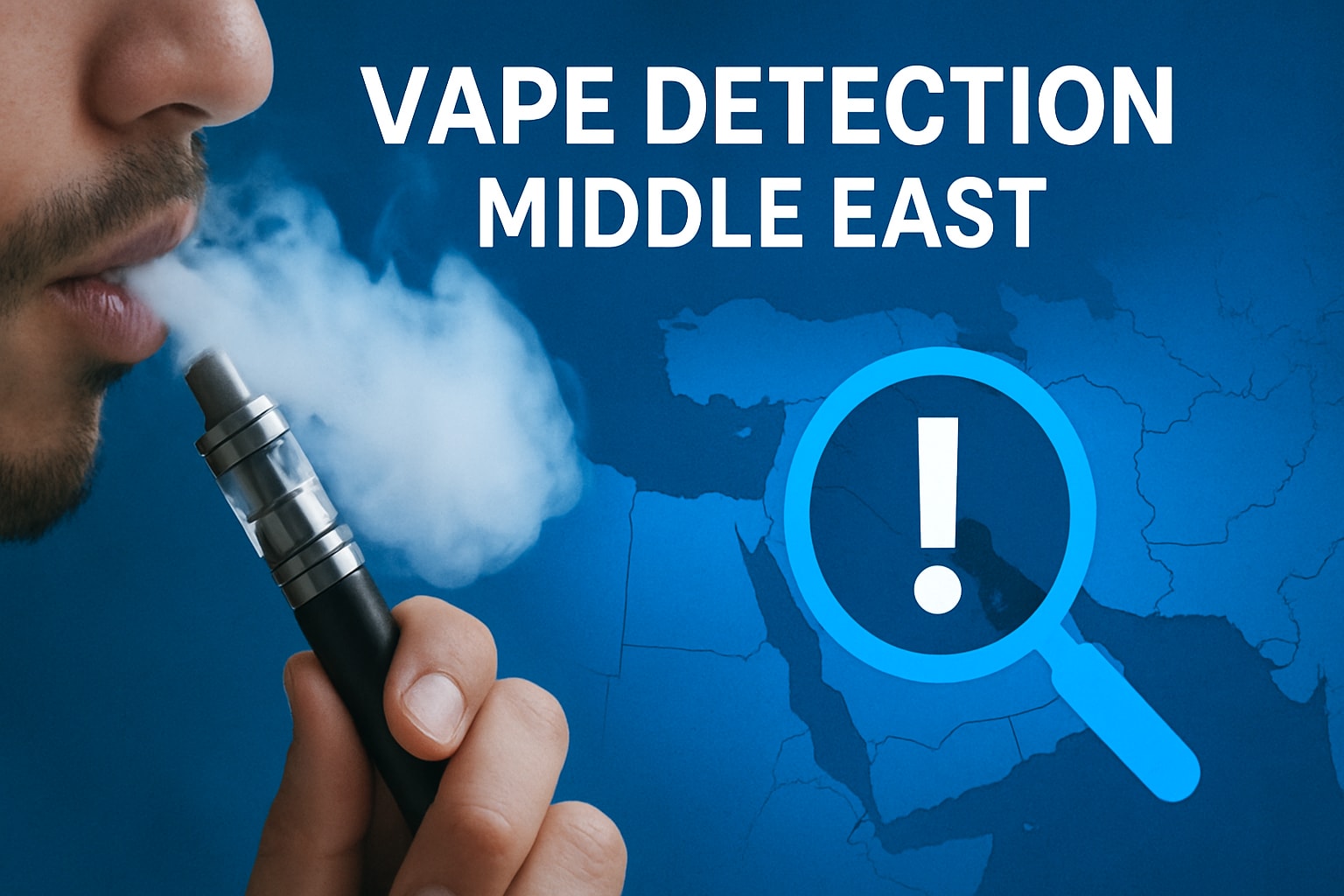
Vaping is rising rapidly across the Middle East, with countries like the UAE seeing vape sales jump by 25 percent from 2022 to 2024. This surge has created an urgent demand for vape detection middle east solutions that can keep pace with shifting regulations and public health concerns.
This guide delivers essential insights into vape detection middle east for 2026, giving you a clear understanding of the regulatory landscape, the latest technology, and practical steps for successful implementation.
Explore the region’s unique challenges, discover innovative detection strategies, and learn how expert guidance can help you create safer, compliant environments.
Vape Detection in the Middle East: Current Landscape and 2026 Outlook
Vaping has seen a remarkable surge in popularity across the Middle East, prompting urgent action among public health officials, educators, and facility managers. The need for robust vape detection middle east solutions is clear, as communities face rising youth usage and shifting attitudes. Understanding the current landscape and what lies ahead by 2026 is critical for those seeking effective strategies to address this growing trend.

Regional Trends and Vaping Prevalence
Vaping is rapidly gaining traction in the Middle East, especially among younger populations. Across countries like the UAE, Saudi Arabia, and Qatar, the number of vape users has increased steadily over the past few years. For example, the UAE reported a 25 percent rise in vape sales between 2022 and 2024. Public health experts are increasingly concerned about youth uptake, with recent research highlighting substantial vaping rates among university students in Arab countries (Vaping prevalence among university students in Arab countries). Compared globally, these trends reflect both local and international challenges. Societal attitudes toward vaping remain mixed, with some communities viewing it as a lesser evil compared to smoking, while others see it as a serious health risk. This dynamic environment underscores the necessity for advanced vape detection middle east initiatives.
Regulatory Environment and Compliance
Regulations governing vaping are evolving quickly in the Middle East. Many countries have introduced strict laws around the sale and use of e-cigarettes, particularly in public and educational settings. Below is a summary of current regulations in key countries:
| Country | Vape Laws (2024) | Anticipated Changes (2026) |
|---|---|---|
| UAE | Restricted, age limits | Tighter school bans |
| Saudi Arabia | Regulated sale, bans in institutions | Broader public restrictions |
| Qatar | Sales limited, public ban | Increased enforcement |
| Kuwait | Age limits, public ban | Stricter compliance checks |
Enforcement remains challenging due to differing regional approaches and resource constraints. Educational institutions are often at the forefront, implementing comprehensive vape bans and compliance protocols. These changes highlight the central role of vape detection middle east solutions in meeting legal requirements and protecting public health.
Demand for Vape Detection Solutions
The demand for vape detection middle east technologies is on the rise, fuelled by the need to safeguard health, ensure safety, and comply with evolving regulations. Schools, offices, hospitality venues, and public spaces are all seeking reliable systems to detect and deter vaping activities. Government bodies and private sector leaders are launching pilot programmes and awareness campaigns to address this issue. For instance, the Ministry of Education has introduced vape detection pilots in schools, aiming to create healthier learning environments. As awareness grows, more organisations are investing in advanced detection solutions to stay ahead of compliance and public expectation.
Key Stakeholders and Decision Makers
A successful vape detection middle east strategy depends on the collaboration of multiple stakeholders. Facility managers, compliance officers, and IT departments are directly responsible for the selection and operation of detection systems. Government health authorities set guidelines and enforce standards, while community groups and parents play an active role in supporting prevention efforts. The involvement of these varied stakeholders ensures that detection systems are chosen, installed, and maintained with both regulatory compliance and community trust in mind.
Socioeconomic and Cultural Considerations
Introducing vape detection middle east measures requires careful attention to local customs and privacy expectations. Many communities in the region are sensitive to surveillance, especially in educational or religious settings. Balancing the need for effective detection with respect for cultural norms is crucial. Acceptance and enforcement of vape detection can vary widely, shaped by socioeconomic factors and regional practices. Tailoring solutions to fit these unique needs will be essential for long-term success and community engagement.
Vape Detection Technologies: Innovations and Best Practices for 2026
Vape detection middle east solutions have transformed rapidly, keeping pace with evolving vaping habits and regulatory demands. In 2026, facilities across the region require robust systems that blend accuracy, real-time insights, and integration with wider safety infrastructure. The following explores key technologies, practical implementation steps, and proven results in the region.
Types of Vape Detection Systems
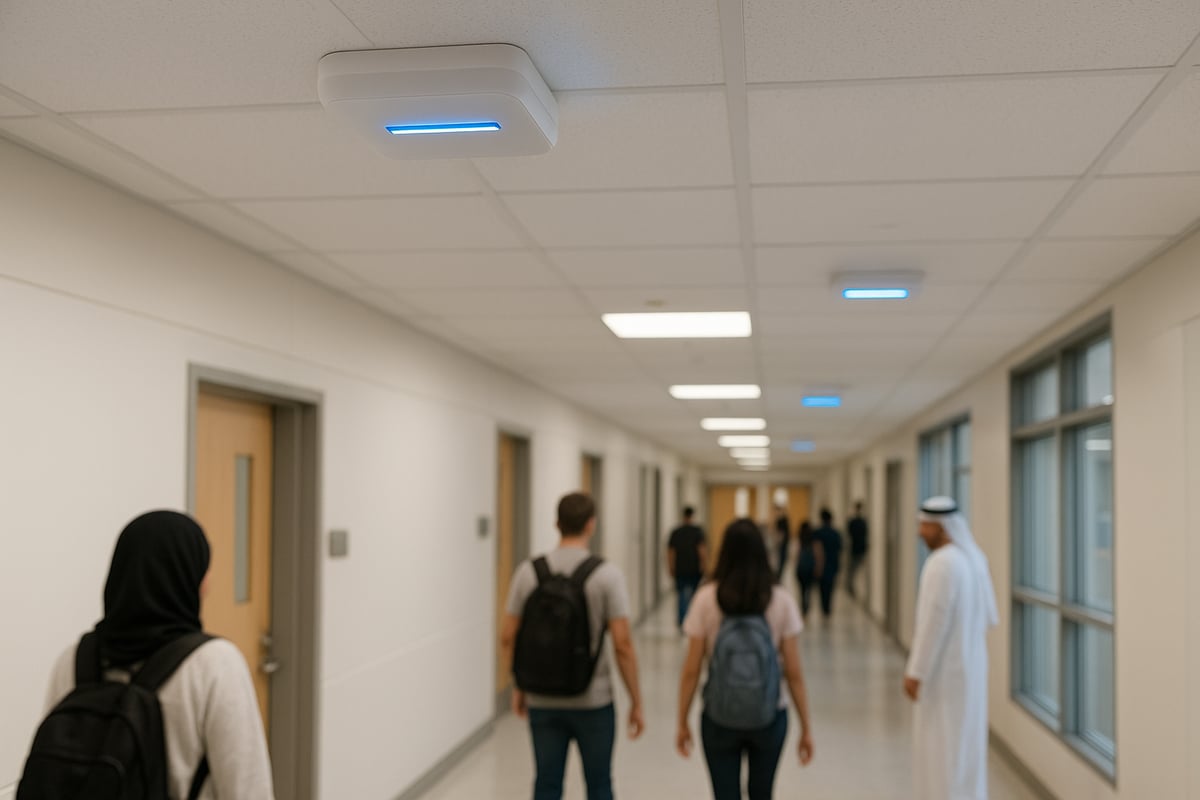
Vape detection middle east solutions come in several forms, each tailored to address specific environments and challenges. Sensor-based systems use chemical sensors to identify vapour signatures, making them suitable for smaller, enclosed areas. AI-driven systems harness machine learning to recognise patterns and distinguish between vaping and other airborne particles, which is crucial for locations with variable air quality. Hybrid systems combine both approaches, offering enhanced detection accuracy and reliability.
Facilities benefit from choosing systems based on their unique needs. For a deeper look at the technology behind these solutions, see this smart sensor technology for vaping resource. Selecting the right system ensures effective vape detection middle east implementation and supports compliance goals.
Key Features and Capabilities
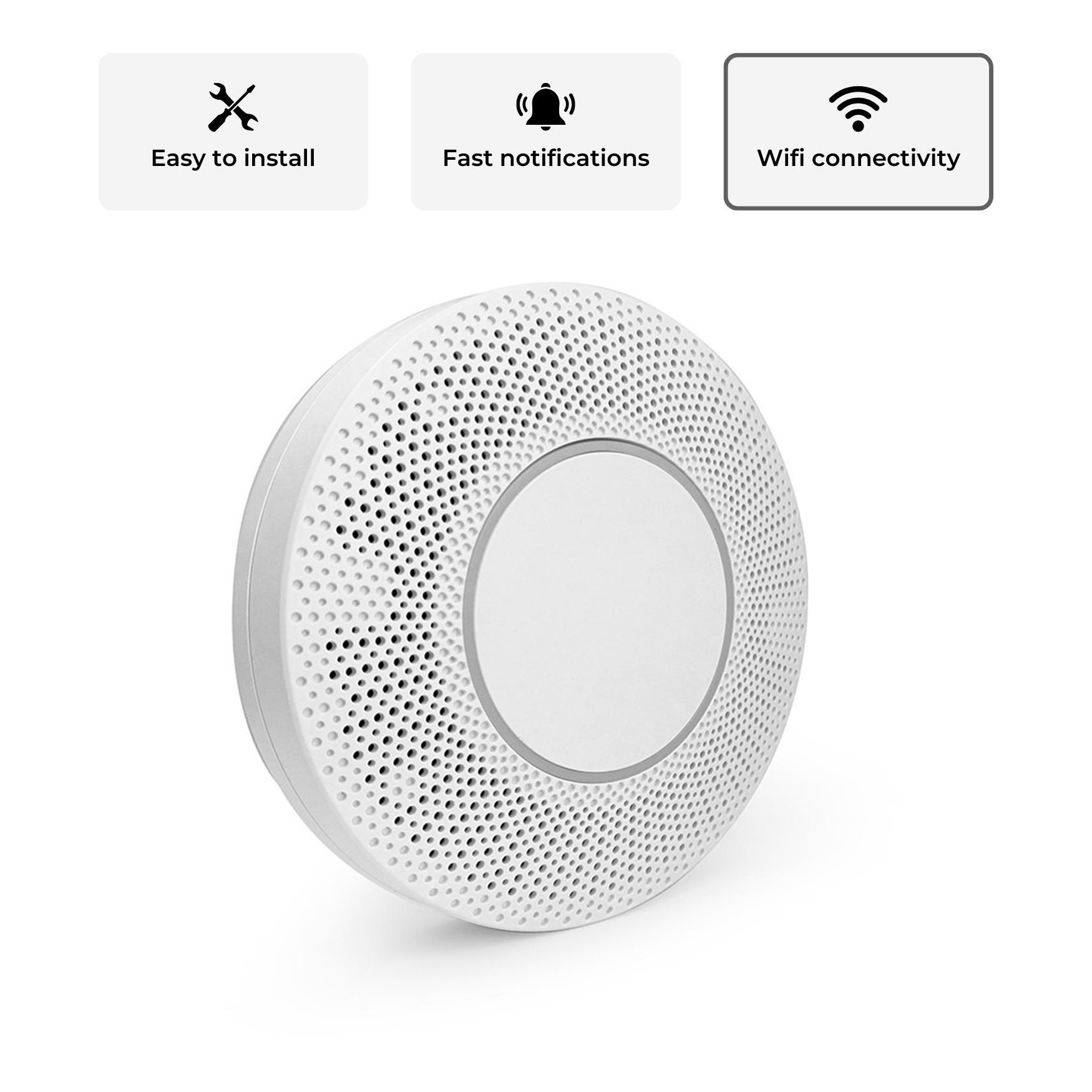
Modern vape detection middle east technologies prioritise real-time alerts, allowing staff to act swiftly when vaping is detected. Integration with facility management and security systems streamlines incident response and data sharing. Many detectors also track air quality and can identify multiple substances, providing a broader overview of environmental health.
Key features include:
- Instant notifications to designated personnel
- Compatibility with building management platforms
- Multi-substance detection for comprehensive monitoring
These capabilities make vape detection middle east solutions adaptable for schools, offices, and hospitality venues, supporting both safety and operational efficiency.
Implementation and Installation Best Practices
Successful vape detection middle east deployment starts with a thorough site assessment. Identifying high-risk zones, such as toilets or secluded corridors, allows for strategic sensor placement. Facilities should work closely with IT and security teams to integrate detectors with existing systems.
Best practices include:
- Conducting a risk analysis before installation
- Placing sensors at optimal locations for maximum coverage
- Scheduling regular maintenance and calibration to ensure accuracy
Following these steps helps maintain reliable vape detection middle east performance and minimises false positives or missed incidents.
Data Privacy and Security Considerations
Data privacy is a significant concern for vape detection middle east projects. Organisations must comply with regional data protection laws, ensuring that collected information is stored securely and only accessible to authorised personnel. Minimising false positives is essential to protect individuals’ privacy and maintain trust.
Secure data protocols include:
- Encrypted data transmission between devices
- Role-based access controls for system administrators
- Regular audits to prevent unauthorised data access
By prioritising privacy, vape detection middle east solutions can operate effectively within sensitive environments without infringing on personal rights.
Case Studies: Successful Deployments in the Middle East
Several vape detection middle east projects have demonstrated measurable success. A school district in Dubai reported an 80 percent reduction in vaping incidents within six months of system deployment, attributing the improvement to real-time alerts and consistent enforcement. In Riyadh, an office complex integrated vape detection with its building management system, streamlining their health and safety operations.
Key lessons learned include:
- Early stakeholder engagement ensures smoother implementation
- Ongoing staff training is vital for sustained results
- Continuous monitoring allows for data-driven adjustments
These examples highlight the practical benefits of vape detection middle east investments.
Cost Considerations and ROI
Investing in vape detection middle east technology involves upfront costs, but the long-term benefits far outweigh initial expenditures. Incident reduction leads to savings on disciplinary actions, facility repairs, and regulatory penalties. Many organisations also benefit from enhanced reputational standing and improved occupant wellbeing.
Funding options include government grants, private sector partnerships, and phased implementation plans. Calculating ROI should factor in both tangible savings and the broader value of compliance and safety. As vape detection middle east solutions become more advanced and accessible, facilities can expect even greater returns on their investment.
Step-by-Step Guide to Implementing Vape Detection in Middle Eastern Facilities
Implementing vape detection middle east strategies requires a structured approach tailored to the region’s regulatory, cultural, and operational landscape. This step-by-step guide outlines essential actions for organisations seeking to deploy effective vape detection middle east solutions in educational, corporate, and public environments.

Step 1: Assessing Organisational Needs and Risks
Begin with a comprehensive assessment to identify where vape detection middle east solutions are most needed. Map out high risk areas such as restrooms, locker rooms, and secluded corridors. Evaluate which groups are most vulnerable, with particular attention to youth and young adults in educational settings.
Engage all relevant stakeholders, including facility managers, health and safety officers, and IT teams, to gather input. Use a structured risk assessment checklist:
- Identify vaping hotspots
- Review incident records
- Evaluate current prevention measures
This foundational step ensures your vape detection middle east plan is targeted and effective.
Step 2: Selecting the Right Vape Detection Solution
Choosing the appropriate technology is vital for successful vape detection middle east deployment. Evaluate available systems based on detection accuracy, reliability, integration capabilities, and ongoing support. Prioritise solutions that offer scalability for future needs and compatibility with your existing infrastructure.
Vendor due diligence is essential. Assess reputation, regional experience, and compliance with local regulations. For schools, explore dedicated options such as Vape detectors for education facilities to ensure suitability for sensitive environments.
A careful selection process supports long term success of vape detection middle east initiatives.
Step 3: Installation and Integration
Prepare your facility by ensuring infrastructure is ready for vape detection middle east system installation. Coordinate with IT and security teams to address connectivity, power supply, and integration with building management systems.
Strategically place detectors in areas identified during the risk assessment. Conduct thorough testing and validate system performance to confirm coverage and responsiveness.
Document installation processes and create a maintenance schedule to ensure ongoing reliability of your vape detection middle east solution.
Step 4: Staff Training and Awareness Programmes
Effective vape detection middle east implementation depends on well trained personnel. Train security staff, administrators, and maintenance teams on device operation, alert protocols, and response procedures.
Develop clear response protocols for when vape detection middle east alerts are triggered. Consider educational initiatives for students or employees to raise awareness about the risks of vaping and the purpose of detection systems.
Regular awareness programmes foster a culture of compliance and reinforce the objectives of your vape detection middle east strategy.
Step 5: Policy Development and Communication
Update facility policies to explicitly address vape detection middle east requirements. Develop or adapt model policy templates to include guidelines for device use, incident response, and privacy protections.
Communicate these updates clearly to all stakeholders, including staff, students, parents, and visitors. Use meetings, newsletters, and visible signage to ensure everyone understands new expectations.
Transparent policies build trust and support the broader goals of vape detection middle east adoption.
Step 6: Monitoring, Reporting, and Continuous Improvement
Ongoing monitoring is crucial for maintaining vape detection middle east effectiveness. Use system analytics to track incident frequency, response times, and emerging trends.
Schedule regular system reviews and updates to address technical or operational issues. Involve stakeholders in evaluating outcomes and adapting strategies based on data.
Continuous improvement ensures your vape detection middle east programme remains proactive, relevant, and impactful over time.
Challenges and Solutions in Vape Detection Across the Middle East
The rapid adoption of vape detection middle east systems brings both promise and complexity. Facilities must overcome technical, regulatory, and cultural barriers to ensure effective monitoring and compliance. Addressing these challenges head-on requires a tailored approach that respects local norms, legal frameworks, and operational needs.
Technical and Environmental Challenges
Implementing vape detection middle east solutions is not without obstacles. False positives can occur if sensors mistake steam or aerosol from non-vape sources for vaping, reducing trust in the system. Device tampering is another concern, especially in areas where youths may attempt to disable detectors.
Environmental conditions, such as high humidity or dust, can affect sensor performance. Facilities must select hardware designed for the region's climate and ensure detectors are robust against interference. Advanced algorithms and regular calibration help mitigate these challenges, improving reliability and accuracy.
Legal and Regulatory Barriers
Regulations for vape detection middle east systems vary significantly across countries. Legal frameworks in the UAE differ from those in Saudi Arabia or Qatar, making compliance complex for multinational organisations. Adapting systems to meet evolving laws is essential, as governments continue to refine their approach to vaping.
Cross-border compliance can be particularly challenging in shared business environments. Facilities should stay updated on legislative changes and consult legal experts to ensure all vape detection middle east deployments align with current requirements. Clear documentation and policy alignment are vital steps.
Cultural and Social Sensitivities
The introduction of vape detection middle east technology often raises concerns about privacy, especially in conservative communities. Monitoring systems must be implemented with transparency, ensuring individuals understand their purpose and scope.
Gaining support from parents, staff, and community leaders is crucial. Facilities can host information sessions and provide clear communication to address misconceptions. Culturally sensitive training and respectful engagement ensure vape detection middle east solutions are accepted and effective across diverse settings.
Operational and Maintenance Issues
Reliable operation of vape detection middle east systems depends on consistent maintenance. Staff turnover can disrupt system knowledge, so ongoing training is necessary. Facilities must schedule regular checks, firmware updates, and calibration to prevent lapses in coverage.
Remote monitoring and automated diagnostics reduce manual workload and support quick issue resolution. Creating clear maintenance protocols ensures that vape detection middle east infrastructure remains dependable and effective over time.
Measuring Success and Demonstrating Impact
Success in vape detection middle east initiatives is best shown through data-driven outcomes. Key performance indicators include the number of incidents detected, response times, and reductions in policy violations. Regular reporting to stakeholders builds trust and demonstrates progress.
Facilities can learn from local case studies, such as those featured in Vape Guardian case studies Middle East, which highlight real-world reductions in vaping incidents and best practices. Sharing measurable results encourages continued investment in vape detection middle east solutions and fosters a culture of accountability.
The Future of Vape Detection in the Middle East: Trends and Predictions for 2026
The future of vape detection middle east is set to be defined by rapid technological innovation, regulatory evolution, and proactive health strategies. As vaping continues to impact public spaces, facilities across the region are looking ahead to more advanced and integrated detection solutions. Let us explore what 2026 holds for vape detection middle east, from smart technologies to shifting market dynamics.
Emerging Technologies and AI Advancements
By 2026, vape detection middle east will benefit from next-generation sensors and AI-driven analytics. These advancements enable detection systems to identify vaping aerosols with greater accuracy, even in complex environments. Machine learning algorithms will continuously refine detection to reduce false alarms and adapt to evolving vaping devices.
Predictive analytics will play a critical role. Facilities can anticipate risk patterns and deploy preventive measures before incidents occur. For those interested in the underlying science, the Real vape detection technology overview provides a detailed look at how these systems work.
Integration with Broader Security and Health Systems
Vape detection middle east is increasingly integrated with wider building management and health platforms. In 2026, expect detection systems to work seamlessly alongside fire alarms, CCTV, and access control, creating a holistic security network.
This integration enables real-time incident response and centralised monitoring. The data collected also supports broader health and safety strategies, contributing to healthier environments in schools, offices, and public venues. Smart building ecosystems will become the norm, delivering both compliance and operational efficiency.
Anticipated Regulatory Changes and Industry Standards
Anticipated regulatory updates will significantly shape vape detection middle east. Governments are expected to introduce stricter enforcement and clearer guidelines for device installation, data protection, and reporting. International collaborations may also lead to the development of unified standards, making compliance more straightforward for multinational organisations.
Procurement processes will likely prioritise certified solutions that meet these new standards. Facilities will need to keep pace with changing laws to avoid penalties and ensure ongoing protection for users and staff.
The Evolving Role of Education and Prevention
Education will remain a cornerstone of successful vape detection middle east initiatives. By 2026, we will see expanded awareness campaigns, interactive training modules, and closer collaboration between government and private sector stakeholders.
Programmes targeting youth are especially vital, aiming to reduce vaping prevalence before it becomes entrenched. Regional initiatives will focus on equipping educators, parents, and community leaders with the knowledge and tools needed to reinforce healthy behaviours and policy compliance.
Market Growth and Investment Opportunities
The vape detection middle east market is forecasted for robust growth, driven by regulatory momentum and rising public health awareness. Local and international solution providers will find ample opportunities, particularly as demand spreads across education, hospitality, and corporate sectors.
Government incentives and grants are expected to fuel adoption, making advanced systems more accessible. For a broader context on vaping trends that influence this market, the OECD report on smoking and vaping trends offers valuable regional insights.
Vape Guardian: Advanced Vape Detection Solutions for the Middle East
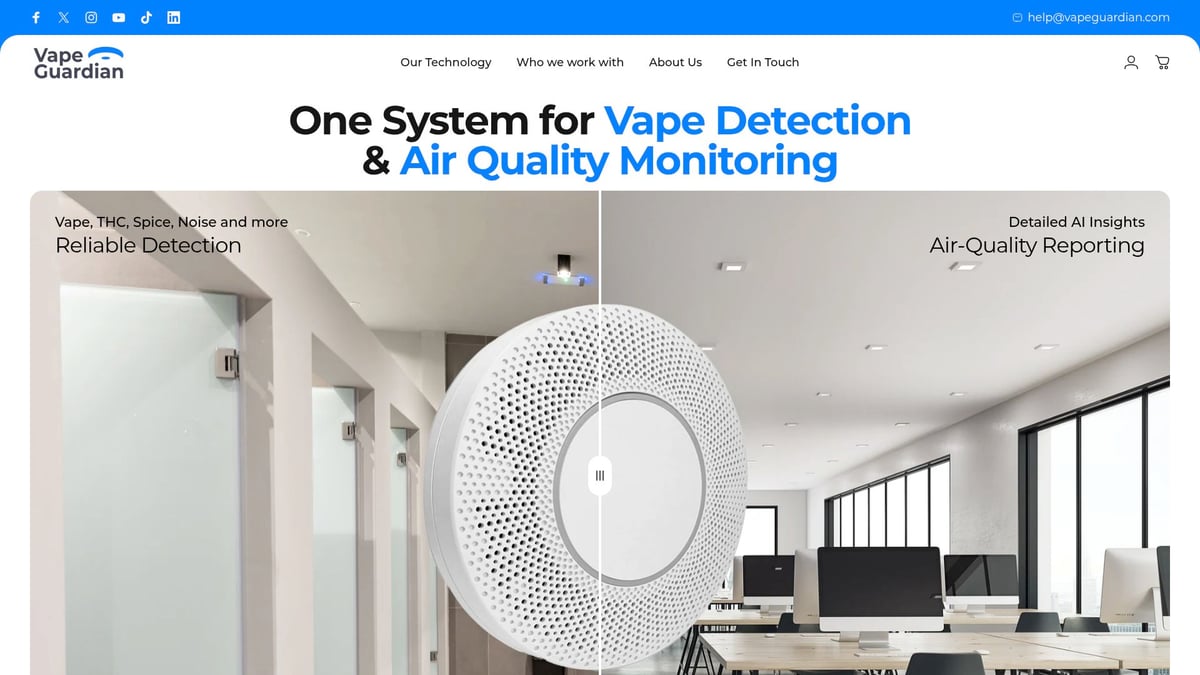
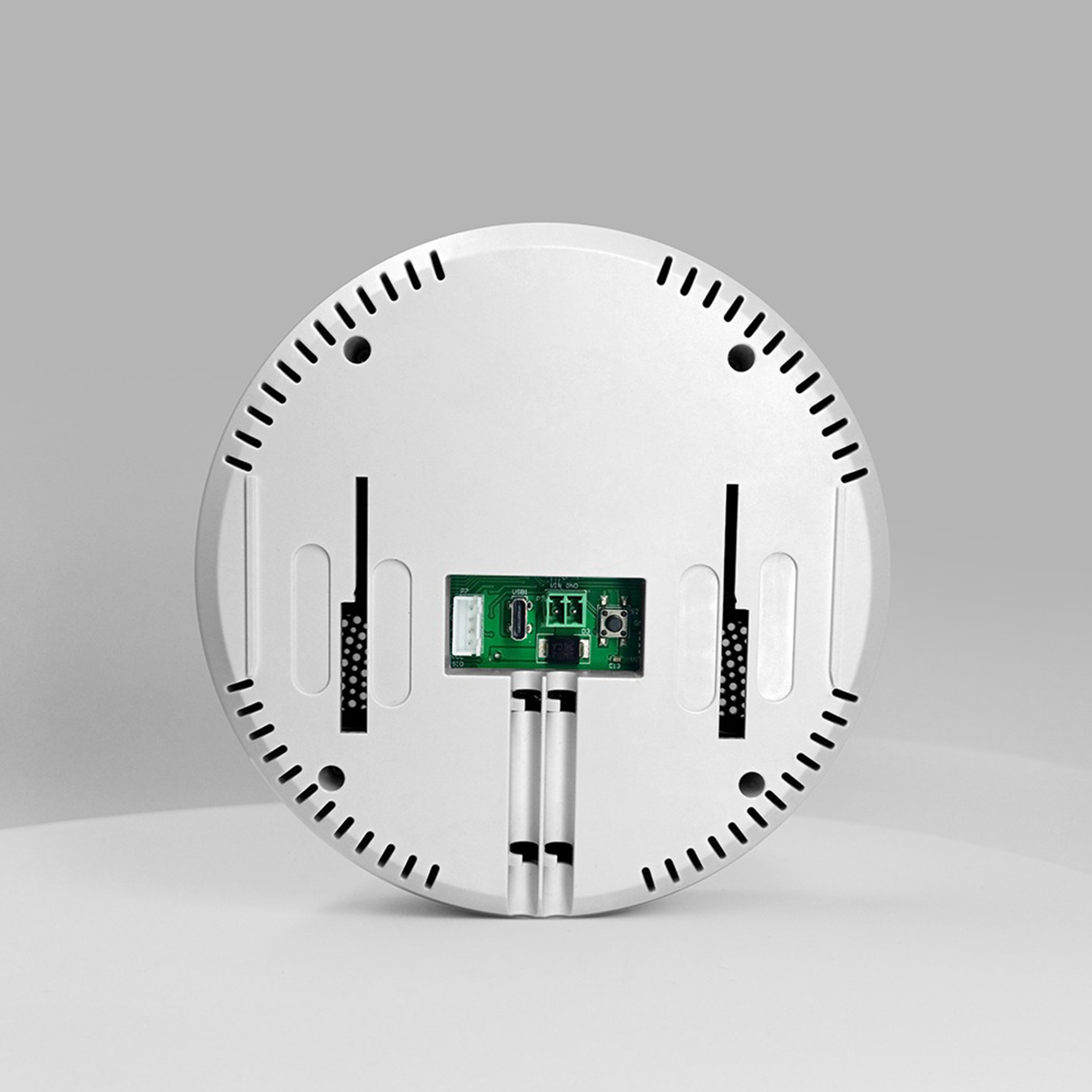
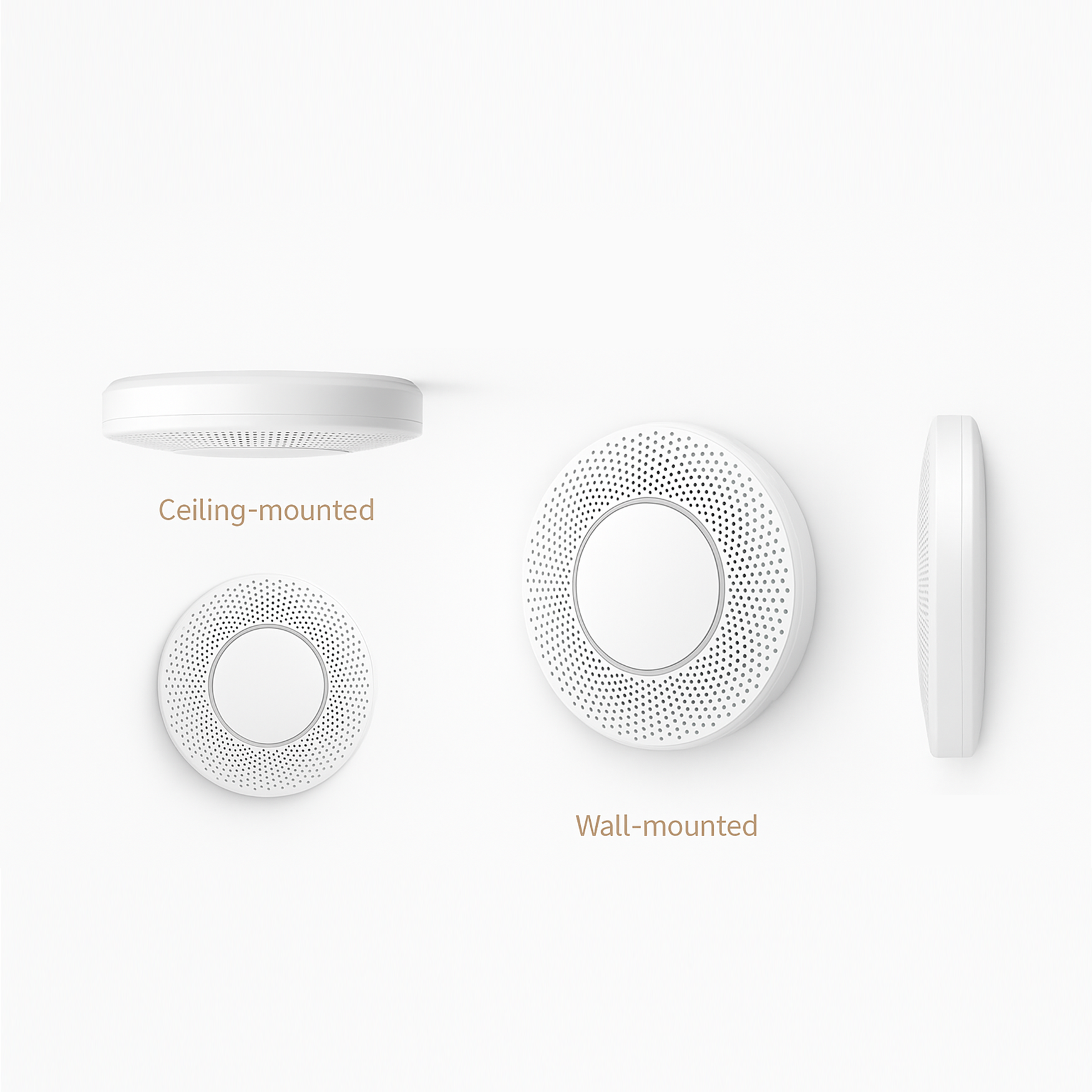
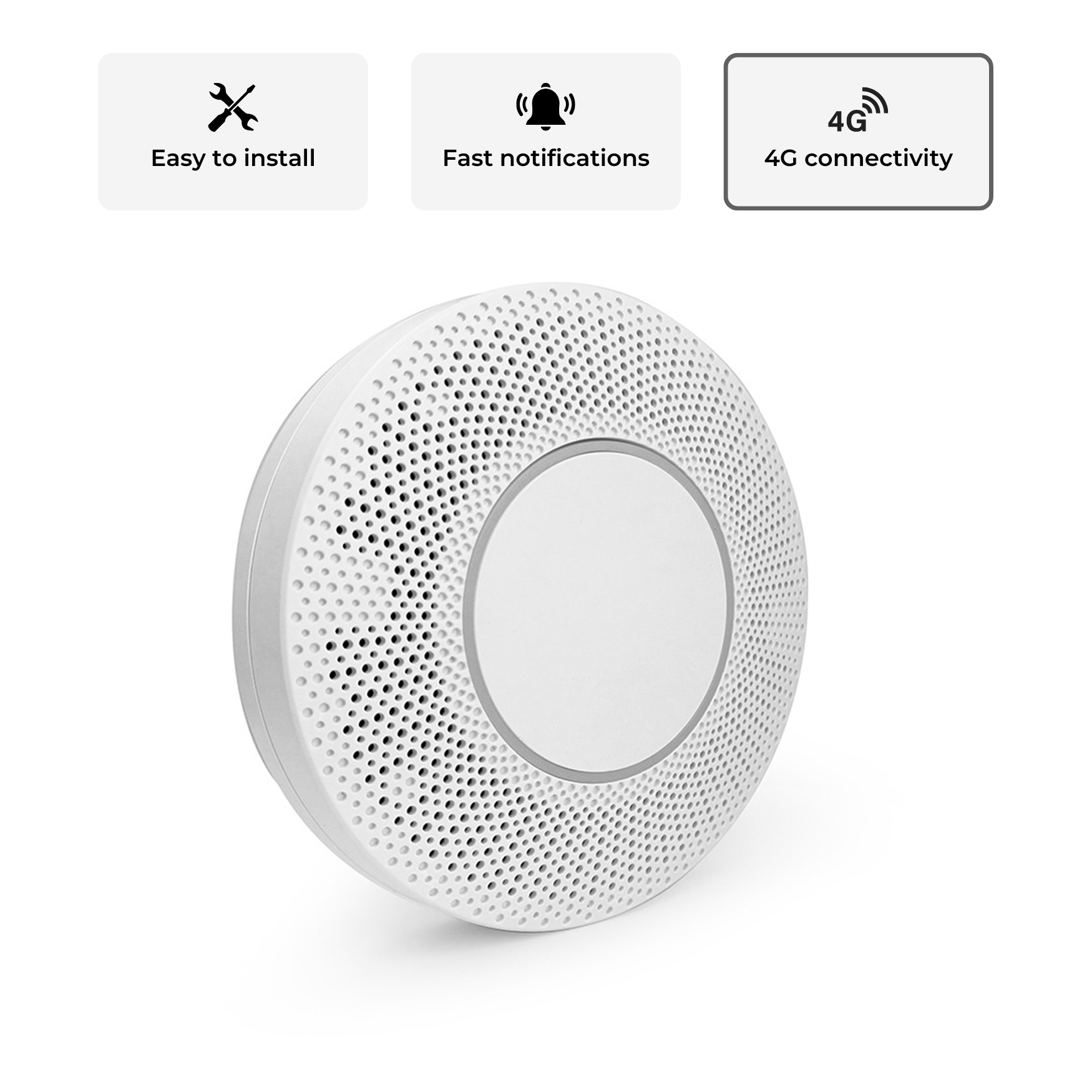
Vape Guardian stands at the forefront of vape detection middle east, delivering advanced technology and tailored solutions for facilities across the region. Their systems are built to address the unique regulatory, cultural, and operational needs faced by schools, offices, and hospitality venues.
Key Features of Vape Guardian:
- Real time alerts, ensuring immediate response to vaping incidents
- High sensitivity sensors for accurate detection of a wide range of substances
- Multi substance analysis for comprehensive air quality monitoring
- AI powered analytics to identify trends and support proactive intervention
Vape Guardian's proven track record includes documented reductions in vaping incidents, particularly in educational and office environments. In fact, their expertise is supported by a deep understanding of the Saudi Arabia e-cigarette market analysis, which helps inform effective strategies for vape detection middle east.
The company supports organisations at every stage, from compliance with evolving regulations to ongoing customer education and regular system improvements. With free trials, tailored consultations, and dedicated support, Vape Guardian empowers Middle Eastern facilities to create safer, healthier environments with confidence.
As we’ve explored, the landscape of vape detection in the Middle East is rapidly evolving, with new regulations, technologies, and best practices emerging as we approach 2026. If you’re keen to understand how advanced solutions like Vape Guardian’s smart sensors can help you create safer, compliant environments—whether in schools, offices, or public spaces—there’s never been a better time to get informed. You don’t have to navigate these changes alone. If you’re ready to see how real time detection and air quality monitoring can protect your facility and support your compliance goals, learn more about how it works.





Share:
Zero False Alarms Vape Detector Guide: The 2026 Essential Manual
University Vape Detection Guide: Strategies and Insights 2026