
Vaping incidents are surging across schools, offices, and leisure venues in 2026, making effective monitoring more crucial than ever. This vape detection installation guide delivers a comprehensive, step-by-step roadmap, packed with expert advice for today’s evolving environments. Explore the latest vape detection technologies, essential planning strategies, clear installation steps, compliance checks, and ongoing maintenance. Stay ahead of rising trends, discover innovative solutions, and create safer spaces with guidance built for this year’s unique challenges.
The Evolving Landscape of Vape Detection in 2026
In 2026, the need for robust vape detection is more urgent than ever. Vaping rates continue to climb, especially among young people and within workplace environments. This surge has prompted both public and private sectors to seek out a reliable vape detection installation guide to ensure safety, compliance, and peace of mind.
Vaping Trends and Regulatory Changes
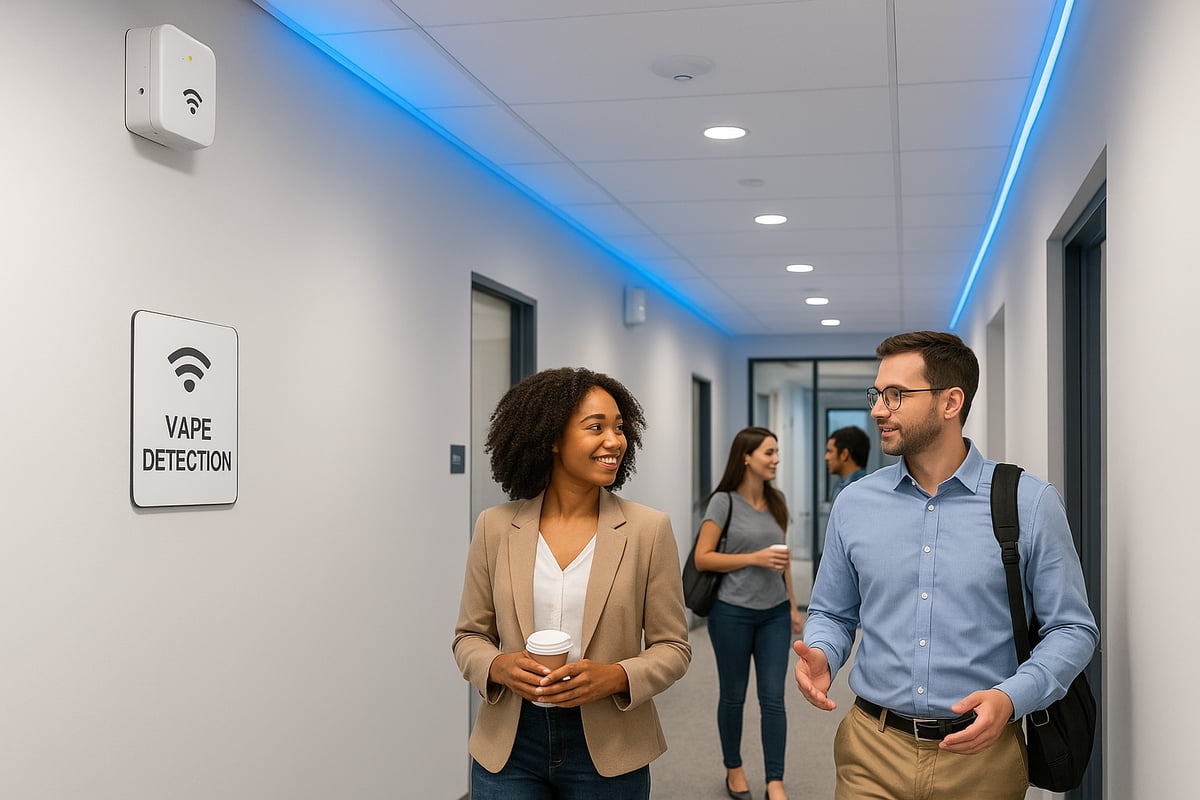
Recent years have witnessed a notable shift in attitudes and policies regarding vaping. Schools, offices, and leisure venues are under growing pressure to address vaping incidents. Regulatory bodies in the UK and across Europe have introduced stricter compliance standards, mandating the installation of advanced detection systems. For anyone following a vape detection installation guide, understanding these new rules is essential to avoid penalties and ensure the safety of all occupants.
Authorities now require more comprehensive reporting and accountability. As a result, organisations are prioritising solutions that not only detect vaping but also provide detailed analytics and support ongoing compliance efforts.
Technology Advances and Key Statistics
The landscape of vape detection technology has transformed dramatically. Today’s systems leverage artificial intelligence, substance-specific sensors, and real-time alerts to stay ahead of evolving vaping behaviours. According to recent market research, there has been a 30 percent rise in vaping among secondary school pupils since 2024, with workplace incidents up by 18 percent. These figures underline the necessity of a thorough vape detection installation guide for both new and existing facilities.
Modern detection platforms feature:
| Feature | Description |
|---|---|
| AI Integration | Adapts to new vaping methods and substances |
| Real-time Alerts | Immediate notifications to staff |
| Substance Specificity | Detects nicotine, THC, and other aerosols |
| Cloud Connectivity | Enables remote monitoring and reporting |
For more on technology requirements and sensor data analysis, consult Best Practices for Vape Detection.
Implementation in Schools and Workplaces
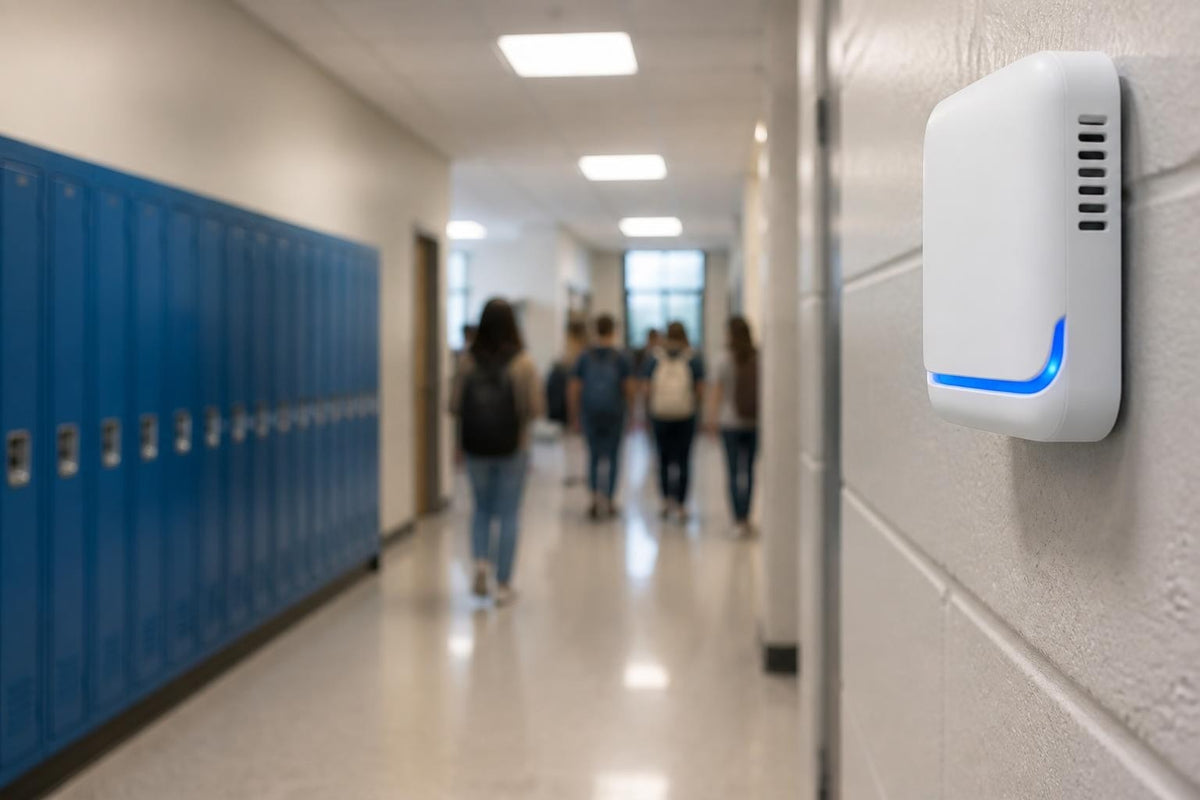
Across the UK, schools and offices are investing in advanced vape detection systems. For example, a secondary school in Manchester saw vaping incidents fall by 80 percent within three months of deploying an AI-powered solution. Workplaces are also adopting these technologies to safeguard employees and maintain compliance.
However, successful implementation requires more than just equipment. Following a detailed vape detection installation guide ensures proper placement, system integration, and staff training, reducing the likelihood of false alarms and missed events.
Challenges and Solutions
Despite significant progress, challenges persist. Students and employees often attempt to evade detection by vaping in concealed spaces or modifying their devices. Environmental factors such as high humidity or poor ventilation can also trigger false positives.
Key challenges include:
- Evasion tactics by users
- False alarms from environmental triggers
- Need for multi-substance detection
- Device tampering and vandalism
A comprehensive vape detection installation guide addresses these issues by recommending optimal sensor placement, robust calibration, and regular system maintenance.
Air Quality Monitoring and Data Analytics
Modern vape detection is not just about identifying incidents. Leading systems now integrate air quality monitoring, providing valuable data on carbon dioxide levels, particulates, and overall indoor environment. This holistic approach supports broader health and safety goals.
Data analytics and automated reporting have become central to future-proofing installations. Experts advise choosing solutions that offer detailed dashboards, trend analysis, and secure data storage. This enables organisations to respond proactively to emerging risks while maintaining compliance with evolving standards.
Looking ahead, the most effective vape detection installation guide will emphasise adaptability, stakeholder engagement, and continuous improvement. By staying informed about regulatory changes and technological advances, organisations can create safer, more responsive environments for everyone.
Pre-Installation Planning and Site Assessment
Preparing for a successful vape detection installation guide begins long before any sensors are mounted. Comprehensive planning ensures that systems are effective, compliant, and tailored to each environment. By focusing on site assessment, environmental factors, and stakeholder engagement, organisations can lay the groundwork for a robust solution.

Identifying High-Risk Areas
A critical first step in any vape detection installation guide is pinpointing locations most vulnerable to vaping. High-risk areas typically include:
- Toilets and washrooms
- Changing rooms
- Corridors with limited visibility
- Communal spaces such as lounges or canteens
These locations often provide privacy or poor visibility, making them attractive for vaping. Mapping these areas early allows for targeted sensor placement and maximises system effectiveness.
Environmental and Compliance Considerations
Environmental factors play a significant role in the success of a vape detection installation guide. Key aspects to consider are:
| Factor | Why It Matters |
|---|---|
| Airflow | Impacts sensor accuracy and alert timing |
| Ventilation | Alters vapour dispersal and detection range |
| Temperature | Affects sensor calibration and reliability |
| Humidity | May trigger false positives if not managed |
It is also essential to review local regulations and safeguarding policies. Ensure that all plans comply with legal requirements and align with organisational policies to support a safe, secure environment.
Engaging Stakeholders and Conducting Site Surveys
Effective vape detection installation guide planning requires input from multiple stakeholders:
- Facility managers for site access and maintenance insights
- IT teams for network and connectivity support
- Security and safeguarding personnel for policy alignment
Conduct a thorough site survey, noting existing infrastructure, power sources, and potential interference. A risk assessment will identify vulnerabilities and inform sensor placement. Collect baseline air quality data to measure system impact after installation, providing clear evidence of improvements.
Example: Step-by-Step School Site Assessment
To put theory into practice, consider a school preparing for a vape detection installation guide. The process might include:
- Walkthrough of the premises to identify high-risk zones.
- Consultation with staff to gather incident reports and hotspot feedback.
- Measurement of airflow and humidity in candidate areas.
- Review of safeguarding policies and legal obligations.
- Documentation of findings to inform sensor placement.
For more tailored advice on educational environments, see the detailed vape detectors for education settings resource. This guide offers practical recommendations for schools at every stage of the installation process.
Step-by-Step Vape Detection Installation Guide
Installing a vape detection system in 2026 requires precision, planning, and an understanding of the latest technologies. This vape detection installation guide walks you through each critical phase, ensuring a smooth process for any environment, whether school, office, or leisure space.

Step 1: Preparation and Procurement
Begin by assembling all required equipment and documentation. Confirm that you have the correct number and types of vape sensors, mounting accessories, power supplies, and any integration hardware.
Carefully review the manufacturer's installation requirements. Check compatibility with your building's IT infrastructure. Ensure you have access to site plans and stakeholder contact details.
A methodical approach at this stage sets the foundation for a successful vape detection installation guide.
Step 2: Unboxing and Verifying System Components
Open each package and verify every component against the packing list. Inspect for physical damage and confirm you have all mounting plates, screws, cables, and user manuals.
Set aside a clean, secure area for staging. Test power supplies and check that firmware or software versions are up to date. This careful verification reduces the risk of installation delays.
Document any missing or damaged items before proceeding.
Step 3: Mapping Installation Points Based on Site Assessment
Using your site assessment, map out optimal sensor locations. Focus on high-risk zones such as toilets, changing rooms, corridors, and communal spaces.
Mark installation points on printed site plans or digital building blueprints. Consider environmental factors like airflow, ventilation, and proximity to power sources.
Accurate mapping ensures the vape detection installation guide delivers maximum coverage and effectiveness.
Step 4: Physical Installation—Mounting Sensors and Ensuring Discreet Placement
Install sensors securely at the mapped locations. Use tamper-resistant screws and ensure each device is level and unobstructed.
Position sensors at recommended heights, typically near the ceiling, to capture vapour concentrations effectively. Avoid installing near vents or windows to minimise false readings.
Discreet placement is crucial for both deterrence and aesthetics.
Step 5: Power and Connectivity Setup—Wired, Wireless, and PoE Options
Connect each sensor to its power source. For wired installations, route cables neatly and secure with cable management clips. Wireless options may require battery installation and signal strength checks.
If using Power over Ethernet (PoE), ensure network switches are configured to supply adequate power. Test each connection for stability and signal integrity.
Reliable power and connectivity are vital for ongoing system performance.
Step 6: System Configuration—Calibrating Sensors, Setting Thresholds, and Customising Alerts
Access the configuration interface, either via web portal, mobile app, or direct connection. Calibrate sensors according to manufacturer guidelines, taking baseline air quality readings.
Set detection thresholds to balance sensitivity and reduce false positives. Customise notification settings for different user groups and escalation levels.
For detailed, step-by-step instructions, see the Step-by-step sensor setup instructions from Vape Guardian, which align with industry best practices in this vape detection installation guide.
Step 7: Integration with Building Management and Notification Systems
Integrate the vape detection system with your existing building management software, security platforms, or safeguarding tools.
Configure automated alerts to notify designated personnel instantly. Set up real-time dashboards for monitoring and incident logging.
Ensure all integrations comply with your organisation’s IT and data protection policies.
This step enhances the value of any vape detection installation guide by streamlining incident response.
Step 8: Testing and Validation—Simulated Vape Events, Data Logging, and Troubleshooting
Conduct comprehensive tests by simulating vape events in each monitored area. Observe sensor responses and verify that alerts are triggered as expected.
Check data logging functionality and ensure event timestamps are accurate. Address any issues with sensor placement or configuration.
Document all test results for compliance and future reference.
Step 9: Staff Training—Using Dashboards, Responding to Alerts, and Maintaining Confidentiality
Deliver hands-on training sessions for staff. Demonstrate how to use monitoring dashboards, interpret alerts, and respond appropriately to incidents.
Emphasise the importance of confidentiality, especially in educational or workplace environments. Provide quick reference guides and support contact details.
Well-trained staff are essential to a successful vape detection installation guide.
Step 10: Documentation and Handover for Compliance and Future Reference
Compile all installation records, including sensor locations, configuration settings, test results, and maintenance schedules.
Prepare a formal handover document for facility managers and IT teams. Include warranty information, support contacts, and recommended maintenance intervals.
Proper documentation ensures long-term compliance and simplifies future upgrades.
In summary, a structured approach to your vape detection installation guide guarantees reliable detection, seamless integration, and ongoing safety for your environment.
Post-Installation: Optimisation, Monitoring, and Maintenance
Ensuring your vape detection installation guide delivers long-term value means focusing on what happens after the initial setup. Post-installation optimisation is essential for maintaining system effectiveness, safeguarding users, and achieving compliance. In 2026, with vaping incidents rising and technology evolving, continuous monitoring and proactive maintenance are key to maximising your investment.
Regular System Checks and Firmware Updates
After completing the vape detection installation guide, schedule routine system checks. These checks verify that all sensors, connectivity modules, and alert mechanisms are functioning as intended. Modern systems often require firmware updates to maintain compatibility with new vaping devices and address security vulnerabilities.
Firmware updates should be applied according to the manufacturer’s recommendations. Automated notifications can help ensure you never miss critical updates. Keeping your system current is vital for sustained performance and reliability.
Analysing Incident Data and Continuous Improvement
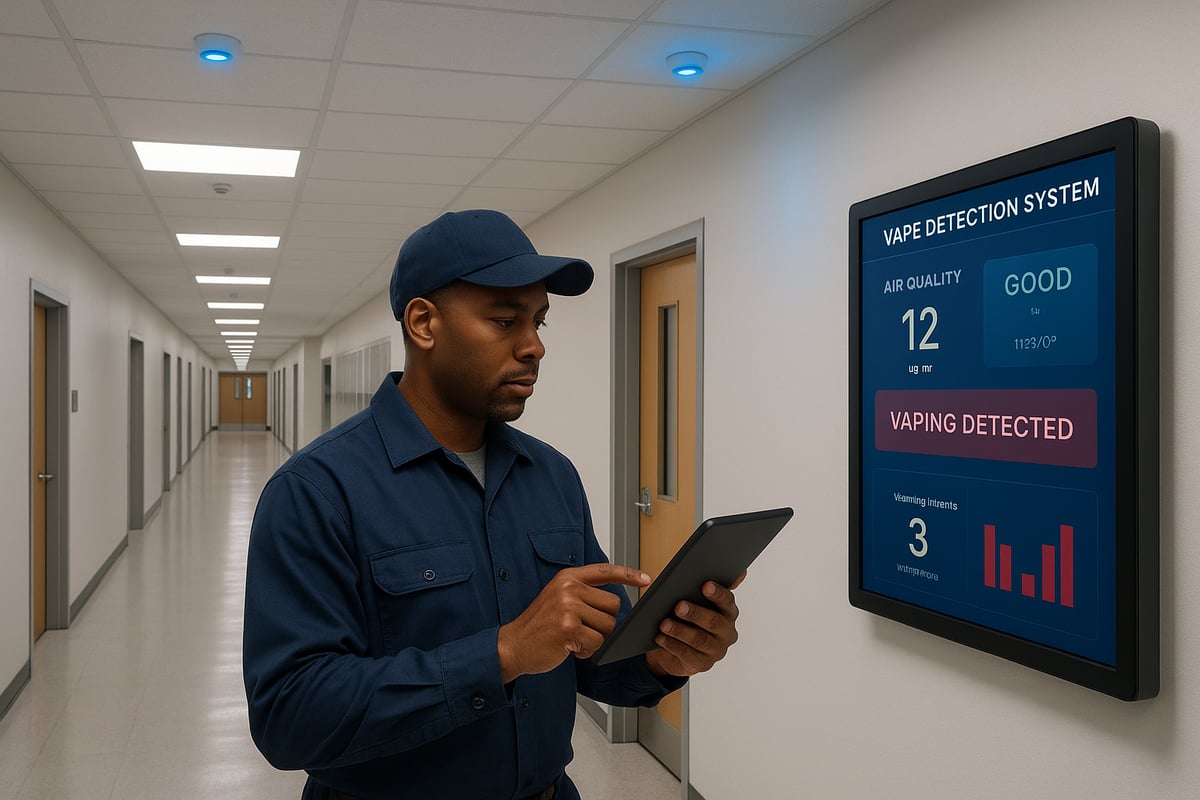
A robust vape detection installation guide will recommend regular data analysis. By reviewing incident logs, you can identify usage trends, high-risk zones, and potential gaps in your response protocols. Use the system’s analytics dashboard to visualise patterns and inform targeted interventions.
Monitoring incident frequency and response times supports compliance and demonstrates your commitment to safeguarding. Data-driven insights can guide policy adjustments and resource allocation, ensuring your environment remains proactive rather than reactive.
Automated Reporting and Integration with Safeguarding Teams
Integrating your vape detection system with safeguarding teams is fundamental for rapid response and accountability. Automated reporting tools send real-time alerts to designated staff, reducing response times and minimising disruption.
Consider setting up scheduled reports for management and compliance purposes. These reports provide evidence of system effectiveness and support audits. For guidance on responding to alerts and refining protocols, refer to Best practice for handling vaping alerts. This resource complements your vape detection installation guide and helps staff manage incidents confidently.
Routine Maintenance and Staff Training
Ongoing maintenance is critical for consistent system performance. Establish a cleaning schedule for sensors, as dust and debris can impair detection accuracy. Periodic inspections help identify tampering, damage, or connectivity issues before they impact reliability.
Staff training should not end after installation. Schedule regular refreshers to review system features, alert handling, and confidentiality protocols. Updated training ensures all stakeholders are prepared to act quickly and appropriately.
Leveraging User Feedback and Planning for Upgrades
Collect feedback from staff and users to identify areas for improvement. User experiences can reveal hidden challenges, such as false alarms or overlooked locations. Incorporate suggestions into your vape detection installation guide to foster continuous enhancement.
Plan for scalability by evaluating future needs. Consider system expansion, software upgrades, or integration with new building management platforms. Staying adaptable ensures your investment remains effective as regulations and vaping behaviours evolve.
Maintenance Checklist Table
| Task | Frequency | Responsible Party |
|---|---|---|
| System health check | Weekly | IT/Security |
| Firmware updates | As released | IT |
| Sensor cleaning | Monthly | Maintenance |
| Staff training | Quarterly | HR/Safeguarding |
| Data review | Monthly | Management |
Real-World Example: Leisure Centre Optimisation
One leisure centre saw a notable drop in false alarms after refining their vape detection installation guide. By implementing regular maintenance and reviewing incident data, staff pinpointed ventilation issues that previously triggered unnecessary alerts. Adjustments to sensor placement and updated protocols led to more accurate detections and higher stakeholder confidence.
Conclusion
Post-installation success depends on ongoing commitment to optimisation, monitoring, and maintenance. By following your vape detection installation guide, staying current with updates, and engaging your team, you ensure a safer, compliant, and adaptable environment. Continuous improvement is the key to keeping ahead of evolving vaping trends in 2026.
Legal, Ethical, and Privacy Considerations in Vape Detection
The legal landscape for vape detection is evolving rapidly. By 2026, both public and private institutions must keep pace with new regulations to ensure their vape detection installation guide aligns with national and local laws. This includes understanding how vape monitoring fits within safeguarding frameworks for schools and workplaces. The increased use of advanced detection systems brings greater scrutiny from regulators, making compliance a critical factor for every installation.
Privacy concerns are at the forefront of vape detection system deployment. Collecting, storing, and processing air quality and incident data requires strict adherence to data protection standards. Under GDPR and similar regulations, institutions need to clarify the purpose and duration of data storage and obtain clear user consent where appropriate. Effective policies must define who has access to incident data, how long information is retained, and the processes for deletion. When creating a vape detection installation guide, it is vital to build in robust privacy safeguards from the outset.
Balancing individual rights with safety imperatives is a complex challenge. Students and employees are entitled to privacy, yet organisations have a duty to maintain safe environments. The ethical use of AI and analytics in vape detection must be transparent and proportionate. Systems should avoid unnecessary surveillance and only monitor what is essential for health and safety. Best practice involves regular audits to ensure that detection technology is not being misused. For further insight, the Developing an Effective Vape Detection Solution resource provides detailed strategies for planning, compliance, and ethical deployment.
Transparency in communication is crucial. Institutions should provide clear policy documents explaining why vape detection is in place, how data will be used, and the steps taken to protect privacy. Policy templates for schools and offices can support consistency and regulatory compliance. Regular staff training and stakeholder engagement reinforce ethical standards and build trust. Ultimately, a successful vape detection installation guide must consider not only technical excellence but also legal and ethical responsibilities, ensuring that all parties are protected and informed.
As you’ve seen throughout this guide, staying ahead of vaping trends in 2026 requires both advanced technology and a clear plan for installation and compliance. Whether you’re aiming to protect a school, office, or leisure space, having the right detection system makes all the difference in creating a safer environment for everyone. If you’re ready to take the next step or have questions about tailoring a solution for your site, don’t hesitate to talk to our team and protect your building today. We’re here to support you every step of the way.



Share:
The Essential AI Vape Detection Guide for 2026
Vape Detection USA Guide: Navigating Solutions in 2026