
Did you know that poor air quality can slash factory productivity by up to 30 percent, according to the HSE? As we approach 2026, the spotlight on factory air quality monitoring has never been brighter, driven by rising health concerns and stricter regulations.
This expert guide will equip you with essential knowledge to master factory air quality monitoring. You will discover the latest monitoring technologies, understand evolving compliance standards, and gain actionable steps for implementation.
Ready to protect worker health, boost productivity, and future-proof your facility? Read on for the definitive strategies and trends that will shape your factory’s air quality management.
The Importance of Factory Air Quality in 2026
Health, Safety, and Productivity Impacts
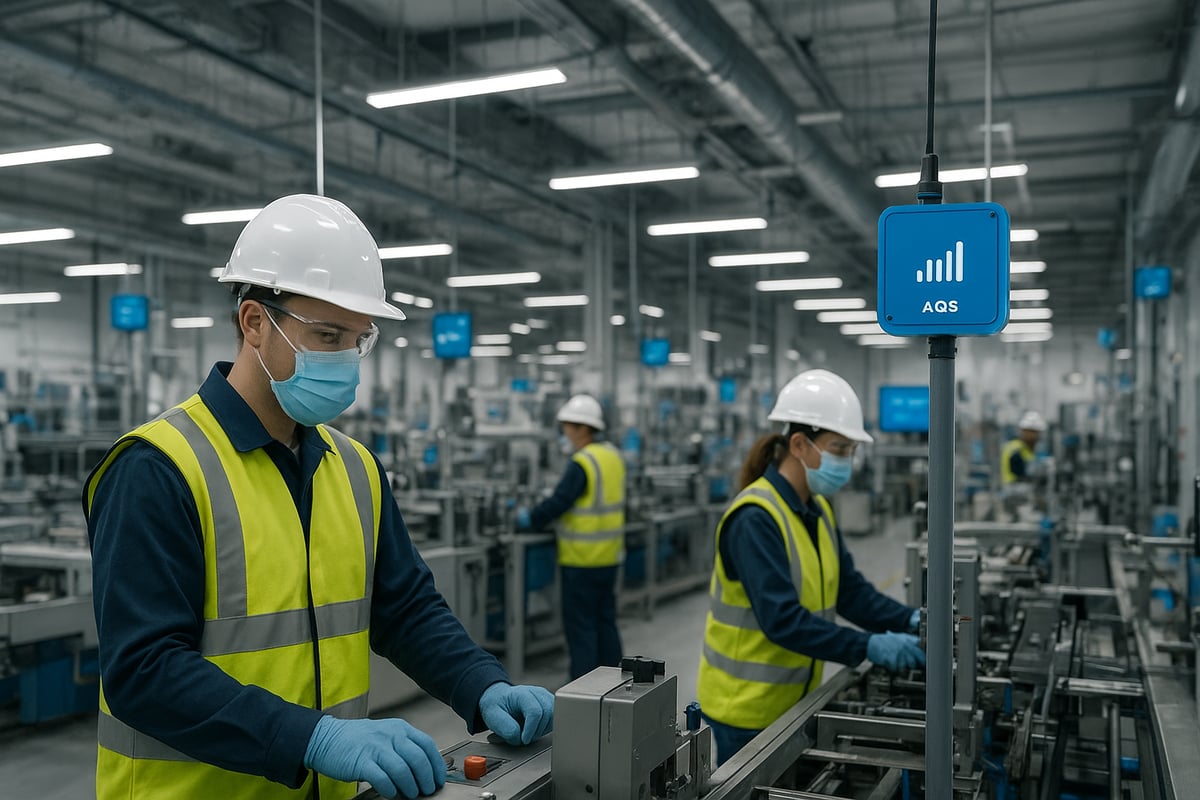
Poor air quality in factories poses a serious threat to worker health, leading to increased respiratory issues such as asthma and chronic obstructive pulmonary disease. Exposure to airborne contaminants can result in higher absenteeism, directly impacting overall productivity. Studies reveal that up to 30 percent productivity loss has been recorded in environments where factory air quality monitoring is inadequate, according to HSE, 2023.
Factories with insufficient air quality controls often report more frequent sick days and longer-term health complications among staff. Case studies show that continuous investment in factory air quality monitoring leads to measurable improvements in both worker wellbeing and output. The correlation between clean air and staff performance is no longer a matter of debate.
Regulatory Compliance and Legal Risks
Stringent UK and EU regulations govern industrial air quality standards in 2026, making factory air quality monitoring non negotiable for legal compliance. Failure to meet these standards can result in heavy penalties, legal claims, and even forced closures. In 2025, several UK factories faced significant fines and temporary shutdowns after missing mandated air quality targets.
The financial and operational risks of non compliance are substantial. Fines can reach millions, and remediation costs are often even higher. For a comprehensive overview of current standards, refer to the UK Air Quality Limits, which detail permissible exposure levels for key pollutants in factory settings. Staying ahead of regulatory requirements is a key driver for robust factory air quality monitoring programmes.
Reputation, Recruitment, and Retention
A factory’s air quality directly affects its reputation, influencing how current and prospective employees perceive the company. Organisations with poor air quality records struggle to attract top talent, as workers increasingly prioritise safe and healthy environments. Employee retention is also closely linked to the perceived safety of the workplace.
Brands have experienced significant reputational damage following air quality scandals, resulting in negative media coverage and public backlash. Factory air quality monitoring demonstrates a clear commitment to staff welfare, helping companies position themselves as employers of choice in a competitive market. Proactive efforts in this area can be a powerful recruitment tool.
Environmental Responsibility
Environmental responsibility is now a core expectation for manufacturing leaders. Effective factory air quality monitoring supports corporate sustainability and net zero ambitions by providing the data needed to reduce emissions beyond legal requirements. Monitoring systems enable companies to track progress towards environmental goals and identify opportunities for further improvement.
Air quality data is increasingly central to ESG reporting, helping stakeholders assess a company’s environmental, social, and governance performance. By investing in advanced factory air quality monitoring, businesses not only protect workers but also demonstrate leadership in sustainability. Transparent reporting strengthens trust with regulators, investors, and the wider community.
Key Air Contaminants and Monitoring Challenges
Understanding the key contaminants and the unique challenges of factory air quality monitoring is fundamental for effective risk management. Factories are dynamic environments where pollutants and hazards can fluctuate rapidly, making robust monitoring essential for health and compliance.
Common Industrial Air Pollutants
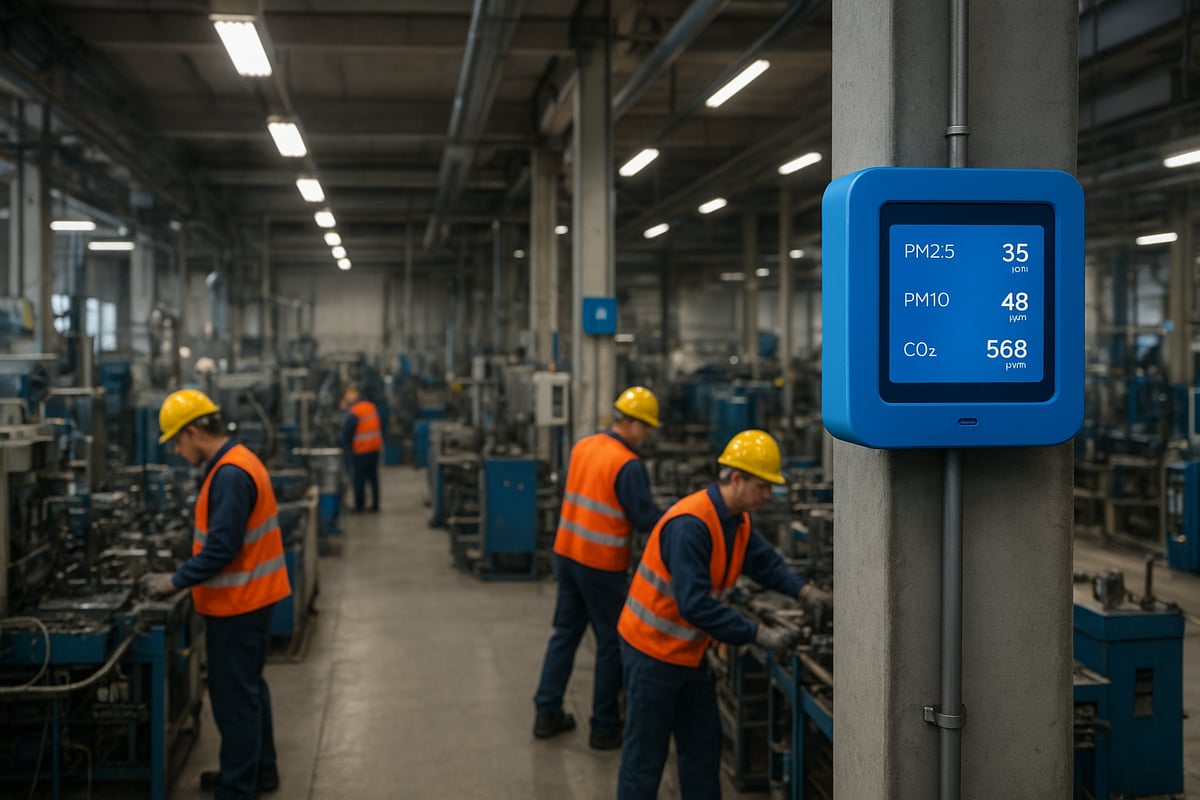
Effective factory air quality monitoring begins by identifying the main contaminants present in industrial settings. The most common are:
- Particulate matter (PM2.5, PM10) from machinery and processing
- Volatile organic compounds (VOCs) released during painting or coating
- Gaseous pollutants such as carbon monoxide, nitrogen oxides, and sulphur dioxide
- Biological contaminants like mould and bacteria, especially in humid conditions
- Metal dust and welding fumes in fabrication zones
Each pollutant poses unique health and operational risks. For a deeper look at the technologies used to detect these threats, see the Indoor air quality sensors overview. Understanding the full spectrum of pollutants is vital for comprehensive factory air quality monitoring.
Monitoring Complexity in Factory Environments
Factory air quality monitoring is complicated by several factors. Factories often feature large, open-plan layouts where airflow can vary significantly, leading to uneven distribution of contaminants. Multiple sources, such as machinery, storage, and chemical processes, can cause fluctuating concentrations throughout the day.
Some zones operate at high temperatures or contain hazardous materials, requiring specialised sensors and robust equipment. Additionally, the sheer volume of data generated by modern sensors can overwhelm teams, making it difficult to extract actionable insights from factory air quality monitoring efforts.
Case Examples and Industry Data
Real-world examples highlight the challenges of factory air quality monitoring. For instance, automotive plants frequently experience spikes in VOC levels during paint application cycles, putting both worker health and product quality at risk.
Industry data reveals that 60% of factories report difficulties in identifying the precise sources of air pollutants, according to EEF 2024. These findings underline the necessity for strategic sensor placement and advanced analytics within factory air quality monitoring programmes.
Worker Exposure and Risk Assessment
Assessing worker exposure is a core element of factory air quality monitoring. It is important to distinguish between area exposure, which measures general conditions in a specific zone, and personal exposure, which tracks what individual workers actually breathe.
Real-time monitoring enables immediate identification of hazardous conditions, allowing for prompt intervention and risk mitigation. By prioritising both area and personal data, factory air quality monitoring provides a complete picture of workplace safety and helps prevent long-term health impacts.
Air Quality Monitoring Technologies and Solutions in 2026
Maintaining optimal air standards is essential for any factory in 2026. Factory air quality monitoring technology has evolved rapidly, offering a range of sophisticated solutions to address complex industrial environments.
Fixed vs Portable Monitoring Systems
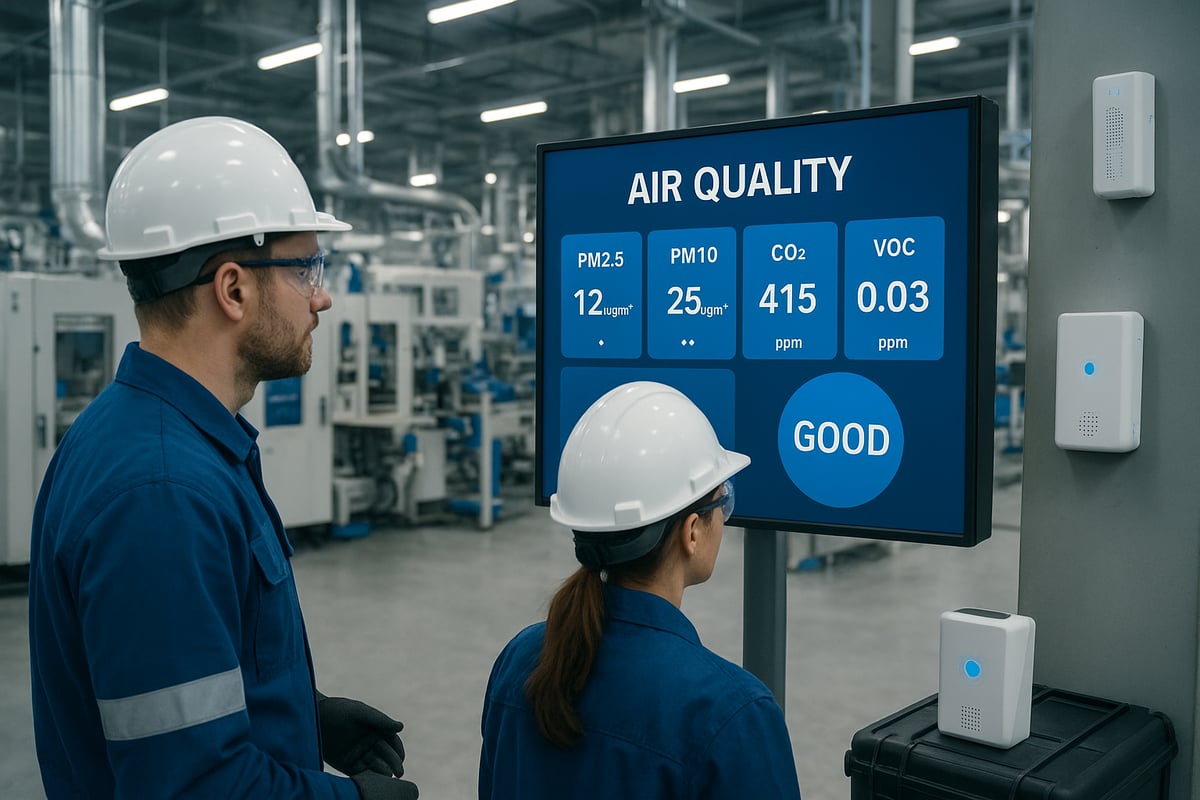
Factories today can choose between fixed and portable monitoring systems. Fixed systems offer continuous surveillance, ideal for tracking air quality trends throughout the entire plant. Portable systems, on the other hand, provide flexibility for targeted spot checks and rapid response during incidents.
| Feature | Fixed Systems | Portable Systems |
|---|---|---|
| Coverage | Whole-facility, permanent | Specific areas, as needed |
| Data Continuity | Continuous | Intermittent |
| Flexibility | Limited | High |
| Cost | Higher upfront | Lower initial |
Selecting the right type depends on your factory air quality monitoring objectives and layout. Many facilities now combine both for comprehensive coverage. For an in-depth look at available options, see commercial air monitoring solutions.
Sensor Types and Capabilities
Sensor technology is more advanced than ever. Electrochemical sensors are used for gases like CO and NOx, while optical and laser-based sensors excel at detecting particulate matter such as PM2.5 and PM10. Multi-parameter devices can measure several contaminants simultaneously, improving efficiency.
Wireless and IoT-enabled sensors are standard in 2026, allowing real-time data transmission and seamless integration with digital platforms. These advancements make factory air quality monitoring more precise and accessible for managers and safety teams.
Data Analytics and AI Integration
Artificial intelligence has transformed factory air quality monitoring. AI-driven systems analyse massive data streams, automatically detecting anomalies and predicting equipment failures. Predictive maintenance features allow early intervention, minimising downtime and exposure risks.
Automated alerts and workflow integrations ensure that hazards are addressed quickly. For example, an AI system can predict a filter failure and trigger maintenance before air quality drops, preventing incidents and safeguarding worker health.
Calibration, Accuracy, and Maintenance
Accurate data is the backbone of reliable factory air quality monitoring. Regular calibration of sensors is critical for compliance and operational safety. Many modern systems offer remote diagnostics, making it easier to identify issues without manual inspections.
Automated calibration functions further reduce the risk of human error, ensuring that measurements remain precise over time. Scheduled maintenance and software updates are essential practices that support system longevity and data integrity.
Integration with Factory Systems
Integrating air quality monitoring with building management and safety systems unlocks significant value. Real-time sensor data can trigger automated responses, such as adjusting ventilation or activating alarms if pollutant levels rise.
For instance, some factories have linked their monitoring platforms directly to HVAC controls, ensuring a swift response to any detected hazards. This integration streamlines operations and reinforces compliance with safety regulations.
Cost Considerations and ROI
Investing in factory air quality monitoring involves both upfront and operational costs. Fixed systems typically require higher initial investment, while portable solutions offer cost-effective entry points. However, the return on investment is clear.
Studies have shown a 20 percent reduction in sick days after deploying advanced monitoring technologies. By improving worker health and productivity, these systems pay for themselves, supporting both compliance and business performance.
Step-by-Step Guide to Implementing Factory Air Quality Monitoring
Implementing an effective factory air quality monitoring programme requires a structured, methodical approach. Each step builds on the last, ensuring comprehensive coverage, compliance, and long-term improvement. Below, you will find a detailed breakdown of each essential stage.
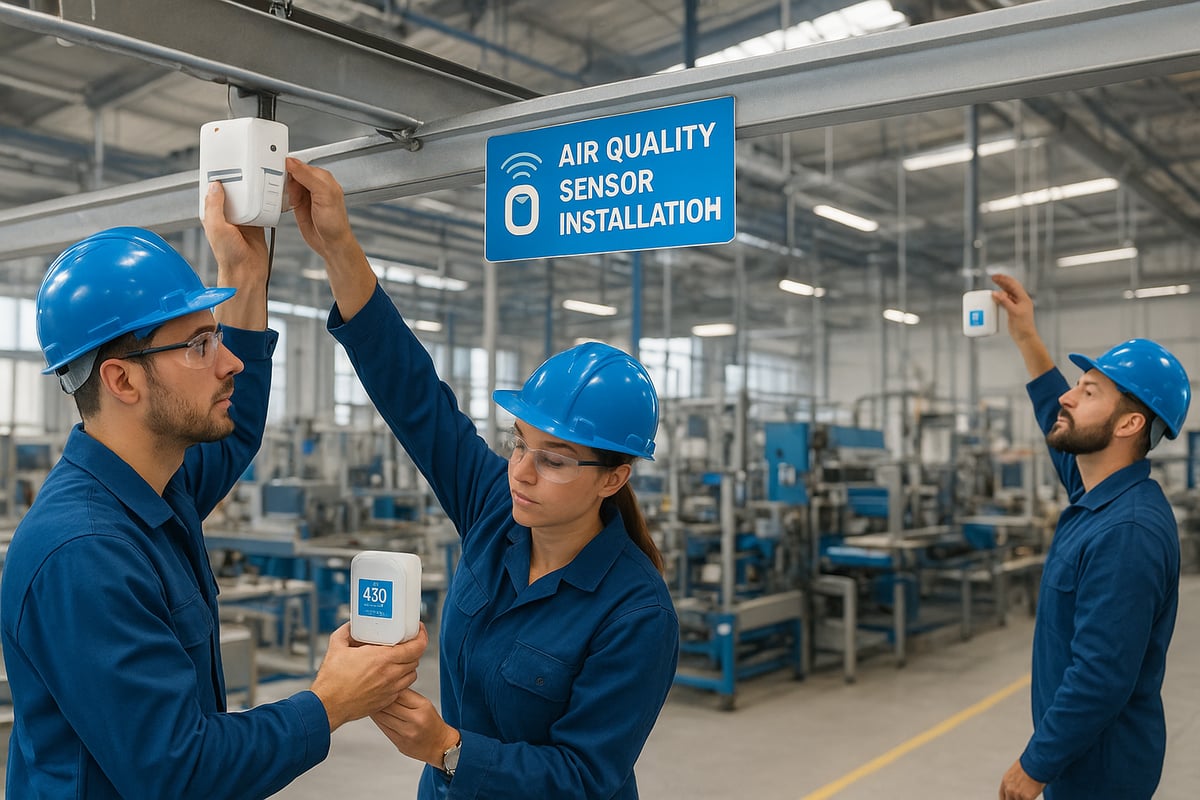
Step 1: Assessing Factory Needs and Risks
Begin your factory air quality monitoring journey with a thorough site assessment. Identify all potential sources of air contaminants, such as machinery, chemical storage, and production lines. Engage stakeholders from environmental health and safety teams, management, and employee representatives to capture a complete risk profile.
Evaluate current practices, review any past incidents, and set clear objectives. Are you aiming for regulatory compliance, improved worker health, or sustainability leadership? This foundational step ensures your factory air quality monitoring is tailored to your unique environment and strategic goals.
Step 2: Selecting the Right Monitoring Technology
Choosing the correct tools is critical for effective factory air quality monitoring. Match sensor types to your identified risks, considering contaminants like particulate matter, volatile organic compounds, and gases. Assess whether fixed or portable systems suit your layout and operational needs.
Think ahead by selecting solutions that are scalable and future-ready. Modular systems can adapt as regulations or processes change. Assess vendor support, warranty, and service agreements to ensure reliability throughout the monitoring lifecycle.
Step 3: Planning Sensor Placement and Network Design
Strategic placement is essential for accurate factory air quality monitoring. Map out high risk zones, such as near welding stations, paint lines, or chemical storage. Take into account airflow patterns and physical barriers that could impact readings.
Plan for adequate coverage and redundancy, ensuring critical areas are never left unmonitored. Decide between wireless and wired networks based on your facility’s infrastructure and potential for expansion. Proper network design supports seamless data flow and real-time alerts.
Step 4: Installing and Commissioning Equipment
Careful installation ensures your factory air quality monitoring system delivers reliable results. Follow best practices for mounting sensors at the correct height and orientation. Adhere to safety protocols to protect installers and avoid disrupting operations.
Commission the system by calibrating sensors and collecting baseline data. This initial calibration provides your reference point for future comparisons and compliance checks. Document all steps to support audits and ongoing maintenance.
Step 5: Data Management and Analysis
An effective factory air quality monitoring strategy relies on robust data handling. Set up user-friendly dashboards and reporting tools to visualise readings in real time. Customise alerts for threshold breaches, allowing rapid escalation and mitigation.
Regularly analyse trends to pinpoint problem areas, process changes, or equipment failures. For an in depth look at advanced analytics and reporting, explore Air quality analytics and reporting. Comprehensive data management not only supports compliance but also drives continuous improvement.
Step 6: Training, Awareness, and Response Planning
Equip your staff with the knowledge to use factory air quality monitoring systems confidently. Provide hands on training for sensor operation, emergency procedures, and routine checks. Encourage proactive reporting and foster a culture where air quality concerns are addressed promptly.
Conduct regular drills to test response plans and review incident outcomes. Ongoing engagement ensures everyone understands their role in maintaining a safe and healthy workplace.
Step 7: Ongoing Maintenance and Continuous Improvement
Sustain your factory air quality monitoring effectiveness with scheduled maintenance and regular recalibration. Use software updates and remote diagnostics to keep systems at peak performance.
Leverage collected data to optimise processes and reduce emissions. Benchmark your results against industry standards, and review performance routinely to identify new improvement opportunities. This step ensures your monitoring remains robust as regulations and technologies evolve.
Data-Driven Air Quality Management and Compliance
Effective factory air quality monitoring is transforming how factories protect workers and maintain compliance. Data-driven strategies give teams the power to act instantly, streamline regulatory reporting, and create a culture of safety and accountability.
Real-Time Monitoring and Automated Response
Real-time factory air quality monitoring allows teams to identify and resolve hazards before they escalate. Sensors continuously track particulate matter, gases, and other contaminants, providing instant alerts when thresholds are exceeded.
Automated systems can trigger ventilation, shut down equipment, or adjust processes based on live data. For example, when a chemical spill occurs, automated alerts guide immediate evacuation and activate extraction fans. This proactive approach minimises worker exposure and supports uninterrupted operations.
Real-time data empowers management to respond rapidly, reduce downtime, and prioritise health and safety. As a result, factories can stay ahead of potential risks and demonstrate a strong commitment to worker wellbeing.
Reporting, Auditing, and Documentation
Robust reporting is central to factory air quality monitoring. Factories must generate compliance-ready reports for regulators such as the HSE and Environment Agency. With digital dashboards, managers can track historical trends and maintain audit trails for each incident and intervention.
To remain compliant, it is essential to understand the Air Quality: UK Policy and Regulation, which outlines the UK’s current legal framework for air quality in industrial settings. In addition, leveraging resources like PM2.5 air quality reports helps teams benchmark performance and demonstrate transparency.
Automated documentation and data retention make regulatory inspections less stressful and support continuous improvement initiatives.
Using Data for Continuous Improvement
With factory air quality monitoring, data is not just for compliance, but a tool for transformation. Factories can analyse trends, identify root causes of pollution, and set clear KPIs for improvement.
For instance, regular review of sensor data can reveal recurring issues, such as filter blockages or process inefficiencies. Factories that use this insight to adjust workflows see measurable reductions in hazardous exposures and operational costs.
Continuous improvement relies on engaging staff, reviewing performance, and benchmarking results against industry standards. This data-driven mindset benefits both workers and the business.
Stakeholder Communication and ESG Reporting
Transparent communication is a cornerstone of responsible factory air quality monitoring. Sharing air quality results with employees, management, and external stakeholders builds trust and demonstrates accountability.
Air quality data is increasingly integrated into ESG (Environmental, Social, Governance) reporting. By including this information in sustainability disclosures, factories reinforce their commitment to corporate responsibility and attract partners who value safe, ethical operations.
Clear communication and accessible reporting promote engagement, support recruitment, and strengthen industry reputation.
Future Trends in Factory Air Quality Monitoring
The landscape of factory air quality monitoring is rapidly evolving as new technologies, stricter regulations, and changing workforce expectations reshape industrial environments. Staying ahead of these trends is crucial for maintaining compliance, protecting employee wellbeing, and enhancing operational efficiency.
Emerging Pollutants and Regulatory Changes
As manufacturing processes evolve, new contaminants such as nanoparticles and microplastics are becoming significant concerns for factory air quality monitoring. Regulatory bodies in the UK and EU are expected to introduce updated standards by 2026, targeting these emerging threats alongside traditional pollutants. Factories must adapt their monitoring strategies to address these changes, or risk fines and operational disruptions. Proactive monitoring of both established and novel contaminants ensures compliance and supports a safer workplace environment.
Advances in Sensor and AI Technology
Sensor technology is advancing at a remarkable pace, offering greater sensitivity, lower maintenance, and enhanced data accuracy for factory air quality monitoring. Next generation sensors can now detect a broader range of airborne hazards, while AI powered analytics enable predictive risk management and automated response. Innovative solutions such as the Holographic Air-Quality Monitor Study illustrate how cutting edge research is transforming the way factories approach air quality, providing real time insights and minimising human error.
Integration with Industry 4.0 and Smart Factories
Factory air quality monitoring is becoming an integral part of the Industry 4.0 revolution. Modern systems are designed to seamlessly connect with robotics, inventory control, and energy management platforms, creating a unified smart factory ecosystem. This integration allows for automated responses to air quality fluctuations, such as adjusting ventilation or halting specific processes to maintain safety standards. As a result, factories benefit from improved operational efficiency and enhanced risk mitigation.
Sustainability and Decarbonisation Initiatives
Sustainability is now a core focus for manufacturers, with factory air quality monitoring playing a central role in decarbonisation efforts. Advanced monitoring systems help track emissions, identify inefficiencies, and support net zero ambitions. The growing adoption of these solutions is reflected in recent market trends, as highlighted in the Air Quality Monitoring System Market Report, which forecasts significant growth in the deployment of monitoring technologies across industrial sectors.
Workforce Health and Wellbeing Focus
The focus on workforce health has intensified post pandemic, with factory air quality monitoring now recognised as a key factor in employee wellbeing programmes. Real time data empowers employers to act swiftly in the event of air quality breaches, reducing absenteeism and fostering a safer, more attractive workplace. Companies investing in advanced monitoring not only protect their staff but also enhance their reputation as responsible employers committed to long term health and safety.
Case Studies and Industry Benchmarks
Leading factories are setting new benchmarks in factory air quality monitoring by adopting smart, data driven systems and transparent reporting practices. For instance, 80 percent of new factories in the UK are projected to implement advanced monitoring by 2026, demonstrating industry wide commitment to safer and more sustainable operations. These case studies provide valuable lessons and inspiration for manufacturers seeking to future proof their air quality strategies and achieve excellence in compliance and employee care.
After exploring the latest trends, technologies, and strategies for factory air quality monitoring in 2026, you can see how vital it is to create safer, healthier work environments and ensure compliance. If you want to take the next step towards protecting your team and meeting evolving regulations, we are here to help. Our experts understand the unique challenges factories face and can guide you through practical solutions tailored to your needs. Let’s work together to make your workplace safer, more productive, and future ready—Talk to our team and protect your building today.



Share:
Hotel Vape Detector Guide: Essential Insights for 2026
Warehouse Air Quality Monitoring Guide: Stay Ahead in 2026