

Did you know that poor indoor air quality can reduce productivity by up to 30 percent in modern buildings? As we look ahead to 2026, smarter buildings are rapidly evolving, and air sensors are at the heart of this transformation.
This guide explores building management air sensors and their essential role in creating healthier, more efficient, and future-ready facilities.
We will cover the benefits of advanced air sensors, emerging sensor technologies, the selection process, integration with building systems, compliance considerations, and key trends shaping the future.
Discover how adopting smarter air sensor solutions can help you deliver safer, more comfortable, and sustainable spaces for everyone.
The Importance of Air Quality in Modern Building Management
Air quality is at the heart of modern facility strategy. As awareness of its impact grows, building management air sensors are becoming essential for healthy, efficient, and future-ready environments. These sensors now play a pivotal role in compliance, energy savings, risk management, and tenant satisfaction.

The Link Between Indoor Air Quality and Occupant Health
Poor indoor air quality can trigger headaches, allergies, fatigue, and respiratory issues. These symptoms often result in higher absenteeism and lower workplace morale. In fact, research shows that optimising indoor air quality can lead to productivity gains of up to 30 percent. For a deeper understanding, explore MIT’s findings on Indoor Air Quality's Impact on Health and Productivity.
Building management air sensors track pollutants such as CO2, VOCs, and particulates. By identifying problem areas early, facility teams can act quickly to protect occupant health and wellbeing.
Regulatory Standards and Growing Compliance Demands
The landscape for air quality regulation is evolving rapidly. The UK and EU have introduced strict requirements for indoor air quality in commercial and public buildings. Standards such as BS EN 13779 and the Building Regulations Approved Document F outline minimum ventilation and pollutant thresholds.
Furthermore, WELL and RESET certifications are gaining traction. The table below highlights key standards:
| Standard | Focus | Region |
|---|---|---|
| BS EN 13779 | Ventilation, pollutant limits | UK, EU |
| WELL | Holistic health, IAQ | Global |
| RESET | Continuous IAQ monitoring | Global |
Building management air sensors are critical tools for achieving and maintaining compliance.
Energy Efficiency and Environmental Impact
Energy efficiency is a top priority in building operations. Building management air sensors help optimise HVAC systems by monitoring real-time conditions. When sensors detect low occupancy or favourable outdoor air, ventilation systems can adjust automatically.
This targeted approach reduces unnecessary energy consumption and lowers utility bills. Over time, efficient air management supports sustainability goals and can help buildings achieve green certifications.
Occupant Experience and Smart Building Value
Tenants and employees expect comfortable, healthy spaces. Real-time air quality data from building management air sensors empowers facility managers to respond quickly to issues. When occupants see that air quality is monitored and managed, trust and satisfaction grow.
For example, several smart offices in London have reported higher occupancy rates and improved tenant retention following the installation of advanced air sensors. Enhanced occupant experience adds tangible value to the building.
Risk Management and Liability Reduction
Managing air quality is also a matter of legal and financial protection. Poor IAQ can expose building owners to lawsuits, regulatory penalties, and increased insurance premiums. By deploying building management air sensors, teams can document compliance and prove proactive risk management.
Insurance providers often reward documented efforts to maintain healthy environments. Keeping accurate sensor data can be a critical component in mitigating liability.
Data-Driven Decision Making
The power of building management air sensors extends to operational strategy. Facility teams use sensor data to guide cleaning schedules, target maintenance, and optimise HVAC use. For example:
- Scheduling filter changes based on actual air quality readings
- Adjusting cleaning routines for high-traffic zones
- Identifying trends that signal system inefficiencies
By leveraging data, decision makers can allocate resources more effectively, reduce costs, and ensure optimal indoor conditions for all occupants.
Key Types of Air Sensors for Building Management
Selecting the right building management air sensors is essential for maintaining healthy, efficient, and future-ready facilities. With a range of sensor technologies available, understanding their unique roles helps building managers create smarter, safer environments.
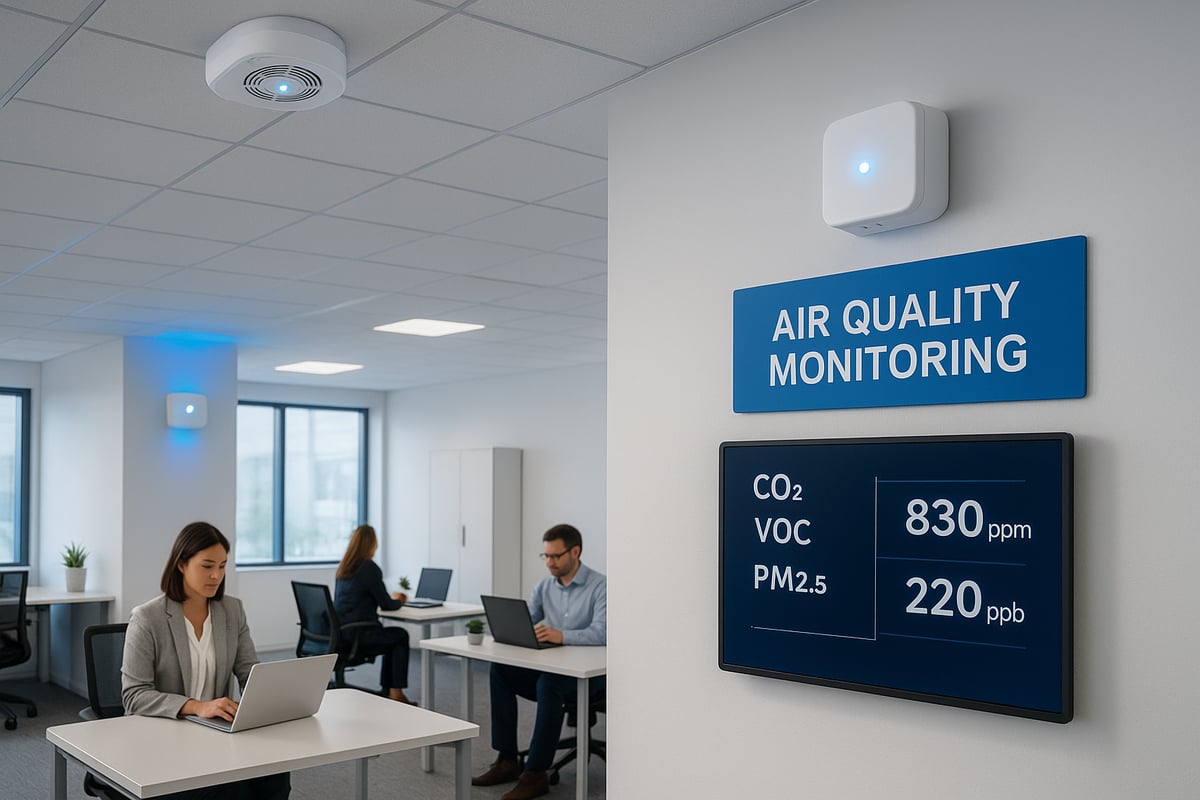
CO2 and VOC Sensors
CO2 and VOC sensors are fundamental building management air sensors, monitoring carbon dioxide and volatile organic compounds to maintain optimal ventilation. High CO2 levels can indicate poor airflow, leading to drowsiness and reduced focus, especially in learning or office environments.
For example, schools using CO2 sensors have seen improvements in student alertness by adjusting ventilation based on real-time data. VOC sensors, meanwhile, detect chemicals from cleaning products, paints, or furniture that may affect occupant health. These sensors support compliance and healthier indoor environments.
Particulate Matter (PM2.5 and PM10) Sensors
Particulate matter sensors measure fine particles like PM2.5 and PM10, which are linked to allergies and respiratory problems. Building management air sensors in this category help monitor dust, pollen, and pollution.
According to NHS guidance, controlling PM exposure is crucial in schools and offices to protect vulnerable groups. By tracking particle levels, facilities can take action with air purifiers or improved filtration, reducing health risks and supporting a safer workplace.
Temperature and Humidity Sensors
Temperature and humidity sensors are critical building management air sensors for comfort, mould prevention, and HVAC efficiency. Consistent temperature control keeps spaces pleasant, while balanced humidity prevents dampness and the growth of mould.
Improper humidity can damage equipment or building materials. By integrating these sensors, managers can automate responses like adjusting heating or dehumidification, ensuring a stable indoor climate and protecting assets.
Advanced Gas Detection (CO, NO2, Ozone)
Advanced gas detection sensors monitor carbon monoxide, nitrogen dioxide, and ozone. These building management air sensors identify risks from combustion appliances, traffic emissions, and strong cleaning agents.
Early detection of gases like CO, which is odourless and dangerous, is vital for occupant safety. In urban locations, NO2 monitoring helps address pollution from nearby roads. These sensors can trigger alerts or ventilation adjustments to keep air safe and compliant.
Integrated Multi-Sensor Devices
Integrated multi-sensor devices combine several building management air sensors into one unit, offering a holistic view of indoor air quality. These devices often track CO2, VOCs, PM, temperature, and humidity simultaneously.
Modern office buildings use multi-sensors to manage air quality efficiently across multiple parameters. This approach simplifies installation and maintenance while delivering comprehensive analytics for informed decisions. For a deeper look at these technologies, see Indoor air quality sensors explained.
| Sensor Type | Monitors | Typical Use Cases |
|---|---|---|
| CO2 and VOC | Airflow, chemicals | Offices, schools |
| PM2.5 and PM10 | Dust, pollen, pollution | Classrooms, gyms |
| Temp and Humidity | Comfort, mould | Meeting rooms |
| Advanced Gas | CO, NO2, ozone | Kitchens, car parks |
| Multi-Sensor | Combined parameters | Smart buildings |
Wireless and IoT-Connected Sensors
Wireless and IoT-connected sensors have transformed building management air sensors by providing cloud connectivity and remote monitoring. These devices enable real-time alerts and advanced data analytics for multi-site management.
Facility managers can access dashboards from any location, quickly responding to issues and optimising air quality. IoT integration also supports predictive maintenance, ensuring systems run efficiently and minimising downtime.
Specialised Sensors: Vaping and Substance Detection
Specialised building management air sensors for vaping and substance detection address the rising challenge of e-cigarettes and illicit substances in shared spaces. These advanced sensors can differentiate between regular air pollutants and vaping aerosols or THC.
Schools and offices using these solutions have reported up to 95 percent fewer vaping incidents, creating healthier and more compliant environments. Integration with alert systems allows rapid response, protecting the wellbeing of all occupants.
Step-by-Step Guide to Selecting and Implementing Air Sensors
Selecting and implementing building management air sensors requires a methodical approach to ensure optimal indoor environments. Each step in the process plays a pivotal role in safeguarding occupant wellbeing, improving operational efficiency, and supporting regulatory compliance.

Assessing Building Needs and Risk Areas
The foundation of any building management air sensors strategy is a thorough assessment of your facility. Begin with an indoor air quality (IAQ) audit to identify high-risk zones where air quality may fluctuate. Common hotspots include meeting rooms, washrooms, gyms, and areas with high foot traffic.
Map out typical occupancy patterns and activities throughout the day. Consider external factors, such as proximity to busy roads or industrial sites, that may impact indoor air quality. Use floor plans to visualise sensor coverage and prioritise areas where occupants spend the most time.
Consulting resources like the Office air quality monitoring guide can provide best practices for identifying critical monitoring points. Early engagement with stakeholders ensures the assessment reflects real operational needs and regulatory obligations.
Determining Sensor Types and Coverage
Choosing the right mix of building management air sensors is essential for comprehensive coverage. Match sensor specifications to your building’s size, occupancy, and specific use cases. For example, offices may require CO2 and VOC sensors, while schools might prioritise particulate and temperature monitoring.
Reference industry guidelines, such as BSRIA recommendations, to determine sensor density and placement. Create a table to compare sensor options:
| Zone | Sensor Type | Coverage Required |
|---|---|---|
| Meeting Rooms | CO2, VOC | High |
| Washrooms | Humidity, Odour | Medium |
| Open Offices | PM2.5, CO2 | High |
| Gyms | Temperature, PM10 | High |
Ensure your plan accounts for future expansion and evolving building needs.
Evaluating Sensor Accuracy and Reliability
Accuracy is a cornerstone of any building management air sensors deployment. Select sensors with third-party certifications, such as RESET or WELL, to guarantee data quality. Investigate calibration protocols, manufacturer reputation, and warranty terms.
Reliable sensors should offer stable readings across a range of environmental conditions. Look for devices featuring automatic calibration, low drift, and robust construction. Review product datasheets and independent testing results before making a final decision.
Periodic recalibration and maintenance schedules should be established to maintain sensor performance.
Integration with Building Management Systems (BMS)
Seamless integration of building management air sensors with your existing BMS is vital for maximising value. Confirm compatibility with your current platform, whether it is BACnet, Modbus, or a proprietary system.
Modern sensors often support open protocols, enabling data sharing across HVAC, lighting, and access control systems. Integration allows real-time air quality data to trigger automated ventilation or purification responses.
Collaborate with IT and facilities teams to test interoperability and develop custom dashboards for visualising sensor data. Plan for future upgrades by selecting modular, scalable solutions.
Installation Considerations and Best Practices
Proper installation of building management air sensors ensures accurate and reliable data capture. Place sensors at breathing height, away from direct airflow, heat sources, or obstructions. Avoid areas prone to tampering or accidental damage, such as doorways or near windows.
Follow manufacturer guidelines for spacing and mounting. In larger facilities, stagger sensor locations to capture variations in air quality across different zones. Use secure enclosures for sensors in public or high-traffic areas.
Document installation points and create a maintenance log for ongoing reference.
Data Management, Security, and Privacy
Effective management of data from building management air sensors is crucial for compliance and trust. Implement secure data transmission protocols, such as encrypted WiFi or wired connections, to prevent unauthorised access.
Store data in GDPR-compliant systems with restricted access. Develop policies for data retention, sharing, and deletion. Anonymise occupancy or location data where possible to protect individual privacy.
Regularly audit data flows and update security measures against emerging threats. Train staff on the importance of data integrity and privacy.
Training Staff and Stakeholder Engagement
A successful building management air sensors programme relies on well-informed staff and engaged stakeholders. Provide training sessions for facility managers on interpreting sensor data and responding to alerts.
Create user-friendly guides and dashboards for occupants to access real-time air quality information. Encourage feedback and participation by sharing outcomes, such as improved comfort or reduced complaints.
Establish clear escalation protocols for responding to poor air quality events. Ongoing education and transparent communication foster a culture of health, safety, and continuous improvement.
Integration of Air Sensors into Smart Building Ecosystems
Modern facilities are moving beyond basic compliance to embrace the full potential of building management air sensors. Seamless integration of these sensors into smart building ecosystems is now a cornerstone for operational excellence. From real-time monitoring to predictive analytics, these connected solutions empower facility managers to optimise environments, reduce costs, and enhance occupant wellbeing. This section explores how building management air sensors transform data into actionable insights, driving smarter, safer, and more efficient buildings.
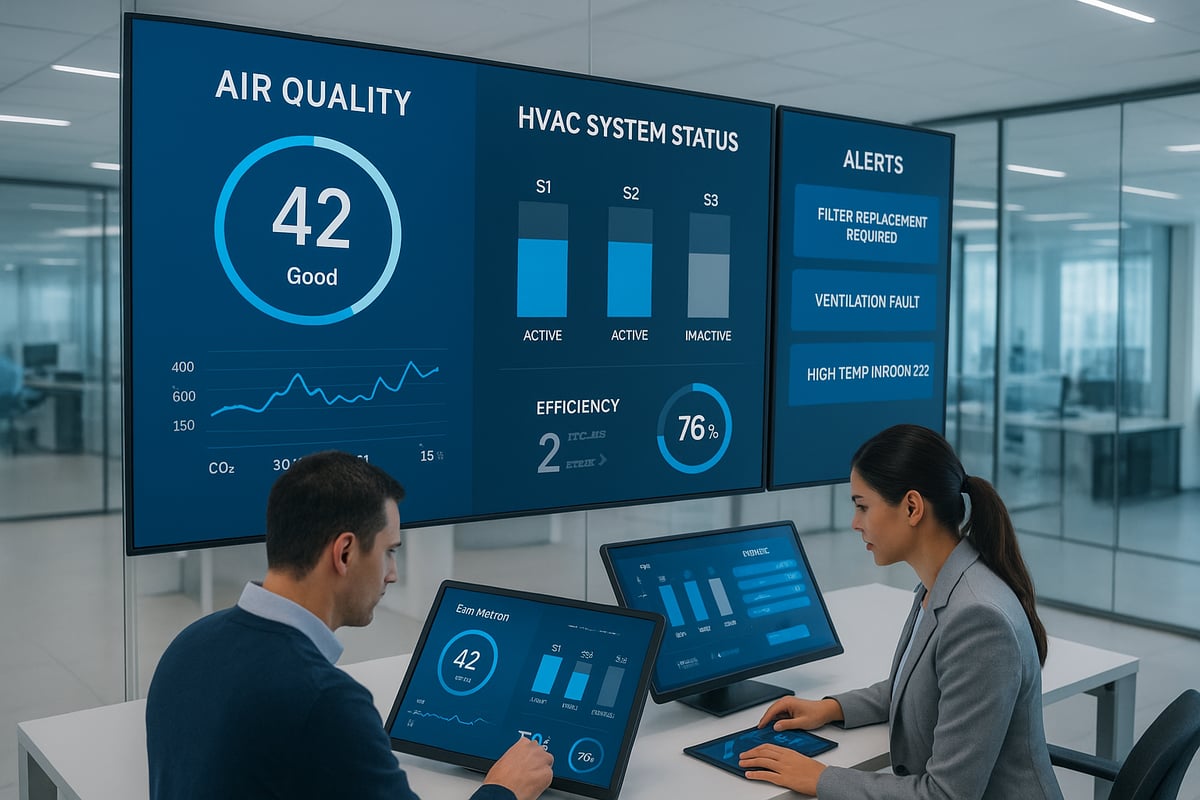
Real-Time Monitoring and Automated Responses
Building management air sensors enable instant detection of changes in indoor air quality. These sensors communicate directly with building systems, triggering immediate actions such as adjusting HVAC settings, opening windows, or activating air purifiers. For example, if CO2 levels rise in a conference room, the system can automatically increase ventilation, maintaining a healthy environment without manual intervention.
The value of real-time data is evident, as it allows facility teams to respond proactively rather than reactively. To understand how timely insights can drive operational improvements, review the real-time air quality data benefits that these solutions provide. With building management air sensors, every second counts toward ensuring occupant health and comfort.
Centralised Dashboards and Analytics
Centralised dashboards bring together data from all building management air sensors across multiple sites. These platforms display air quality metrics, occupancy trends, and system performance in one unified interface, making it easier for managers to identify patterns and prioritise interventions.
Advanced analytics tools can detect anomalies, benchmark performance, and generate custom reports for stakeholders. This consolidated approach supports strategic decision-making and ensures compliance with air quality standards. By leveraging aggregated sensor data, building operators gain a comprehensive view of indoor environments, helping them maintain optimal conditions.
Predictive Maintenance and Asset Protection
Building management air sensors do more than monitor air quality. They also track trends in equipment usage and environmental changes. By analysing this data, facility teams can predict when HVAC systems or air purifiers may require maintenance, reducing the risk of unexpected breakdowns.
Predictive maintenance minimises downtime and extends asset lifespans. When sensors detect early signs of wear or inefficiency, technicians can intervene before issues escalate. This proactive approach lowers repair costs and safeguards critical infrastructure, ensuring uninterrupted building operations.
Enhancing Occupant Wellbeing and Productivity
The integration of building management air sensors directly influences occupant experience. By continuously measuring parameters like CO2, humidity, and particulate matter, these systems adapt indoor environments to suit activity levels and occupancy patterns.
Customised settings can be applied to different zones, supporting productivity and comfort. For instance, meeting rooms can receive extra ventilation during peak usage, while quiet areas maintain optimal humidity for concentration. This responsive environment not only boosts tenant satisfaction but also elevates the reputation of the facility.
Scalability and Future-Proofing
A major advantage of modern building management air sensors is their scalability. Modular sensor networks can grow with a building's needs, supporting expansions, renovations, or evolving regulatory requirements. Open communication protocols enable integration with a wide range of platforms, ensuring continued compatibility as technology advances.
To explore how flexible sensor solutions underpin long-term building strategies, see this article on smart building sensor technologies. Investing in scalable infrastructure guarantees that facilities remain adaptable and compliant well into the future.
Challenges and Solutions in System Integration
Integrating building management air sensors with existing systems presents some challenges. Common pitfalls include:
- Compatibility issues with legacy building management systems
- Data silos caused by proprietary protocols
- Network security vulnerabilities
- Insufficient training for facility staff
To overcome these hurdles, select sensors that support open standards such as BACnet or Modbus. Collaborate closely with IT teams to ensure robust cybersecurity measures. Invest in comprehensive training programmes for all stakeholders, empowering them to use sensor data effectively. By addressing these challenges, facilities can unlock the full potential of integrated air quality management.
Future Trends: Air Sensors and the Evolution of Smarter Buildings by 2026
The next few years are set to revolutionise building management air sensors, driving smarter, healthier, and more sustainable buildings. As 2026 approaches, these technologies will become the backbone of future-ready facilities. Here is a look at the trends shaping the evolution of air sensors and their impact on smart building management.
AI and Machine Learning for Predictive Air Quality Management
AI-driven building management air sensors are transforming how facilities anticipate and address air quality issues. Algorithms learn from sensor data, predicting potential drops in air quality before they occur. This predictive capability enables automated systems to adjust ventilation, filtration, or cleaning schedules proactively. As AI matures, it will empower facility teams to prevent problems rather than react to them.
Integration with Health and Wellness Initiatives
As building management air sensors become more sophisticated, they are increasingly linked with employee wellness programmes and ESG reporting. Facilities can now share real-time air quality insights with staff, supporting cognitive performance and wellbeing. According to the Office Air Quality and Cognitive Function study, optimised indoor air directly improves employee productivity and decision-making. This integration is driving a shift towards holistic, occupant-centred building management.
Expansion of Sensor Capabilities
The next generation of building management air sensors will address a broader range of environmental threats. New sensors are emerging to detect bioaerosols, pathogens, and even track personalised exposure for individuals. This expansion means facility managers can respond to a wider array of risks, ensuring safer and healthier indoor environments for all occupants.
Key advancements include:
- Detection of airborne viruses and bacteria
- Personal exposure tracking via wearable devices
- Real-time alerts for emerging pollutants
Regulatory Evolution and Market Growth
Regulatory standards for building management air sensors are tightening, with updates expected in UK and EU building codes by 2026. Certifications like RESET are setting benchmarks for sensor accuracy and data transparency. The RESET Air Accredited Monitors initiative highlights the importance of using certified monitors to meet these evolving standards. The global smart sensor market is projected to grow significantly, as shown below:
| Year | Market Value (USD Billion) | Projected Growth (%) |
|---|---|---|
| 2023 | 6.5 | 12 |
| 2026 | 9.2 | 14 |
The Rise of Digital Twins and Building Intelligence
Digital twins are virtual replicas of physical buildings, powered by data from building management air sensors. They allow facility managers to visualise real-time air quality, simulate environmental changes, and optimise building performance. As adoption grows, digital twins will become a core component of intelligent building ecosystems, enabling data-driven decisions at scale.
Sustainability and Net Zero Objectives
Sustainability is a driving force behind the adoption of building management air sensors. By monitoring and optimising air quality, these systems support energy efficiency and carbon reduction goals. They also help buildings achieve green certifications and align with net zero objectives, positioning facilities as leaders in environmental stewardship.
User-Centric Design and Enhanced Occupant Experience
The future of building management air sensors lies in user-centric design. Occupants will have greater control over their environment, with customisable air quality settings and real-time feedback. This focus on personalisation not only enhances comfort but also boosts satisfaction and loyalty among tenants and staff.
The evolution of building management air sensors by 2026 promises smarter, safer, and more adaptive buildings, setting new standards for occupant wellbeing and operational excellence.
As we look to the future of smarter buildings, it’s clear that real time air sensors are transforming how we create safer, healthier spaces for everyone. Whether you’re managing a school, office, or leisure facility, having the right technology in place means you can respond faster, meet evolving compliance standards, and truly enhance occupant wellbeing. If you’re ready to take the next step towards reliable air quality and vaping detection in your building, I invite you to talk to our team and protect your building today. We’re here to help you build a smarter, safer environment for 2026 and beyond.



Share:
College Vape Detection System Guide: What to Know in 2026
Cloud-Based Detection System: The Essential Guide for 2026