

Did you know that in 2026, indoor air can be more polluted than the busiest city street? As concerns about air quality surge, understanding the risks becomes essential.
This expert guide to voc and formaldehyde detection demystifies the science and empowers you to protect your health using the latest solutions.
You will discover a clear, actionable roadmap to identify, monitor, and manage invisible threats in homes, schools, and workplaces.
We will explain what VOCs and formaldehyde are, detail their health impacts, explore detection technologies, review industry standards, and share step-by-step detection strategies.
Stay informed and take control of your environment today.
Understanding VOCs and Formaldehyde: Sources and Health Risks
Indoor environments in 2026 face new challenges from invisible threats, making voc and formaldehyde detection a critical topic for everyone. These pollutants are more prevalent than most realise, and understanding their sources, risks, and regulations is essential for a healthy living or working space.
What Are VOCs and Formaldehyde?
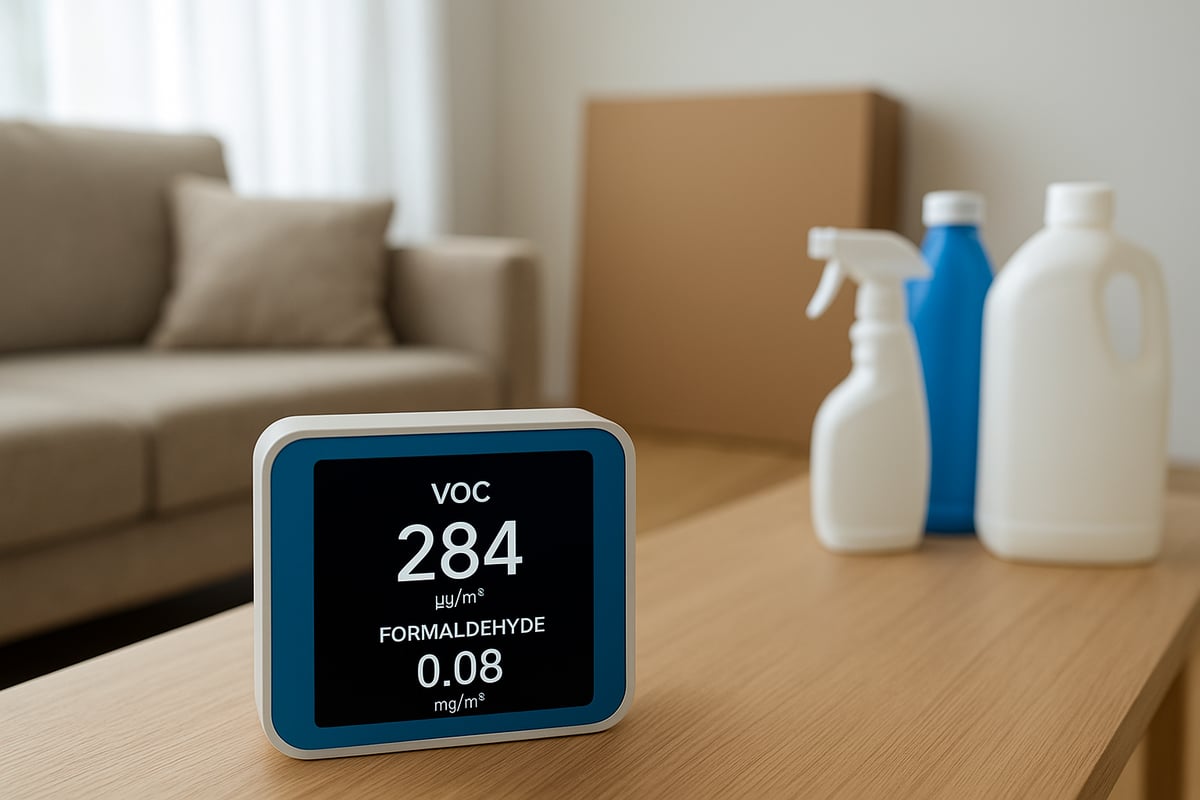
Volatile Organic Compounds (VOCs) are a group of carbon-based chemicals that easily become vapours at room temperature. Formaldehyde, a specific and well-known VOC, is a colourless gas with a strong odour. Both are found in a variety of environments, and voc and formaldehyde detection is the first step in managing indoor air quality.
Common sources of VOCs include:
- Paints, varnishes, and adhesives
- Cleaning products and air fresheners
- New carpets and furniture
Formaldehyde is often released from:
- Pressed wood products
- Tobacco smoke
- Combustion appliances
While formaldehyde is a single compound, VOCs describe a broad category. The table below summarises the differences:
| Feature | VOCs | Formaldehyde |
|---|---|---|
| Definition | Group of organic chemicals | Specific VOC, CH2O |
| Sources | Wide variety | Building materials, smoke |
| Health effects | Vary by compound | Irritant, carcinogen |
Health Impacts and Exposure Risks
Exposure to VOCs and formaldehyde can cause both immediate and long-term health issues. Short-term effects may include headaches, irritation of eyes, nose, and throat, and dizziness. Prolonged exposure increases the risk of respiratory diseases, allergic reactions, and, in the case of formaldehyde, certain cancers.
According to the World Health Organization and UK Health Security Agency, indoor air can be two to five times more polluted than outdoor air. This statistic highlights why voc and formaldehyde detection is vital, particularly for vulnerable groups:
- Children
- Elderly individuals
- People with asthma or other respiratory conditions
Even low-level, continuous exposure can build up over time, resulting in chronic health problems.
Real-World Examples
The impact of poor air quality is not theoretical. Several documented cases in schools have shown increased absenteeism and complaints of headaches due to elevated VOC and formaldehyde levels after new flooring installation.
In office environments, employees reported eye irritation and fatigue following recent renovations, prompting voc and formaldehyde detection surveys. Residential settings are also at risk, especially after purchasing new furniture or repainting rooms. These examples demonstrate the real consequences of ignoring indoor air pollutants.
Regulatory Guidelines and Exposure Limits
To protect public health, authorities have established strict guidelines for safe exposure. The UK, EU, and international bodies such as the World Health Organization have published threshold values for both VOCs and formaldehyde.
For detailed standards and recommended exposure limits, the UK indoor air quality guidelines for VOCs provide essential reference points. Compliance is a legal requirement in many workplaces, and voc and formaldehyde detection supports ongoing monitoring.
Emerging Concerns in 2026
The landscape of indoor pollutants is rapidly changing. The increased use of synthetic building materials following the pandemic has introduced new sources of VOCs and formaldehyde. Home renovations and hybrid work environments mean more people are exposed for longer periods.
With these trends, voc and formaldehyde detection is more important than ever. Staying informed and proactive is key to ensuring healthy indoor environments now and in the future.
Advances in VOC and Formaldehyde Detection Technologies
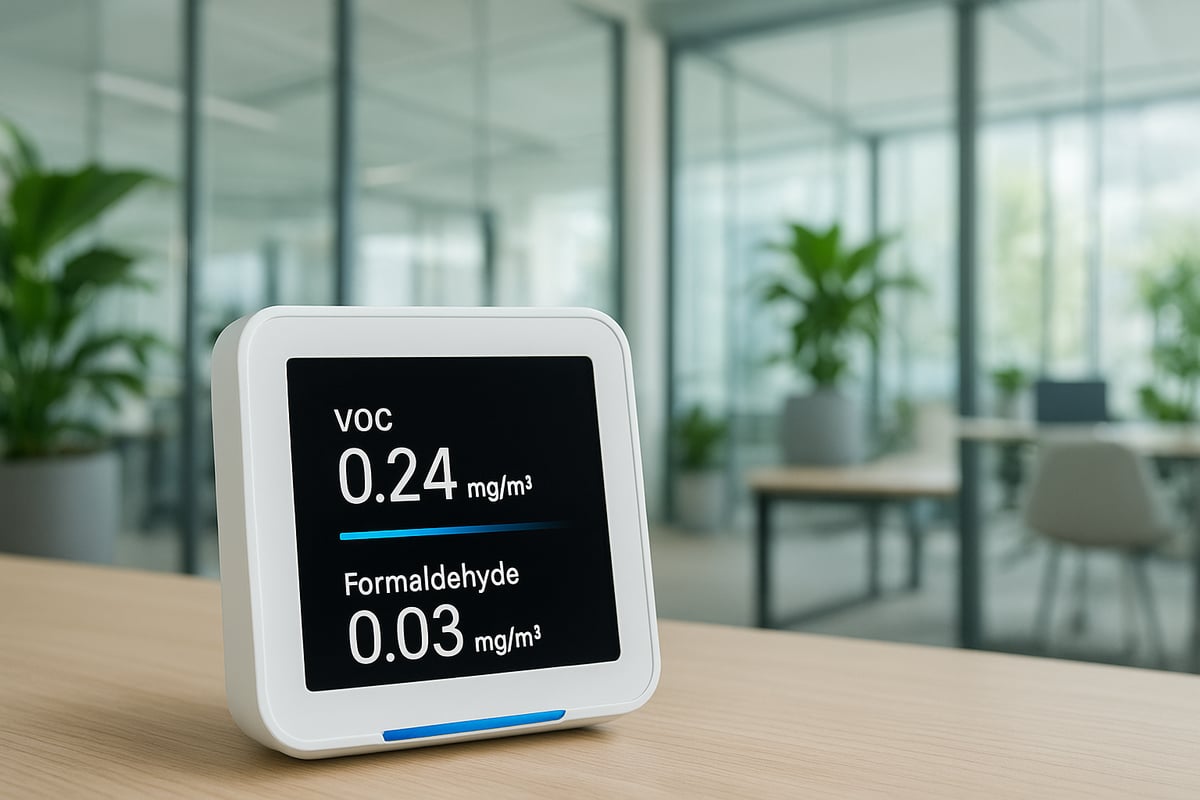
The landscape of voc and formaldehyde detection has transformed dramatically by 2026. As indoor air quality becomes a top priority, detection technologies are now more accessible, accurate, and integrated than ever before. Understanding these advances is crucial for choosing the right solutions for homes, offices, and industrial environments.
Traditional Detection Methods
Historically, voc and formaldehyde detection relied on manual sampling and laboratory analysis. Technicians collected air samples using sorbent tubes or canisters, then transported them to labs for gas chromatography or spectrophotometry.
While these methods provided reliable results, they were time consuming and costly. Results often took days to process, making it difficult to respond quickly to hazardous conditions. Furthermore, manual sampling lacked real time feedback, limiting its effectiveness for ongoing monitoring.
In 2026, these traditional approaches are mainly reserved for regulatory compliance checks or forensic investigations. They are less suited for environments needing continuous voc and formaldehyde detection.
Modern Sensor Technology
Today, sensor technology has revolutionised voc and formaldehyde detection. Devices now use advanced sensor types, including photoionisation detectors (PID), non dispersive infrared (NDIR) sensors, and electronic noses that mimic the human sense of smell. Colourimetric tubes remain in use for quick spot checks but are now more accurate and easier to use.
Sensor sensitivity and specificity have improved significantly, allowing for detection of pollutants at lower concentrations. Integration with IoT and smart building systems means sensors can now deliver real time alerts and automate ventilation responses.
For a deeper dive into the types of sensors available and their applications, see the indoor air quality sensors guide.
Key Features of Next-Generation Detectors
Next generation voc and formaldehyde detection devices come packed with innovative features. Real time data logging enables users to monitor trends and spot problems as they arise. Remote monitoring allows facilities managers to oversee multiple locations from a central dashboard.
Many devices now offer multi pollutant detection, tracking not only VOCs and formaldehyde but also carbon dioxide, particulate matter, and humidity. Enhanced calibration routines and self diagnostic functions ensure ongoing accuracy with minimal intervention.
These features make voc and formaldehyde detection more reliable and user friendly, empowering users to act before issues escalate.
Comparative Analysis of Leading Detection Devices
Selecting the right voc and formaldehyde detection device requires understanding how products compare on key criteria. Independent studies from organisations such as BSRIA and BRE have highlighted differences in accuracy, response time, and ease of use.
| Device Type | Accuracy | Response Time | User Friendly |
|---|---|---|---|
| PID Sensors | High | Fast | Moderate |
| NDIR Sensors | Moderate | Moderate | High |
| Electronic Noses | Very High | Fast | High |
| Colourimetric Tubes | Moderate | Slow | Easy |
Performance data shows that electronic noses and PID sensors lead in sensitivity and speed. User friendliness, however, depends on interface design and integration with building management systems.
Cost and Accessibility Trends
Widespread adoption has driven down the cost of voc and formaldehyde detection technology. Devices that were once only feasible for large enterprises are now commonly found in homes and small businesses.
Mass production and global demand have made high quality sensors more affordable. Subscription models for monitoring services are increasingly popular, offering flexibility for organisations of all sizes.
Accessibility is further enhanced by plug and play installation and wireless connectivity, making voc and formaldehyde detection a practical investment for everyone.
Data Security and Privacy Considerations
With increased data collection comes the need for robust security. Modern voc and formaldehyde detection systems handle sensitive air quality data, which may include information about building occupancy and usage patterns.
Manufacturers are prioritising compliance with GDPR and other privacy regulations. Data encryption, user authentication, and anonymisation are now standard features in leading products.
As detection technology becomes more integrated into smart buildings, ongoing vigilance is essential to protect both data and occupant trust.
Step-by-Step Guide: How to Detect VOCs and Formaldehyde in 2026
Ensuring safe indoor air starts with a systematic approach to voc and formaldehyde detection. This guide breaks down each step to help you confidently identify and manage these pollutants in any environment.
Step 1: Assess Your Environment
Begin by surveying your space for potential sources of pollution. Identify areas where synthetic materials, adhesives, paints, or cleaning agents are present. Consider the age of the building, as older structures may have outdated materials that emit higher levels of chemicals.
Pay close attention to spaces with recent renovations or new furniture. In offices, science labs, and classrooms, activities like printing or art projects can elevate risk. Evaluate occupancy patterns, as crowded environments often experience greater pollutant build-up.
A thorough assessment is the foundation for effective voc and formaldehyde detection. Document findings and prioritise high-risk zones for further testing.
Step 2: Select the Right Detection Technology
Choosing suitable sensors is crucial for accurate voc and formaldehyde detection. Evaluate devices based on sensitivity, detection range, and connectivity options. Decide if a fixed unit for continuous monitoring or a portable device for spot checks best fits your needs.
Look for features such as real-time data tracking, multi-pollutant detection, and integration with building management systems. For an in-depth comparison of leading products, consult resources like the Best air quality monitoring device guide, which reviews top monitors for both home and workplace settings.
Selecting the right technology ensures reliable results and supports proactive air quality management.
Step 3: Installation and Calibration
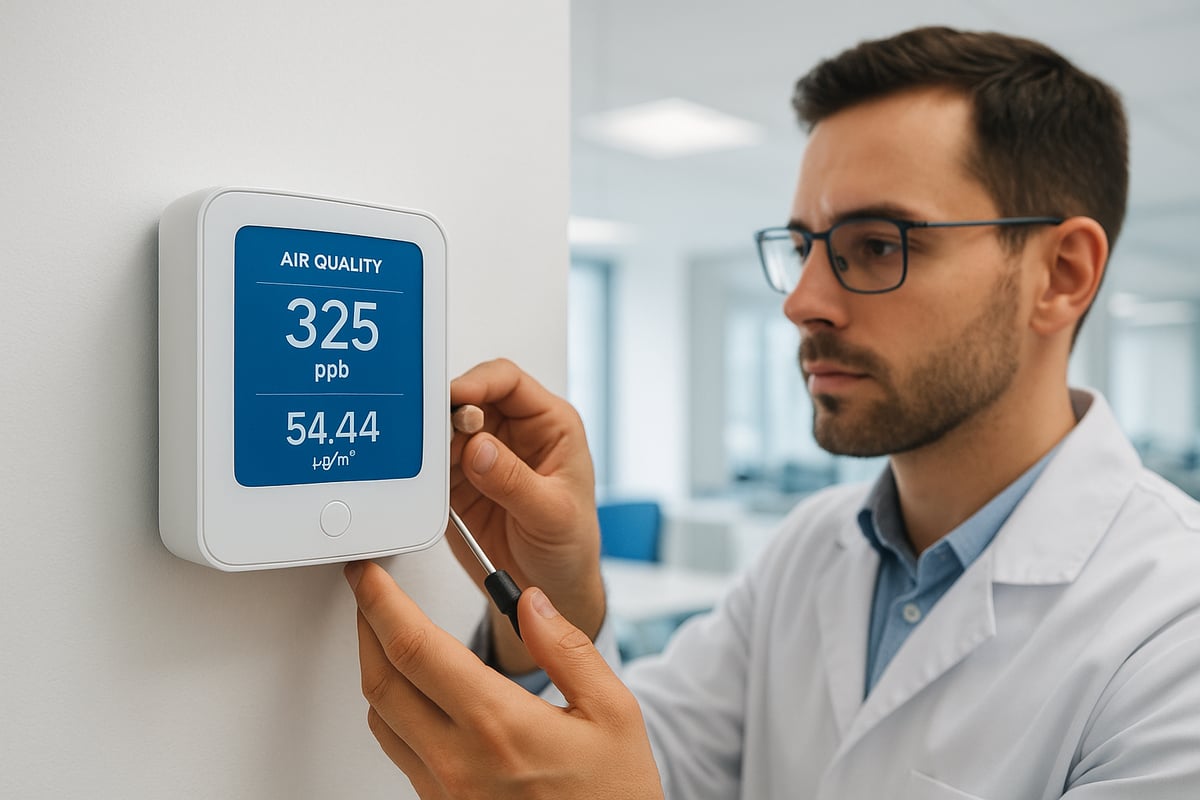
Proper installation maximises the effectiveness of voc and formaldehyde detection. Place sensors away from direct airflow, windows, and doors to avoid skewed readings. Ensure placement at breathing height for the most relevant data.
Follow manufacturer guidelines for mounting and initial set-up. Calibration is essential before first use and should be repeated regularly to maintain accuracy. Some advanced units offer automated calibration routines, reducing manual effort.
Routine calibration prevents drift and ensures your detection system delivers trustworthy results, safeguarding occupants’ health.
Step 4: Monitoring and Data Collection
Once installed, configure your sensors for continuous or interval-based monitoring. Set up dashboards to visualise air quality trends in real time. Establish data logging intervals that align with regulatory standards and the specific needs of your environment.
Regularly review collected data to spot unusual patterns or spikes in pollutant levels. Many modern systems offer alerts for threshold breaches, allowing for immediate response.
Effective voc and formaldehyde detection relies on consistent monitoring and accessible data, enabling timely interventions.
Step 5: Interpreting Results and Taking Action
Analyse your readings in relation to legal exposure limits and health guidelines. If levels exceed recommended thresholds, act quickly to improve ventilation, remove sources, or enhance filtration systems.
Immediate actions might include opening windows, activating air purifiers, or relocating occupants. For persistent issues, consider engaging remediation specialists for professional assessment and intervention.
Ongoing interpretation of detection results empowers you to make informed decisions, ensuring long-term protection against harmful exposures.
Step 6: Ongoing Maintenance and Verification
Sustained voc and formaldehyde detection performance depends on regular upkeep. Schedule periodic cleaning of sensors and replace components as needed. Update firmware to benefit from the latest features and security measures.
Plan routine recalibration and annual audits to verify system accuracy and compliance with regulations. Document all maintenance activities for accountability and future reference.
Consistent maintenance preserves the reliability of your detection system and supports continuous air quality improvement.
Example Scenarios
Imagine a newly renovated office where staff report headaches and fatigue. A voc and formaldehyde detection device identifies elevated formaldehyde from new furnishings. Prompt action, such as increased ventilation and source removal, quickly restores safe conditions.
In a school science lab, a sudden spike in VOCs is detected after a practical experiment. Immediate evacuation, followed by targeted ventilation and review of safety protocols, prevents health incidents and reinforces the importance of regular monitoring.
These real-world examples highlight how systematic voc and formaldehyde detection transforms reactive responses into proactive safety measures.
Industry Standards, Regulations, and Compliance in 2026
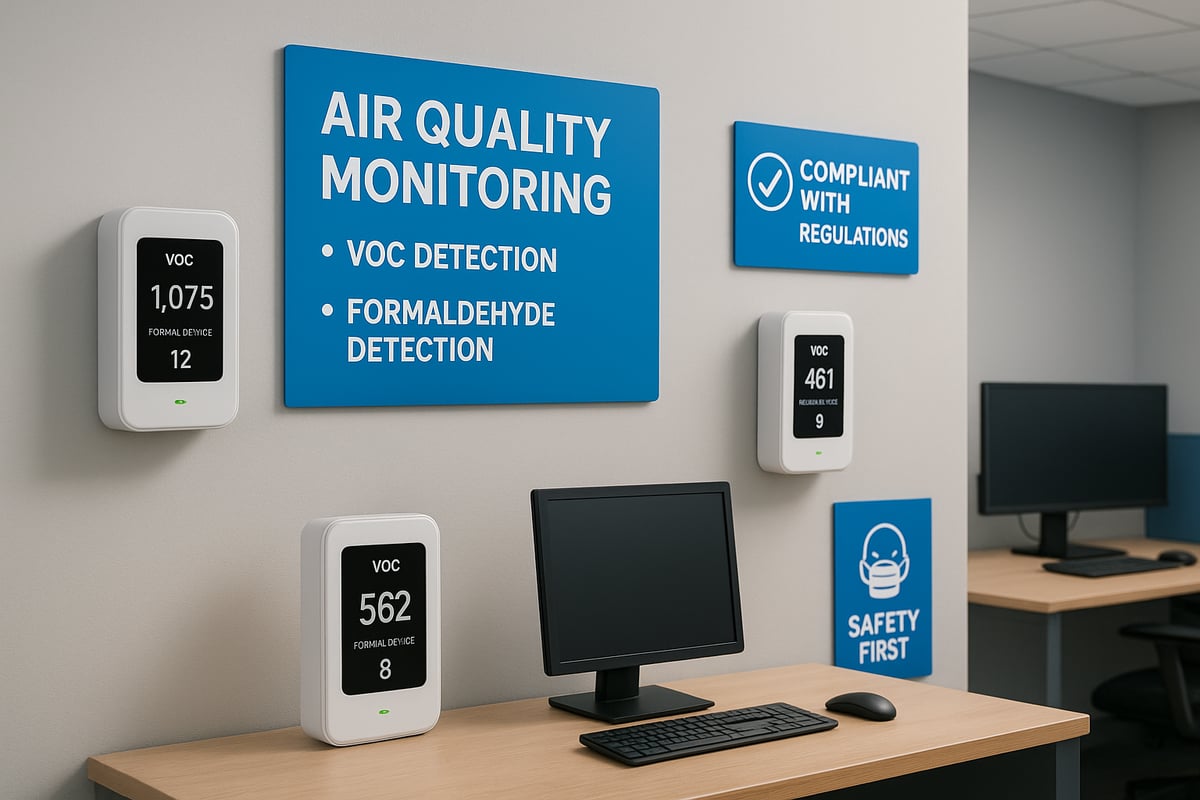
The landscape of voc and formaldehyde detection in 2026 is shaped by ever-evolving industry standards and stringent regulations. As public awareness of indoor air quality grows, organisations must stay ahead of compliance requirements to protect occupant health and avoid legal consequences.
Key Regulatory Bodies and Guidelines
Several authorities shape the framework for voc and formaldehyde detection. The Health and Safety Executive (HSE), World Health Organization (WHO), European Union (EU), and International Organization for Standardization (ISO) all set clear exposure thresholds and safety protocols. In the UK, HSE's guidance on formaldehyde exposure is particularly influential, outlining limits and safe handling practices. Recent 2026 updates include lower permissible exposure values and stricter reporting for high-risk settings. For further detail on UK-specific guidelines, visit the HSE guidelines on formaldehyde use.
With the push for healthier buildings, compliance with these standards is now essential for any organisation deploying voc and formaldehyde detection systems.
Legal Obligations for Businesses and Facility Managers
Legal duties around voc and formaldehyde detection are now more robust. Businesses are required to:
- Conduct routine air quality monitoring
- Maintain transparent records of all detection activities
- Report hazardous readings to relevant authorities
- Implement immediate remediation if limits are exceeded
Non-compliance may result in fines, prosecution, or reputational damage. Recent case law demonstrates that failure to act on detection data can lead to significant penalties. Facility managers should prioritise compliance by integrating detection protocols into daily operations.
Certification and Accreditation
Choosing certified equipment is a key step for reliable voc and formaldehyde detection. Look for devices marked with CE, ISO, or BSI certification, which signal adherence to quality and safety standards. Third-party validation ensures accuracy and reliability. Below is a quick comparison:
| Certification | What it Ensures | Common Symbols |
|---|---|---|
| CE | EU safety compliance | CE |
| ISO | International standard | ISO |
| BSI | UK quality mark | BSI Kitemark |
Always verify that detection systems have up-to-date certificates and have passed recent calibration checks.
Compliance Strategies
Effective compliance strategies start with a formal air quality management plan. This should include:
- Regular training for staff on detection protocols
- Scheduled audits and sensor maintenance
- Clear response procedures for elevated readings
Documenting every step ensures traceability and accountability. Engaging with external consultants may also help navigate complex regulatory landscapes, especially in multi-site or cross-border operations.
Sector-Specific Considerations
Requirements for voc and formaldehyde detection can vary by sector. Schools have a duty of care to protect children, often mandating more frequent monitoring and stricter limits. Healthcare facilities must safeguard vulnerable patients, while commercial properties focus on worker productivity and legal compliance. Tailoring detection and response strategies to each sector's unique needs is crucial for meeting all regulatory expectations.
Integrating Detection with Air Quality Management Solutions
In 2026, integrating voc and formaldehyde detection with active air quality management is essential for healthy indoor environments. Standalone monitoring is no longer enough. Modern facilities require seamless links between detection, remediation, and ongoing improvement. This section explores how innovative approaches are transforming air quality control for workplaces, schools, and homes.
Linking Detection to Remediation
Effective air quality management starts with real-time voc and formaldehyde detection. When elevated levels are identified, automated ventilation and filtration systems can be triggered instantly. This ensures pollutants are removed before they reach harmful concentrations.
For example, advanced HVAC systems now integrate directly with detection devices. When a spike in formaldehyde or VOCs occurs, the system increases airflow or activates high-efficiency filters. Some buildings use programmable logic to tailor responses based on pollutant type and severity.
- Real-time alerts to building managers
- Automated ventilation adjustments
- On-demand filtration activation
This approach means detection leads directly to action, minimising health risks and regulatory breaches.
Smart Building Ecosystems
Modern smart buildings bring together voc and formaldehyde detection, IoT connectivity, and centralised control. Sensors relay data to building management systems that monitor multiple parameters and coordinate responses across HVAC, lighting, and even occupancy.
Artificial intelligence and machine learning enhance these ecosystems by predicting trends and identifying anomalies before they become critical. For instance, if predictive analytics suggests a likely increase in VOCs due to scheduled cleaning, the system can proactively adjust ventilation.
Key features include:
- Central dashboards for multi-zone monitoring
- AI-driven predictive maintenance
- Seamless integration with energy management
This holistic approach optimises comfort, compliance, and operational efficiency.
Data Analytics for Continuous Improvement
Continuous improvement relies on robust data analytics. Historical records from voc and formaldehyde detection devices reveal patterns, helping facility managers set actionable air quality targets and track progress.
Data-driven insights support smarter decision-making. Teams can identify persistent problem areas, evaluate the impact of remediation efforts, and justify investments in new technologies. For a deeper understanding of analytics in this context, see Air quality analytics insights.
Benefits of advanced analytics include:
- Identifying sources and trends over time
- Setting and measuring clear air quality goals
- Supporting compliance with evolving standards
Regular analysis ensures that improvements are sustained, not just reactive.
Stakeholder Engagement
Transparent communication is crucial when implementing voc and formaldehyde detection strategies. Sharing air quality results with occupants and staff fosters trust and encourages proactive behaviour.
Digital dashboards, periodic reports, and targeted alerts keep everyone informed. In office environments, this transparency is increasingly expected. For strategies tailored to workplace settings, explore Office air quality monitoring.
Ways to engage stakeholders:
- Display real-time air quality screens in shared spaces
- Provide regular updates and educational materials
- Involve staff in response planning
Open dialogue supports a culture of safety and responsibility.
Cost-Benefit Analysis
Investing in voc and formaldehyde detection and integrated management delivers measurable returns. Proactive detection reduces absenteeism and healthcare costs by preventing exposure-related health issues.
A simple comparison:
| Approach | Upfront Cost | Ongoing Savings | ROI Timeline |
|---|---|---|---|
| Manual spot checks | Low | Minimal | Long |
| Integrated system | Moderate | Significant | Short to medium |
The initial investment is quickly offset by improved productivity, fewer complaints, and easier regulatory compliance.
Future-Proofing Your Facility
As standards evolve and technology advances, facilities must remain adaptable. Scalable voc and formaldehyde detection solutions allow for easy upgrades and expansion. Building management systems should be flexible enough to incorporate new sensor types and data protocols.
By future-proofing now, organisations ensure that their air quality management remains effective, compliant, and sustainable for years to come.
The Future of VOC and Formaldehyde Detection: Trends and Innovations
The landscape of voc and formaldehyde detection is evolving rapidly as we approach 2026. Advances in technology, growing health awareness, and regulatory changes are shaping how we monitor and manage indoor air quality. This section explores the trends and innovations driving the future of detection and what you can expect in the coming years.
Emerging Technologies
Miniaturisation is transforming voc and formaldehyde detection, making devices smaller, more affordable, and wearable. Wearable sensors allow real-time personal exposure tracking, which is especially valuable for workers in high-risk environments.
Artificial intelligence is being integrated into detection systems for anomaly recognition and predictive analytics. These technologies provide early warnings of air quality issues, enabling proactive intervention before health risks escalate.
Recent breakthroughs include nanomaterial-based sensors with enhanced sensitivity and selectivity. For a deeper dive, review Advancements in VOC detection technologies, which highlights cutting-edge sensor materials and their applications.
Market Growth and Adoption
The market for voc and formaldehyde detection is expanding rapidly in the UK and globally. Increased health awareness and stricter regulations are key drivers, alongside incentives from insurers for proactive air quality management.
Forecasts suggest widespread adoption in both commercial and residential settings. Businesses are investing in integrated detection systems as part of occupational health and safety programmes.
Insurers are starting to offer premium reductions for facilities with continuous monitoring and documented air quality improvements. This trend is expected to accelerate as the cost of advanced detection drops further.
Integration with Health and Wellness Initiatives
Voc and formaldehyde detection is now linked closely with workplace health and wellness initiatives. Smart offices are deploying sensors that feed real-time air quality data into employee wellness dashboards.
Occupational health programmes can use this data to identify problem areas and tailor interventions. In schools and healthcare settings, transparent reporting helps build trust with staff and families.
By integrating detection with building management systems, organisations can automate ventilation and filtration responses, ensuring a healthier environment for all occupants.
Research and Development Highlights
Research in voc and formaldehyde detection is moving at pace, with universities and industry partners collaborating to develop new sensor materials and algorithms. Focus areas include increasing sensitivity, reducing cross-sensitivity, and improving device longevity.
Advanced data analytics are enabling better interpretation of complex air quality data. The use of machine learning models allows for more accurate trend prediction and early detection of anomalies.
These developments are making detection more accessible and reliable, supporting the widespread adoption of proactive air quality management.
Consumer Awareness and Behaviour Change
Public demand for transparency in indoor air quality is on the rise. People expect real-time information about voc and formaldehyde detection in offices, schools, and public spaces.
Educational campaigns and accessible dashboards help drive behaviour change, encouraging occupants to adopt healthier habits and demand safer environments. Organisations that communicate their air quality initiatives build trust and reputation.
As awareness grows, so does the expectation for regular monitoring, transparent reporting, and swift remediation.
Barriers and Challenges Ahead
Despite progress, several challenges remain in voc and formaldehyde detection. Cost is still a barrier for some, especially smaller organisations or households.
Technical complexity and interoperability issues can hinder seamless integration with building management systems. There are also important privacy and ethical considerations around the collection and use of air quality data.
Addressing these barriers will be crucial for ensuring that detection technologies are accessible, reliable, and trusted by all stakeholders.
Preparing for 2030 and Beyond
Looking ahead, regulatory shifts will continue to influence voc and formaldehyde detection. Increased focus on climate resilience and sustainability means air quality monitoring will play a critical role in building design and operation.
Anticipated updates to exposure limits and reporting requirements will require organisations to stay informed and agile. For a comprehensive overview of formaldehyde’s regulatory landscape, see the Formaldehyde risk evaluation by EPA.
Facilities that invest in scalable, adaptable detection solutions today will be best positioned to meet future standards and protect occupant health.
As we’ve explored, understanding and managing VOCs and formaldehyde is essential for safeguarding the health and wellbeing of everyone in your building, whether it’s a school, office, or leisure space. With advances in detection technology, you now have the tools to stay ahead of air quality risks and meet the latest compliance standards. If you’re ready to take the next step and want personal guidance on choosing the right solution or integrating real time monitoring into your environment, you can talk to our team and protect your building today.


Share:
Vape Guardian School Safety Guide: Protecting Students in 2026
Air Monitoring in Schools Guide: Ensuring Safe Classrooms 2026