
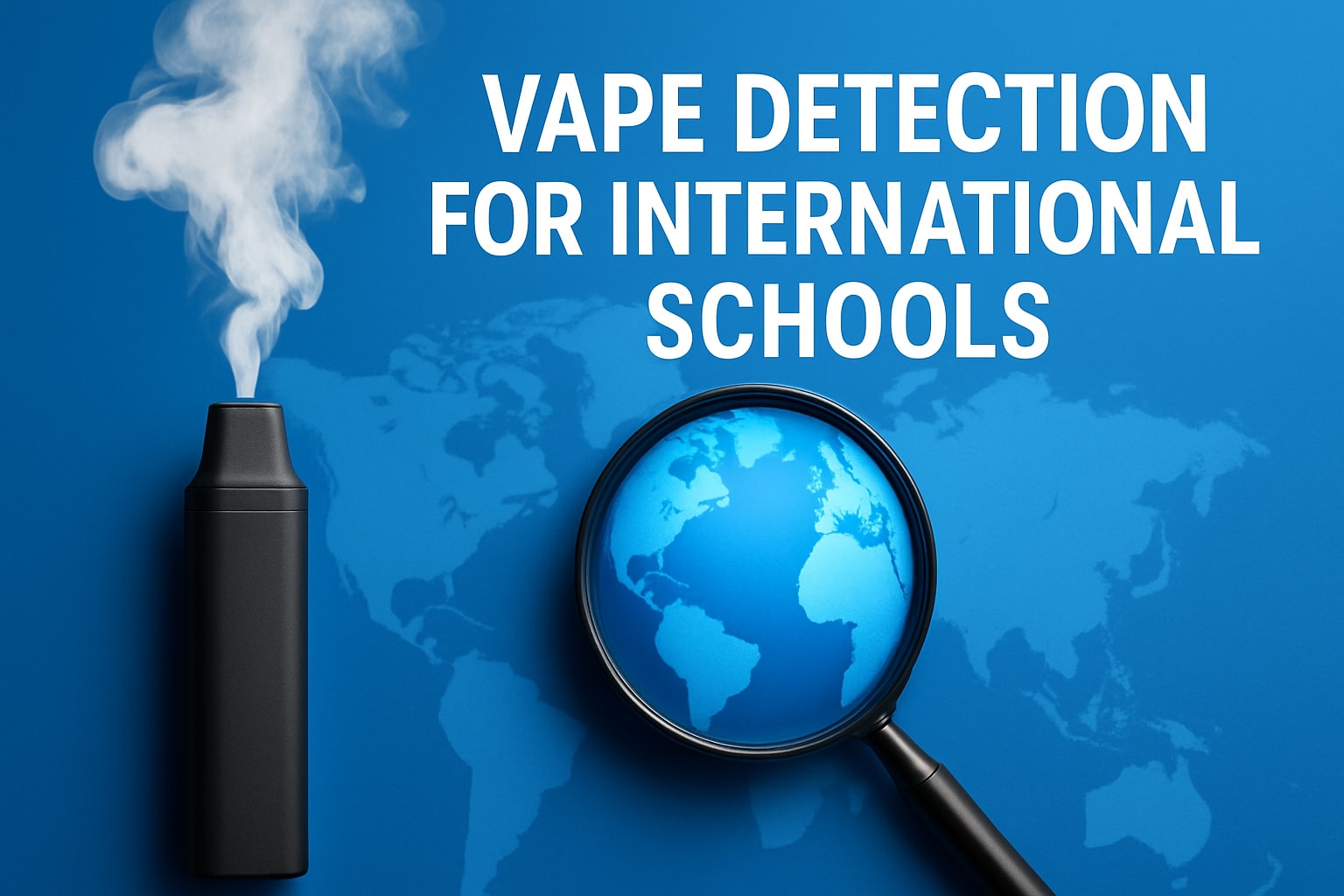
Vaping is quietly becoming a widespread concern across international schools, threatening student wellbeing and the reputation of leading institutions. School leaders face a complex challenge as vaping devices become more discreet and policies struggle to keep pace.
This expert guide on vape detection for international schools arms you with practical strategies to address this urgent issue before it escalates further. You will discover the latest risks, innovative detection technologies, and clear steps for safeguarding your community by 2026.
Explore proven solutions, policy integration tips, and future-proofing measures. Take decisive action to ensure your campus remains a safe and healthy environment for every student.
The Rising Challenge of Vaping in International Schools
Vaping is no longer a marginal issue in international schools. Rising use among students is reshaping campus health and safety. School leaders now face mounting pressure to respond, as vaping incidents threaten both student wellbeing and institutional reputation.

Global Trends and Statistics
Across the globe, youth vaping is surging in international schools. Recent data from the World Health Organization and national health authorities reveal that adolescent e-cigarette use has reached record highs. Substances commonly detected include nicotine, THC, and synthetic cannabinoids such as Spice.
Notable incidents have made headlines, causing significant reputational damage and sparking urgent conversations in the education sector. When comparing international and local schools, studies show international campuses often experience higher rates due to diverse student backgrounds and less consistent local oversight.
| School Type | Reported Vaping Rate (%) |
|---|---|
| International School | 27 |
| Local School | 18 |
For a deeper dive into the crisis and how detection is evolving, see this underage vaping in schools crisis article.
Health and Safety Risks
The health implications of vaping for teenagers are serious. Short-term effects include respiratory irritation, headaches, and increased heart rate. Over time, vaping is linked to impaired lung development, addiction, and potential exposure to toxic chemicals.
Learning and behaviour can also suffer. Students who vape may experience concentration difficulties and mood swings, impacting classroom performance. There are also secondary risks, as non-vaping students and staff can be exposed to aerosols in shared spaces.
Schools have reported vaping-related emergencies, such as fainting or allergic reactions, which require immediate intervention. Implementing vape detection for international schools helps address these health and safety challenges.
Cultural and Regulatory Differences
International schools operate in diverse legal and cultural landscapes. National laws on vaping can vary widely, from strict bans to minimal regulation. This creates challenges for school leaders who must comply with local requirements while upholding global safeguarding standards.
Cultural attitudes towards vaping differ as well. In some countries, parents and communities may be more tolerant, while in others, there is strong opposition. Meeting parental expectations and balancing these perspectives is a complex task for any international school.
Clear and consistent vape detection for international schools is essential for navigating these regulatory and cultural differences.
The Hidden Nature of Vaping
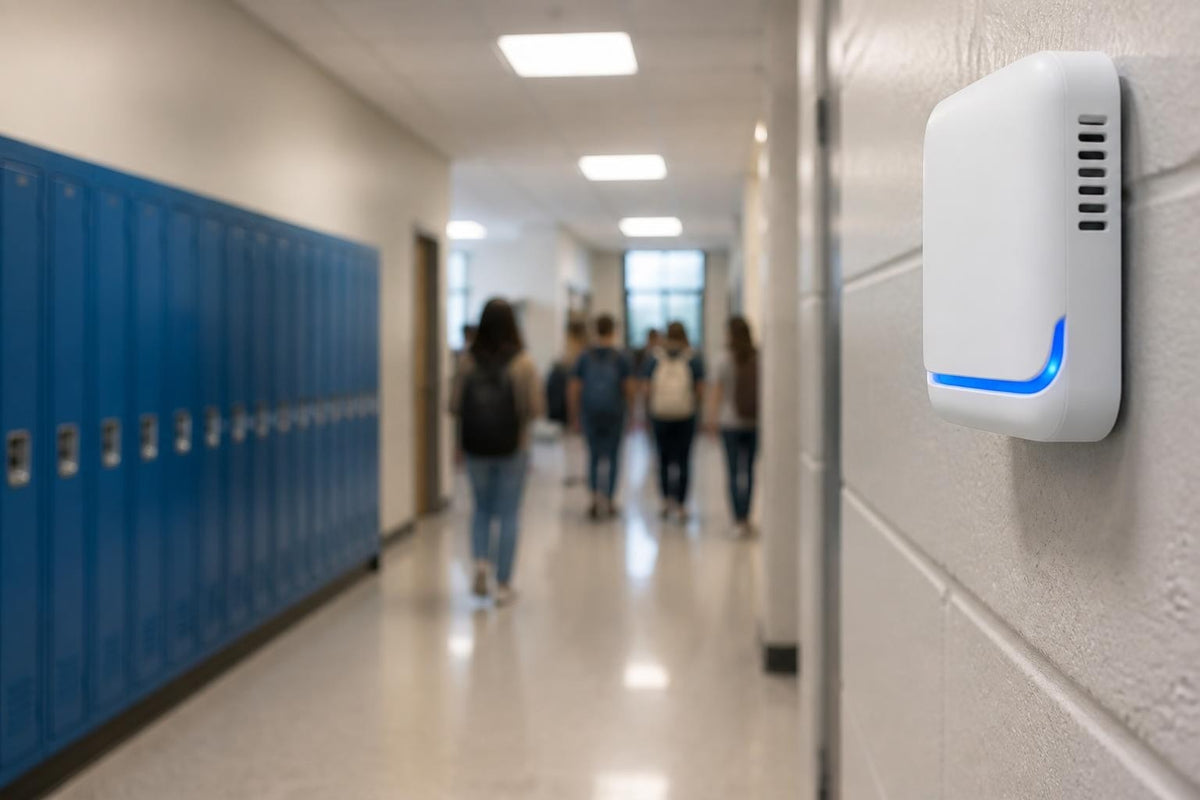
Students have become adept at concealing vaping activities. Devices are now small, odourless, and often disguised as pens or USB drives. Vaping can take place in toilets, changing rooms, and secluded corridors, making it difficult for staff to supervise effectively.
Traditional supervision and discipline methods are often insufficient. One international school faced repeated incidents in student restrooms, despite regular patrols and awareness campaigns. Only after introducing technology-driven vape detection for international schools did the school see a measurable drop in incidents.
The Urgency for Proactive Detection
Relying on reactive measures, such as searching bags or responding to complaints, has proven ineffective. By the time staff intervene, the activity has often ended and evidence is gone.
Early intervention is crucial to prevent escalation. Proactive vape detection for international schools allows staff to identify issues in real time, support at-risk students, and maintain a safer environment for everyone.
Vape Detection Technologies: What’s Available in 2026?
The landscape of vape detection for international schools has undergone rapid transformation, with cutting edge solutions now available to safeguard student wellbeing. As vaping trends evolve, so too do the technologies designed to counteract them. In this section, we explore the current and emerging tools, their integration into school environments, and how to make informed choices for your campus.

Evolution of Vape Detection Systems
Vape detection for international schools has evolved significantly over the past decade. Initially, schools relied on manual checks and staff vigilance, which often proved ineffective against discreet vaping devices. By 2026, the field features advanced AI powered sensors capable of detecting aerosols and chemicals in real time.
Key milestones include the shift from basic smoke detectors to smart air quality monitors and machine learning algorithms. These systems now use environmental data to distinguish between harmless vapour and substances like nicotine or THC. This progression has made vape detection for international schools far more proactive and reliable.
Types of Vape Detection Devices
There are several categories of vape detection devices, each tailored to different needs within international schools. Air quality sensors are the most common, identifying vape aerosols and particulates at a molecular level.
Some systems incorporate audio sensors to detect anti social behaviour that may accompany vaping. Multi substance detectors can identify a range of compounds, such as THC, synthetic cannabinoids, and nicotine. The versatility of these devices makes vape detection for international schools adaptable to changing threats.
- Air quality sensors
- Audio based detectors
- Multi substance analysers
Choosing the right device depends on the specific risks faced by your school.
Integration with School Infrastructure
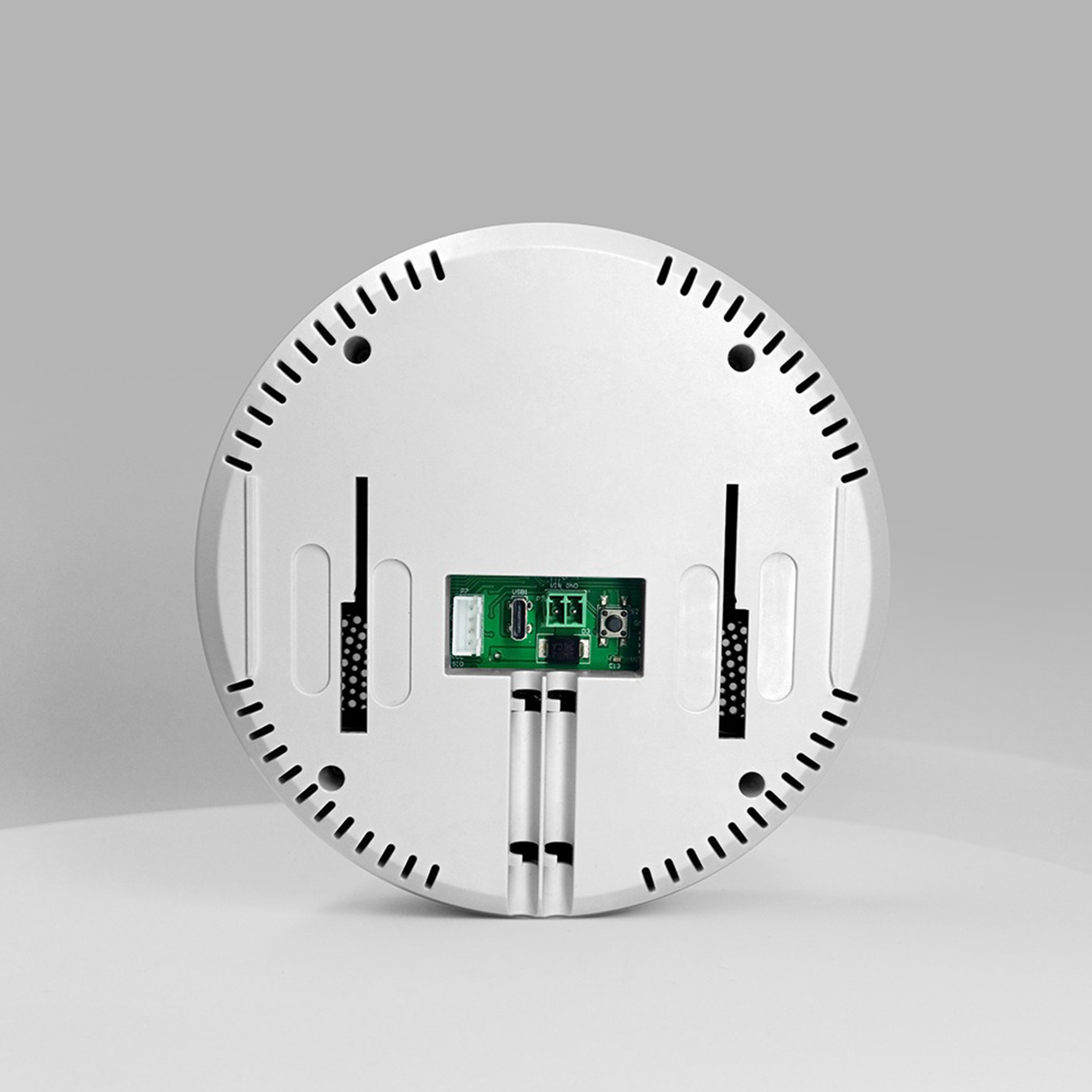
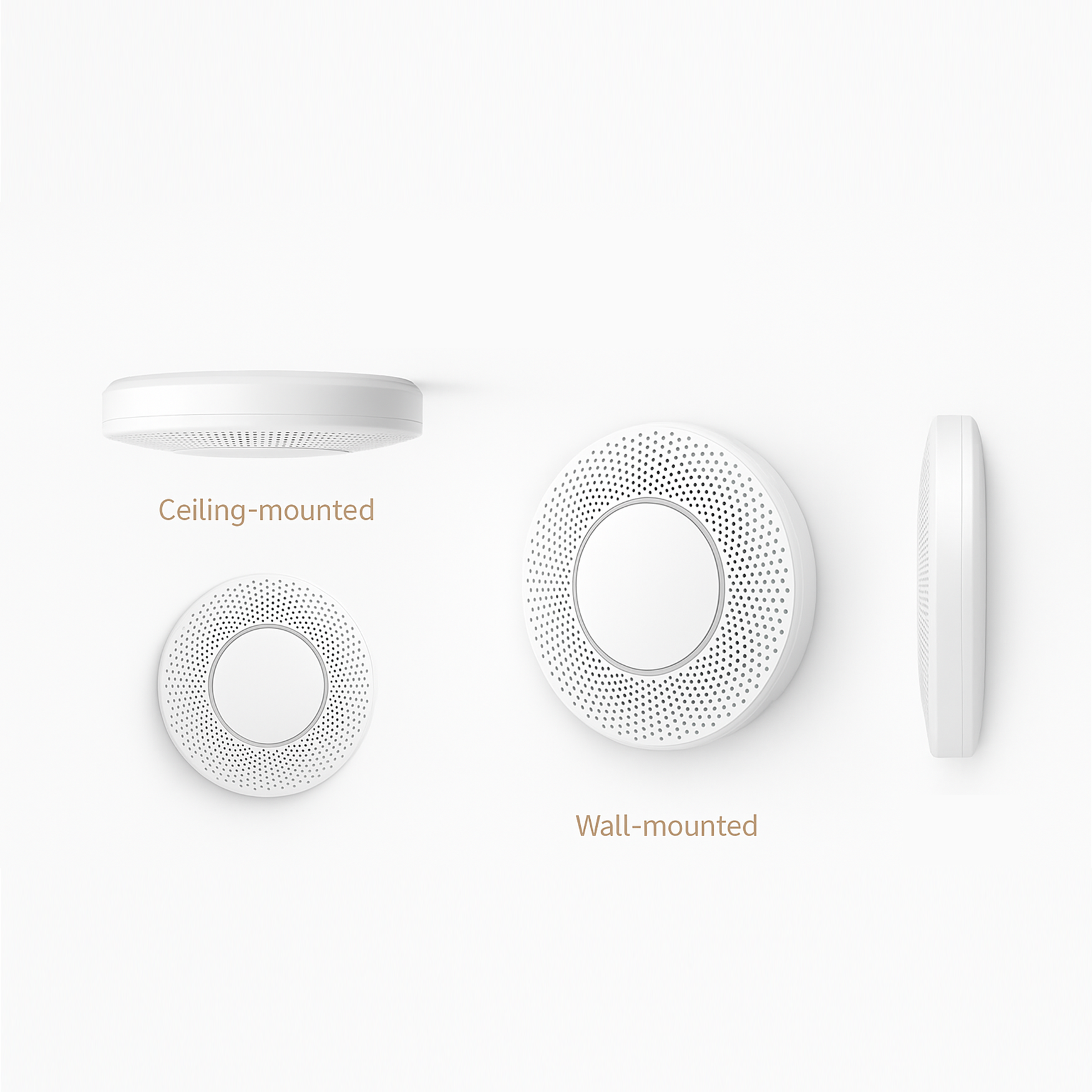
Modern vape detection for international schools is designed for seamless integration with existing infrastructure. Schools can choose between wireless and wired systems, each offering distinct benefits.
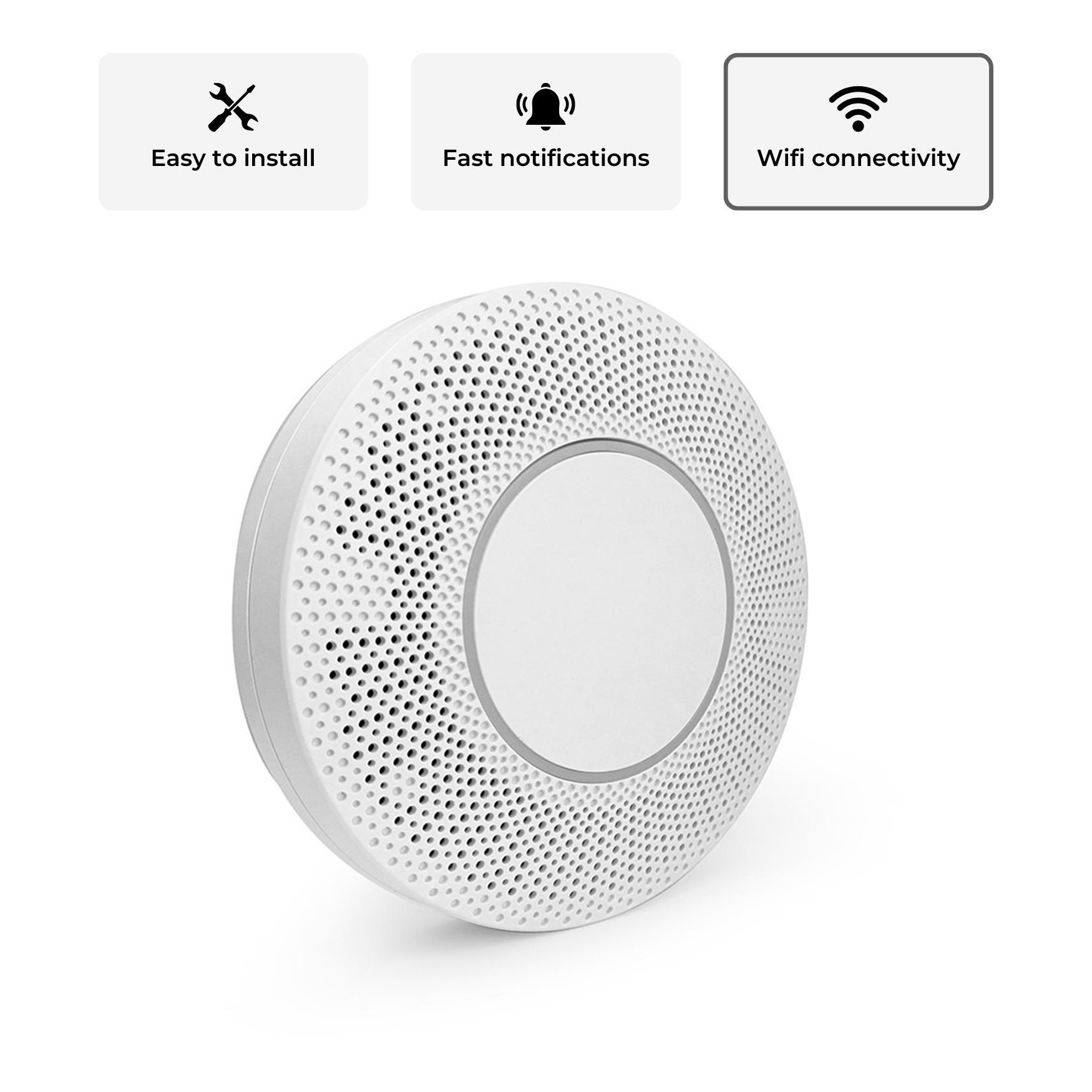
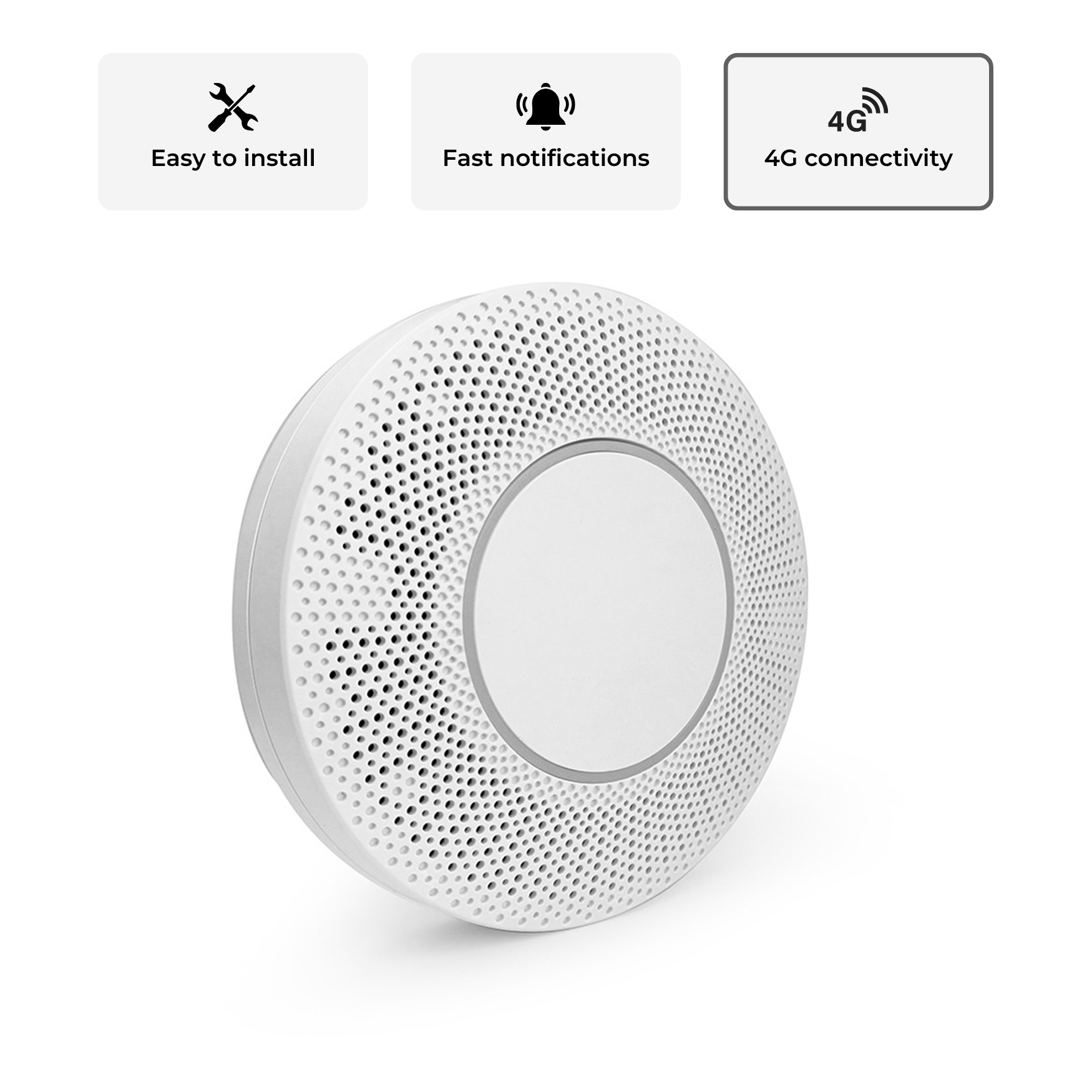
Wireless systems provide easier installation and flexibility, while wired options deliver consistent connectivity and reduced interference. Cloud based dashboards allow staff to monitor incidents from any location, and mobile app integration means alerts are received instantly.
Real time reporting features ensure that every vape detection for international schools incident is logged, supporting swift intervention and data driven decision making.
Accuracy and Reliability
Accuracy is a critical concern in vape detection for international schools. Early models struggled with false positives, often confusing steam or deodorant sprays with actual vaping.
Today’s solutions use AI algorithms and multiple data points to reduce errors. Studies show that the latest systems achieve over 90 percent accuracy in detecting vaping substances. Continuous calibration and software updates further enhance reliability.
Schools benefit from real time alerts that are both precise and actionable, ensuring that vape detection for international schools leads to timely and appropriate responses.
Privacy and Ethical Considerations
Balancing effective vape detection for international schools with privacy is essential. Schools must ensure that monitoring technology complies with both local and international legal frameworks.
The best systems focus solely on detecting airborne substances, avoiding unnecessary collection of personal data. Clear communication with students and parents about what is monitored helps build trust. Ethical use guidelines should be established, ensuring vape detection for international schools is used for safeguarding, not surveillance.
Selecting the Right Solution
Selecting vape detection for international schools requires careful evaluation. Factors to consider include coverage, scalability, cost, and ease of maintenance. Comparing leading solutions can be simplified using a table:
| Feature | Wireless System | Wired System | Multi Substance Detection | Cloud Dashboard |
|---|---|---|---|---|
| Coverage | High | Very High | Yes | Yes |
| Scalability | Excellent | Good | Yes | Yes |
| Cost | Moderate | Higher | Varies | Included |
| Maintenance | Low | Moderate | Moderate | Low |
For a comprehensive overview of available options and deployment advice, visit Vape detectors for education settings.
Making the right choice ensures vape detection for international schools is both effective and sustainable for the future.
Step-by-Step Guide to Implementing Vape Detection in International Schools
Introducing vape detection for international schools requires a methodical plan, cross-functional teamwork, and commitment from leadership. This step-by-step guide lays out the essential actions for school leaders to create a safer, healthier environment by 2026.
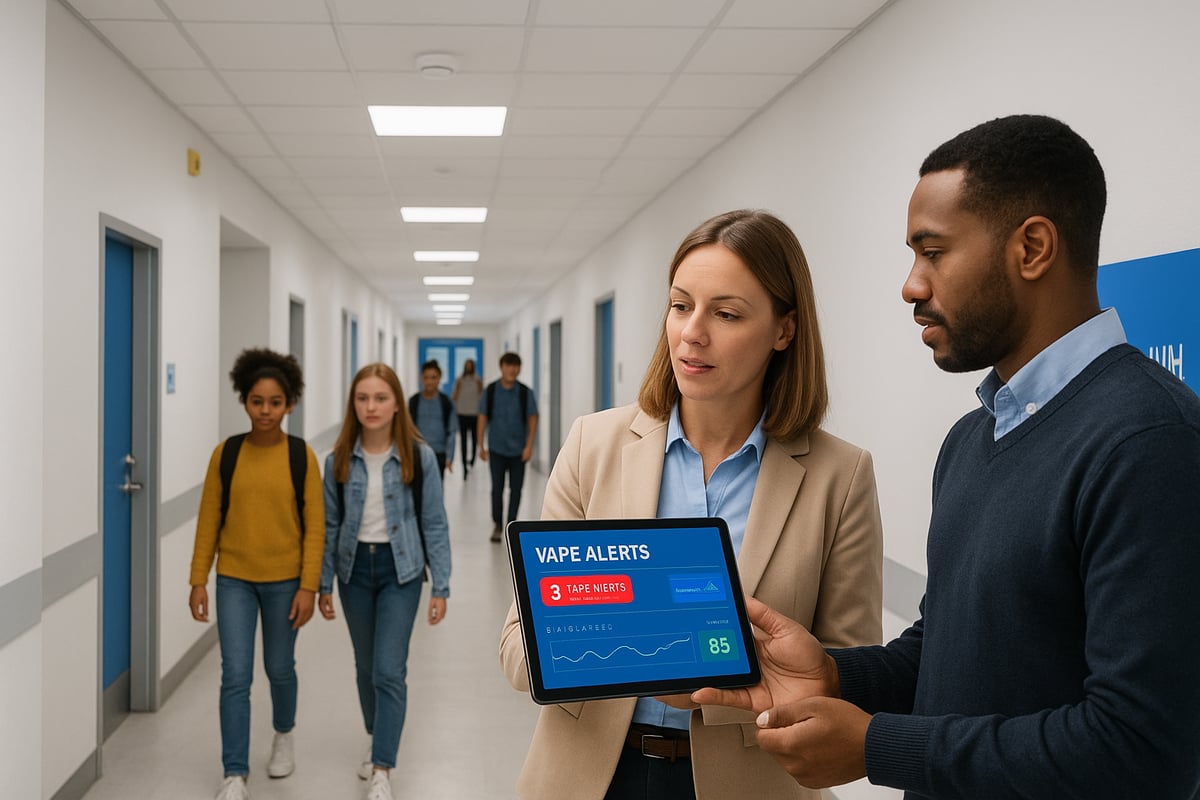
Step 1: Assessing Your School’s Needs
Begin by conducting a comprehensive risk assessment across your campus. Identify locations where vaping incidents are most likely, such as toilets, changing rooms, and secluded corridors. Engage staff, students, and parents to gather insights into problem areas and times.
Key actions include:
- Surveying staff and students about known hotspots.
- Reviewing incident logs for patterns.
- Consulting with local health authorities.
This foundation ensures vape detection for international schools targets the highest risk areas and addresses community concerns from the outset.
Step 2: Researching and Selecting Technology
With clear needs identified, research available vape detection technologies. Request demonstrations from vendors and compare features, such as detection accuracy, substance coverage, and integration with existing systems. Consider the future scalability of each solution.
A sample comparison table:
| Feature | Vendor A | Vendor B | Vendor C |
|---|---|---|---|
| Substance Types | Nicotine, THC | Nicotine only | Nicotine, THC, Spice |
| Real Time Alerts | Yes | No | Yes |
| Cloud Dashboard | Yes | Yes | No |
| Mobile Integration | Yes | No | Yes |
For actionable guidance, refer to this How to stop vaping at school resource, which outlines proven steps that align with vape detection for international schools.
Step 3: Planning Installation
Work closely with your facilities and IT teams to map out optimal device placement. Ensure all power and connectivity requirements are met before installation begins.
Key considerations:
- Position devices in high risk zones without intruding on privacy.
- Check Wi-Fi or wired network availability in each area.
- Schedule installation during school breaks to minimise disruption.
A thoughtful installation plan is essential for seamless vape detection for international schools, maximising coverage and system reliability.
Step 4: Staff Training and Awareness
Effective vape detection for international schools depends on staff understanding and engagement. Train teachers, security personnel, and administrators on system use, alert response, and maintenance routines.
Awareness strategies include:
- Hands-on training sessions with device demonstrations.
- Clear protocols for responding to alerts.
- Information campaigns for students and parents.
Regular training ensures consistency in response and builds a culture of prevention throughout the school community.
Step 5: Policy Integration and Communication
Update your school’s policies to reflect the introduction of vape detection for international schools. Clearly outline the consequences of vaping, detection procedures, and support pathways for students caught vaping.
Transparent communication is vital:
- Notify students and families about the new systems.
- Address privacy and disciplinary concerns openly.
- Provide information on health risks and available support.
Policy clarity helps align expectations and fosters trust within the international school community.
Step 6: Ongoing Monitoring and Support
Continuous monitoring is crucial for the long term success of vape detection for international schools. Schedule regular system checks and software updates to maintain accuracy.
Leverage incident data to refine intervention strategies:
- Review alert logs for patterns over time.
- Adjust device placement if new hotspots emerge.
- Utilise vendor support for troubleshooting and refresher training.
Ongoing support ensures the technology continues to meet your school’s evolving needs.
Step 7: Measuring Success and Continuous Improvement
Set clear benchmarks and key performance indicators to evaluate the effectiveness of vape detection for international schools. Track reductions in vaping incidents, response times, and feedback from staff and students.
Continuous improvement steps:
- Hold termly review meetings with key stakeholders.
- Adjust policies and procedures based on data insights.
- Stay informed about emerging vaping trends and detection technologies.
Regular assessment ensures your vape detection strategy remains effective, adaptable, and aligned with your school’s safeguarding goals.
Integrating Vape Detection with School Policies and Safeguarding
Developing a robust policy framework is essential for the success of vape detection for international schools. Clear guidelines ensure that detection systems are not only effective but also legally compliant and culturally sensitive.
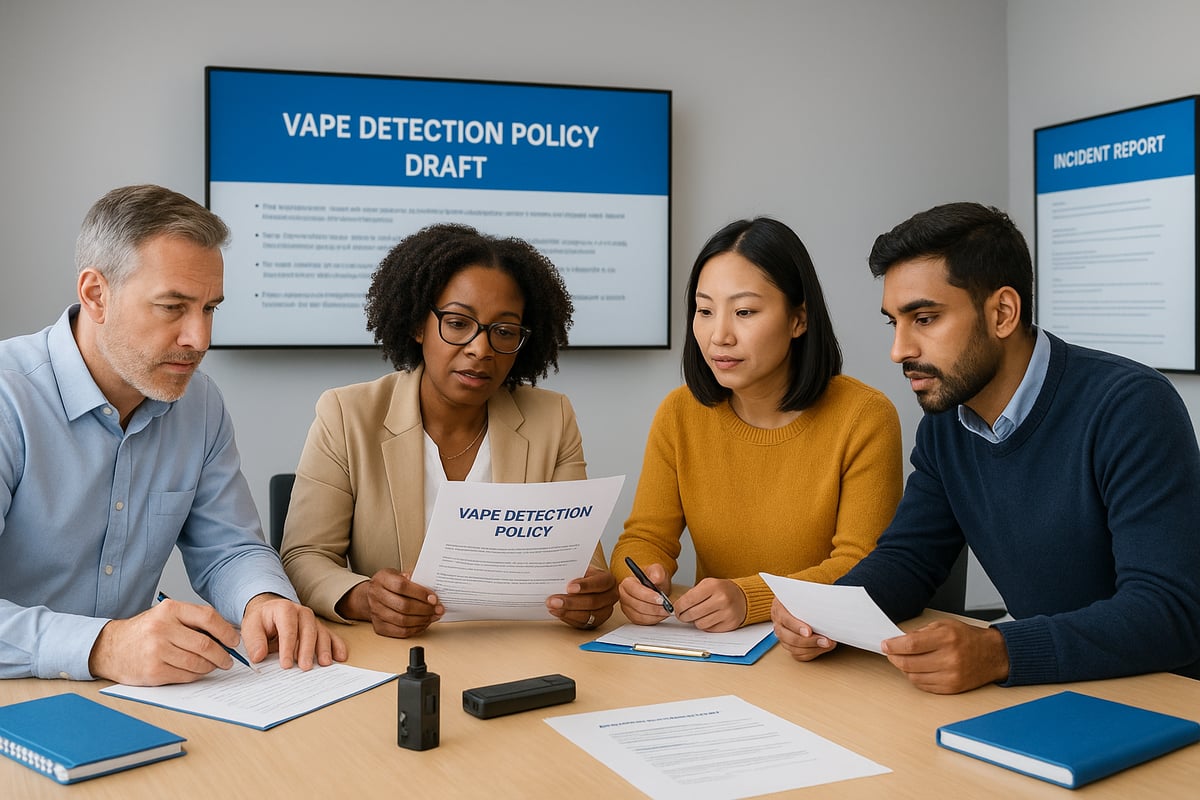
Policy Development and Review
To implement vape detection for international schools, leaders must begin by crafting comprehensive anti-vaping policies. These should define unacceptable behaviours, outline detection protocols, and specify disciplinary procedures.
Policies must be regularly reviewed to stay compliant with the host country's laws and reflect international best practices. A policy review table can help schools track essential elements:
| Policy Area | Reviewed | Last Update | Notes |
|---|---|---|---|
| Detection Protocols | Yes | 2025-09 | Updated for new tech |
| Disciplinary Steps | Yes | 2026-01 | Aligned with local law |
| Privacy Measures | Yes | 2025-11 | GDPR-compliant |
Clear, accessible policies foster transparency and reinforce the school's commitment to student wellbeing.
Safeguarding and Student Support
Vape detection for international schools must be integrated with safeguarding measures. When a detection alert is triggered, it should initiate a supportive response rather than punitive action alone.
Effective safeguarding links detection with pastoral care, offering students counselling and education on the risks of vaping. For example, after a vape incident, some schools have found success by providing restorative conversations and health guidance rather than immediate suspension.
Balancing discipline with support encourages honest dialogue and long-term behavioural change, creating a culture of trust and safety.
Engaging the School Community
Building a culture around vape detection for international schools requires engaging parents, guardians, and local health authorities. Regular workshops and information sessions keep the community informed and involved.
Schools can empower staff and families with resources from the Vaping education hub for schools, which offers guides, lesson plans, and practical advice. Open communication fosters shared responsibility and ensures everyone understands the school's approach to vaping prevention.
Community engagement is key to sustaining awareness and reinforcing policy effectiveness.
Data Management and Reporting
Managing data securely is critical in vape detection for international schools. Detection system data should be handled in line with privacy regulations and only accessible to authorised personnel.
Incident reporting must be clear and consistent, allowing schools to track trends and report significant events to stakeholders or authorities while maintaining confidentiality. Transparency in data handling reassures families that student privacy is respected.
Regular analysis of incident data also helps schools refine intervention strategies and measure policy impact.
Preparing for Regulatory Inspections
Preparation for inspections is a vital aspect of vape detection for international schools. Schools should maintain thorough documentation of policy updates, incident logs, and staff training records.
Demonstrating proactive safeguarding measures and compliance with local and international standards can support accreditation and build trust with regulatory bodies. Regular self-assessments and readiness drills ensure that the school is always inspection-ready.
Embedding detection within broader safeguarding processes shows a genuine commitment to student health and safety.
Future-Proofing Your Vape Detection Strategy
Staying ahead of vaping trends is essential for effective vape detection for international schools. As student tactics evolve, so must your strategies, ensuring your school remains protected and compliant. Future-proofing means more than just installing technology—it is about building a resilient, adaptable system that keeps pace with change.
Adapting to Emerging Vaping Trends
Emerging trends in vaping, such as new device forms and substances, challenge even the most vigilant schools. Regularly reviewing reports and consulting with health authorities helps schools anticipate threats. Monitoring student behaviour and staying informed about regional trends ensures vape detection for international schools remains relevant and effective.
Schools should maintain an open dialogue with local experts and law enforcement. By fostering relationships, you gain early warnings about new vaping products or tactics. Being proactive, not reactive, is key to long-term success.
Leveraging AI and Analytics
Artificial intelligence enables data-driven decision-making in vape detection for international schools. Modern systems use predictive analytics to identify patterns, risk zones, and peak incident times. Tools like FlySense® Vape & Bullying Detector combine air quality sensors and real-time alerts, supporting rapid intervention.
Automated reporting streamlines follow-up actions and ensures staff respond quickly. AI can also reduce false positives, increasing confidence in system reliability. Embracing these innovations maximises both effectiveness and operational efficiency.
International Collaboration and Best Practice Sharing
Collaboration across borders is vital as international schools face unique regulatory and cultural challenges. Participating in global forums, sharing case studies, and learning from ongoing research strengthens vape detection for international schools.
Resources like the Global Study on Teen Vaping provide valuable insights into adolescent vaping behaviours worldwide. By working together, schools can standardise responses and pool resources for better outcomes.
Sustaining a Culture of Prevention
A prevention-focused culture underpins successful vape detection for international schools. Ongoing education for students, staff, and parents helps create a shared sense of responsibility. Workshops, assemblies, and information campaigns should be refreshed regularly to address new concerns.
Integrating vape detection into broader wellbeing initiatives ensures that deterrence is balanced with support. Encouraging students to report concerns and seek help fosters a safer, more inclusive environment for all.
Budgeting and Resource Planning
Long-term planning is crucial for sustaining vape detection for international schools. Allocate funds for system upgrades, staff training, and ongoing maintenance. Budgeting should account for both hardware and software renewal cycles.
Consider creating a resource table that tracks costs, renewal dates, and training schedules. This proactive approach helps avoid lapses in coverage and ensures your detection system remains effective as your school evolves.
As we’ve explored, tackling vaping in international schools demands a forward-thinking approach that goes beyond policy updates and traditional supervision. By integrating advanced detection technology, you can create a safer, healthier environment for every student and meet evolving safeguarding standards with confidence. If you’re ready to see exactly how these solutions work in real school settings—and discover how effective monitoring can reduce incidents and support your compliance efforts—take the next step. Learn how Vape Guardian is protecting schools. Your commitment today sets the standard for student wellbeing tomorrow.




Share:
Become a Vape Detection Partner: The Essential Guide 2026
How to Stop Vaping in Schools: The Essential Guide 2026