

The rise of vaping in educational institutions and workplaces has created unprecedented challenges for facility managers, administrators, and health and safety officers. Traditional supervision methods prove ineffective in monitoring enclosed spaces like toilets, changing rooms, and private areas where vaping typically occurs. A remote vape monitoring system addresses this gap by providing continuous, automated surveillance that detects vaping activity and other air quality concerns without invading personal privacy. These intelligent systems combine advanced sensor technology, cloud connectivity, and instant alerting capabilities to create safer environments whilst supporting compliance with organisational policies and regulatory requirements.
Understanding Remote Vape Monitoring Technology
Remote vape monitoring systems represent a significant advancement in environmental safety technology. Unlike basic smoke detectors or manual inspection protocols, these sophisticated platforms utilise multi-sensor arrays that identify specific chemical signatures associated with vaping products.
The technology operates through strategically positioned sensors that continuously sample air quality parameters. When these devices detect vapour particulates, volatile organic compounds, or specific chemical markers consistent with e-cigarette use, they transmit data wirelessly to centralised monitoring platforms.
Core Components of Detection Systems
Modern remote vape monitoring systems comprise several integrated elements working in harmony:
- Multi-spectrum sensors capable of identifying nicotine, THC, and other substances
- Wireless connectivity modules enabling real-time data transmission
- Cloud-based analytics platforms processing sensor data and generating alerts
- User interface dashboards providing visibility across multiple locations
- Mobile notification systems ensuring immediate response capabilities
The integration of these components creates a comprehensive monitoring ecosystem. Sensors communicate continuously with cloud infrastructure, analysing patterns and triggering alerts when threshold values are exceeded. This architecture supports smart building sensors that extend beyond vape detection to encompass broader environmental monitoring objectives.

Detection Capabilities Beyond Vaping
Advanced systems extend monitoring capabilities to encompass various environmental and behavioural concerns:
- Air quality monitoring tracking PM2.5 particulates, carbon dioxide, and humidity
- Acoustic monitoring identifying elevated noise levels indicating disruption
- Temperature fluctuations detecting unusual environmental conditions
- Chemical vapour detection recognising substance abuse beyond standard vaping products
This multi-dimensional approach provides organisations with comprehensive situational awareness. The environmental monitoring system capabilities enable proactive intervention before situations escalate whilst maintaining detailed records for compliance and investigation purposes.
Implementation Strategies for Educational Institutions
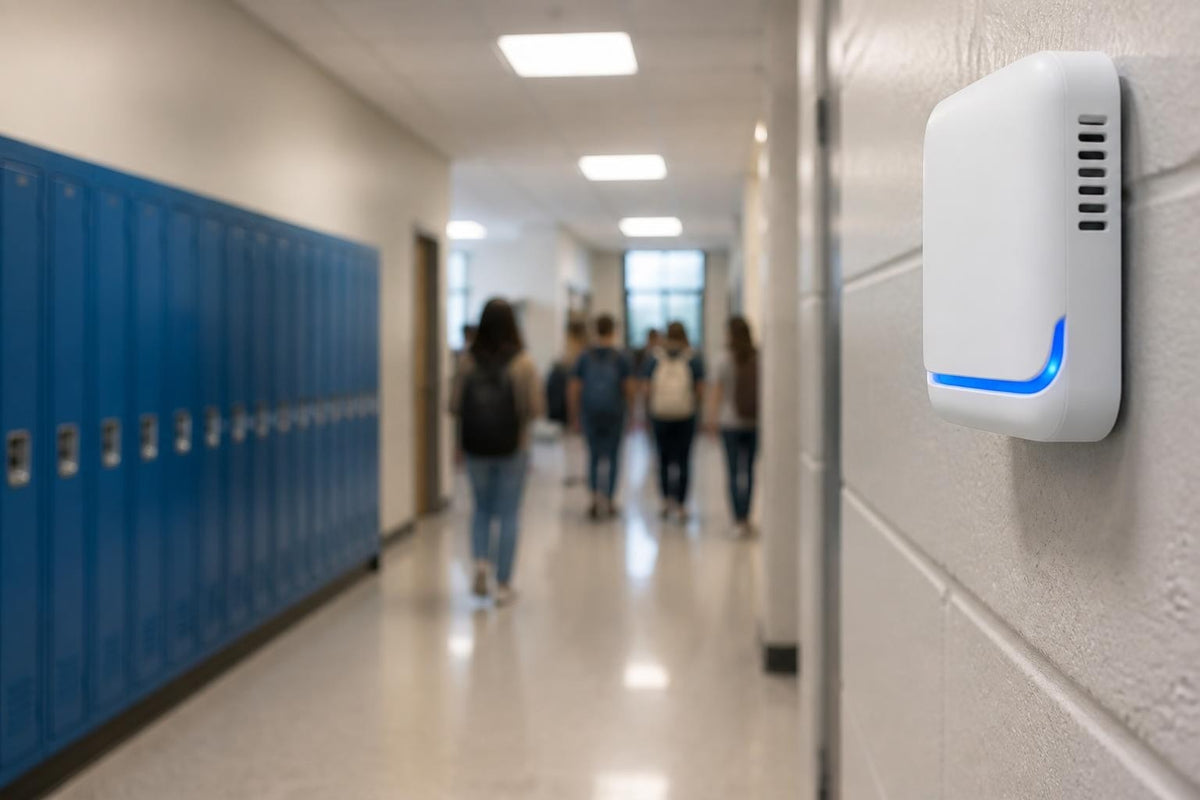
Schools and colleges face unique challenges when addressing vaping amongst students. A remote vape monitoring system offers discrete, effective oversight that respects privacy whilst maintaining safety standards.
Strategic Placement Considerations
Successful deployment requires thoughtful sensor positioning. High-risk areas demand priority coverage:
Primary Installation Locations:
| Location Type | Risk Level | Monitoring Priority | Sensor Density |
|---|---|---|---|
| Student toilets | Very High | Critical | 1 per facility |
| Changing rooms | High | Essential | 1-2 per room |
| Stairwells | Medium | Important | 1 per floor |
| Common areas | Low-Medium | Supplementary | Strategic points |
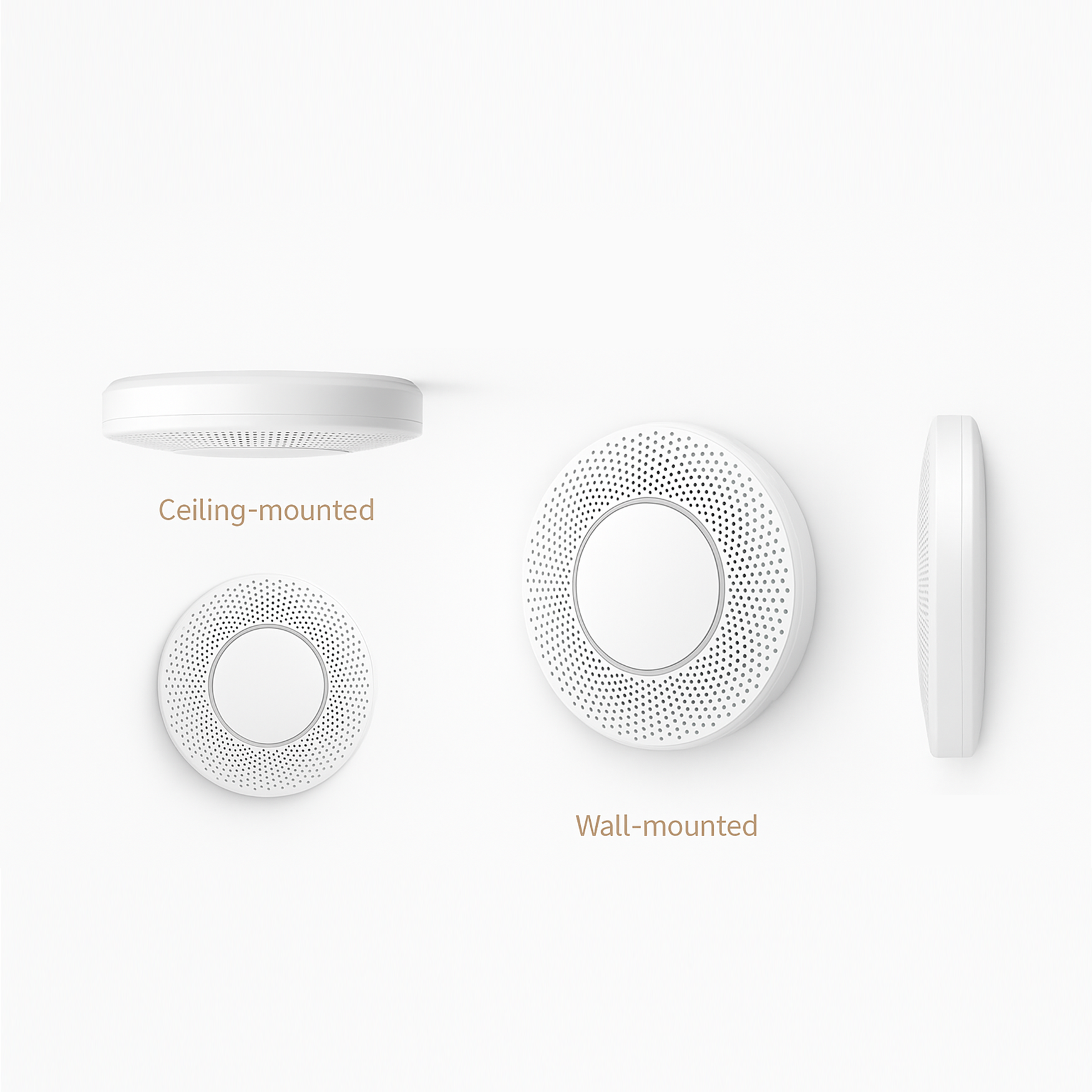
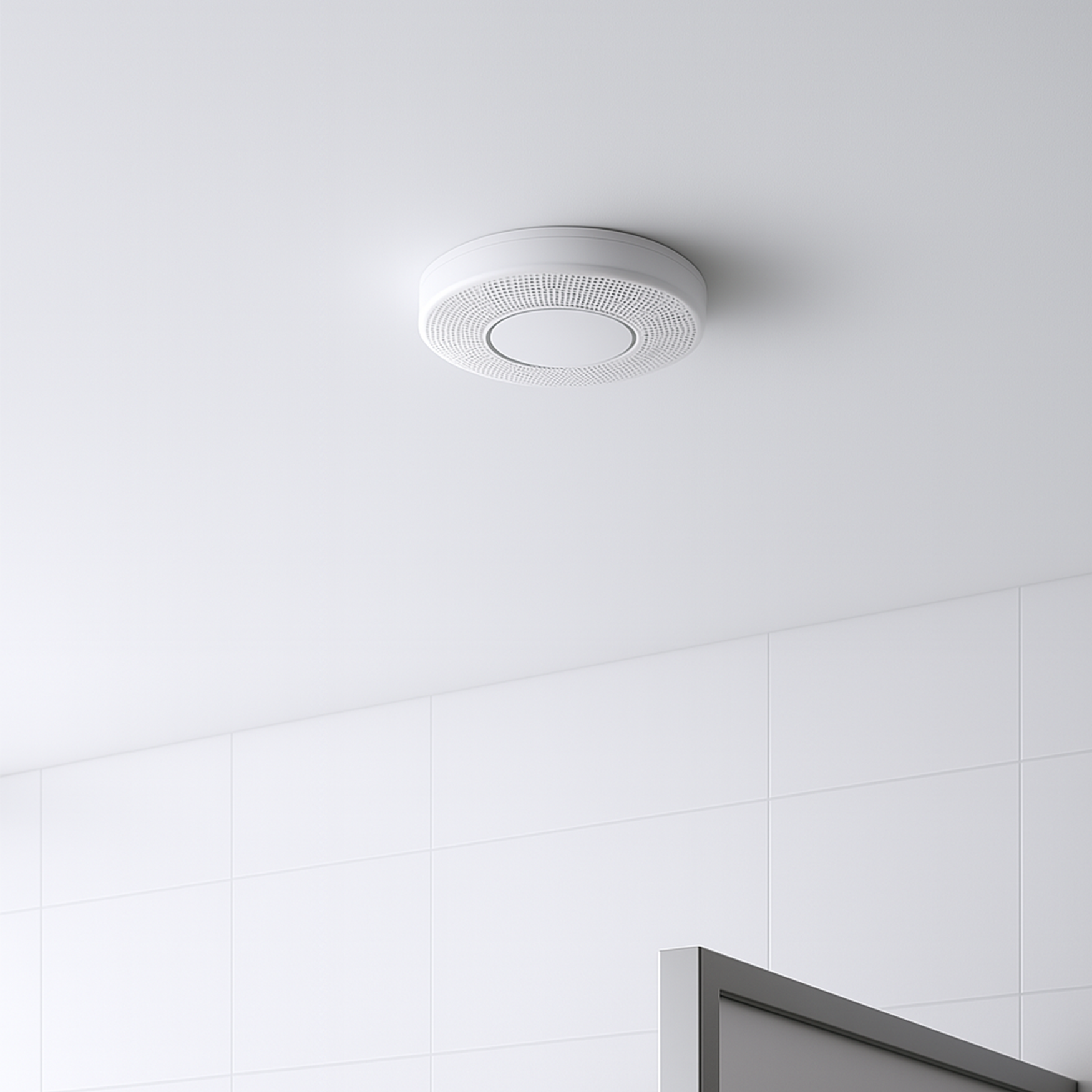
Installation in toilets presents particular challenges and opportunities. Devices must operate effectively whilst respecting privacy legislation. Modern systems like those described in guides about detecting vaping in toilets achieve this balance through non-invasive monitoring that focuses solely on air quality rather than visual or audio surveillance.
Integration with School Policies
Technology alone cannot eliminate vaping without supportive policy frameworks. Effective implementation combines hardware deployment with comprehensive governance structures.
Schools implementing remote vape monitoring systems should develop clear protocols addressing detection responses, escalation procedures, and educational interventions. The school vape policy solution approach integrates technology with pastoral care, ensuring students receive support rather than purely punitive measures.
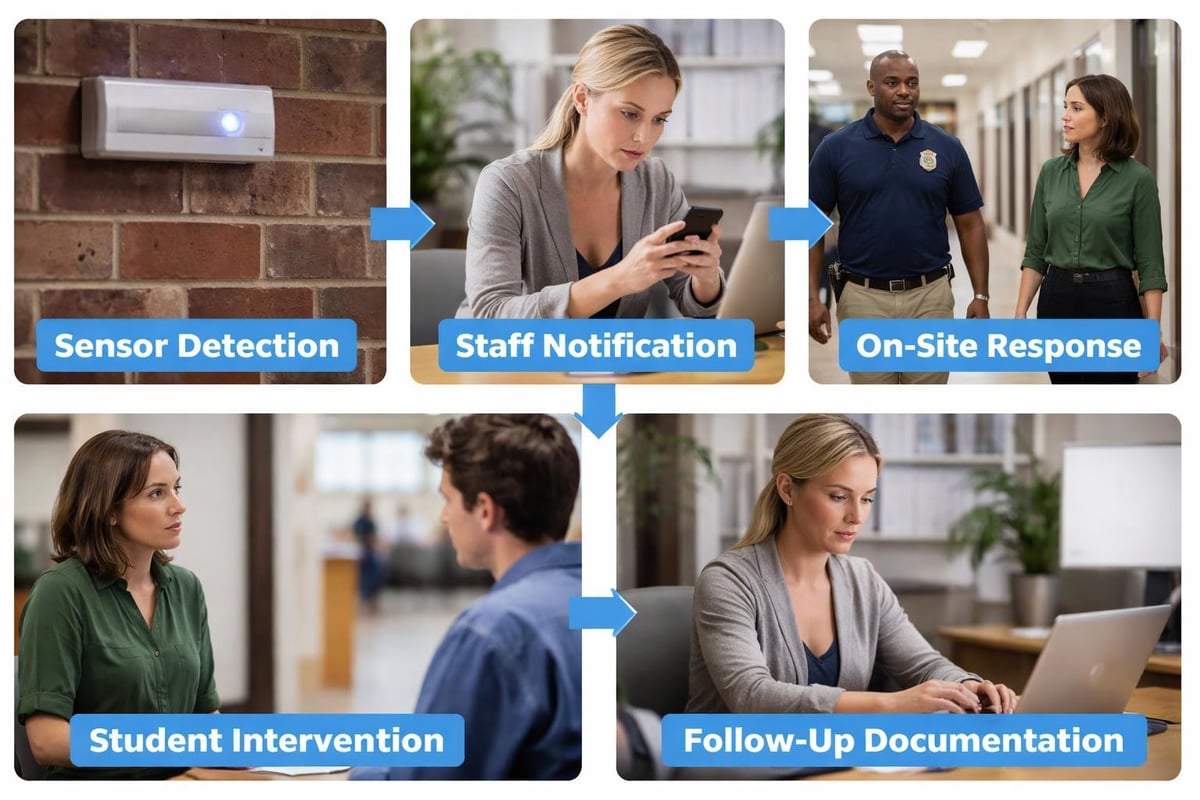
Alert workflows typically follow structured pathways:
- System detects vaping activity and logs incident details
- Designated staff receive instant mobile notifications
- Personnel respond according to established protocols
- Incident documentation supports follow-up interventions
- Data analytics identify patterns requiring targeted action
This systematic approach transforms reactive discipline into proactive behaviour management, helping schools tackle vaping through evidence-based strategies.
Workplace Applications and Benefits
Commercial environments increasingly recognise the value of remote vape monitoring systems for maintaining healthy workspaces and supporting employee wellbeing.
Creating Vape-Free Office Environments
Professional settings benefit from discrete monitoring that enforces no-vaping policies without requiring constant supervision. Systems deployed in business offices provide several operational advantages.
Employers implementing these solutions report improved air quality, reduced health complaints, and enhanced compliance with workplace safety regulations. The technology particularly benefits organisations in sectors with strict environmental controls, including healthcare facilities, food processing operations, and clean room environments.
Remote monitoring eliminates the awkwardness of direct confrontation whilst providing objective evidence supporting policy enforcement. When employees understand that comprehensive monitoring is in place, voluntary compliance rates typically increase significantly.
Air Quality and Productivity Connections
Beyond vaping detection, these systems contribute to broader wellness initiatives. Research increasingly demonstrates connections between indoor air quality and workplace performance.
Modern office air quality monitoring tracks multiple parameters:
- Particulate matter concentrations affecting respiratory health
- Carbon dioxide levels influencing cognitive function
- Volatile organic compounds from various sources
- Humidity and temperature impacting comfort and focus
Organisations investing in comprehensive monitoring often discover previously unrecognised air quality issues. Addressing these concerns yields measurable benefits including reduced absenteeism, improved employee satisfaction, and enhanced productivity metrics.
The Vape Detection System addresses both immediate vaping concerns and broader environmental monitoring requirements, providing organisations with multifaceted value from a single technology platform.
Technical Specifications and Performance Metrics
Understanding the technical capabilities of remote vape monitoring systems helps organisations make informed procurement decisions and set realistic performance expectations.
Sensor Accuracy and Response Times
Contemporary detection technology achieves impressive performance specifications:
Key Performance Indicators:
| Metric | Typical Range | Premium Systems | Industry Standard |
|---|---|---|---|
| Detection accuracy | 85-95% | 95-99% | >90% |
| Response time | 10-30 seconds | <10 seconds | <60 seconds |
| False positive rate | 2-5% | <1% | <3% |
| Coverage area | 100-150 sq m | Up to 200 sq m | 120 sq m |
| Battery life (wireless) | 3-5 years | 5-7 years | 3+ years |
These specifications matter significantly in practical deployment. Faster response times enable quicker intervention, whilst lower false positive rates reduce alert fatigue and maintain staff confidence in system reliability. Solutions from providers like HALO Smart Sensor and similar platforms demonstrate how advanced engineering delivers measurable performance improvements.
Connectivity and Integration Options
Modern systems support various connectivity protocols matching diverse facility infrastructure requirements:
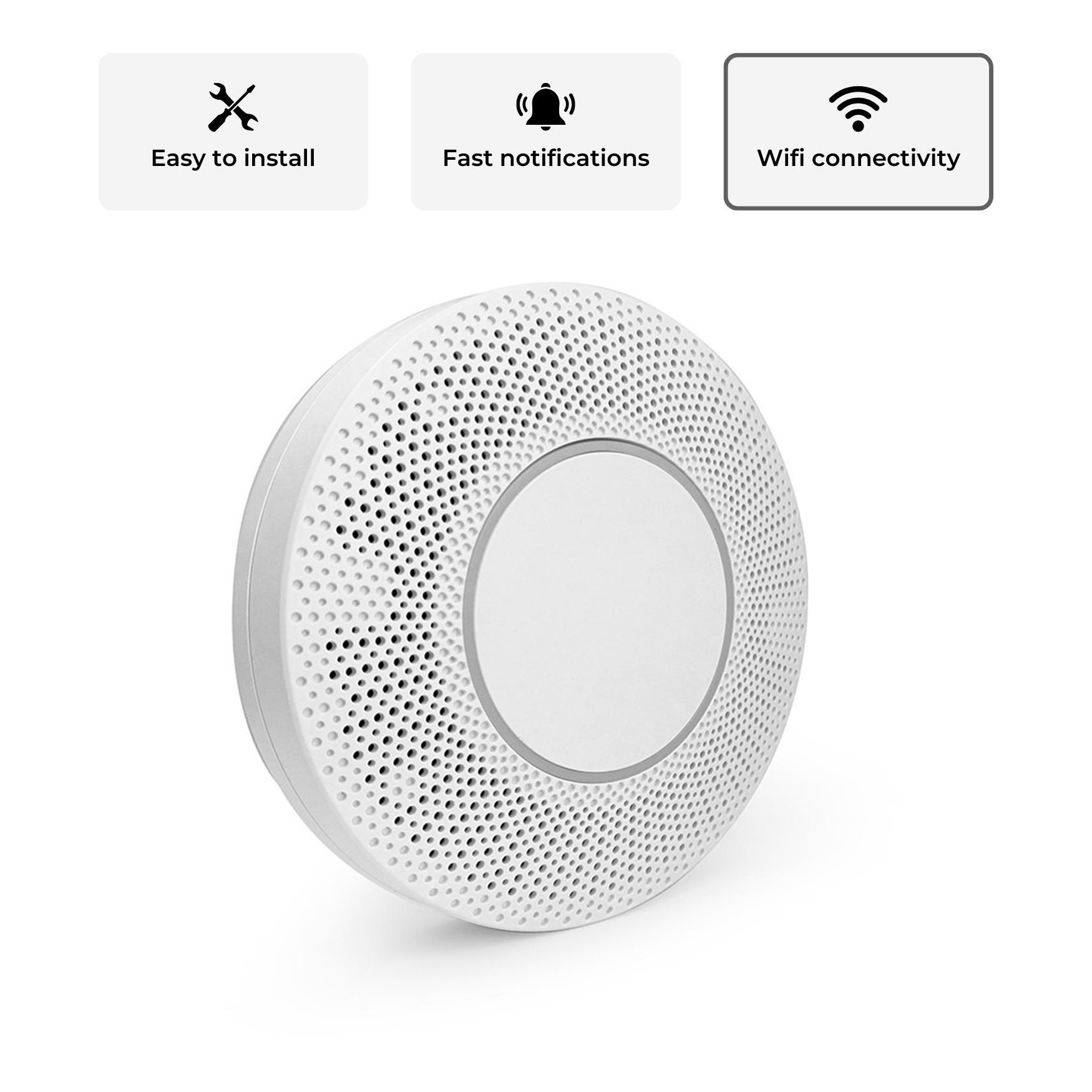
- WiFi connectivity for buildings with robust wireless networks
- Ethernet connections offering maximum reliability and security
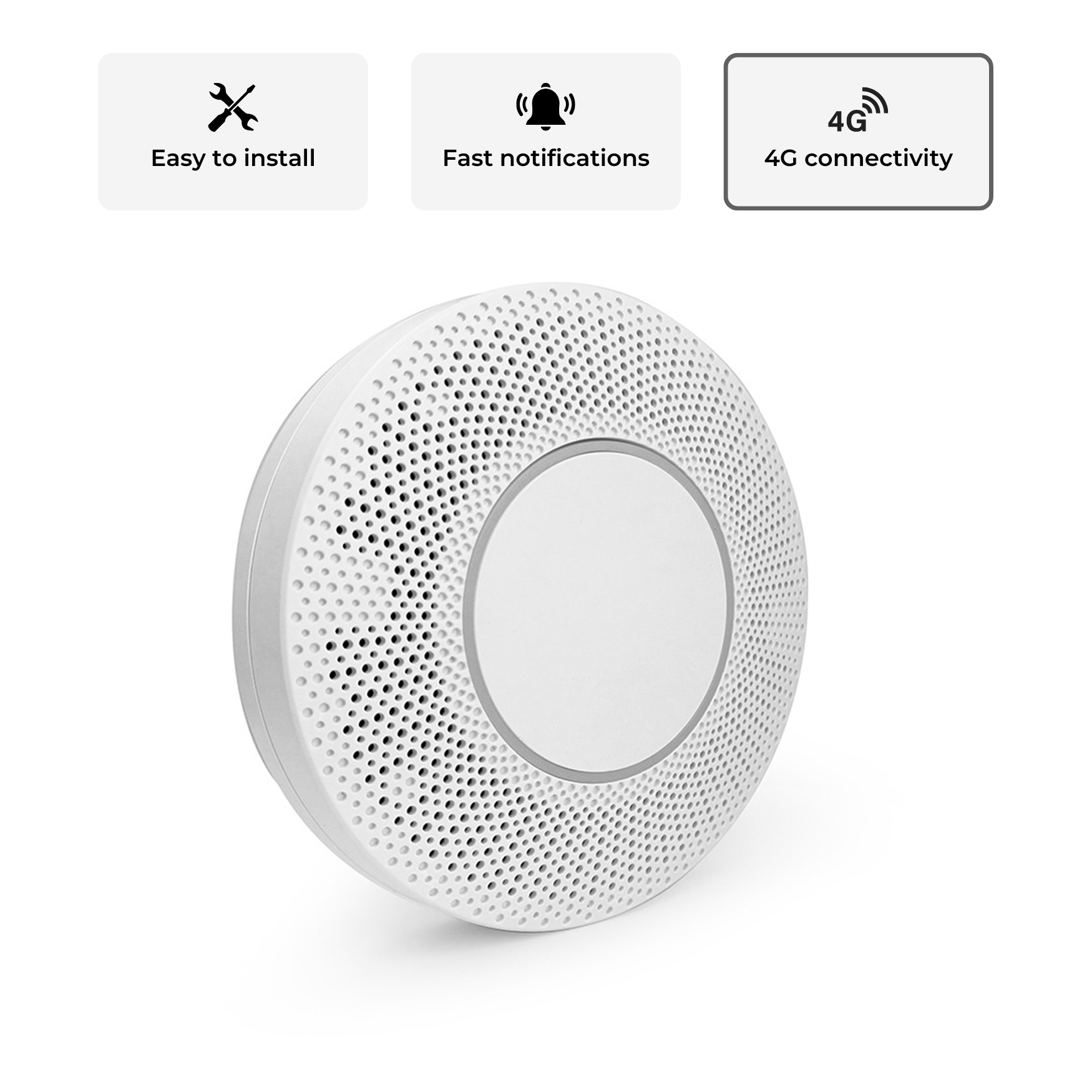
- Cellular modules enabling deployment in locations lacking network infrastructure
- LoRaWAN technology supporting long-range, low-power applications
The GS601 detector from TerraQ Technologies exemplifies LoRaWAN-enabled devices, offering flexible deployment in challenging environments. Each connectivity option presents distinct advantages regarding installation complexity, ongoing costs, and operational reliability.
Integration capabilities extend monitoring value through connections with existing building management systems, security platforms, and facility management software. API access enables custom workflows and automated responses tailored to specific organisational requirements.
Compliance and Regulatory Considerations
Implementing remote vape monitoring systems involves navigating legal frameworks governing privacy, data protection, and workplace rights.
Data Protection and Privacy Requirements
UK organisations must ensure deployment complies with GDPR and related privacy legislation. Key considerations include:
- Legitimate interest assessments justifying monitoring activities
- Privacy impact evaluations examining data collection necessity
- Transparent communication informing occupants about monitoring systems
- Data minimisation principles collecting only essential information
- Retention policies establishing appropriate storage durations
Systems designed for privacy compliance avoid capturing personally identifiable information. Unlike CCTV systems, air quality sensors monitor environmental conditions rather than individuals, simplifying regulatory compliance whilst maintaining effectiveness.
Schools implementing monitoring should consult the frequently asked questions about compliance requirements and develop appropriate governance frameworks addressing parental concerns and student rights.
Supporting Enforcement of Vaping Regulations
Recent legislative developments strengthen organisational authority to prohibit vaping. The UK's vape ban regulations create clearer frameworks for enforcement whilst imposing new responsibilities on institutions.
Remote monitoring provides objective evidence supporting policy enforcement, documenting incidents with timestamps and environmental data that withstand scrutiny. This documentation proves invaluable when addressing repeated violations or defending decisions in grievance procedures.
Cost Considerations and Return on Investment
Financial planning for remote vape monitoring system deployment requires understanding both initial investment and ongoing operational costs.
Budget Planning and Total Cost of Ownership
Comprehensive cost analysis encompasses multiple expenditure categories:
Implementation Cost Components:
- Hardware procurement (sensors, gateways, ancillary equipment)
- Installation labour (professional fitting, configuration, testing)
- Software subscriptions (cloud platforms, analytics, mobile applications)
- Training programmes (staff education, protocol development)
- Ongoing maintenance (calibration, updates, technical support)
Initial hardware costs typically range from £200 to £800 per sensor depending on capabilities and specifications. Enterprise deployments benefit from volume pricing whilst smaller organisations may access entry-level solutions at lower price points. Detailed breakdowns available in vape detector cost analyses help organisations develop accurate budgets.
Quantifying Benefits and Savings
Calculating return on investment requires identifying tangible and intangible benefits:
Measurable Returns:
| Benefit Category | Typical Annual Value | Measurement Method |
|---|---|---|
| Reduced cleaning costs | £500-£2,000 per facility | Maintenance records |
| Decreased property damage | £300-£1,500 | Repair expenditure tracking |
| Lower insurance premiums | 5-10% reduction | Policy comparisons |
| Improved compliance | Variable | Reduced violations/fines |
| Staff time savings | 10-20 hours monthly | Time tracking analysis |
Schools report significant reductions in vaping incidents following system deployment. The deterrent effect alone justifies investment for many organisations, even before accounting for health benefits and improved learning environments. Research indicates that comprehensive monitoring can reduce incidents by 60-80% within the first academic year.
Advanced Features and Future Developments
The remote vape monitoring system landscape continues evolving with emerging technologies enhancing capabilities and user experience.
Artificial Intelligence and Machine Learning Integration
Next-generation systems incorporate AI algorithms that improve detection accuracy whilst reducing false positives. Machine learning models analyse sensor data patterns, distinguishing between vaping activity and benign environmental changes like aerosol cleaners or air fresheners.
These intelligent systems adapt to facility-specific conditions, learning normal environmental baselines and flagging anomalies with increasing precision. Predictive analytics identify high-risk times and locations, enabling proactive intervention strategies rather than purely reactive responses.
Similar technological approaches in remote alcohol monitoring demonstrate how connectivity and data analytics transform substance detection capabilities across various applications.
Enhanced Reporting and Analytics
Sophisticated platforms provide comprehensive reporting tools supporting strategic decision-making:
- Incident trend analysis revealing patterns across time periods and locations
- Comparative benchmarking assessing performance against baseline metrics
- Heat mapping visualisations identifying high-activity zones requiring attention
- Automated compliance reports streamlining regulatory documentation
- Predictive forecasting anticipating future risk scenarios
These analytical capabilities transform raw detection data into actionable intelligence. Administrators gain insights supporting resource allocation, policy refinement, and targeted intervention programmes addressing root causes rather than symptoms.
Selecting the Right System for Your Organisation
Choosing appropriate remote vape monitoring technology requires evaluating specific requirements against available solutions.
Essential Evaluation Criteria
Organisations should assess prospective systems across multiple dimensions:
Selection Framework:
- Detection capabilities: Which substances and environmental factors are monitored?
- Coverage requirements: How many locations need monitoring and at what density?
- Connectivity options: What infrastructure exists and what protocols are supported?
- Integration needs: Must the system connect with existing platforms?
- Scalability potential: How easily can the deployment expand as needs evolve?
- Support and maintenance: What ongoing assistance does the vendor provide?
- Total cost structure: What are upfront and recurring financial commitments?
Comparing offerings from providers like AirCare Sensors, ICAS Corp, and vIDix Solutions helps organisations understand market options and identify solutions matching specific requirements.
Implementation Best Practices
Successful deployment extends beyond hardware installation:
- Conduct thorough site surveys identifying optimal sensor placement
- Develop comprehensive policies governing system use and response protocols
- Train staff on alert handling, escalation procedures, and documentation requirements
- Communicate transparently with occupants about monitoring purposes and privacy safeguards
- Establish review processes assessing system effectiveness and identifying improvement opportunities
Starting with pilot deployments in high-priority areas enables organisations to refine approaches before full-scale implementation. This phased strategy reduces risk whilst building internal expertise and stakeholder confidence.
Resources covering school compliance monitoring provide valuable frameworks applicable across various institutional contexts.
Addressing Common Concerns and Misconceptions
Despite proven effectiveness, remote vape monitoring systems sometimes face resistance based on misunderstandings or incomplete information.
Privacy and Surveillance Perceptions
Stakeholders occasionally conflate environmental monitoring with invasive surveillance. Unlike cameras or audio recording devices, air quality sensors detect chemical signatures and environmental conditions without capturing personal information or identifying specific individuals.
Educational communication emphasising privacy-respecting design helps overcome resistance. Transparent policies explaining what data is collected, how it is used, and who accesses it build trust whilst demonstrating regulatory compliance.
Effectiveness and Reliability Questions
Some sceptics question whether systems reliably work in bathrooms and other challenging environments. Extensive field testing and real-world deployments confirm that properly specified and installed systems achieve excellent performance across diverse settings.
Addressing these concerns requires presenting evidence, sharing case studies, and offering trial deployments demonstrating practical effectiveness. Organisations benefit from reviewing independent evaluations and speaking with peers who have implemented similar solutions.
Maintenance and Long-Term Management
Sustaining system performance requires ongoing attention and systematic maintenance practices.
Regular Calibration and Testing
Sensors gradually drift from factory calibration, potentially affecting accuracy. Establishing regular calibration schedules maintains detection reliability:
- Monthly functional tests confirming alert generation and communication pathways
- Quarterly calibration checks using reference materials to verify sensor accuracy
- Annual comprehensive servicing including hardware inspection and software updates
- Post-incident validation ensuring systems performed correctly during actual detections
Comprehensive indoor air quality sensor maintenance programmes support long-term value whilst minimising operational disruptions.
Software Updates and Feature Enhancements
Cloud-connected systems receive regular firmware and software updates delivering:
- Enhanced detection algorithms incorporating latest research findings
- Additional reporting features responding to user feedback
- Security patches addressing emerging cybersecurity threats
- Integration capabilities supporting new platform connections
- User interface improvements streamlining daily operations
Automatic update mechanisms ensure systems remain current without requiring manual intervention, though organisations should maintain awareness of changes affecting workflows or capabilities.
Remote vape monitoring systems deliver comprehensive solutions addressing growing concerns about vaping in schools, workplaces, and public facilities whilst supporting broader environmental quality objectives. The technology combines sophisticated detection capabilities, intelligent connectivity, and user-friendly interfaces that empower organisations to create healthier, safer environments. Vape Guardian offers advanced detection solutions backed by reliable customer support, helping UK organisations implement effective monitoring programmes that reduce vaping incidents whilst maintaining privacy and compliance standards. Contact Vape Guardian today to discover how their proven technology can transform your approach to environmental safety and behavioural monitoring.


Share:
School Compliance Monitoring System: A Complete Guide
Education Vape Detection: A Complete Guide for 2026