

Facility management is undergoing a remarkable transformation as smart sensor technology accelerates into 2026. Facility managers are now faced with an array of innovative tools that promise to reshape how buildings are monitored, maintained, and optimised.
This guide is designed to equip you with essential insights into the latest facility management sensors. These devices are becoming indispensable for modern operations, providing real-time data that enhances efficiency, safety, and comfort across all types of facilities.
Curious about how these solutions can streamline your workflow and future proof your buildings? In the following sections, we will explore the types of sensors available, their benefits, implementation strategies, emerging trends, and best practices to help you stay ahead in the evolving world of facility management.
The Role of Sensors in Modern Facility Management
The landscape of facility management has changed significantly in recent years. Traditional routines, once dominated by manual checks and paper logs, have been transformed by digital innovation. Today, facility management sensors are at the heart of this evolution, helping building operators shift from reactive tasks to proactive, data-driven decisions.
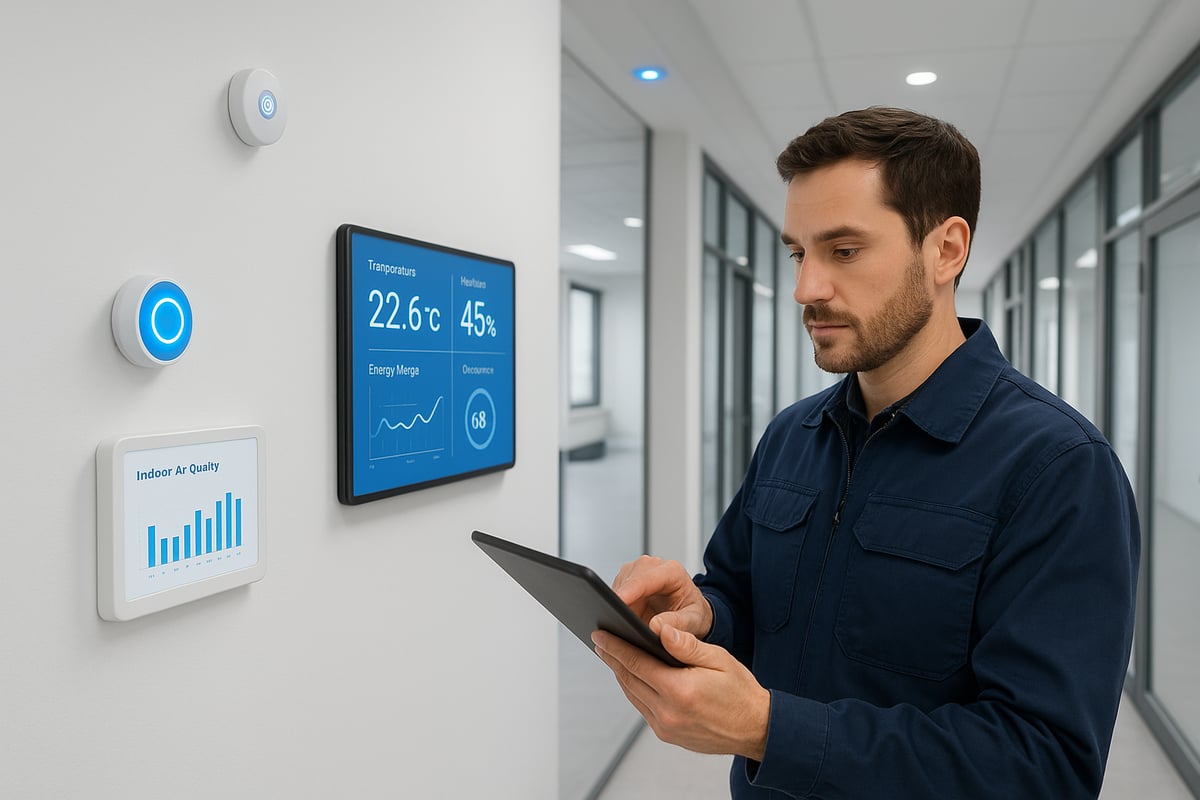
Evolution of Facility Management: From Manual to Smart
Facility management has moved far beyond the checklist and clipboard era. The adoption of facility management sensors marks a major step towards intelligent, automated environments. Manual activities like temperature logging, lighting adjustment, and security rounds are now handled by interconnected sensors and automated systems.
Digital transformation and the rise of the Internet of Things have put real-time data at the fingertips of facility managers. For example, a building that once required daily manual checks for heating and cooling now uses sensors to monitor and adjust conditions continuously. Automation not only saves time but also ensures accuracy and consistency, reducing the risk of human error.
The integration of facility management sensors allows teams to focus on strategic improvements rather than repetitive tasks. This shift is making facilities more adaptive and future-ready.
Types of Sensors Used in Facilities
A wide variety of facility management sensors are now standard in modern buildings. Common types include:
- Temperature sensors for climate control
- Humidity sensors to prevent mould and protect assets
- Occupancy sensors for space utilisation
- Air quality sensors to track CO2, VOCs, and particulates
- Motion sensors for security and automation
- Light sensors for daylight harvesting and efficiency
- Energy sensors for monitoring consumption
- Leak detection sensors for water management
Each sensor serves a unique role. For instance, air quality sensors in schools help reduce absenteeism, while leak detection sensors in commercial kitchens prevent costly water damage. Data from 2023 to 2025 shows that occupancy and air quality sensors have seen the highest adoption rates, reflecting a growing focus on health, safety, and operational efficiency.
Facility management sensors are now tailored to the specific needs of each environment, making them essential tools for building performance.
Integration with Building Management Systems (BMS)
Facility management sensors reach their full potential when integrated with Building Management Systems. BMS platforms collect sensor data and enable centralised control, making it easy to monitor and adjust building conditions from a single dashboard.
Cloud platforms and mobile apps have further enhanced real-time access to sensor data. Facility managers can now receive instant alerts and make remote adjustments, whether on-site or off-site. For example, a large office building that implemented integrated sensors and BMS achieved significant energy savings by automating lighting and HVAC schedules.
For a deeper dive into how these technologies work together, see the Smart Sensor Technology Overview.
This seamless integration streamlines operations and empowers teams to respond quickly to emerging issues.
Benefits for Facility Managers and Stakeholders
The adoption of facility management sensors delivers measurable advantages. Operational efficiency is significantly improved, as automated monitoring reduces manual workload and frees up staff for higher-value activities.
Compliance with health, safety, and environmental regulations is easier to achieve, thanks to real-time reporting and automated documentation. Facility management sensors enable predictive maintenance, allowing teams to address issues before they escalate, which minimises downtime and extends asset life.
Industry benchmarks show that buildings using facility management sensors can reduce energy costs by up to 30 percent. Real-time alerts help prevent costly incidents, while data-driven insights support continuous improvement.
For facility managers and stakeholders, these benefits translate into lower costs, safer environments, and more sustainable operations.
Key Smart Sensor Solutions for 2026
Smart buildings in 2026 rely on advanced facility management sensors to create healthier, safer, and more efficient environments. With the latest innovations, facility managers can monitor, analyse, and optimise every aspect of building operations in real time. Let us explore the essential types of sensors making a difference in modern facilities.
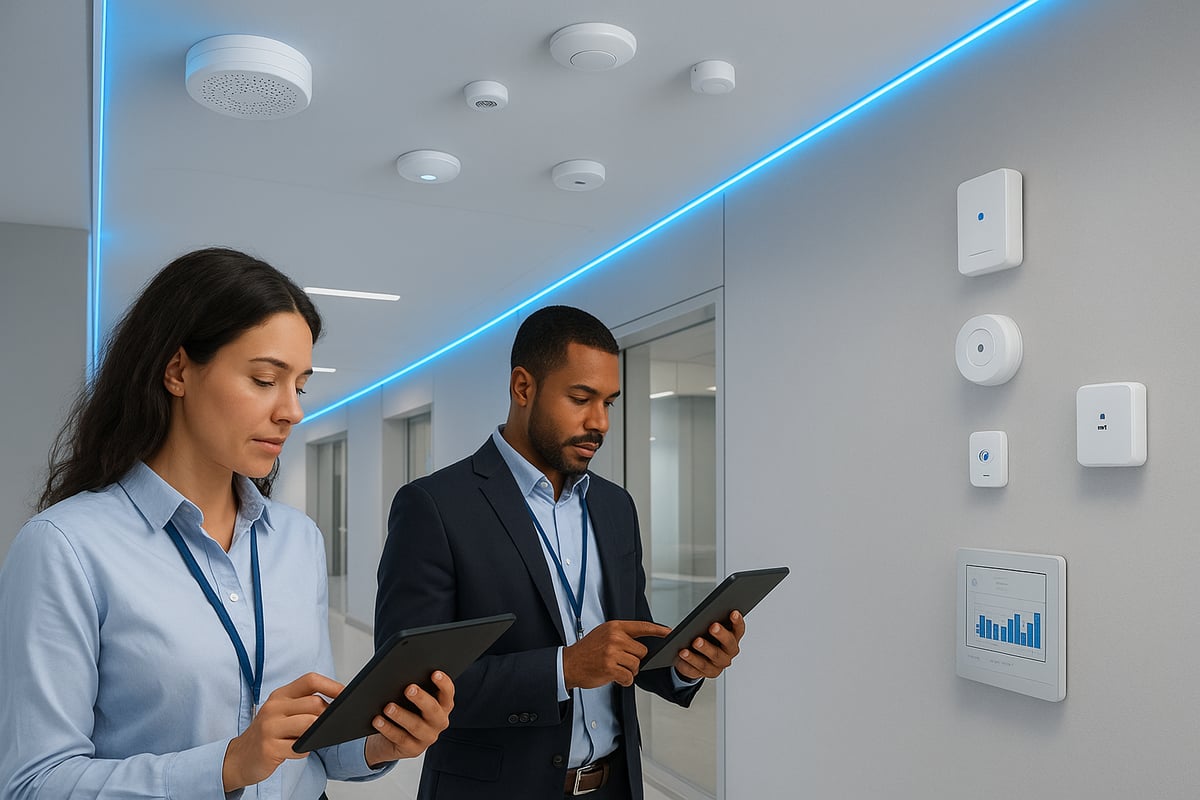
Environmental Sensors: Air Quality, Temperature, and Humidity
Maintaining healthy indoor environments is a top priority for facility managers. Facility management sensors that measure air quality, temperature, and humidity provide critical insights for occupant comfort and safety.
Air quality sensors detect carbon dioxide, volatile organic compounds, and particulate matter. These are vital for schools and offices, where poor air quality can lead to reduced productivity and increased absenteeism. Temperature and humidity sensors help maintain optimal conditions, protecting both people and sensitive assets like IT equipment.
For example, schools have reported lower absentee rates after installing air quality sensors in classrooms. With real time alerts, facility teams can address ventilation issues before they become problems. By integrating these facility management sensors, managers ensure compliance with health standards and create a positive environment for all occupants.
Occupancy and Motion Sensors for Space Optimisation
Understanding how spaces are used is crucial for efficient facility management. Occupancy sensors track the presence of people in rooms, while motion sensors detect movement for security and automation.
These facility management sensors help optimise space usage by identifying underutilised areas. This data supports decisions about cleaning schedules, energy use, and workspace allocation. For instance, workspace occupancy trends from 2023 to 2025 show that businesses using occupancy sensors reduced operational costs by adjusting lighting and HVAC based on actual usage.
Motion sensors also enhance building security and automate lighting, reducing energy waste. Facility managers benefit from accurate data, enabling smarter resource allocation and improved occupant experiences.
Energy and Utility Monitoring Sensors
Rising energy costs make efficiency a top concern. Facility management sensors designed for energy and utility monitoring provide detailed insights into electricity, water, and gas consumption.
Smart meters and submeters identify inefficiencies and high usage patterns, allowing for targeted interventions. For example, retail chains have used energy sensors to track progress toward sustainability goals, achieving measurable reductions in utility expenses.
These sensors also support predictive maintenance by flagging unusual consumption patterns, which may indicate equipment faults or leaks. Facility managers can access real time dashboards to make informed decisions, ensuring long term savings and environmental responsibility.
Leak Detection and Water Management Solutions
Water damage can be costly and disruptive. Leak detection sensors are vital facility management sensors, offering early warnings to prevent extensive harm.
These devices monitor for moisture or abnormal water flow in high risk areas such as kitchens, bathrooms, and plant rooms. When integrated with automated shut off systems, they can halt water supply instantly after a leak is detected, minimising damage and repair costs.
Statistics from recent years show that proactive leak management with sensors saves thousands of pounds annually for large facilities. Facility managers gain peace of mind knowing that potential issues are addressed before they escalate, supporting business continuity and asset protection.
Noise and Vibration Sensors for Safety and Comfort
Noise and vibration monitoring is increasingly important for both occupant wellbeing and equipment reliability. Facility management sensors measuring sound levels help maintain comfortable environments in offices, schools, and public buildings.
Excessive noise can impact productivity and satisfaction, so continuous monitoring allows for timely interventions. Vibration sensors, on the other hand, are used for predictive maintenance on mechanical assets. In manufacturing, these sensors detect abnormal vibrations, signalling the need for servicing before costly breakdowns occur.
A real world example is a manufacturing facility that reduced downtime significantly by analysing vibration data from critical machinery. When evaluating the best solutions for your needs, consult resources like the Best Vape Detector and Sensors Guide to compare available options and features.
Implementing Smart Sensor Systems: A Step-by-Step Guide
Bringing facility management sensors into your organisation requires a structured approach. By breaking the process into clear steps, facility managers can ensure successful deployment, data accuracy, and long-term value. Below is a comprehensive guide to help you navigate each critical phase.

Step 1: Needs Assessment and Goal Setting
Begin by identifying the unique challenges and objectives within your facility. Engage key stakeholders, including operations, IT, and health and safety teams, to gather comprehensive requirements.
Ask targeted questions: What problems do we want to solve with facility management sensors? Are compliance, safety, or energy efficiency the top priorities? For example, a hospital may focus on infection control and patient safety, while a commercial office might prioritise energy savings and occupant comfort.
Document specific goals such as reducing utility costs, improving air quality, or automating routine checks. Clear objectives will guide every subsequent decision and maximise the return on your sensor investment.
Step 2: Sensor Selection and Solution Design
With your needs defined, match sensor types to each operational challenge. Consider temperature, air quality, occupancy, or leak detection sensors as required. Evaluate compliance requirements and future scalability.
Be mindful of integration with existing systems and ensure your facility management sensors are compatible with your building management system. Design a solution that allows for expansion without major disruption.
Common pitfalls include selecting devices that lack interoperability or have limited support. Prioritise sensors that offer robust data collection and can adapt to evolving facility needs.
Step 3: Installation and Integration
Proper installation is vital for accurate data and reliable performance. Plan sensor placement carefully, considering coverage, interference, and accessibility for maintenance. Collaborate with IT to ensure strong network connectivity and minimal disruption to daily operations.
Seamless integration with your BMS or IoT platform is essential. For practical tips on setup and configuration, consult the Best Practices for Sensor Setup guide.
Test each device after installation to confirm data transmission and functionality. Document all sensor locations and establish clear protocols for troubleshooting.
Step 4: Data Management and Analytics
Once installed, set up dashboards to monitor real-time data from your facility management sensors. Use analytics tools to generate insights into patterns, anomalies, and operational trends.
Leverage artificial intelligence or machine learning where possible to identify inefficiencies and predict maintenance needs. For example, a university campus may optimise HVAC performance by analysing occupancy and temperature data.
Establish clear reporting routines for stakeholders, and use visualisations to communicate findings. This proactive approach supports better decision making and continuous improvement.
Step 5: Training, Maintenance, and Continuous Improvement
Train staff thoroughly on system usage and response protocols. Provide clear guides for interpreting alerts and taking corrective action. Develop a routine maintenance schedule to keep sensors calibrated and firmware up to date.
Encourage feedback from users to identify areas for further optimisation. Regularly review system performance, update objectives, and adapt as new technologies or needs arise.
Continuous improvement ensures your facility management sensors remain accurate, reliable, and aligned with organisational goals.
Data Security and Privacy in Facility Sensor Networks
As facility management sensors become central to building operations, data security and privacy have never been more critical. The vast networks of connected devices present new opportunities for efficiency, but also introduce complex risks that managers cannot ignore. Understanding and addressing these risks is essential for smart, compliant, and resilient facilities.

Understanding the Risks
The adoption of facility management sensors exposes buildings to new cyber threats. Attackers target IoT devices and sensor networks to gain unauthorised access, disrupt operations, or steal sensitive data. Even a single compromised device can provide a gateway into critical systems, potentially causing operational downtime or financial loss.
Typical risks include:
- Unsecured network protocols
- Outdated firmware on sensors
- Lack of device authentication
- Poorly segmented networks
The consequences of a breach can be severe, including regulatory penalties, reputational harm, and safety hazards. Facility managers must proactively assess and mitigate these risks as part of any sensor deployment.
Compliance and Legal Considerations
Compliance with data protection laws is non negotiable for organisations using facility management sensors. Regulations like the GDPR and UK-specific rules govern how sensor data is collected, processed, and stored. Facilities must ensure that all sensor deployments adhere to these standards.
Best practices for compliance include:
- Limiting data collection to what is necessary
- Anonymising data wherever possible
- Maintaining clear records of data processing activities
Both public and private sector facilities should routinely review their policies and procedures to remain compliant as regulations evolve. Transparent governance builds trust with occupants and stakeholders.
Securing Sensor Data and Networks
Protecting the integrity of facility management sensors requires a multi layered approach. Encryption, strong authentication, and network segmentation are fundamental strategies to prevent unauthorised access and data leaks. Regular security audits and timely firmware updates further strengthen defences.
For centralised control and secure connectivity, it is vital to understand the fundamentals of Network and Connectivity for Sensors. This ensures that data from facility management sensors is transmitted safely and reliably across the building’s infrastructure.
A robust network security posture is essential for safeguarding both operational data and occupant privacy.
Privacy by Design: Protecting Occupant Data
Privacy by design must guide every stage of facility management sensors implementation. Reducing the collection of personally identifiable information (PII) limits exposure in the event of a breach. Facilities should also communicate clearly with building occupants about what data is collected and how it will be used.
Effective strategies include:
- Using aggregated or anonymised data for analytics
- Providing opt out mechanisms where feasible
- Displaying privacy notices in visible locations
Embedding privacy into system design not only protects individuals, it also strengthens the overall trust in facility technology.
Emerging Trends and Future Innovations in Facility Management Sensors
The landscape of facility management sensors is rapidly changing, with emerging trends set to redefine best practices in 2026. As technology advances, facility managers are adopting smarter, more connected solutions to drive efficiency, sustainability, and occupant wellbeing. This section explores the latest innovations, from AI-powered analytics to cutting-edge sensor technologies, and highlights how these developments are shaping the future of facilities management.
AI and Predictive Analytics in Sensor Networks
AI is transforming facility management sensors by enabling predictive maintenance and automated responses to anomalies. With machine learning algorithms, sensor networks can analyse vast amounts of real-time data, identify patterns, and alert managers to potential issues before they escalate. For example, AI-driven systems can predict HVAC failures, optimise cleaning schedules, and even forecast occupancy trends.
According to Facilities Management Trends 2026, the integration of AI with facility management sensors is driving smarter resource allocation and energy management. As a result, facilities can reduce downtime, extend asset lifespan, and improve overall operational efficiency.
Wireless and Battery-Free Sensor Technologies
The next generation of facility management sensors is moving towards wireless and battery-free designs. Advances in wireless communication protocols and energy harvesting technologies are eliminating the need for extensive wiring or frequent battery replacements.
These innovations make sensor deployment faster and more flexible. Facility managers can now install sensors in hard-to-reach locations and easily scale systems as needs evolve. Wireless facility management sensors also reduce installation costs and minimise disruption to building occupants.
A growing number of organisations are adopting these solutions, recognising their value in future-proofing building infrastructure.
Edge Computing and Decentralised Data Processing
Edge computing is revolutionising facility management sensors by enabling data processing closer to the source. Rather than sending all sensor data to a central server, edge devices analyse and filter information locally.
This approach offers several benefits. Facility management sensors can deliver faster response times, enhance privacy, and reduce bandwidth requirements. For critical infrastructure and high-security environments, edge computing ensures sensitive data remains within the facility, addressing compliance and risk concerns.
Decentralised processing also supports real-time decision-making, empowering teams to act swiftly when issues arise.
Sustainability and Green Building Certifications
Facility management sensors are essential for achieving green building certifications such as BREEAM, LEED, and WELL. These sensors monitor energy use, indoor air quality, water consumption, and other environmental parameters, providing the data needed to meet stringent sustainability standards.
By leveraging facility management sensors, organisations can track their environmental performance, identify areas for improvement, and demonstrate compliance during certification audits. Automated reporting and analytics simplify the process, helping facilities achieve long-term sustainability goals.
As demand for eco-friendly buildings grows, facility management sensors will be central to future-ready, responsible operations.
Interoperability and Open Standards
Interoperability is a critical trend shaping the future of facility management sensors. Open standards and vendor-agnostic protocols allow different devices and systems to communicate seamlessly, ensuring flexibility and scalability.
According to Facility Management in 2026, the industry is moving towards integrated platforms that unify data from various sensors for holistic building management. This shift helps facility managers avoid vendor lock-in and adapt to new technologies as they emerge.
Embracing open standards ensures that facility management sensors remain adaptable, supporting investments that stand the test of time.
Best Practices for Maximising ROI with Facility Management Sensors
Maximising the return on investment from facility management sensors requires a strategic, data-driven approach. By following proven best practices, facility managers can ensure their sensor systems deliver measurable value, adapt to changing needs, and support organisational goals. Let us explore the essential steps to unlock the full potential of facility management sensors.
Setting Clear Objectives and KPIs
Start with a clear vision for your facility management sensors project. Define specific objectives that align with your business goals, such as reducing energy costs, improving occupant comfort, or enhancing safety.
Establish measurable KPIs to track progress. For example, a hotel chain might monitor guest comfort and energy usage, setting targets for temperature consistency and energy reduction. This clarity ensures everyone understands the purpose and benchmarks for success.
Proactive Maintenance and Lifecycle Management
Routine maintenance is essential for reliable facility management sensors. Schedule regular calibration, cleaning, and firmware updates to maintain accuracy and prevent failures.
A proactive approach extends sensor lifespan and minimises costly downtime. Industry data shows that facilities with scheduled maintenance experience up to 20 percent longer sensor life. Use a maintenance log or digital platform to track tasks and automate reminders.
| Maintenance Task | Frequency | Benefit |
|---|---|---|
| Calibration | Quarterly | Sustains accuracy |
| Firmware Updates | Biannual | Improves security |
| Battery Replacement | Annual | Prevents outages |
Leveraging Data for Continuous Improvement
Facility management sensors generate valuable data for decision-making. Use analytics tools to identify trends, inefficiencies, and opportunities for optimisation.
For instance, a school district reduced operational costs by analysing occupancy and energy data, then adjusting HVAC schedules accordingly. Regularly review reports to spot anomalies and prioritise improvements. Integrating insights from analytics helps you refine processes and boost performance over time.
Engaging Stakeholders and Driving Adoption
Successful facility management sensors deployment depends on staff engagement. Provide comprehensive training so users can interpret sensor data and respond effectively to alerts.
Communicate the benefits to both leadership and occupants, highlighting how sensors support health, safety, and sustainability. Encourage feedback and address concerns promptly. This approach builds trust, increases adoption, and fosters a culture of innovation across the organisation.
Scaling and Future-Proofing Sensor Investments
Plan for growth from the outset. Choose facility management sensors that support open standards and can integrate with future technologies. Evaluate total cost of ownership, including support and upgrade options.
Stay informed about industry trends. As highlighted in the Top 5 Trends Shaping Facility Management in 2025, IoT integration and predictive maintenance are transforming how facilities operate. Future-proof your investments by selecting scalable solutions and maintaining strong vendor relationships.
As you’ve seen throughout this guide, the future of facility management lies in smart, integrated sensor solutions that boost safety, efficiency, and compliance across all types of environments. Whether you’re looking to monitor air quality, detect vaping and anti-social behaviour, or simply create a healthier space for everyone, leveraging advanced technology puts you ahead of the curve. If you’re ready to see what’s possible for your building or want expert advice tailored to your needs, I encourage you to talk to our team and protect your building today. Let’s create safer, smarter spaces together.



Share:
Partner With Vape Guardian: Your Essential Guide 2026
Air Quality Compliance Report Guide: Your 2026 Roadmap