
By 2026, UK businesses face a sharp rise in vaping incidents at work, with reports showing a 30 percent increase in related complaints. This trend highlights the urgent need for enterprise vape detection to safeguard assets, protect staff, and maintain compliance.
This guide offers a comprehensive, step-by-step approach to implementing enterprise vape detection solutions. You will learn to understand the evolving threat, assess risks, select and deploy the right technology, remain legally compliant, and build future-proof strategies.
Ready to create a secure and compliant environment? Let’s begin your journey towards robust enterprise protection.
The Evolving Threat of Vaping in Enterprise Environments
Vaping is rapidly becoming a critical concern for UK businesses. Today, organisations face a growing challenge as vaping shifts from a marginal issue to a persistent risk within enterprise settings. To effectively protect staff, assets, and compliance standing, enterprise vape detection must evolve to keep pace with this emerging threat.
The rise of vaping in workplaces and public venues
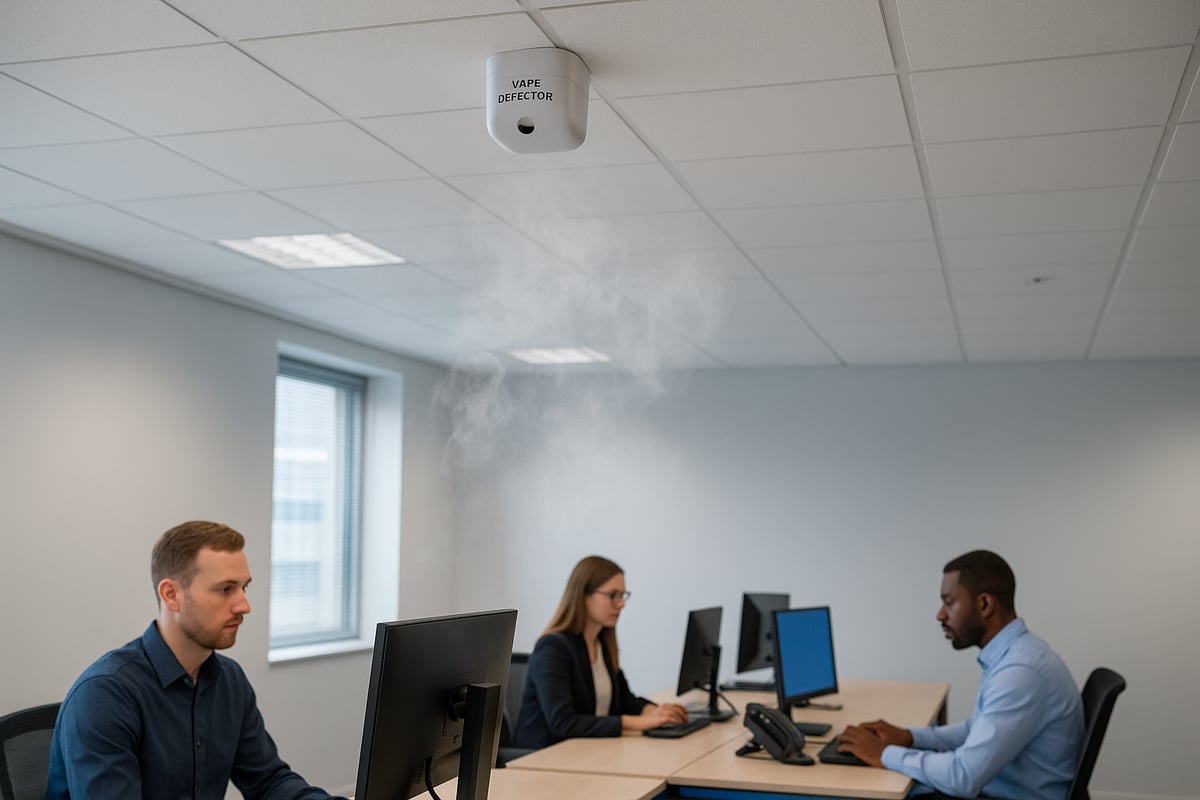
Incidents of vaping within UK workplaces and public venues have increased significantly. According to the ONS Smoking and Vaping Report 2024, the number of employees reporting vape use at work has risen by nearly a third since 2022.
This rise is not limited to offices. Retail, leisure, and hospitality venues report similar trends. Case studies from major retail chains reveal that staff and visitors often vape in less visible areas, such as changing rooms and staff stairwells. As vaping becomes more normalised indoors, the need for enterprise vape detection grows urgent.
Health, safety, and reputational risks
Vaping presents a complex set of risks for employers. Secondhand aerosol exposure is known to affect air quality and can trigger allergies or respiratory conditions among staff. There is also a fire risk, as lithium ion vape batteries have been linked to workplace incidents.
Brand reputation is another concern. If staff or customers perceive that a company does not enforce a healthy environment, trust and loyalty can erode. The 2025 UK workplace health survey noted a 30 percent increase in vape-related complaints, underscoring the reputational stakes for businesses lacking robust enterprise vape detection.
- Health concerns: secondhand exposure, allergies
- Safety risks: fire from batteries, equipment damage
- Reputation: staff trust, customer perceptions
The complexity of detecting modern vaping devices
Modern vaping devices are designed to be smaller and more discreet. Many produce little or no odour, making them difficult to spot through traditional monitoring. Multi substance vapes, including those containing THC or synthetic blends, further complicate detection.
Manual monitoring and CCTV often fail to identify vaping incidents in real time. As a result, enterprise vape detection must rely on advanced technology capable of identifying a range of substances and device types with high accuracy.
Impact on compliance and insurance
Compliance with UK and EU smoke free workplace laws is non negotiable. Businesses found in breach of these regulations may face fines, legal action, or even denied insurance claims. Recent cases highlight the consequences of inadequate enterprise vape detection, with some companies facing significant penalties after failing to prevent vaping incidents.
A summary of compliance risks:
| Risk | Potential Impact |
|---|---|
| Regulatory fines | £2,500-£10,000 per incident |
| Insurance claims denied | Full cost liability for damages |
| Legal action | Damages, legal fees, reputational loss |
Financial implications for enterprises
The financial impact of vaping incidents is substantial. Unauthorised breaks can reduce productivity, while cleaning and air quality restoration add to operational costs. On average, UK businesses spend £12,000 annually on vape-related damages.
Enterprise vape detection is not only about compliance but also about protecting the bottom line. By proactively addressing vaping, businesses can reduce absenteeism, avoid fines, and minimise repair costs, ensuring a safer and more profitable workplace.
Step 1: Assessing Your Enterprise’s Vape Risk Profile
Understanding your organisation’s exposure to vaping risk starts with a thorough assessment of your environment, people, and processes. Enterprise vape detection is not a one-size-fits-all solution, so a tailored risk profile is essential to inform your strategy.

Identifying high-risk zones and vulnerable populations
The first step in enterprise vape detection is to map out your premises, focusing on areas where vaping is most likely to occur. Offices, washrooms, stairwells, and secluded corners often attract discreet vaping activity. Retailers, for example, frequently identify changing rooms as hotspots.
Consider staff demographics and visitor patterns. Younger employees or frequent visitors may increase risk in certain zones. By pinpointing these areas and populations, you set a strong foundation for targeted enterprise vape detection.
- Map offices, washrooms, and stairwells
- Analyse visitor flows and staff age groups
- Use floor plans to visualise risk areas
Reviewing incident history and reporting mechanisms
Past incidents provide valuable insight for enterprise vape detection planning. Gather records of previous complaints, staff reports, and any disciplinary actions related to vaping.
Evaluate your current reporting channels. Anonymous reporting options often encourage staff to share concerns that might otherwise go unreported. If patterns emerge, these can highlight gaps in coverage or compliance.
Regular reviews of incident logs help you adjust your enterprise vape detection strategy over time, ensuring it remains effective as behaviours evolve.
Evaluating current policies and enforcement gaps
Review your staff handbooks, signage, and disciplinary policies to determine if they adequately address vaping. Many businesses focus on smoking, but vaping may not be clearly covered.
Inspect enforcement consistency. Are policies applied equally across locations and departments? Identify any weaknesses or ambiguities that undermine your enterprise vape detection efforts.
Clear, well-communicated policies support effective implementation and foster a culture of compliance.
Engaging stakeholders for a holistic assessment
A successful enterprise vape detection initiative depends on collaboration. Engage HR, facilities management, IT, and health and safety officers in the assessment process.
Anonymous staff surveys can help uncover underreported incidents and perceptions. Stakeholder input ensures your assessment reflects reality and not just policy.
Involving diverse perspectives leads to comprehensive risk identification and buy-in for future actions.
Benchmarking against industry standards
Compare your policies and procedures with similar organisations. Consult best practice guidelines from the Health and Safety Executive and public health authorities. Reviewing case studies and enterprise vape detector solutions can help you understand what works in real-world settings.
Benchmarking highlights strengths and reveals areas for improvement. It also ensures your enterprise vape detection plan meets or exceeds industry expectations.
Quantifying the potential business impact
Finally, translate risk into measurable business impact. Calculate potential fines, insurance premium increases, and productivity losses linked to vaping incidents.
Prepare a risk assessment report for senior management. This document should outline findings, recommend actions, and justify investment in enterprise vape detection.
Clear quantification supports informed decision-making and ensures organisational commitment to a safer, compliant workplace.
Step 2: Choosing the Right Vape Detection Technology
Selecting the best enterprise vape detection technology is crucial for safeguarding your business. With vaping devices becoming more discreet, enterprises must adopt advanced solutions that offer accuracy, scalability, and compliance. This section will guide you through the main technology choices, what to look for in a system, and how to ensure your investment delivers lasting value.
Types of vape detection solutions
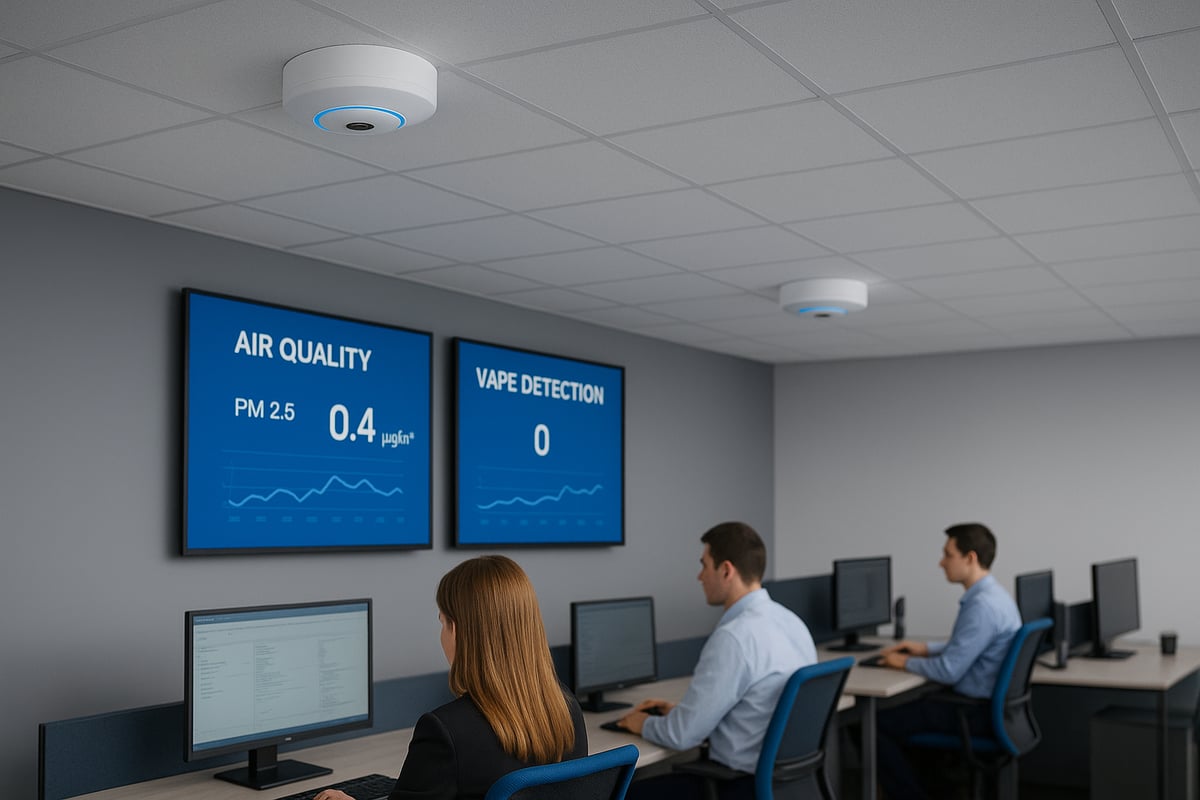
Today’s enterprise vape detection solutions come in several forms. The main options include sensors, air quality monitors, AI-powered systems, and hybrid approaches that combine these technologies. Each offers unique benefits and challenges.
| Solution Type | Description | Pros | Cons |
|---|---|---|---|
| Sensors | Detects airborne chemicals from vapour | Fast alerts, compact design | May miss odourless vapes |
| Air Quality Monitors | Tracks changes in air composition | Broad coverage, multi-use | Less precise for vaping |
| AI-Based Systems | Uses algorithms for detection and analysis | Reduces false positives | Requires data integration |
| Hybrid Approaches | Combines multiple tech types | Enhanced accuracy | Higher initial cost |
For a deeper dive into the latest advancements, see this overview of advanced vape detection technology.
Key features to look for in enterprise vape detectors
When evaluating enterprise vape detection systems, focus on features that ensure reliability and ease of use. Look for real-time alerts, high detection accuracy, and the ability to recognise multiple substances, including synthetic blends.
- Real-time notifications via app, email, or dashboard
- High accuracy rates with AI-driven false positive reduction
- Multi-substance detection, covering nicotine, THC, and synthetics
- Integration with building management and security systems
Choosing a system with these qualities will help your enterprise vape detection strategy remain robust and future-ready.
Data privacy and IT security considerations
Protecting employee data and maintaining compliance with GDPR are non-negotiable for enterprise vape detection. Ensure the chosen system encrypts all alert and reporting data, restricts access to authorised personnel, and maintains clear data retention policies.
- End-to-end encryption for all communications
- Role-based access controls for system users
- Regular audits of data handling and storage practices
By prioritising privacy and IT security, your enterprise vape detection approach will support both compliance and trust.
Cost considerations and ROI analysis
Enterprise vape detection solutions vary in cost, so careful analysis is essential. Consider upfront hardware investment, subscription models, maintenance fees, and the potential for bulk discounts. Calculate ROI based on reduced incidents, lower insurance premiums, and improved productivity.
- Hardware and installation costs
- Ongoing software or monitoring subscriptions
- Estimated savings from fewer incidents and claims
A well-chosen enterprise vape detection system often pays for itself within the first year through operational savings.
Installation, scalability, and maintenance
Effective implementation of enterprise vape detection requires strategic sensor placement and a plan for future growth. Prioritise high-risk zones, such as washrooms, stairwells, and secluded areas. Ensure the system can scale as your business expands or adds new locations.
- Map out initial coverage based on risk assessment
- Opt for modular systems that allow easy expansion
- Schedule regular maintenance to guarantee performance
Enterprise vape detection systems with strong support and flexible architecture will adapt smoothly to changing business needs.
Vendor evaluation and selection criteria
Selecting the right vendor for enterprise vape detection involves more than comparing technical specs. Assess each provider's reliability, customer service, and reputation in the market. Request trial periods to validate performance and seek out satisfaction guarantees.
- Reputation based on customer reviews and case studies
- Responsiveness of technical support teams
- Transparent pricing and flexible contract terms
By following these criteria, you can ensure your enterprise vape detection investment delivers both immediate and long-term results.
Step 3: Implementing and Integrating Vape Detection Across Your Business
Rolling out enterprise vape detection across your organisation is a pivotal step in securing your premises and maintaining compliance. A well-structured implementation plan ensures technology delivers measurable results, supports staff, and aligns with business objectives. Let us explore the essential steps for seamless deployment.
Developing a phased rollout plan
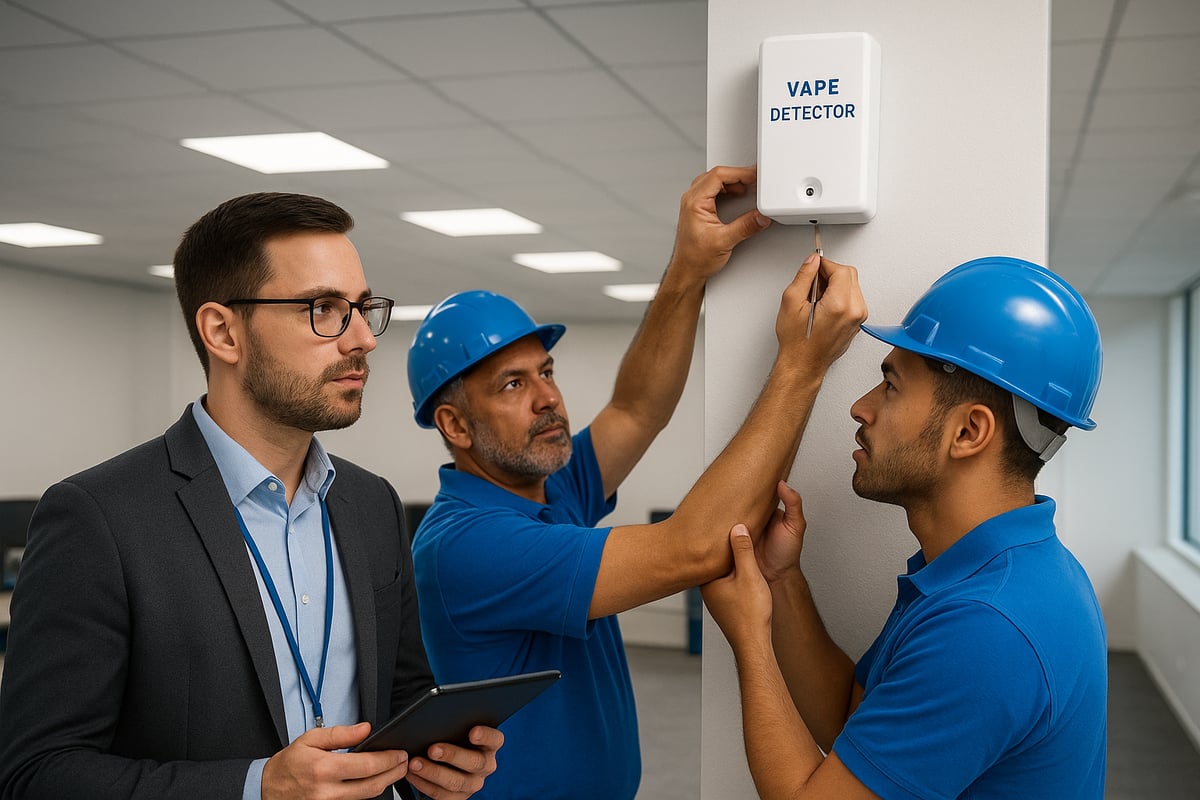
Begin your enterprise vape detection journey by prioritising high-risk areas for initial deployment. Map out locations such as washrooms, stairwells, and secluded meeting spaces. This phased approach minimises disruption and allows your team to address the most pressing risks first.
Create a project timeline that staggers installation across different zones. Engage department heads early to ensure operational continuity. Use pilot sites to gather feedback and refine processes before scaling up. Real-world examples, such as those found in Vape detection system case studies, demonstrate the effectiveness of phased rollouts in reducing incidents and building stakeholder confidence.
Integrating detection systems with existing infrastructure
Seamless integration is vital for maximising the value of enterprise vape detection. Connect detectors to your building management, fire alarm, and security systems for unified oversight. Collaborate with IT to ensure network compatibility and data security.
Develop an integration checklist covering power requirements, data protocols, and alert routing. Test system interoperability before going live. Centralised dashboards enable real-time monitoring and quicker incident response. By embedding vape detection into your building’s ecosystem, you create a resilient, future-ready solution.
Staff training and awareness programmes
Comprehensive staff training underpins the success of enterprise vape detection initiatives. Educate employees on new policies, the purpose of monitoring, and how to report incidents. Use a mix of in-person sessions, digital modules, and visual aids to cater for different learning preferences.
Managers and security teams should receive detailed instruction on interpreting alerts and enforcing protocols. Awareness campaigns—such as posters and email updates—reinforce the importance of compliance. Empowering your workforce with knowledge builds trust and drives positive behavioural change.
Real-time response protocols and escalation
Clear protocols ensure swift action when enterprise vape detection systems identify a breach. Assign roles for initial response, follow-up investigation, and incident escalation. Establish criteria for escalating repeated or severe violations to senior management or HR.
Outline the steps staff should take upon receiving an alert. Provide guidance for handling sensitive situations discreetly and professionally. Regularly review and test response plans to maintain readiness. Well-defined procedures limit reputational risks and support a culture of accountability.
Incident documentation and analytics
Accurate documentation is essential for tracking the effectiveness of enterprise vape detection systems. Use automated reports to record incident details, locations, and response times. Analytics tools can identify emerging trends or persistent hotspots.
Schedule periodic reviews to assess progress and inform policy updates. Share key findings with stakeholders to maintain transparency. Detailed records support compliance efforts and provide evidence for insurance or regulatory requirements. Leveraging analytics ensures continual improvement and informed decision-making.
Continuous improvement through feedback and review
Sustaining the impact of enterprise vape detection requires ongoing evaluation. Collect feedback from staff, managers, and stakeholders through surveys and regular meetings. Use insights to adjust system coverage, refine policies, and address any gaps.
Benchmark performance against industry standards and best practices. Schedule annual reviews to ensure the system evolves with changing threats and business needs. By fostering a culture of openness and adaptability, your organisation stays ahead of emerging challenges and maintains a secure, compliant environment.
Step 4: Compliance, Legal, and Ethical Considerations for 2026
As enterprise vape detection becomes standard across UK workplaces, organisations must stay ahead of tightening regulations and ethical expectations. By 2026, evolving laws and best practices will influence every aspect of detection, monitoring, and reporting. Proactive compliance not only protects your business, but also builds trust with staff and stakeholders.
Navigating evolving regulations and standards
The legal landscape for workplace vaping is rapidly changing. By 2026, updated UK and EU regulations will require stricter enforcement of smoke free and vape free policies. The new Tobacco and Vapes Bill is expected to introduce more comprehensive obligations for businesses, including robust incident reporting and clear signage. Staying informed is essential. Government resources, such as Tobacco and Vapes: Evidence to Support Legislation, help clarify evolving compliance requirements for enterprise vape detection, making it easier to future proof your strategy.
Ensuring employee privacy and fair monitoring
Balancing enterprise vape detection with employee privacy is a legal and ethical priority. GDPR and employment law demand transparency and proportionality in monitoring practices. Always inform staff about how vape detection technology operates, what data is collected, and how it is used. Limit access to sensitive incident data to only those who need it. Clear privacy notices and regular communication can prevent misunderstandings, fostering trust while protecting your business from legal challenges.
Documentation and audit readiness
Proper documentation is crucial for enterprise vape detection compliance. Businesses must keep accurate logs of incidents, responses, and maintenance of detection equipment. Automated reporting tools streamline this process, making it easier to prepare for audits or insurance claims. Integrating office air quality monitoring with vape detection provides a comprehensive record of actions taken. This not only proves compliance but also demonstrates a proactive approach to workplace safety.
Addressing diversity, inclusion, and accessibility
Enterprise vape detection policies should be inclusive, ensuring they do not unfairly target or impact vulnerable groups. Consider language barriers, disabilities, or cultural differences when communicating policies. Provide accessible resources and support for those who wish to quit vaping. Collaborate with HR and wellbeing teams to offer cessation programmes. This approach enhances staff wellbeing and upholds your organisation’s commitment to fairness and equality.
Partnering with legal and compliance teams
Regular collaboration with legal and compliance experts is vital for effective enterprise vape detection. Schedule periodic reviews of policies to incorporate new case law and regulatory updates. Engage compliance officers during system rollouts to ensure monitoring practices align with current laws. Legal teams can advise on changes that may affect your operations, helping you avoid costly missteps and maintain a strong compliance posture.
Penalties and consequences for non-compliance
Non compliance with enterprise vape detection regulations can result in significant penalties. Fines, legal actions, and reputational damage are real risks for businesses that fail to enforce policies or document incidents. Insurance claims may be denied if non compliance is proven. Recent enforcement actions in the UK and EU show regulators are taking violations seriously. Staying vigilant and proactive is your best defence against these consequences.
Step 5: Future-Proofing Your Vape Detection Strategy
Staying ahead in enterprise vape detection requires a proactive, adaptable strategy. As vaping technologies and regulations continue to evolve, businesses must anticipate new threats, leverage data-driven solutions, and foster a culture of prevention. Here is how to future-proof your approach and ensure long-term protection for your assets and people.
Adapting to new vaping technologies and trends
Vaping products are rapidly evolving, with new devices and substances appearing each year. Enterprises must regularly monitor trends, such as smaller, pod-based vapes and synthetic blends, to ensure their detection systems keep pace. Modern enterprise vape detection solutions should be flexible and updated to identify emerging threats. For example, incorporating sensors capable of detecting both nicotine and non-nicotine aerosols is essential. Staying informed about public health insights, such as those highlighted in Vaping in 2025 – Progress Stalled, Public Health at Risk, will help businesses anticipate the next wave of challenges. This vigilance is key to maintaining effective enterprise vape detection across all locations.
Leveraging AI and predictive analytics
Artificial intelligence is transforming enterprise vape detection. AI-driven systems analyse environmental data to identify patterns, predict risk zones, and alert teams before incidents escalate. By harnessing machine learning, organisations can proactively address high-risk areas and reduce response times by half. These predictive tools also help in understanding when and where vaping is most likely to occur, enabling smarter resource allocation. Integrating AI with your current enterprise vape detection infrastructure allows for continuous learning and adaptation, ensuring your business stays one step ahead of evolving risks. Regular updates to AI models further enhance detection accuracy.
Integrating vape detection with broader health and safety initiatives
To maximise impact, enterprise vape detection should not operate in isolation. Integrating these systems with wider health and safety initiatives, such as air quality monitoring and substance detection, provides a holistic view of workplace wellbeing. This integration supports ESG goals and demonstrates a commitment to staff health. For example, linking vape detection data with ventilation systems can trigger automatic air purification, improving overall indoor air quality. Aligning with public health recommendations ensures that enterprise vape detection remains a central pillar in your organisation’s safety culture, supporting both regulatory compliance and employee confidence.
Building a culture of prevention and wellbeing
Future-proofing enterprise vape detection is not solely about technology. It requires building a culture where prevention and staff wellbeing are prioritised. This includes regular awareness campaigns, offering support for cessation, and recognising positive behaviour. By involving employees in policy development and providing accessible resources, businesses foster trust and collective responsibility. Recognising compliance champions and sharing success stories can motivate teams to maintain high standards. When staff see that enterprise vape detection is linked to their health and safety, engagement and buy-in increase, leading to lasting behavioural change.
Regular review and continuous improvement
Continuous improvement is crucial for effective enterprise vape detection. Schedule annual system reviews to assess performance, identify coverage gaps, and benchmark against industry standards. Use analytics to track incident trends and inform policy updates. Engage stakeholders through surveys and feedback sessions to capture on-the-ground insights. The table below summarises key review actions:
| Review Action | Frequency | Responsible Team |
|---|---|---|
| System performance | Annually | IT/Security |
| Policy compliance | Quarterly | HR/Compliance |
| Stakeholder feedback | Biannually | All Departments |
Document findings and adjust strategies as needed to ensure your enterprise vape detection remains robust and relevant.
Planning for scalability and cross-site consistency
As your business grows, it is vital to standardise enterprise vape detection protocols across all sites. Develop clear guidelines for installation, monitoring, and response that can be easily replicated in new locations. Stay informed about upcoming regulations, such as those outlined in the Tobacco and Vapes Bill 2025, to ensure compliance remains seamless during expansion. Plan for scalable technology solutions that support future mergers or operational changes. By prioritising consistency, you safeguard your organisation and maintain a high level of protection as your enterprise evolves.
As you’ve seen, tackling the rise of vaping and maintaining compliance in modern enterprise environments requires more than just policies—it demands reliable, real time solutions that protect your people and your reputation. If you’re ready to take the next step in safeguarding your business and want expert guidance tailored to your building’s needs, we’re here to help. Let’s work together to create a safer, healthier workplace for everyone. Talk to our team and protect your building today





Share:
School Environment Air Report Guide: Insights for 2026
The Essential Guide to Vape and Air Quality Reports 2026