
Facility safety is becoming increasingly complex in 2026 as organisations face new risks and evolving regulatory requirements. Cyber threats, environmental hazards, and intricate building designs are raising the stakes for safety managers everywhere.
Smart technologies are now transforming how facilities approach these challenges. From real-time monitoring to automated responses, the landscape is shifting rapidly. This change means that relying on traditional methods is no longer enough.
This expert guide explores the world of smart facility safety solutions. You will discover the latest trends, essential technologies, practical steps for implementation, integration strategies, and a glimpse into the future of facility safety.
Whether you manage offices, schools, or public spaces, you will find actionable insights to help you stay compliant, boost efficiency, and keep your people secure.
The Evolution of Facility Safety: 2026 Trends and Challenges
The landscape of facility safety is undergoing rapid transformation as we approach 2026. Traditional methods that relied on manual inspections, checklists, and isolated alarms are quickly becoming outdated. Modern facilities face a complex array of risks that demand more sophisticated and connected approaches. The move towards smart facility safety solutions is not just a trend but a necessity for organisations striving to keep pace with evolving threats and regulations.
The Shift from Manual to Smart Safety Systems
For decades, facility safety depended on human vigilance and basic technologies. Fire alarms, physical patrols, and paper records formed the backbone of risk management. However, these methods often failed to keep up with the dynamic nature of modern buildings. Manual checks are prone to oversight, slow response times, and inconsistent documentation.
Today’s facilities present new challenges. Cyber threats can compromise building automation systems, while environmental hazards such as poor air quality or chemical leaks pose serious health risks. The complexity of building layouts and the sheer volume of data generated make it difficult for traditional systems to provide comprehensive coverage.
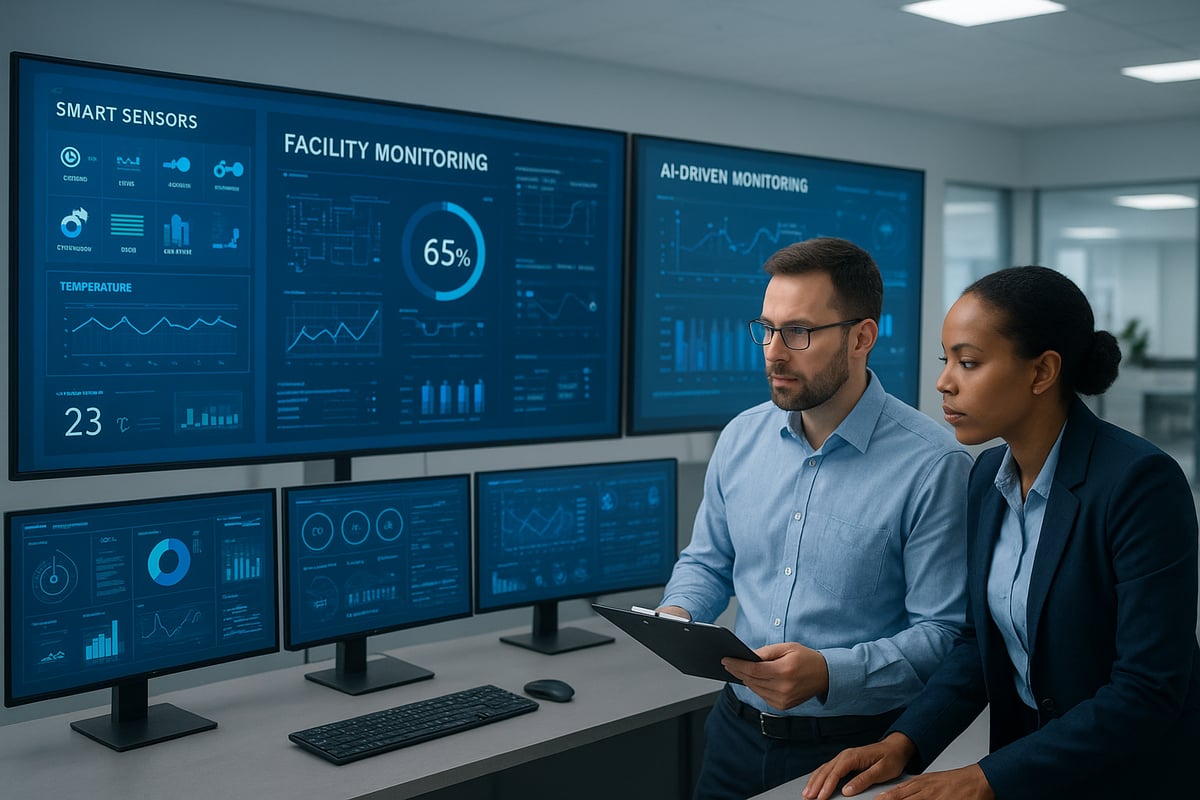
Smart facility safety solutions bring a paradigm shift by leveraging IoT connectivity, artificial intelligence, and automation. These technologies enable real-time monitoring, predictive analytics, and automated responses, which dramatically improve both prevention and incident management. Regulatory requirements are also tightening in 2026, with updated standards demanding integrated and data-driven safety protocols.
Consider the findings from IFMA: 72 percent of facilities plan to upgrade to smart safety systems by 2026. This widespread adoption is driven by the need to address new and existing risks more effectively. However, integrating these advanced systems with legacy infrastructure poses significant challenges. Facilities must ensure seamless compatibility, secure data flows, and adequate staff training for successful implementation.
A notable example is a UK university that transitioned from manual safety checks to an automated monitoring system. This upgrade allowed for instant detection of hazards, streamlined compliance reporting, and a reduction in false alarms. For a deeper dive into the latest industry trends and how smart facility safety solutions are evolving, review the Top Trends in Facility Security for 2026.
Key Drivers Behind Smart Safety Adoption
Why are organisations investing heavily in smart facility safety solutions? The answer lies in the measurable benefits that these systems deliver.
Cost savings are a primary motivator. Predictive maintenance powered by analytics reduces unplanned downtime and minimises repair costs. Fewer safety incidents also mean lower insurance premiums and fewer legal liabilities.
Real-time data analytics enable faster detection and response to emergencies. Facility managers can act within seconds rather than minutes, which can make a critical difference during fire outbreaks or security breaches. Enhanced occupant health and wellbeing is another competitive advantage, as smart facility safety solutions provide continuous air quality monitoring and immediate alerts for hazardous conditions.
Insurance providers are beginning to offer incentives for facilities that implement smart safety technologies. Compliance with advanced standards is becoming a requirement for many sectors. At the same time, tenants, employees, and stakeholders expect transparent and robust safety measures as part of their environment.
The push towards smart facility safety solutions is reshaping how buildings are managed and protected. As risks evolve and expectations rise, only those who embrace these advancements will remain secure, efficient, and compliant.
Core Components of Smart Facility Safety Solutions
Modern smart facility safety solutions rely on a suite of advanced technologies, each serving a distinct purpose. These components work in harmony to create safer, healthier, and more efficient environments. In this section, we explore the essential building blocks that define smart facility safety solutions in 2026.
Smart Detection and Monitoring Technologies
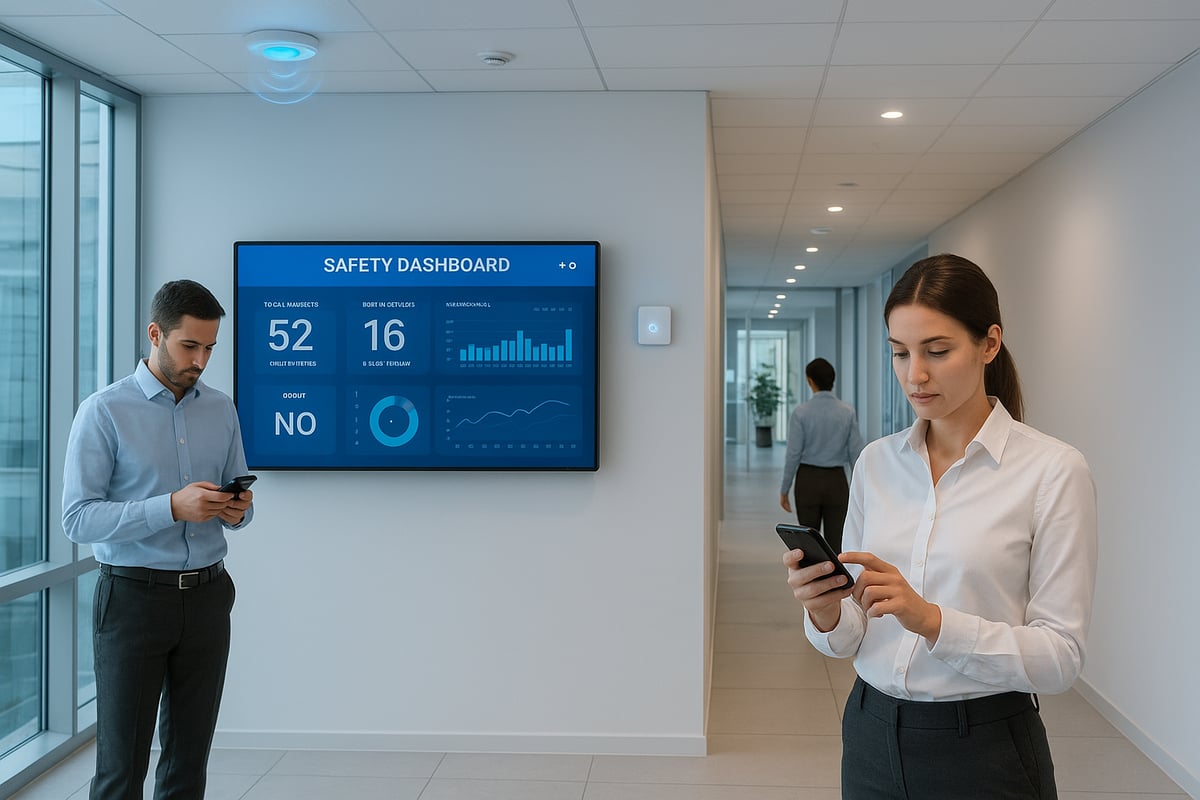
The backbone of smart facility safety solutions is robust detection and monitoring. Facilities now deploy networks of sensors for fire, gas, air quality, and environmental hazards. AI powered surveillance cameras can identify unusual movements, while access control systems use facial recognition or biometrics for secure entry.
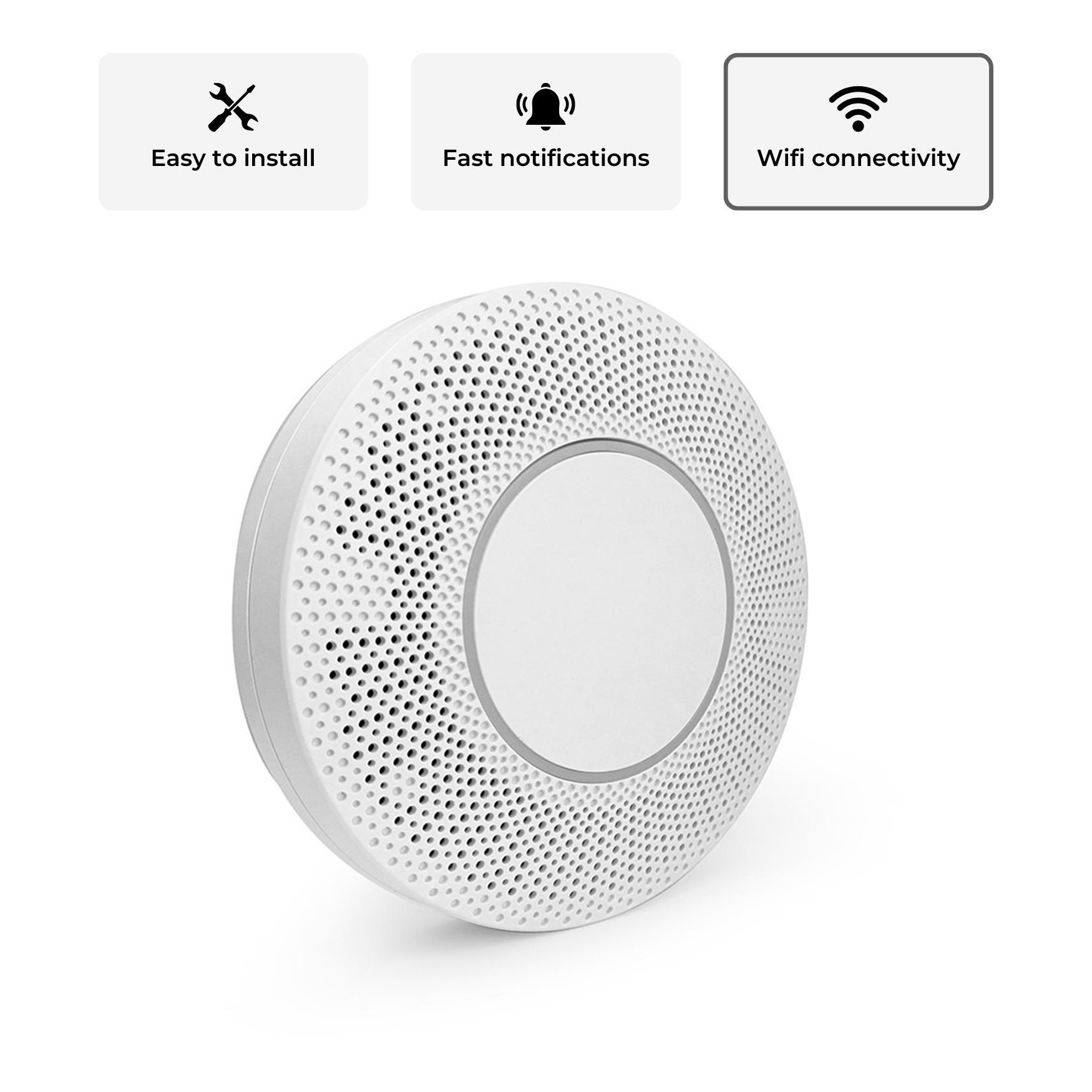
These smart facility safety solutions deliver more accurate and timely alerts compared to legacy systems. For instance, smart smoke detectors have reduced false alarms by 40 percent in commercial properties. If you are interested in the technologies behind these advances, see this Smart sensor technology overview.
Automated Response and Alert Systems
Automated response is central to smart facility safety solutions. When a threat is detected, systems can trigger lockdowns, initiate evacuation protocols, and send mass notifications. Alerts can reach occupants via mobile apps, digital signage, or public address systems, ensuring swift communication.
AI driven incident prediction further enhances safety by identifying risks before they escalate. According to Frost and Sullivan, automated response has cut emergency response times by 30 percent, making these smart facility safety solutions indispensable.
Centralised Safety Management Platforms
Centralised platforms unify safety operations in smart facility safety solutions. Dashboards allow facility managers to monitor systems, track compliance, and generate reports across multiple sites. Integration with building management systems and IoT devices streamlines oversight.
Cloud based analytics provide actionable insights, while real time data helps ensure compliance with evolving regulations. Retailers, for example, leverage centralised platforms to maintain consistent safety standards throughout their estates, making smart facility safety solutions both scalable and efficient.
Advanced Air Quality and Substance Detection
Air quality is a growing concern in smart facility safety solutions. Poor indoor air can affect health, productivity, and regulatory compliance. Smart sensors now detect pollutants, smoke, and even harmful substances like vaping aerosols or drugs.
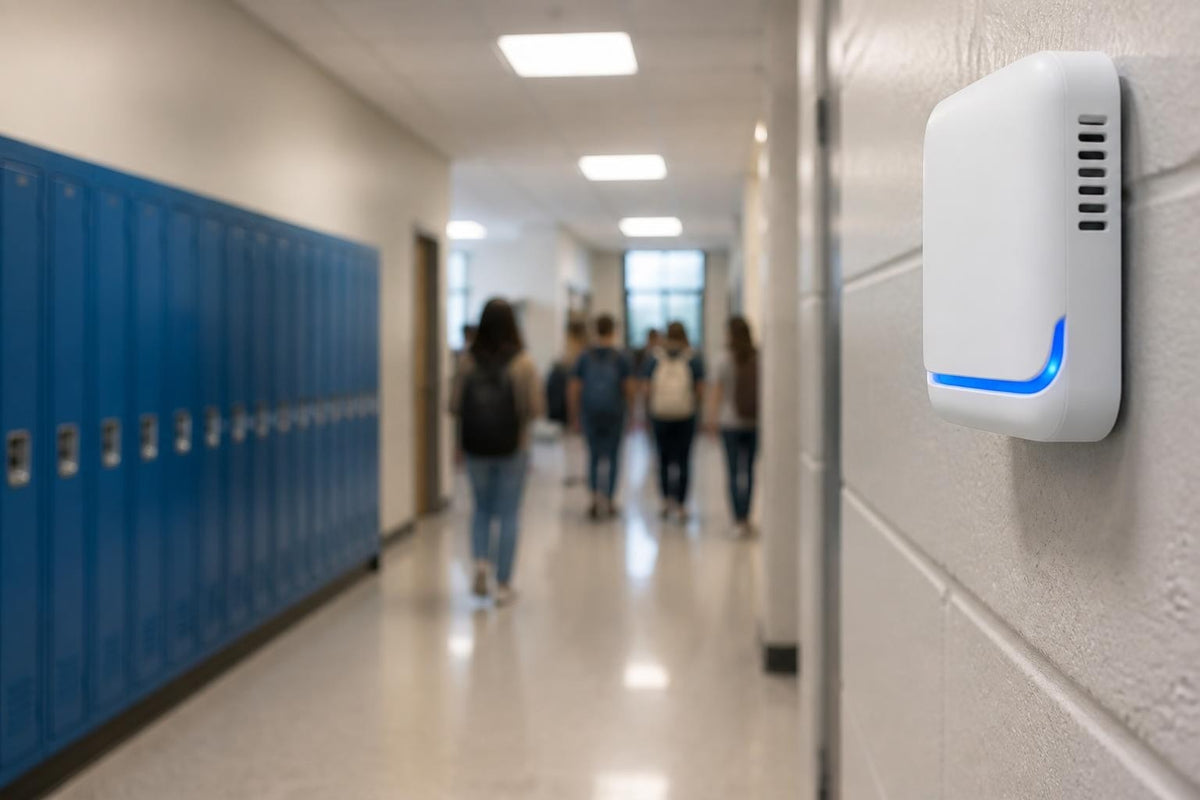
Schools use these tools to prevent vaping incidents, while offices monitor for allergens and particulates. The flexibility of sensor deployment means smart facility safety solutions can adapt quickly to new threats, safeguarding occupant wellbeing and meeting legal requirements.
The Role of Predictive Analytics
Predictive analytics is transforming smart facility safety solutions. Machine learning analyses historical and real time data to anticipate risks and maintenance needs, reducing downtime and preventing incidents.
Facilities can proactively schedule repairs or adjust protocols based on data driven insights. In manufacturing, predictive analytics has helped prevent costly equipment failures. As a result, smart facility safety solutions become more reliable, efficient, and aligned with business objectives.
Vape Guardian: Advanced Vaping Detection and Air Quality Monitoring
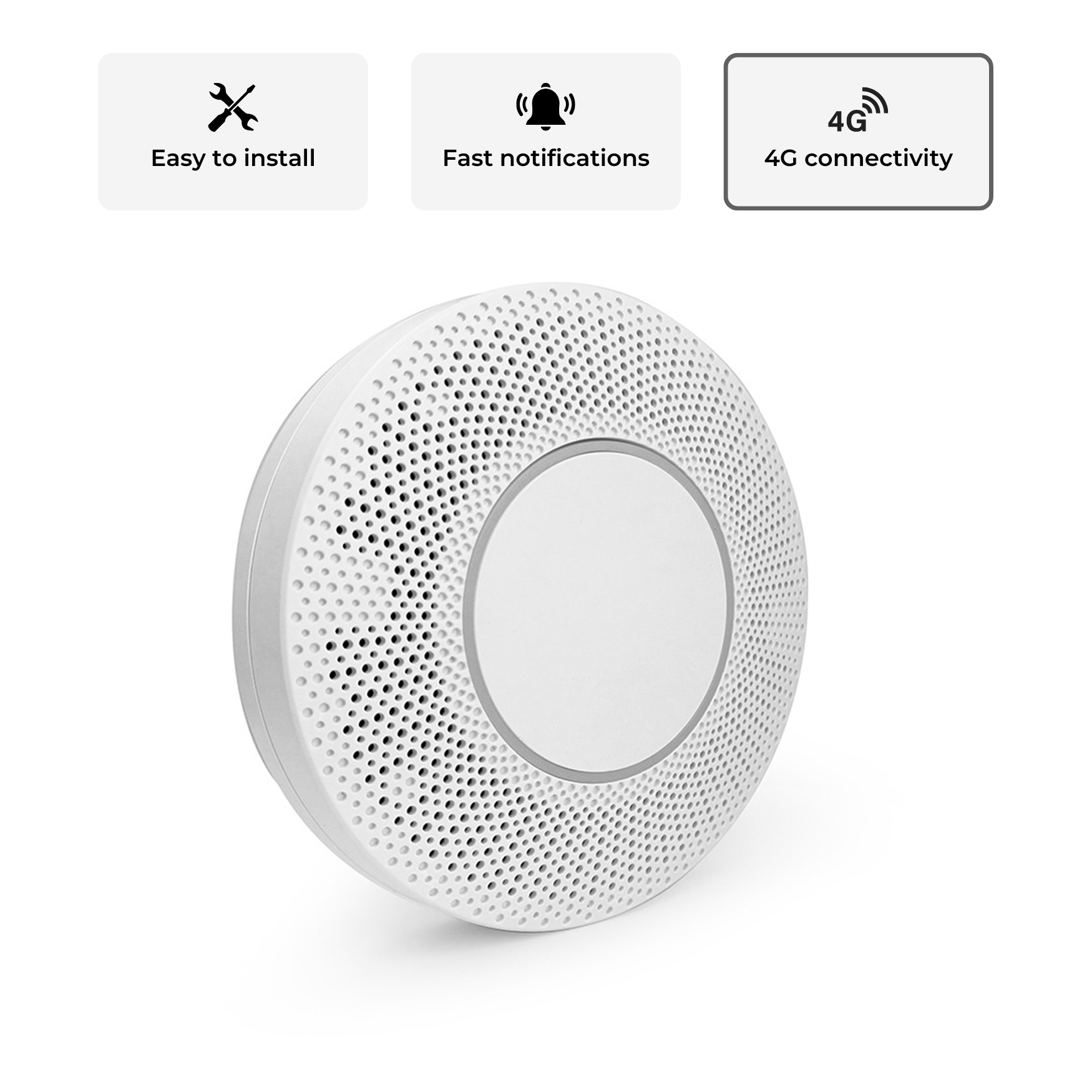
Vape Guardian offers smart facility safety solutions tailored to schools, offices, and leisure spaces. Their AI powered sensors detect vaping, THC, and air quality issues in real time, sending instant alerts to staff.
Detailed reporting supports regulatory compliance and targeted interventions. Deploying Vape Guardian has led to a measurable reduction in vaping incidents, making environments safer for all occupants and reinforcing the benefits of adopting smart facility safety solutions.
Step-by-Step Guide to Implementing Smart Facility Safety Solutions
Implementing smart facility safety solutions requires a strategic, methodical approach. Each step ensures your organisation maximises compliance, efficiency, and resilience. Here is a practical, expert-driven guide to transforming your facility’s safety landscape for 2026.

Step 1: Conducting a Comprehensive Safety Audit
Begin by assessing your current safety infrastructure. Review all existing protocols, equipment, and emergency procedures. Identify vulnerabilities that could expose your facility to risk, including outdated systems or gaps in coverage.
Engage key stakeholders, such as facility managers, IT teams, and compliance officers. Their input helps define clear safety objectives and priorities. Benchmark your site against the latest 2026 regulatory requirements to pinpoint areas needing improvement.
Use this audit to map out where smart facility safety solutions can provide the greatest impact. Document findings to guide your next steps and allocate resources efficiently.
Step 2: Selecting the Right Technologies
Choosing the correct technology is vital for long-term success. Evaluate smart facility safety solutions based on scalability, interoperability, and reliability. Consider how each system integrates with your current and future needs.
Prioritise solutions that can adapt as threats evolve. Compare vendors, looking closely at support services, upgrade paths, and references from similar facilities. Assess platforms for predictive maintenance, real-time monitoring, and data-driven insights.
Ensure your selection aligns with your compliance goals and operational objectives. This step lays the groundwork for building a robust, future-ready safety ecosystem.
Step 3: Integration with Existing Facility Systems
Seamless integration is crucial for efficient operation. Develop a strategy for connecting new smart facility safety solutions to legacy infrastructure, such as building management systems and access controls.
Address potential challenges, including data silos and compatibility issues. Opt for platforms that support open standards and centralised management. For example, centralised safety management platforms offer real-time detection and unified oversight, streamlining compliance and incident response.
Plan phased rollouts to minimise disruption. Document integration processes thoroughly to aid ongoing maintenance and scalability.
Step 4: Staff Training and Change Management
Technology is only as effective as the people using it. Develop comprehensive training programmes tailored to facility personnel. Focus on both technical skills and practical scenarios to build confidence in the new systems.
Encourage a culture open to change. Address concerns and resistance early, highlighting the benefits of smart facility safety solutions for both staff safety and job performance.
Provide ongoing education as systems evolve. Regular refreshers and updates keep everyone aligned with best practices and regulatory standards.
Step 5: Testing, Calibration, and Continuous Improvement
Establish protocols for routine system testing and calibration. Schedule regular drills and simulations to ensure all components of your smart facility safety solutions function as intended.
Leverage analytics to monitor performance and identify trends. Use data-driven insights to refine safety processes, response times, and maintenance routines. Create feedback loops with end users to capture real-world experiences and suggestions.
Continuous improvement ensures your facility remains compliant, adaptive, and ready to meet emerging challenges.
Step 6: Ensuring Compliance and Documentation
Automate compliance reporting to streamline audits and inspections. Use digital tools to maintain up-to-date records, supporting both insurance requirements and legal obligations.
Smart facility safety solutions can simplify documentation, reducing manual effort and error rates. For example, healthcare facilities benefit from automated compliance systems that track safety checks and incident responses in real time.
Keep detailed logs of all safety activities, system updates, and staff training. This transparency supports accountability and builds trust with stakeholders.
Integrating Smart Safety Solutions with Building Operations
Integrating smart facility safety solutions with building operations is no longer optional, it is fundamental for modern organisations. As facilities become more complex and expectations rise, seamless integration delivers resilience, efficiency, and safety. In this section, we explore how interoperability, streamlined emergency response, occupant wellbeing, and overcoming integration challenges shape the future of facility management.
The Importance of System Interoperability
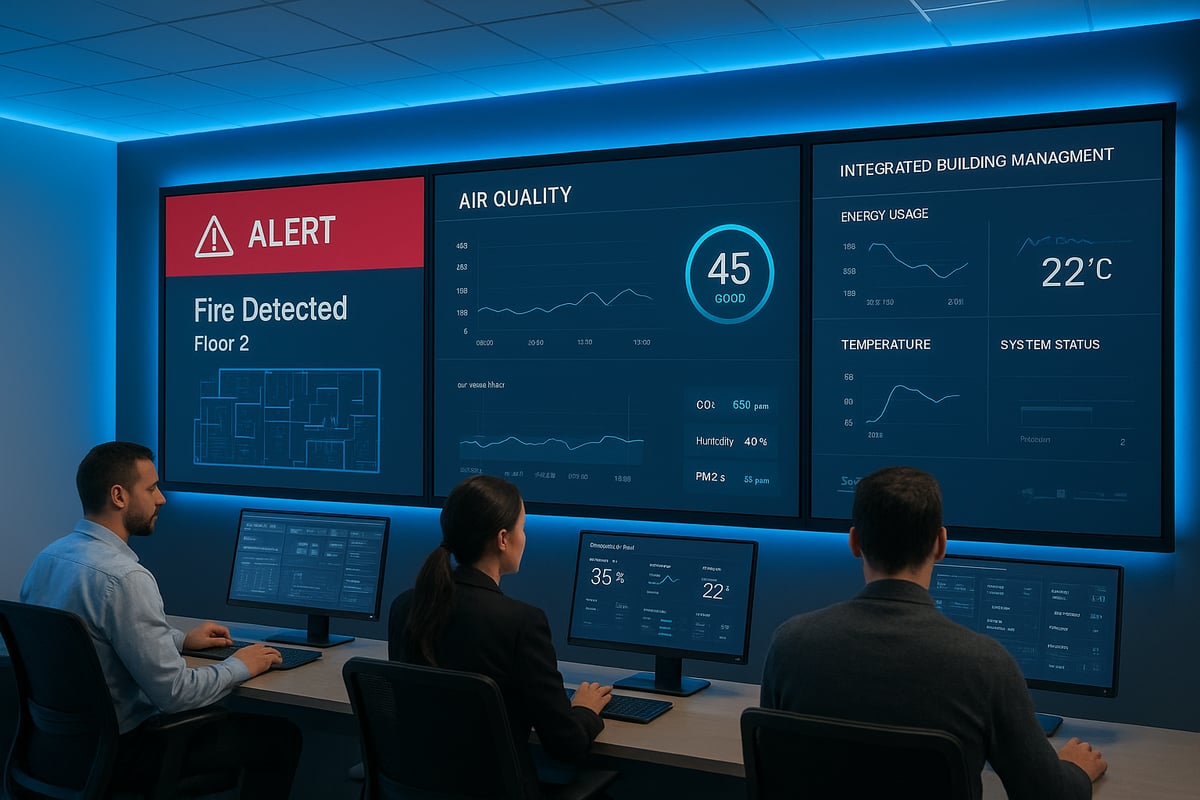
System interoperability is at the heart of effective smart facility safety solutions. When safety systems connect with HVAC, lighting, and energy management, facilities achieve a holistic view of their operations. This integration allows real-time data sharing, enabling automatic adjustments to environmental controls and rapid response to incidents.
For example, a fire alarm can trigger ventilation adjustments, unlock emergency exits, and notify occupants simultaneously. The ability to link access control and environmental monitoring is no longer theoretical. Research such as the Dual-Modality IoT Framework for Integrated Access Control and Environmental Safety Monitoring demonstrates how integrated IoT solutions enhance both security and environmental safety in real-world settings.
Facility managers increasingly value this approach. Data shows that 60 percent consider interoperability essential for future upgrades, as it simplifies management and supports the adoption of new smart facility safety solutions.
Streamlining Emergency Response and Facility Management
Smart facility safety solutions transform emergency response from a manual process to a dynamic, automated workflow. When an incident is detected, integrated systems escalate the response, inform relevant personnel, and initiate recovery procedures without delay.
Consider a leisure centre: with integrated systems, a fire or security breach triggers not only alarms but also coordinated actions like activating digital signage, contacting emergency services, and locking or unlocking doors as appropriate. Mobile apps and cloud-based platforms enable remote management, allowing facility teams to monitor and control responses from anywhere.
This level of coordination reduces confusion and shortens response times, directly contributing to safer outcomes. Smart facility safety solutions ensure critical information reaches the right people instantly, which is vital for both large campuses and smaller sites.
Enhancing Occupant Experience and Wellbeing
Modern buildings are expected to prioritise occupant wellbeing alongside security. Smart facility safety solutions deliver personalised safety notifications, guidance during emergencies, and continuous monitoring of environmental quality.
Air quality is a major focus. Smart sensors measure pollutants and adjust ventilation, ensuring healthy indoor environments. Improved air quality is linked to an 11 percent increase in employee productivity, according to a Harvard study. For offices in particular, adopting advanced monitoring strategies is a competitive advantage. For more practical guidance, see this overview on office air quality monitoring.
By integrating safety with wellbeing initiatives, smart facility safety solutions help retain tenants, attract talent, and support regulatory compliance, making facilities more attractive and future-proof.
Overcoming Integration Challenges
Despite the benefits, integrating smart facility safety solutions with building operations presents challenges. Cybersecurity risks and data privacy concerns must be addressed with robust protocols and regular reviews. Managing multiple vendors and aligning service agreements is vital to ensure smooth operation.
Phased implementation and scalability are crucial for success. Start with high-priority areas, then expand as systems prove their value. Staff training and clear communication help overcome resistance and maximise adoption.
In summary, successful integration empowers facilities to operate efficiently, protect occupants, and adapt to emerging risks. Smart facility safety solutions are the foundation for safe, productive, and resilient spaces in 2026 and beyond.
Measuring ROI and Future-Proofing Your Facility Safety Strategy
Effectively measuring the return on investment for smart facility safety solutions is essential for facility managers aiming to maximise both safety and value. With capital budgets under scrutiny and evolving risks, demonstrating the tangible impact of your technology investments is more important than ever.
Calculating the Return on Smart Safety Investments
When assessing smart facility safety solutions, focus on metrics that directly influence operational and financial outcomes. Key indicators include:
- Reduction in incident frequency and severity
- Faster emergency response and resolution times
- Lower insurance premiums due to improved compliance
- Enhanced operational efficiency through automation
- Decreased downtime from predictive maintenance
For example, a commercial office complex reported a 35 percent decrease in safety incidents after integrating smart facility safety solutions, resulting in significant insurance savings. Educational institutions have also seen measurable gains, with improved occupant wellbeing supporting better academic performance.
Leveraging Data for Continuous Optimisation
Continuous improvement is at the heart of effective smart facility safety solutions. By leveraging analytics and benchmarking, organisations can identify areas for further optimisation. Key practices include:
- Monitoring safety trends across multiple buildings
- Comparing incident rates before and after implementation
- Using predictive analytics to anticipate maintenance needs
- Regularly reviewing compliance with current regulations
Facilities adopting cloud-hosted platforms benefit from real-time data integration, enabling rapid adjustments and proactive management. For further insight into best practices, review the Top 5 Public Safety Trends in 2026, which highlights the value of integrated data and analytics.
Preparing for Emerging Threats and Technologies
Smart facility safety solutions must be adaptable to emerging risks, including cyber-physical attacks, climate-related hazards, and public health emergencies. Staying ahead means:
- Regularly updating threat assessments and risk profiles
- Ensuring systems are flexible and scalable
- Training staff on new safety protocols and digital tools
By anticipating and preparing for new challenges, organisations safeguard investments and maintain regulatory compliance regardless of external changes.
Trends Shaping the Future of Facility Safety
The facility safety landscape is evolving rapidly. AI-driven safety orchestration, plug-and-play devices, and the extension of smart facility safety solutions to smaller sites are shaping tomorrow’s standards. According to Genetec Predicts Top Physical Security Trends for 2026, the convergence of IT and operational technology is accelerating this transformation.
Facility managers should monitor these trends and assess how innovations can be incorporated into their own smart facility safety solutions strategy.
Building a Culture of Safety and Innovation
Sustainable success with smart facility safety solutions relies on fostering a proactive safety culture. This involves:
- Engaging leadership and staff in ongoing safety initiatives
- Promoting transparent communication around safety performance
- Encouraging a data-driven mindset for continual improvement
By embedding innovation and accountability into daily operations, organisations ensure that their smart facility safety solutions remain effective and future-ready.
As you’ve seen throughout this guide, embracing smart facility safety solutions is crucial for staying ahead of emerging risks and meeting 2026’s regulatory demands. Whether you’re looking to protect schools, offices, or public spaces, leveraging advanced detection and monitoring not only enhances security but also builds trust and confidence among occupants. If you’re ready to take the next step in safeguarding your environment and want tailored advice on integrating these technologies, I encourage you to talk to our team and protect your building today. We’re here to support you every step of the way.


Share:
School Environment Monitoring Guide: Best Practices for 2026
Indoor Safety Technology Guide: Innovations for 2026