
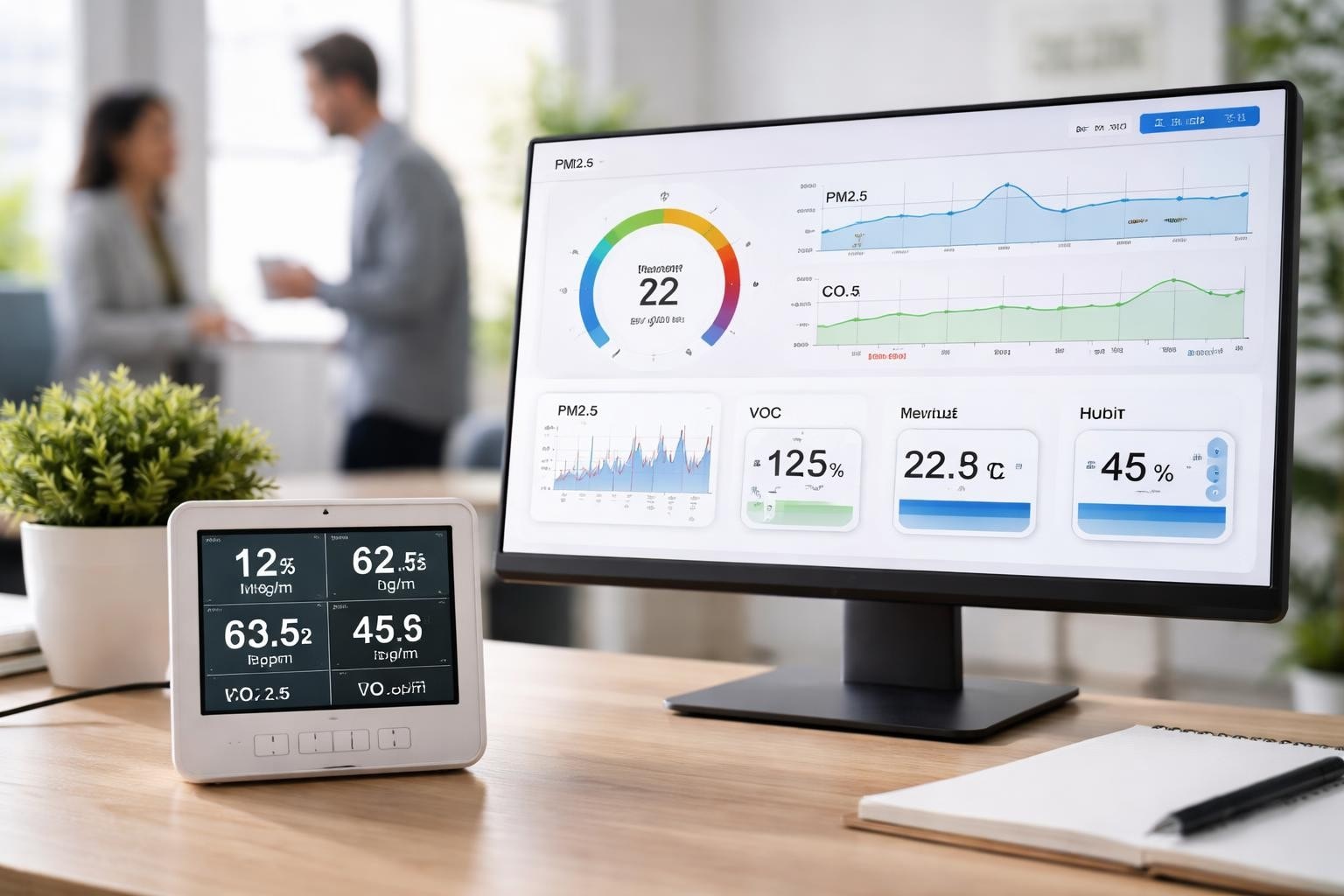
Modern workplaces face invisible threats that impact employee wellbeing and productivity every single day. Poor indoor air quality contributes to headaches, fatigue, respiratory issues, and decreased cognitive function, yet many organisations remain unaware of the pollutants circulating through their buildings. An office air quality monitor provides the visibility needed to identify these hidden dangers and take corrective action before health problems emerge. As businesses prioritise employee wellness and regulatory compliance in 2026, understanding how air quality monitoring works and why it matters has become essential for creating safer, healthier work environments.
Why Office Air Quality Monitoring Matters Now
The quality of air inside commercial buildings directly affects everyone who works there. Research consistently shows that poor indoor air quality reduces concentration, increases sick days, and contributes to long-term health conditions. Unlike outdoor pollution, which receives significant public attention, indoor air quality often goes unmonitored despite people spending approximately 90% of their time indoors.
According to comprehensive EPA monitoring guidelines, proper air quality assessment requires systematic measurement of key pollutants and environmental factors. Without an office air quality monitor, facilities managers operate blindly, unable to identify problem areas or verify that ventilation systems function properly.
The Hidden Cost of Poor Indoor Air
Businesses lose substantial revenue through reduced productivity and increased absenteeism linked to poor air quality. Studies indicate that cognitive performance drops measurably when carbon dioxide levels exceed 1000 parts per million, a threshold frequently breached in poorly ventilated meeting rooms and open plan offices.
The financial implications extend beyond immediate productivity losses:
- Increased healthcare costs from respiratory conditions
- Higher staff turnover in uncomfortable work environments
- Potential liability issues if air quality contributes to health problems
- Reduced property value for buildings with documented air quality issues
- Non-compliance penalties where regulations mandate monitoring

Modern office air quality monitoring solutions address these concerns by providing continuous data about the breathing environment. Rather than waiting for complaints or visible problems, organisations can proactively manage indoor air through informed decisions based on accurate measurements.
Key Pollutants That Office Air Quality Monitors Detect
Understanding what an office air quality monitor measures helps organisations select appropriate technology and interpret the data effectively. Different devices track various combinations of pollutants, each with distinct health implications.
Particulate Matter (PM2.5 and PM10)
Tiny airborne particles represent one of the most harmful indoor pollutants. PM2.5 particles, measuring 2.5 micrometres or smaller, penetrate deep into lungs and enter the bloodstream. Sources include outdoor pollution infiltration, printer emissions, and increasingly, vaping activity in unauthorised areas.
The EPA's guidance on indoor air quality in office buildings emphasises particulate monitoring as a fundamental component of workplace air quality programmes. An effective office air quality monitor provides real-time PM2.5 readings, alerting facilities teams when concentrations exceed safe thresholds.
Volatile Organic Compounds (VOCs)
VOCs encompass hundreds of chemicals released from building materials, furniture, cleaning products, and office equipment. Common VOCs include formaldehyde from pressed wood products, benzene from stored fuels, and toluene from paints and adhesives. Short-term exposure causes eye irritation, headaches, and dizziness, whilst long-term exposure links to serious health conditions.
Quality monitoring devices measure total VOC levels, providing a composite reading that indicates overall chemical contamination. Some advanced systems identify specific VOCs, enabling targeted remediation strategies.
Carbon Dioxide Levels
CO2 serves as a proxy for ventilation effectiveness. Humans exhale carbon dioxide, so elevated levels indicate insufficient fresh air exchange. The outdoor atmospheric CO2 concentration sits around 420 parts per million, whilst poorly ventilated indoor spaces can reach 2000 ppm or higher.
| CO2 Level (ppm) | Air Quality Rating | Typical Effects |
|---|---|---|
| 400-600 | Excellent | Outdoor air quality |
| 600-1000 | Good | Acceptable indoor air |
| 1000-1500 | Moderate | Drowsiness, reduced concentration |
| 1500-2500 | Poor | Headaches, fatigue, impaired decision making |
| 2500+ | Very Poor | Significant health impacts |
An office air quality monitor with CO2 tracking helps optimise ventilation schedules and identify spaces requiring improved air circulation.
Temperature and Humidity
Whilst not pollutants themselves, temperature and humidity dramatically affect comfort and health. High humidity promotes mould growth and dust mite proliferation, whilst low humidity dries mucous membranes and increases susceptibility to respiratory infections. The optimal range sits between 40% and 60% relative humidity.
Temperature affects both comfort and pollutant behaviour. Higher temperatures increase VOC off-gassing from materials and furnishings, whilst also reducing perceived air quality even when actual pollutant levels remain constant.
Selecting the Right Office Air Quality Monitor
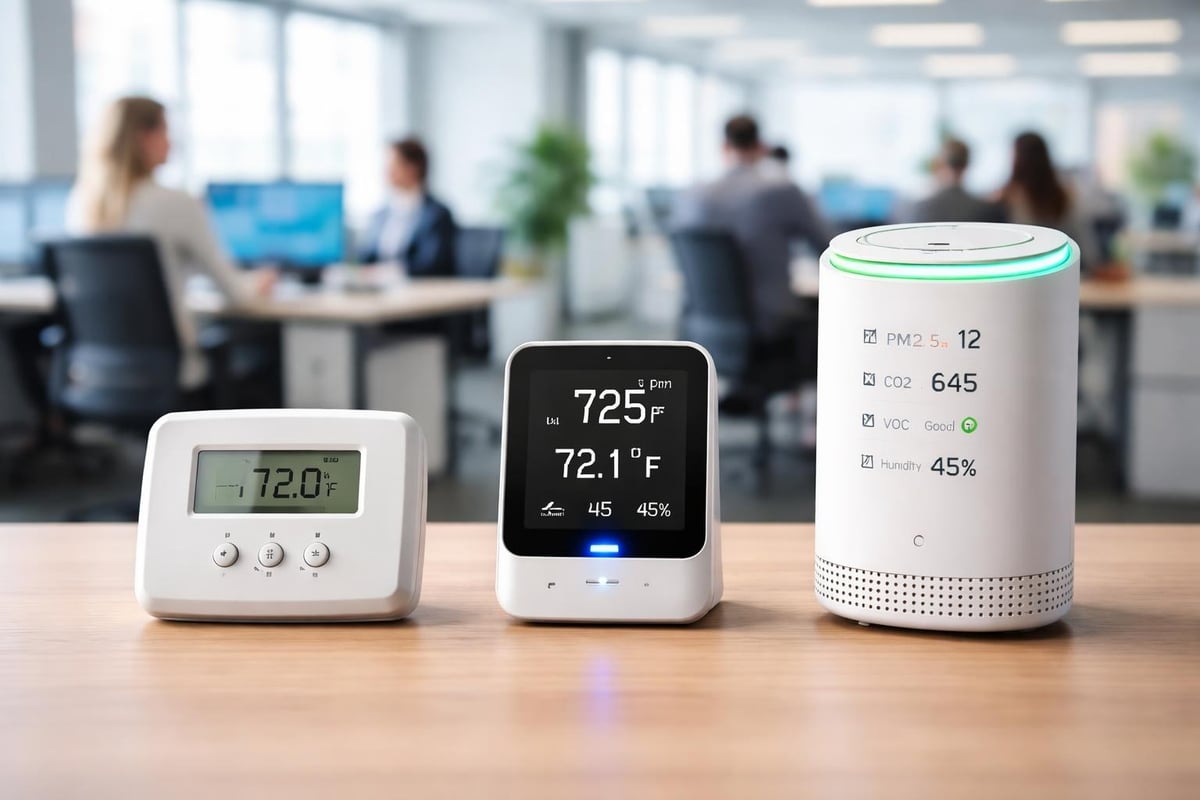
The market offers diverse monitoring solutions, from basic single-parameter devices to comprehensive multi-sensor systems. Choosing appropriate technology requires understanding organisational needs, spatial requirements, and budget constraints.
Standalone Versus Networked Systems
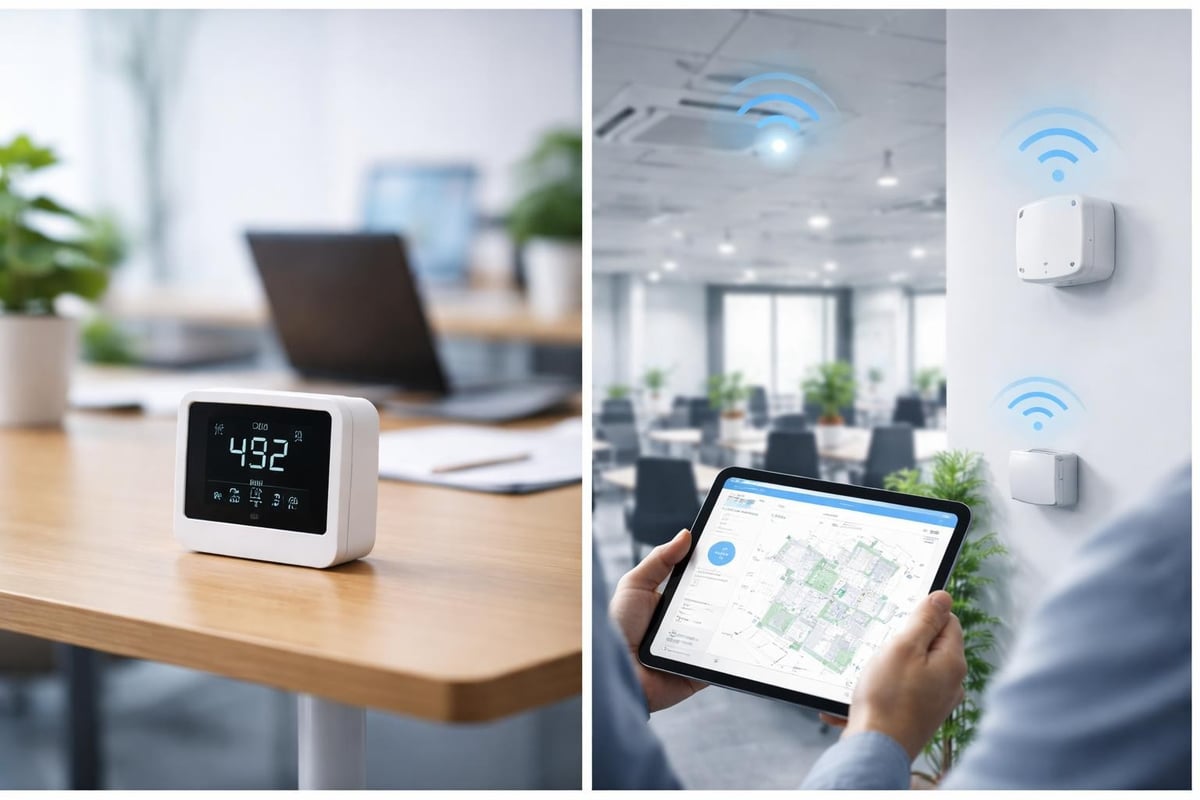
Standalone monitors provide localised readings, typically displaying data on integrated screens. These suit small offices or specific problem areas requiring targeted monitoring. However, they lack centralised data collection and cannot trigger automated responses.
Networked systems connect multiple sensors to cloud-based platforms, enabling facilities managers to monitor entire buildings from a single dashboard. These sophisticated solutions support trend analysis, automated alerts, and integration with building management systems.
The EPA's assessment of low-cost air pollution monitors notes significant variation in device accuracy and reliability. Professional-grade sensors consistently outperform consumer devices, particularly for precise measurements of specific pollutants.
Essential Features for Workplace Monitoring
When evaluating potential solutions, organisations should prioritise these capabilities:
- Multi-pollutant detection covering particulates, VOCs, CO2, temperature, and humidity
- Real-time data transmission enabling immediate response to quality degradation
- Historical data storage supporting trend analysis and compliance documentation
- Customisable alert thresholds matching organisational standards and regulatory requirements
- Integration capabilities connecting with HVAC systems and building automation platforms
- User-friendly dashboards presenting complex data in accessible formats
- Mobile accessibility allowing remote monitoring and management
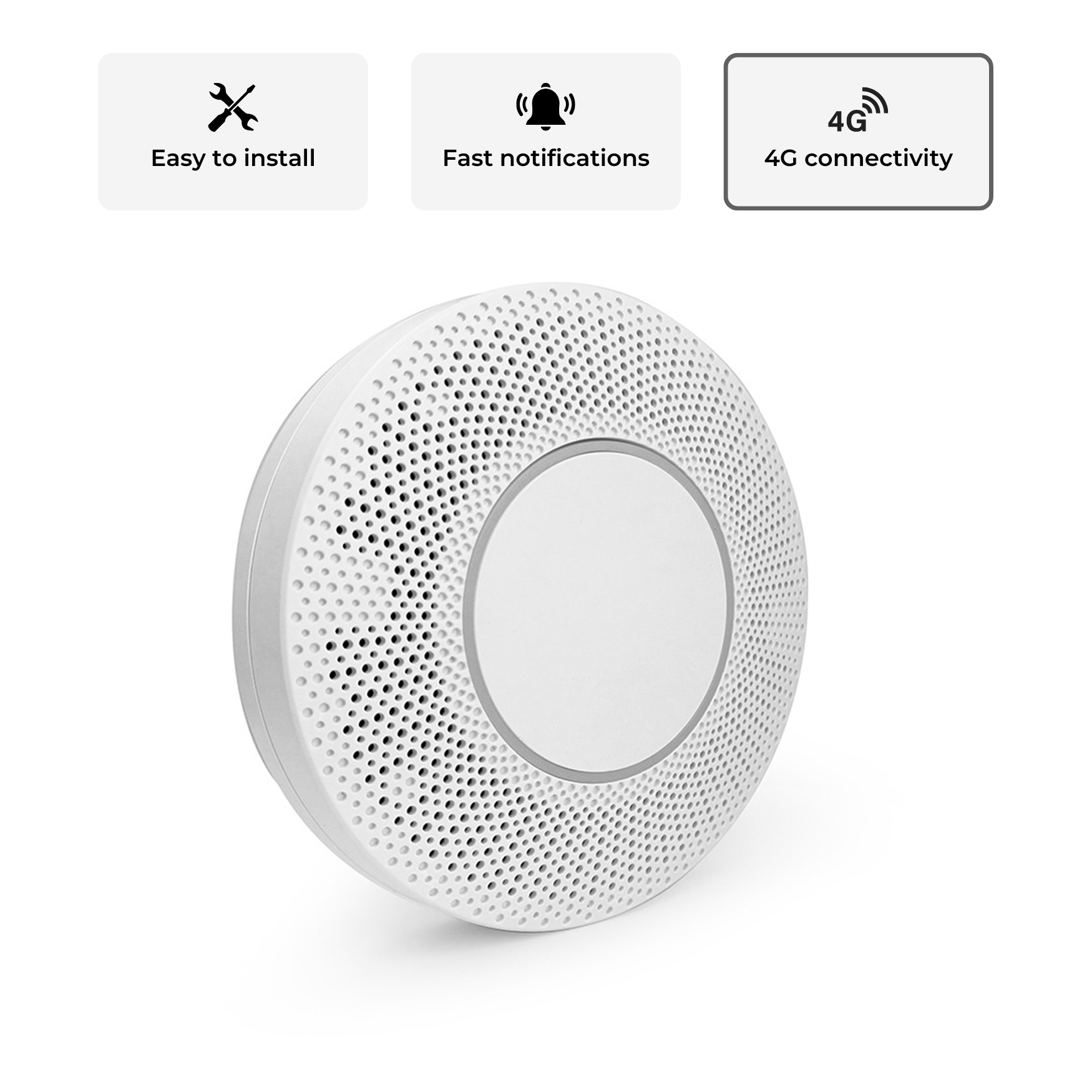
Advanced systems also detect unusual activities that compromise air quality. For organisations concerned about hidden health risks from vaping in offices, specialised detection capabilities identify vape emissions before they affect colleagues. The Vape Detection System combines air quality monitoring with targeted vaping detection, addressing both general environmental quality and specific policy violations.
Placement and Coverage Considerations
Effective monitoring requires strategic sensor placement. General guidelines recommend:
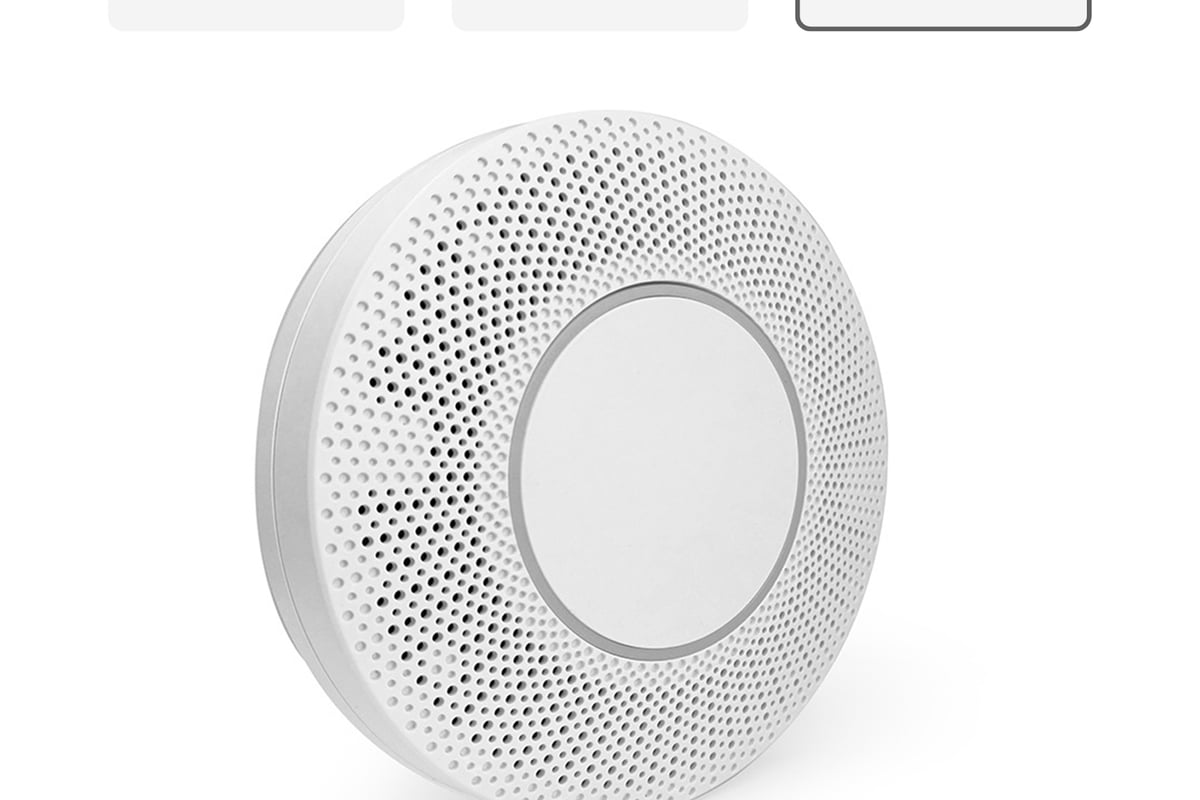
- One sensor per 1000-1500 square feet in open plan areas
- Additional sensors in enclosed spaces like meeting rooms and private offices
- Monitors positioned at breathing height (1.2-1.5 metres above floor level)
- Sensors away from windows, doors, and HVAC vents to avoid skewed readings
- Coverage in high-occupancy areas where air quality impacts the most people
Specialist areas such as restrooms and storage spaces may require dedicated monitoring, particularly where activities like unauthorised smoking or vaping occur. Resources on vape detection for bathrooms provide guidance for these challenging environments.
Implementing an Office Air Quality Monitoring Programme
Successful implementation extends beyond simply installing devices. Organisations must develop comprehensive programmes that translate data into meaningful action.
Establishing Baseline Measurements
Before investing in permanent solutions, conduct baseline assessments to understand existing conditions. Temporary monitoring over several weeks reveals patterns related to occupancy, seasonal variations, and building system performance. This data informs appropriate sensor placement and helps set realistic improvement targets.
The EPA's indoor air quality guide provides frameworks for initial assessments, identifying common pollutant sources and evaluating building characteristics that affect air circulation.
Creating Response Protocols
Data alone accomplishes nothing without clear action plans. Organisations should develop tiered response protocols based on pollutant levels:
Green Zone (Normal Operations)
- Continue regular monitoring
- Maintain scheduled HVAC maintenance
- Review data monthly for trends
Amber Zone (Elevated Levels)
- Increase ventilation rates
- Investigate potential pollutant sources
- Communicate with affected occupants
- Schedule additional cleaning if particulates are elevated
Red Zone (Unhealthy Conditions)
- Evacuate affected areas if necessary
- Implement emergency ventilation
- Identify and eliminate pollutant sources immediately
- Document incident for compliance and analysis
Automated alerts from networked office air quality monitor systems enable rapid response before conditions deteriorate significantly. Integration with building management systems can trigger automatic ventilation adjustments, reducing the burden on facilities staff.
Staff Education and Engagement
Employees should understand what monitoring data means and how they contribute to air quality. Regular communications explaining current readings, improvement initiatives, and individual actions build awareness and support.
Transparency about air quality demonstrates organisational commitment to health and wellbeing. Some businesses display real-time readings in common areas, whilst others provide periodic reports through internal communications channels.
| Communication Method | Frequency | Content Focus |
|---|---|---|
| Digital displays in reception | Continuous | Current readings, status indicators |
| Email bulletins | Monthly | Trends, improvements, upcoming initiatives |
| Intranet dashboard | On-demand | Detailed historical data, comparisons |
| Staff meetings | Quarterly | Programme updates, policy reminders |
Regulatory Compliance and Standards
Whilst the UK lacks comprehensive mandatory office air quality monitoring requirements, various regulations touch on workplace air. The Health and Safety at Work Act 1974 requires employers to ensure workplace safety, which courts have interpreted to include adequate ventilation and acceptable air quality.
The Workplace (Health, Safety and Welfare) Regulations 1992 specifically mandate sufficient fresh air through natural or mechanical ventilation. An office air quality monitor provides objective evidence of compliance, protecting organisations from potential liability.
Industry-Specific Requirements
Certain sectors face stricter standards. Healthcare facilities must meet NHS Health Technical Memorandum guidelines for ventilation and air quality. Laboratories handling chemicals require monitoring of specific contaminants beyond general office pollutants.
The reference guide for indoor air quality in schools offers valuable frameworks applicable to any organisation managing complex indoor environments, though it targets educational facilities specifically.
Financial services firms increasingly face Environmental, Social, and Governance (ESG) reporting requirements where workplace health metrics, including air quality data, demonstrate commitment to employee wellbeing. Forward-thinking organisations leverage monitoring data in sustainability reports and corporate communications.
Advanced Applications and Future Trends
The office air quality monitor market continues evolving rapidly, with new capabilities emerging regularly. Machine learning algorithms now predict air quality degradation before it occurs, enabling preventive interventions rather than reactive responses.
Integration with Smart Building Systems
Modern buildings incorporate sensors throughout their infrastructure, from occupancy detectors to energy management systems. Air quality data enhances these ecosystems, enabling truly responsive environments that optimise conditions automatically.
For example, integrated systems can:
- Adjust ventilation based on real-time occupancy and CO2 levels
- Activate air purification when particulate counts rise
- Modify HVAC settings to maintain optimal temperature and humidity
- Generate maintenance alerts when air quality patterns indicate filter replacement needs
- Reduce energy consumption during low-occupancy periods without compromising air quality
Detecting Emerging Threats
Beyond traditional pollutants, sophisticated monitoring systems identify new concerns. The rise of workplace vaping presents challenges for organisations maintaining vape-free business offices, as aerosols from electronic cigarettes contain particulates and chemicals affecting colleagues.
Specialised sensors distinguish vaping signatures from other particulate sources, enabling targeted enforcement of workplace policies. This capability proves particularly valuable in environments where traditional smoke detectors fail to activate or where discreet vaping in restrooms and private areas occurs.
The technology also extends to detecting unusual chemical signatures that might indicate drug use or other concerning activities, supporting comprehensive safety programmes beyond basic air quality management.
Data Analytics and Predictive Maintenance
Historical air quality data reveals patterns invisible in real-time monitoring. Seasonal trends, occupancy correlations, and system performance degradation become apparent through analysis of months or years of continuous measurements.
Predictive analytics identify optimal maintenance schedules, preventing problems before they affect occupants. Rather than changing HVAC filters on arbitrary timelines, organisations can replace them precisely when air quality data indicates reduced effectiveness, balancing cost efficiency with performance.
These insights also inform facilities planning. Air quality patterns guide decisions about office layouts, meeting room capacities, and renovation priorities, ensuring investments address actual measured needs rather than assumptions.
Cost Considerations and Return on Investment
Budget concerns often dominate discussions about implementing office air quality monitoring programmes. Initial equipment costs vary dramatically based on system sophistication, coverage requirements, and integration complexity.
Basic standalone monitors start around £100-£300 per unit, whilst professional networked systems with advanced sensors cost £500-£2000 per monitoring point. Installation, configuration, and ongoing subscription fees for cloud-based platforms add to total ownership costs.
However, focusing solely on expenses misses the substantial returns quality monitoring delivers:
Direct Financial Benefits
- Reduced HVAC energy consumption through optimised ventilation
- Lower maintenance costs via predictive filter replacement
- Decreased sick leave from improved air quality
- Avoided regulatory penalties and liability claims
Indirect Value Creation
- Enhanced productivity from better cognitive function
- Improved employee retention in healthier workplaces
- Competitive recruitment advantage
- Positive brand reputation for health-conscious organisations
Research indicates that improving indoor air quality delivers returns of £20-£40 for every pound invested when considering productivity gains alone. Adding reduced absenteeism and healthcare costs makes the business case compelling.
The EPA occupants guide provides frameworks for calculating potential savings specific to building characteristics and occupancy patterns.
Scaling Implementation
Organisations uncertain about committing to building-wide monitoring can pilot programmes in high-priority areas. Target spaces might include:
- Executive floors where decision-makers directly experience quality improvements
- High-occupancy open plan areas affecting the most employees
- Problem zones with known air quality complaints
- Customer-facing areas where conditions affect external perceptions
Successful pilots demonstrate value and build support for broader deployment. Data from initial installations informs equipment selection and placement strategies for expansion phases, reducing implementation risks.
Maintenance and Calibration Requirements
Like any precision measurement equipment, an office air quality monitor requires regular maintenance to ensure accuracy. Different sensor types have varying service needs and operational lifespans.
Sensor Lifespan and Replacement
Electrochemical sensors, commonly used for detecting specific gases, typically last 1-3 years before requiring replacement. Optical particle counters for PM2.5 measurement need periodic cleaning and calibration, with sensor modules lasting 3-5 years under normal conditions.
CO2 sensors using non-dispersive infrared (NDIR) technology offer longer lifespans, often 10+ years, but require annual calibration to maintain accuracy. Temperature and humidity sensors prove most durable, frequently lasting the lifetime of the monitoring device itself.
Manufacturers provide replacement schedules and calibration protocols. Organisations should factor these ongoing costs into total ownership calculations, budgeting for periodic sensor replacement as part of the monitoring programme.
Data Validation and Quality Assurance
Automated systems should include validation checks that flag suspicious readings indicating sensor malfunction or calibration drift. Sudden spikes inconsistent with building conditions, readings stuck at constant values, or measurements outside physically possible ranges all warrant investigation.
Periodic comparison against certified reference instruments confirms continued accuracy. Many organisations schedule annual professional calibration services, ensuring monitoring data remains legally defensible for compliance purposes.
Regular filter cleaning, particularly for optical sensors, prevents false readings from accumulated dust on sensor surfaces. Most commercial-grade systems include self-diagnostic capabilities that alert administrators to maintenance needs before data quality degrades.
Real-World Applications Across Industries
Different sectors leverage office air quality monitoring in ways reflecting their specific operational requirements and regulatory environments.
Corporate Offices
Technology companies and professional services firms increasingly view air quality monitoring as a workplace amenity attracting talent. These organisations typically implement comprehensive networked systems with public dashboards demonstrating transparency and commitment to employee wellbeing.
Data informs workspace design decisions, from meeting room sizes to desk density in open plan areas. Some firms tie ventilation systems to occupancy sensors and air quality readings, creating dynamically responsive environments that optimise comfort and efficiency simultaneously.
Healthcare Administration
Medical facilities extend monitoring beyond clinical areas into administrative offices, maintaining consistent environmental standards throughout buildings. Integration with infection control programmes enables rapid response to potential airborne contamination.
Monitoring data supports accreditation processes and demonstrates compliance with health and safety regulations specific to healthcare environments.
Educational Institutions
Universities and colleges implementing air quality monitoring systems address both staff offices and student-facing areas. Libraries, study spaces, and administrative offices all benefit from continuous monitoring ensuring optimal learning and working conditions.
The overlap between general air quality concerns and specific issues like unauthorised vaping makes comprehensive detection systems particularly valuable in educational settings.
Manufacturing and Industrial
Office areas within manufacturing facilities face unique challenges from industrial processes generating pollutants that infiltrate administrative spaces. Continuous monitoring ensures effective separation between production and office environments, protecting administrative staff from industrial emissions.
Data helps validate ventilation system effectiveness and supports health and safety compliance in mixed-use facilities.
Implementing effective office air quality monitoring transforms invisible environmental hazards into manageable data points, enabling organisations to create genuinely healthy workplaces. The combination of appropriate technology, clear response protocols, and ongoing commitment to improvement delivers measurable benefits in employee health, productivity, and organisational performance. For businesses seeking comprehensive solutions that address both general air quality and specific concerns like workplace vaping, Vape Guardian provides advanced monitoring technology with real-time detection capabilities, helping UK organisations maintain safer, healthier environments through reliable sensors and dedicated support.


Share:
Vape Sensors: Advanced Detection for Safer Environments
Ceiling Vape Detector: A Complete 2026 Guide