

Employers across the United Kingdom face mounting pressure to address vaping in the workplace as electronic cigarette use continues to rise. Unlike traditional smoking, which decades of regulation have made straightforward to prohibit, vaping occupies a greyer legal area that demands careful policy crafting. A comprehensive workplace vaping policy protects employee health, maintains professional standards, and ensures compliance with evolving health and safety obligations. This guide walks through the essential components of an effective workplace vaping policy, from legal foundations to practical enforcement strategies.
Understanding the Legal Framework for Vaping at Work
British employment law does not explicitly prohibit vaping indoors, creating confusion for many organisations. The 2007 smoking ban that transformed UK workplaces applies only to combustible tobacco products, leaving electronic cigarettes outside its scope. Employers therefore possess considerable discretion in how they regulate vaping on their premises.
This regulatory gap does not mean a free-for-all. Health and safety legislation still requires employers to maintain a safe working environment, and mounting evidence about secondhand electronic cigarette aerosol exposure supports restrictions. The World Health Organization has called for action on electronic cigarettes, recommending that workplaces treat vaping the same as smoking until more conclusive safety data emerges.
Why Employers Must Act
Three compelling reasons drive workplace vaping policy development:
- Health protection: Research indicates secondhand aerosol contains harmful particulates, nicotine, and flavouring chemicals that affect air quality
- Professional standards: Visible vaping can undermine workplace culture and client perceptions
- Legal liability: Failure to address air quality complaints may expose organisations to health and safety claims
Public perception matters too. Many non-vaping employees find the practice intrusive, and customer-facing businesses risk damaging their brand when staff or visitors vape in visible areas.

Core Components of an Effective Workplace Vaping Policy
Building a robust workplace vaping policy requires more than stating "no vaping allowed." The most successful policies balance prohibition with support, clarity with flexibility, and enforcement with education.
Start with a clear purpose statement. Articulate why the policy exists, referencing health protection, legal compliance, and workplace culture. This foundation makes enforcement easier and demonstrates to employees that decisions stem from legitimate business concerns rather than arbitrary rules.
Scope and Coverage
Your workplace vaping policy must define exactly what it covers. Address these elements:
- Devices included: Electronic cigarettes, vape pens, pod systems, and any nicotine delivery device that produces aerosol
- Locations covered: All indoor spaces, company vehicles, outdoor areas visible to clients, and any property under employer control
- People covered: Employees, contractors, visitors, clients, and any other persons on premises
- Timing: Whether restrictions apply during breaks, lunch periods, and after-hours events
Designated areas offer a practical compromise. Some organisations permit vaping in specific outdoor zones, provided they are distant from entrances, windows, and ventilation intakes. Vaping in offices presents particular challenges for multi-tenant buildings where shared spaces complicate enforcement.
| Policy Approach | Advantages | Considerations |
|---|---|---|
| Total ban | Clear, simple to enforce, maximum health protection | May face resistance, requires outdoor provision |
| Indoor ban only | Balances restriction with accommodation | Needs clear outdoor zone rules |
| Designated areas | Flexibility, employee satisfaction | Harder to monitor, may normalise vaping |
| No restrictions | Minimal conflict | Exposes non-users, professional concerns |
Drafting Clear Policy Language
Ambiguity undermines any workplace vaping policy. Use precise, unambiguous language that leaves no room for interpretation. Specify that the policy prohibits "the use of electronic cigarettes, vaping devices, and any electronic nicotine delivery system that produces aerosol" rather than simply saying "no vaping."
Address enforcement consequences explicitly. Progressive discipline frameworks work well:
- First violation: Verbal warning and policy review
- Second violation: Written warning placed on file
- Third violation: Final written warning
- Fourth violation: Dismissal for gross misconduct (in serious cases)
Document everything. Each policy violation should generate a written record, protecting both employer and employee. This documentation proves essential if dismissal leads to tribunal proceedings.
Accommodation and Exceptions
Whilst no legal requirement mandates vaping accommodation, employers should consider reasonable adjustments. Some employees use vaping as a smoking cessation tool, and systematic reviews of health effects suggest vaping may be less harmful than continued smoking.
Consider these accommodation strategies:
- Extended break allowances for employees who must leave premises
- Temporary exemptions for those in supervised cessation programmes
- Remote work flexibility where operationally feasible
- Access to employee assistance programmes offering quit support
Religious or medical accommodation requests require careful handling. Whilst unlikely, employers must evaluate such requests under equality law. EEOC guidance on religious accommodations provides helpful frameworks, though US-based, for thinking through these scenarios.

Implementing Technology-Based Detection
Policy without enforcement achieves little. Modern detection technology offers an objective, consistent monitoring solution that removes the burden from staff to police colleagues. When employees know that technology monitors restricted areas, compliance typically improves.
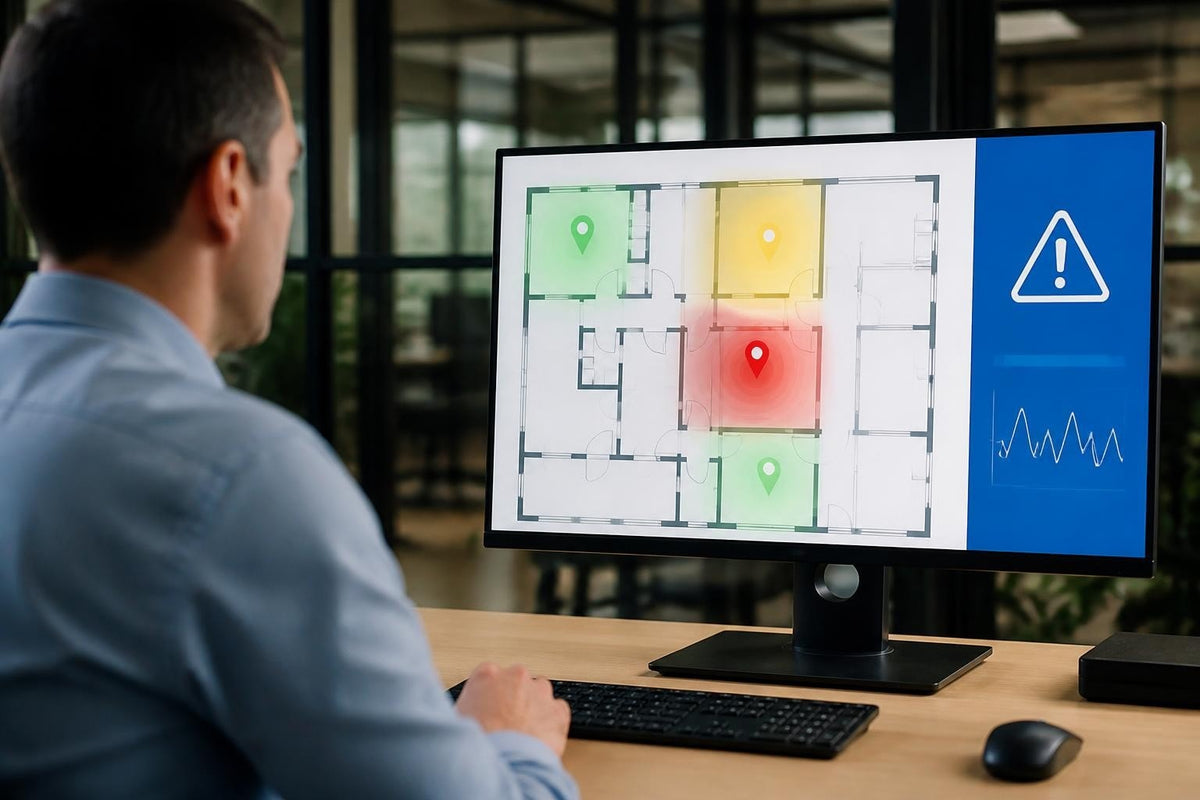
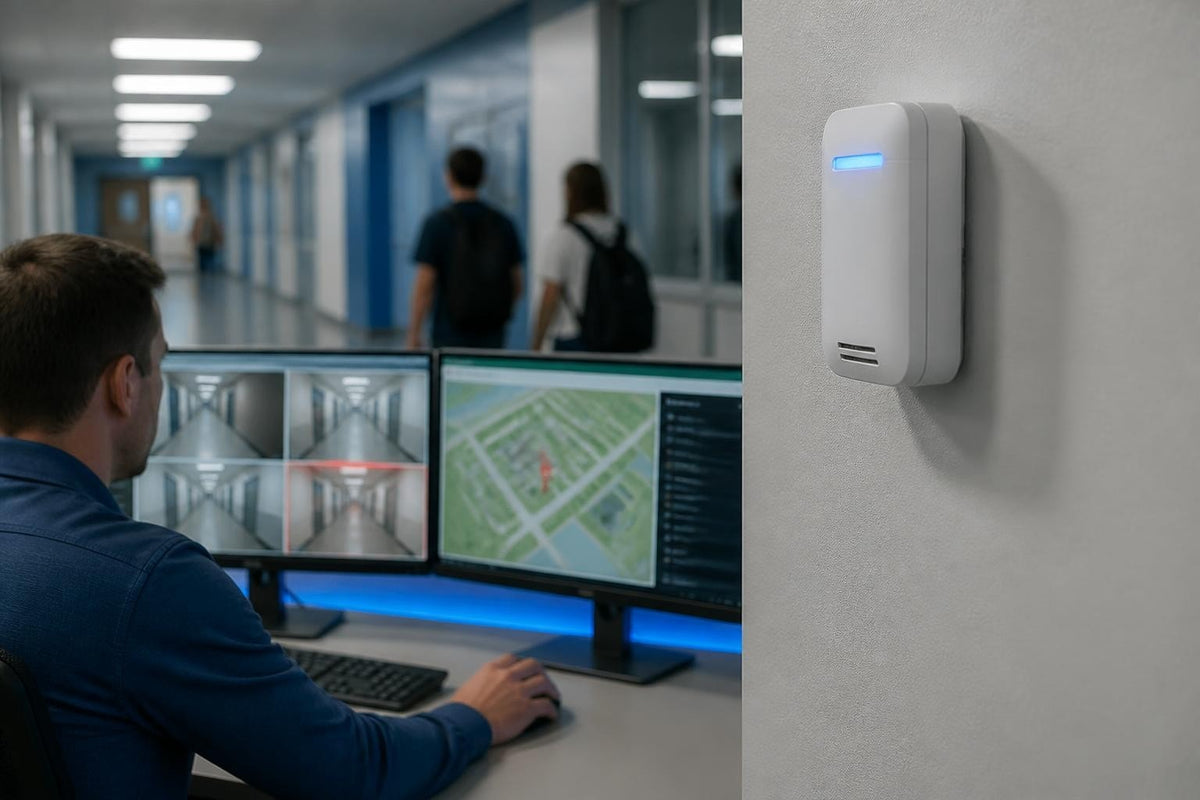
Detection systems work by analysing air quality in real time. Sensors identify the chemical signature of vaping aerosol, distinguishing it from other air quality changes. When vaping is detected, alerts notify designated staff immediately, enabling rapid response.
The Vape Detection System combines hardware sensors with intelligent software to provide comprehensive monitoring. These systems detect not only vaping but also drug use and anti-social behaviour, creating a broader safety net for workplace environments. Installation in toilets, changing rooms, stairwells, and other blind spots extends supervision without invasive cameras.

Choosing Detection Locations
Strategic sensor placement maximises detection effectiveness whilst respecting privacy:
- High-risk zones: Toilets and changing facilities where visual monitoring is inappropriate
- Isolated areas: Stairwells, storage rooms, and loading docks with limited supervision
- Shared spaces: Break rooms and communal areas where policy violations might otherwise go unnoticed
- Entrance points: Lobbies and reception areas that set professional tone expectations
| Sensor Type | Best For | Connectivity | Investment |
|---|---|---|---|
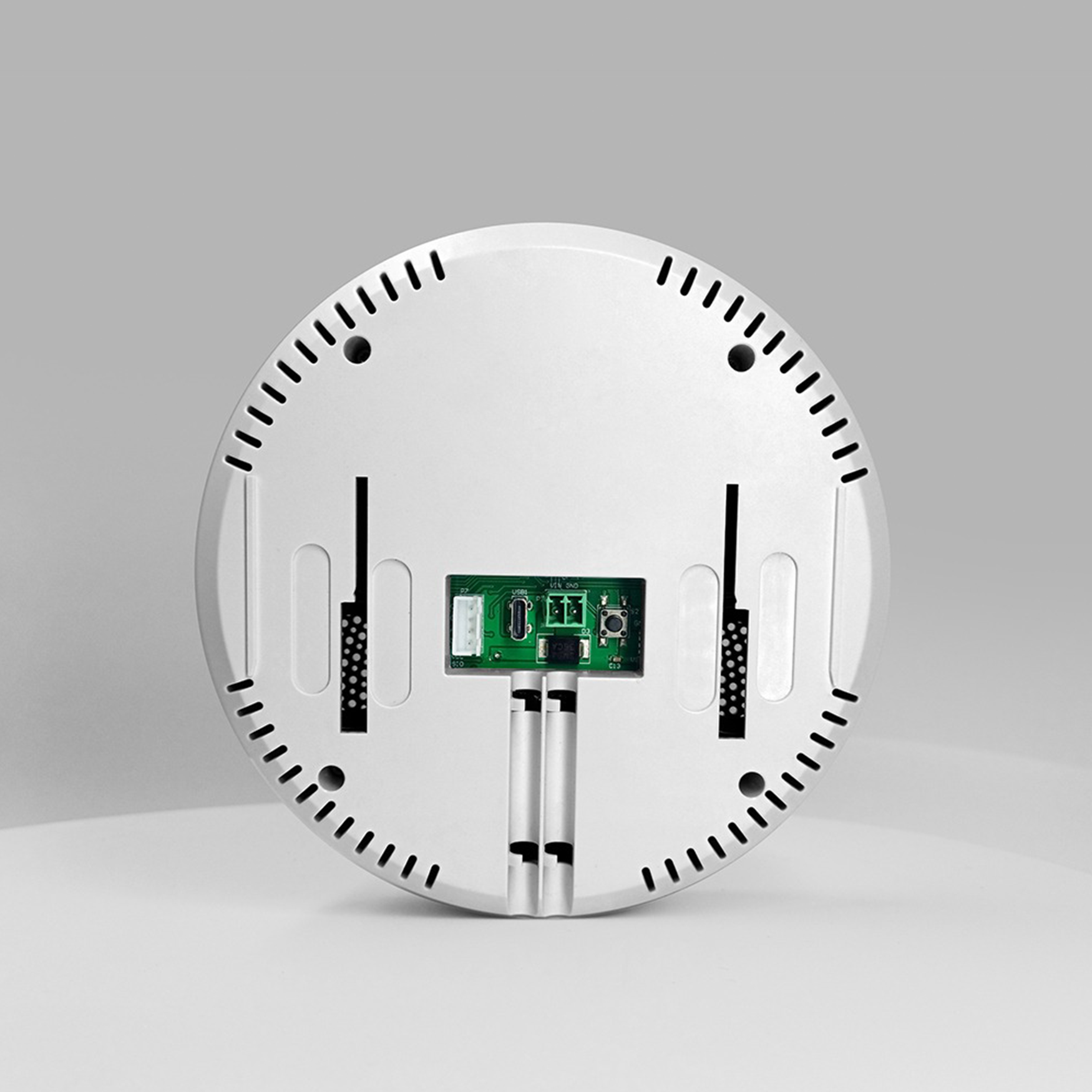
| Power over Ethernet | Permanent installations, IT-integrated buildings | Wired network | Lower running costs |
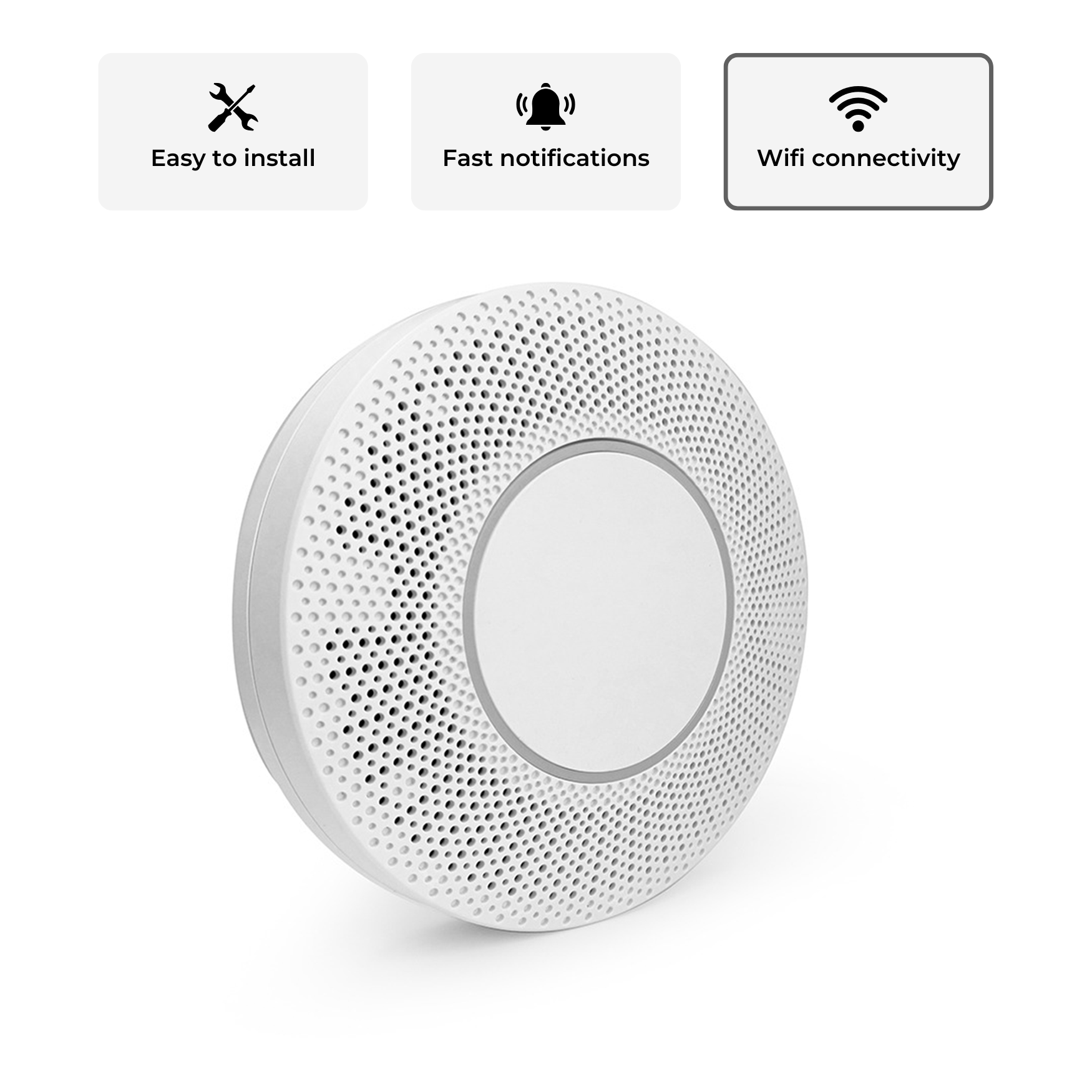
| Wi-Fi enabled | Retrofits, flexible placement | Existing wireless network | Moderate setup |
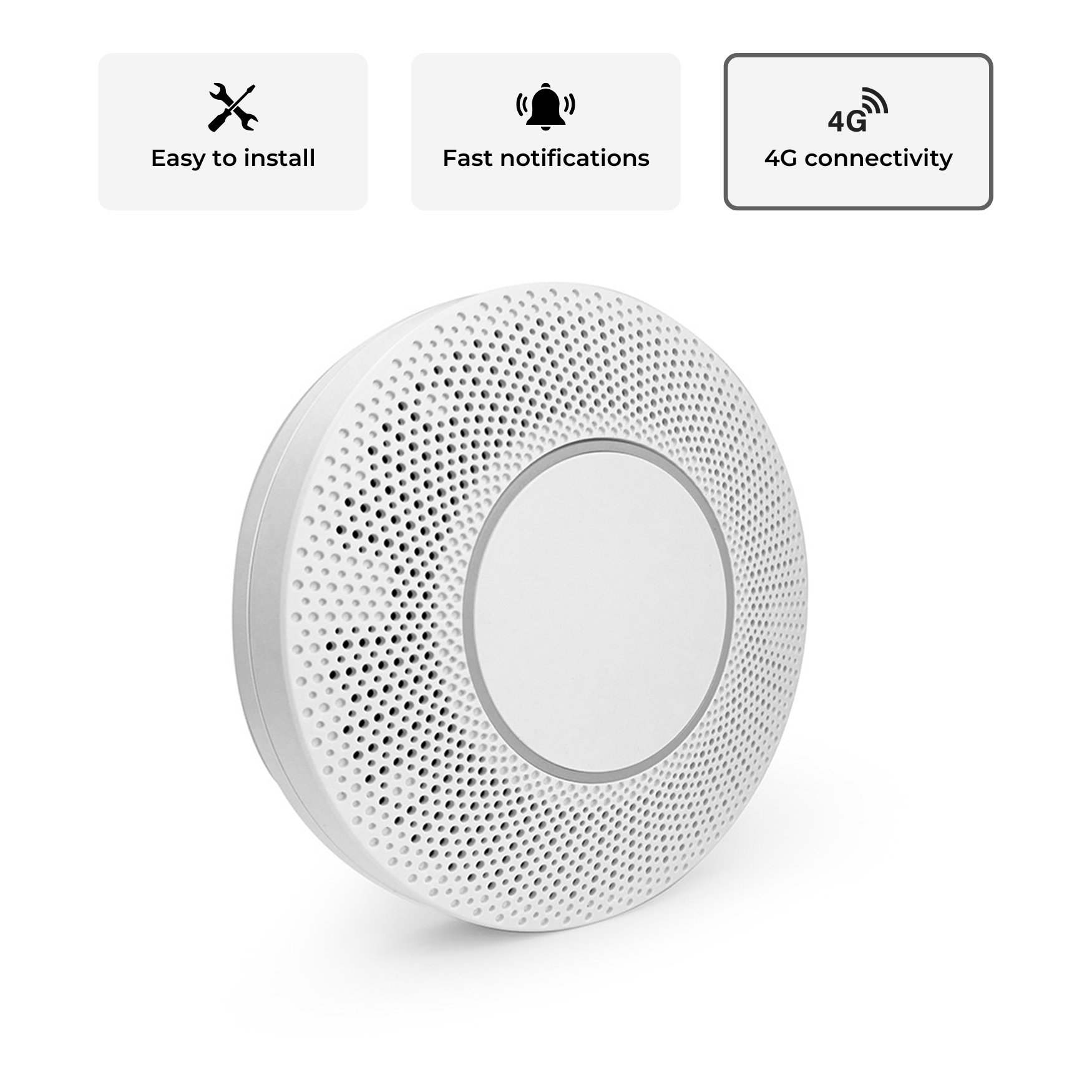
| 4G connected | Remote sites, buildings without IT infrastructure | Mobile network | Higher running costs |
Technology investment pays dividends through reduced staff time spent investigating incidents, objective evidence for disciplinary processes, and demonstrable duty of care. Understanding vape detector costs helps budget planning and ROI calculations.
Communication and Training Strategies
Even the best-drafted workplace vaping policy fails without proper communication. Employees cannot comply with rules they do not understand or know exist. A multi-channel rollout ensures message penetration.
Launch Phase
Announce the new policy through multiple touchpoints:
- All-staff meeting or video message from senior leadership explaining rationale
- Email distribution of full policy document with acknowledgement requirement
- Intranet publication with FAQ section addressing common questions
- Poster displays in break rooms, toilets, and common areas
- One-to-one discussions during probation reviews for new starters
Leadership visibility matters. When senior managers visibly support and follow the workplace vaping policy, employees understand its importance. Conversely, executive non-compliance undermines the entire framework.
Ongoing Reinforcement
Policy awareness fades without regular reminders. Build refreshers into your annual cycle:
- Quarterly email reminders linking to the policy
- Annual acknowledgement during performance review seasons
- New starter induction modules covering all workplace conduct policies
- Refresher training after any policy updates or amendments
- Notice board updates highlighting compliance statistics or policy successes
Training should cover not just the rules but the reasoning. Help employees understand the health evidence, legal obligations, and cultural objectives driving restrictions. Public health trends show growing recognition of indoor vaping risks, making the educational case easier.
Enforcement Best Practices
Inconsistent enforcement destroys policy credibility faster than almost any other failure. When some employees face consequences whilst others escape them, resentment builds and compliance collapses. Fair, transparent, documented enforcement protects both organisational culture and legal position.
Investigation Procedures
When a violation occurs, whether through technology alert or staff report, follow a standard process:
- Immediate response: Designated staff receive alert and attend location promptly
- Evidence gathering: Document time, location, individuals present, and any witness statements
- Private conversation: Speak with suspected violator away from colleagues to establish facts
- Policy review: Ensure employee understands relevant policy sections
- Progressive discipline: Apply appropriate consequence based on violation history
- Documentation: Record all details in personnel file with dated, signed records
Privacy considerations apply even in enforcement. Avoid public confrontations or group announcements about specific violations. Treat policy breaches with the same confidentiality as other performance management matters.
Handling Resistance
Some employees will challenge workplace vaping policy restrictions. Common objections include:
- "It's not illegal, so you can't stop me"
- "I'm only harming myself"
- "Vaping helps me concentrate"
- "This is discrimination against vapers"
Prepare managers with scripted responses grounded in policy rationale, health evidence, and employment law. Remind employees that whilst vaping itself is legal, employers possess broad discretion to set workplace conduct standards. The same principle that allows dress codes, mobile phone restrictions, and social media policies applies to vaping rules.

Addressing Special Circumstances and Edge Cases
Real-world application of workplace vaping policy inevitably surfaces scenarios the initial drafting did not anticipate. Building flexibility into your framework helps address these edge cases without constant policy revision.
Client and Visitor Management
Extending policy to visitors protects your environment but requires diplomatic handling. Include these provisions:
- Pre-visit notification: Meeting confirmations and entry passes reference the no-vaping policy
- Reception signage: Clear notices at all entry points inform visitors of restrictions
- Host responsibility: Employees hosting clients ensure guests understand and comply with rules
- Escalation protocol: Reception staff know whom to contact if visitors resist compliance
Most visitors comply readily when politely informed. Persistent violators can be asked to leave premises, just as with other conduct violations.
Remote and Hybrid Workers
Hybrid working complicates workplace vaping policy enforcement. Whilst employers cannot regulate what employees do in their own homes during remote working, policy applies whenever individuals are on company premises or conducting company business in public.
Address these scenarios explicitly:
- Employees working from client sites must comply with client policies
- Video calls from home do not prohibit vaping, but professional standards suggest avoiding visible use
- Business travel follows the same rules as office-based work
- Company vehicles are treated as workplace premises under the policy
Events and Off-Site Activities
Company events, team-building activities, and conferences all fall under workplace conduct policies. Specify whether restrictions apply during evening social events, residential training courses, and industry conferences where employees represent the organisation.
Many organisations adopt a nuanced approach: strict prohibition during working sessions with relaxed rules during purely social time. This balance maintains professional standards whilst acknowledging the informal nature of evening socialising.
Reviewing and Updating Your Policy
Workplace vaping policy should be a living document, updated as evidence, law, and organisational needs evolve. Schedule annual reviews examining:
- Compliance rates: Are violations increasing, stable, or declining?
- Incident patterns: Do certain locations, times, or employee groups show higher violation rates?
- Regulatory changes: Have government guidelines, health recommendations, or employment laws shifted?
- Technology capabilities: Do detection systems need upgrading or expanding?
- Employee feedback: What concerns, questions, or suggestions have emerged?
Benchmark against similar organisations. Industry groups and professional networks often share anonymised policy data. California workplace smoking guidance, whilst US-based, offers useful regulatory thinking that UK employers can adapt.
Involve stakeholders in reviews. Representatives from HR, facilities management, health and safety, and employee forums bring diverse perspectives that strengthen policy development. Some organisations find employee survey data helpful, gauging attitudes towards current restrictions and proposed changes.
Documenting Changes
When policy updates occur, treat the rollout with the same rigour as initial implementation. Highlight changes clearly, explain the reasoning, require fresh acknowledgements, and provide training on new provisions. Version control prevents confusion, with each iteration clearly dated and previous versions archived.
Integration with Broader Wellness Initiatives
The most effective workplace vaping policy does not exist in isolation but integrates with wider health and wellbeing programmes. Position vaping restrictions as one element of comprehensive employee wellness rather than punitive prohibition.
Support Programmes
Offer resources that help employees who want to quit vaping:
- NHS cessation services: Provide information about free local stop-smoking services
- Employee assistance programmes: Ensure EAP providers offer addiction support
- Occupational health: Schedule sessions where employees can discuss cessation strategies
- Peer support groups: Facilitate voluntary groups for employees attempting to quit
Educational initiatives build understanding. NCBI guidance on e-cigarette policy and practice offers evidence-based recommendations for institutional policies that employers can adapt to workplace settings. Understanding UK vaping laws helps frame policy within the broader regulatory landscape.
Measuring Success
Define metrics that demonstrate policy effectiveness:
| Metric | Target | Measurement Method |
|---|---|---|
| Policy awareness | 100% acknowledgement | Signed policy returns |
| Violation rate | <2% per quarter | Detection system alerts |
| Employee satisfaction | Maintain baseline scores | Annual engagement surveys |
| Air quality | Meet WHO guidelines | Environmental monitoring |
| Quit attempts | 10% annual increase | Voluntary self-reporting |
Regular reporting to leadership maintains momentum and secures continued investment in enforcement technology and support programmes.
Special Considerations for Different Sectors
Workplace vaping policy requirements vary significantly across industries. Schools, healthcare facilities, hospitality venues, and office environments each face unique challenges requiring tailored approaches.
Education Sector
Vaping in colleges and schools presents acute challenges. Young people represent the highest risk group for e-cigarette adoption, making staff modelling particularly important. Education settings typically adopt complete bans covering all staff, students, visitors, and contractors across entire premises.
Detection technology proves especially valuable in educational environments where supervision of toilets and changing areas is limited. Combined with educational interventions, technology creates a comprehensive response.
Healthcare and Care Settings
Healthcare providers face the dual challenge of maintaining therapeutic environments whilst supporting patients with nicotine addiction. Hospitals generally prohibit all vaping indoors but may provide designated outdoor areas for mobile patients.
Staff policy enforcement must balance strictness with the reality that healthcare workers face high-stress environments where nicotine dependence is common. Progressive discipline with robust support services works better than immediate sanctions.
Hospitality and Retail
Customer-facing businesses must consider how workplace vaping policy affects brand perception. Visible staff vaping can deter customers, particularly in food service environments where hygiene concerns are paramount.
These sectors often extend policy to cover areas visible to customers, even if technically outdoors. Loading bays, outdoor seating areas, and car parks all warrant policy coverage when customer sightlines are involved.
A comprehensive workplace vaping policy protects health, maintains professional standards, and demonstrates commitment to employee wellbeing. By combining clear rules, consistent enforcement, and supportive resources, employers create environments where all staff can work comfortably and safely. Vape Guardian provides the detection technology and expertise that makes workplace vaping policy enforcement practical and effective, with sensors that monitor air quality in real time and alert designated staff the moment vaping occurs. Whether you operate a school, office, or leisure facility, the right combination of policy and technology creates the safer environment your people deserve.




Share:
Vaping Statistics UK: 2026 Data and Trends Analysis
Vaping in Schools UK: A Complete 2026 Guide for Educators