

Vaping rehabilitation for secondary school pupils means helping young people recognise nicotine dependence, manage withdrawal and stop vaping through education, pastoral support and health referral, rather than relying on punishment alone. Schools that combine early detection with a supportive response can keep pupils in lessons and reduce repeat incidents.
The scale of the issue explains why this matters. In the 2025 ASH survey, 20% of 11 to 17 year olds in Great Britain had tried vaping, an estimated 1.1 million young people. This guide sets out how headteachers, safeguarding leads and site managers can build a rehabilitation pathway that works alongside detection in toilets and other secluded areas.
Why Rehabilitation Works Better Than Exclusion Alone
A rehabilitation approach treats vaping as a health and safeguarding concern, because most pupils who vape are nicotine dependent and cannot simply choose to stop. Exclusion removes a pupil from the very structure and adult contact that helps them recover, and it rarely addresses the dependence driving the behaviour.
The NHS states that children and young people should not vape, that most vapes contain addictive nicotine, and that the longer term health risks are not yet known. That uncertainty is a good reason for schools to act early and consistently.
A balanced response usually includes:
- A clear sanction for breaking the rules, applied fairly and proportionately
- A supportive conversation with a trusted member of staff
- Education about nicotine dependence and how marketing targets young people
- Access to cessation support, with parents or carers informed
- A review point to check progress
Sanctions and support are not opposing options. The aim is a consistent message that vaping is not permitted on site, paired with a realistic route out for pupils who want one.
Understanding Why Pupils Vape and What Withdrawal Looks Like
Pupils vape for a mix of curiosity, peer influence, stress relief and nicotine dependence, and understanding the reason shapes the right support. A pupil who tried a vape once at a party needs a different conversation from one who vapes between every lesson.
Common drivers include:
- Social pressure and the wish to fit in
- Anxiety, stress or low mood, with vaping used as a coping habit
- Appealing flavours and discreet devices that are easy to hide
- Easy access through older friends, siblings or illegal sales
UK law prohibits selling vaping or nicotine products to anyone under 18, and adults may not buy them on behalf of under 18s, according to the NHS. Pupils are therefore obtaining products unlawfully, which is itself a safeguarding concern worth raising with parents and, where appropriate, local partners.
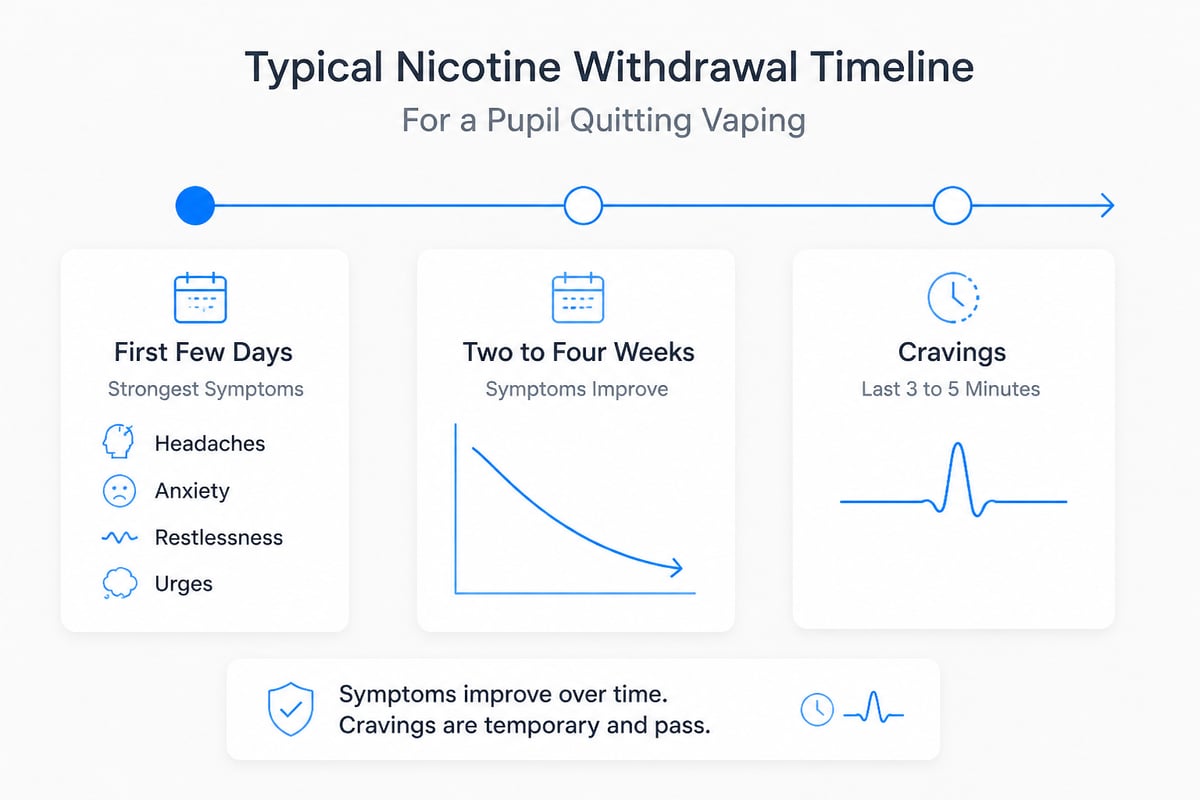
Staff should also understand withdrawal. NHS Ayrshire & Arran lists headaches, anxiety, low mood, difficulty concentrating, restlessness and strong urges to vape as common symptoms. These may be worse in the first few days and improve over two to four weeks. A pupil who seems irritable or unfocused in the first fortnight of quitting may be experiencing withdrawal, not defiance.
How Long Do Vape Cravings Last?
Individual vape cravings often last three to five minutes, which is useful for staff and pupils to know because it makes each urge something that can be waited out. NHS Ayrshire & Arran notes that brief distractions such as walking, talking to friends or doing a hands on activity can help manage them.
For a school, this translates into practical adjustments:
- Agree a quiet check in point where a pupil can speak to a named adult during a craving
- Permit a short walk or a task break within an agreed plan
- Encourage a pupil to carry a small fidget item, water or sugar free gum
- Make staff aware of the highest risk times, usually breaks, lunchtime and the end of the day
The overall recovery period is longer than a single craving, so the plan should run for several weeks rather than a single meeting.
Building a School Vaping Rehabilitation Pathway
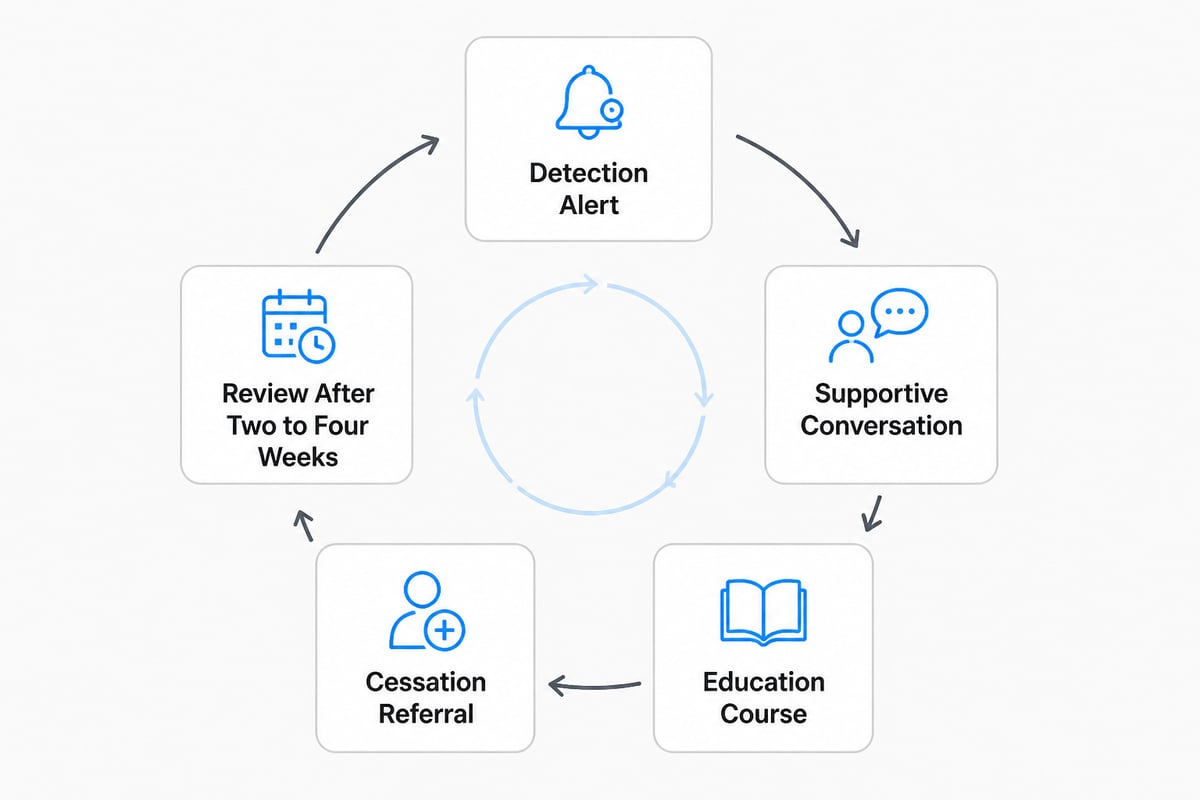
A workable pathway moves a pupil from identification to support to review in clear stages, with a named owner at each point. Without that structure, support depends on whichever member of staff happens to notice.
Step 1: Identify the Pupil
Identification comes from staff observation, pupil or parent disclosure, and detection data from toilets and corridors. Detection matters here because a pupil who vapes covertly may never be spotted otherwise. Real time alerts let staff respond promptly and with evidence, which supports a calm and fair conversation. Our guide to vaping in school toilets explains why these areas are the most common hotspots.
Step 2: Hold a Supportive First Conversation
The first conversation should be private, factual and non judgemental. Ask what the pupil is using, how often, and whether they want to stop. Record the outcome in line with your safeguarding and behaviour policies, and contact parents or carers.
Step 3: Agree a Support Plan
Offer the pupil a choice of approach. NHS Ayrshire & Arran describes two routes: gradually cutting down or stopping in one step. Its gradual reduction suggestions include lowering nicotine strength and increasing the time between vaping sessions. Pupils respond better when they choose the route themselves.
Step 4: Refer Where Needed
School staff are not clinicians. The NHS Healthier Together young person guidance points to routes to support through school staff, local services and health professionals. Your school nurse, GP or local stop smoking service can advise on nicotine replacement for pupils where it is clinically appropriate. Note that the NHS distinguishes vaping as a quitting aid for adult smokers from vaping by children and non smokers, so a pupil should never be advised to vape in order to quit.
Step 5: Review and Reintegrate
Hold a review after two to four weeks, in line with the typical withdrawal window. Celebrate progress, adjust the plan if the pupil has relapsed, and avoid treating a slip as failure.
Education as Part of Rehabilitation
Structured education helps pupils understand dependence and build the skills to refuse, and it works best as a standard part of the response rather than an optional extra. A single assembly rarely changes behaviour, whereas repeated, interactive learning has a better chance of doing so.
Vape Guardian Education is a 35 minute student vaping intervention course with six lessons and quizzes, designed with LifeLab at the University of Southampton. Schools can use it as a constructive alternative to exclusion, so a pupil caught vaping completes learning that addresses nicotine, marketing tactics and peer pressure while remaining in school. It sits naturally alongside detection: the sensors identify where and when vaping is occurring, and the course gives pupils the knowledge to change their behaviour.
Our overview of a vaping education programme for schools sets out how to embed this kind of learning across year groups, and the vaping education hub for schools collects further resources.

Why Detection Supports Rehabilitation
Detection gives a school the evidence and timing it needs to offer support early, and it reduces the opportunities for pupils to vape in the first place. Fewer incidents mean fewer pupils developing or deepening a dependence on site.
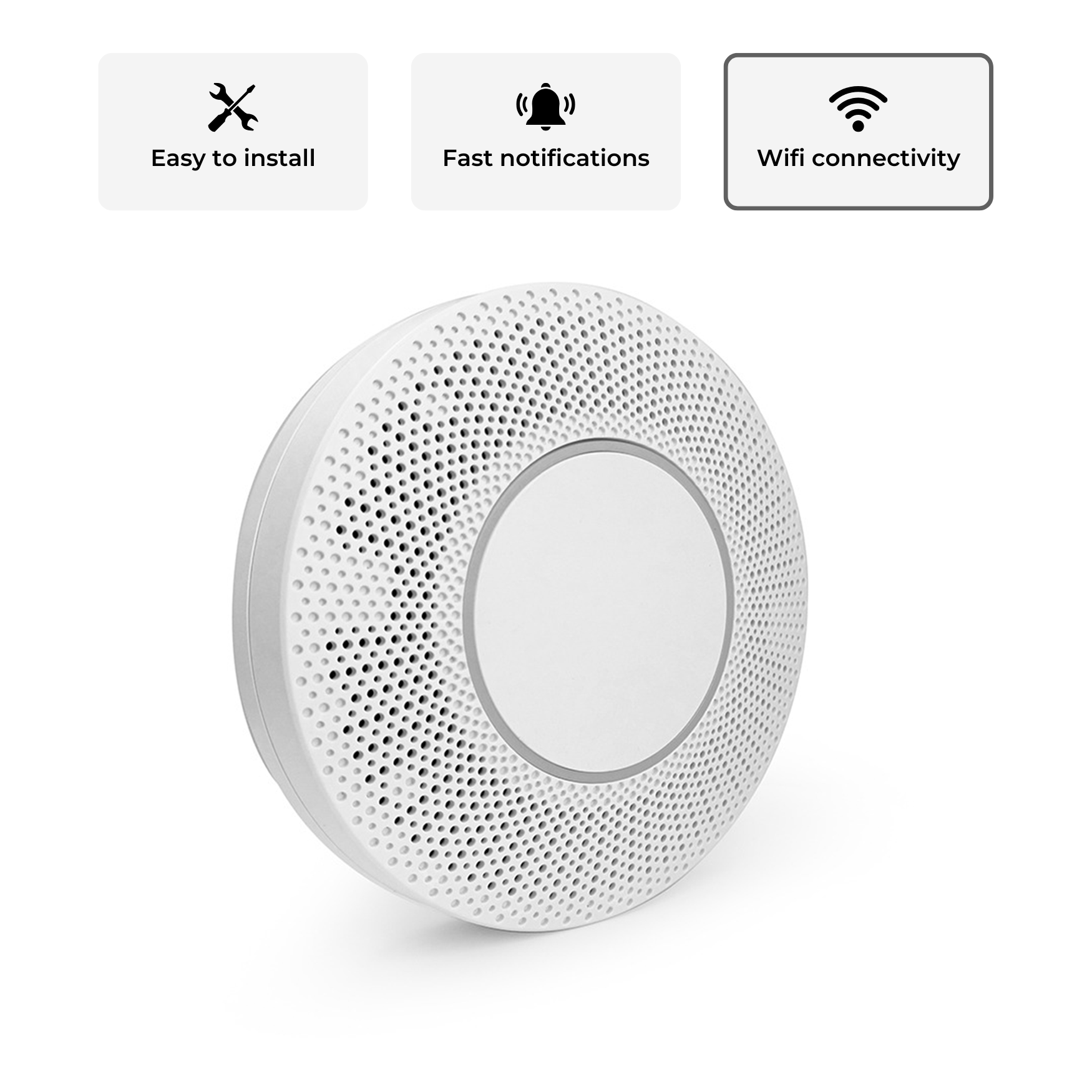
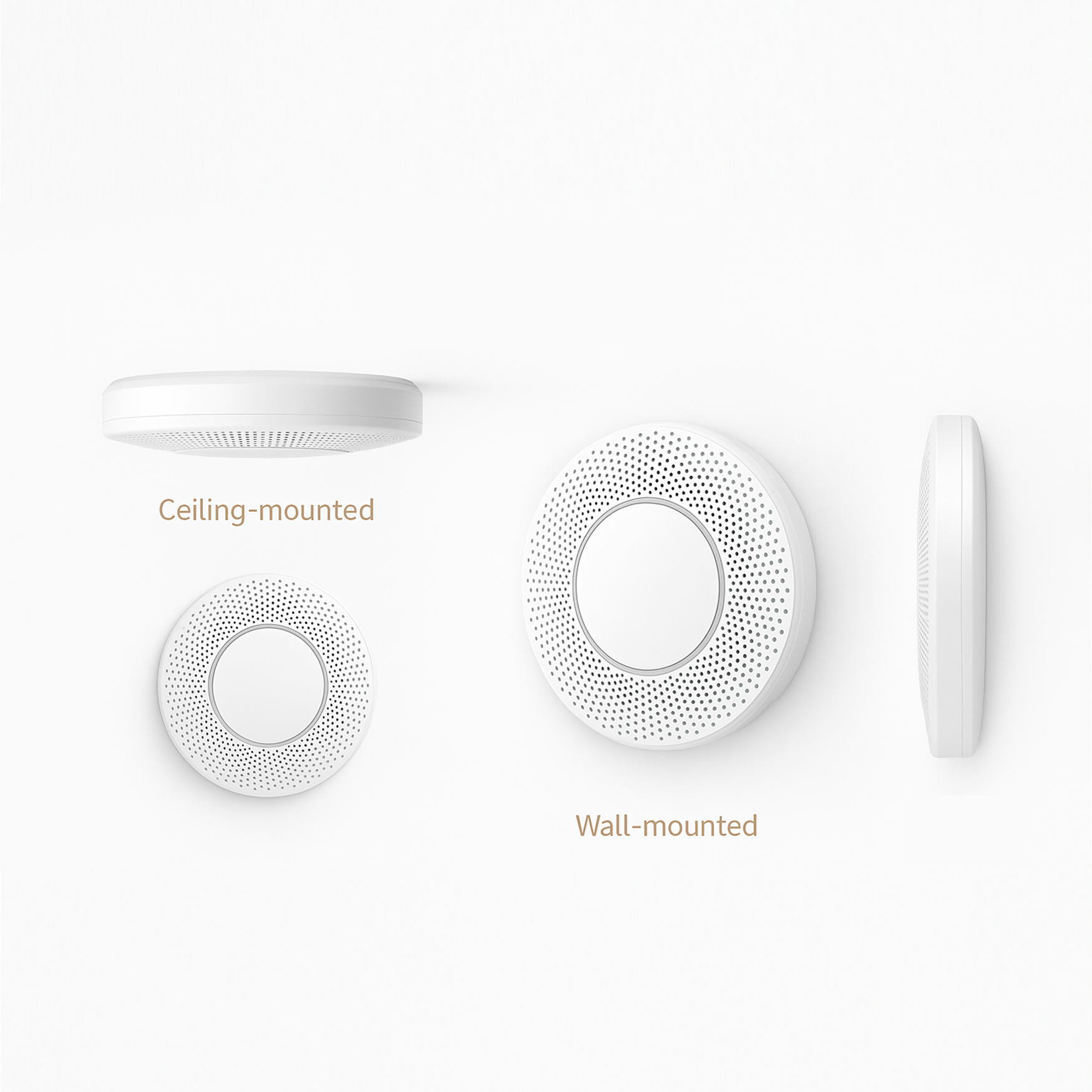
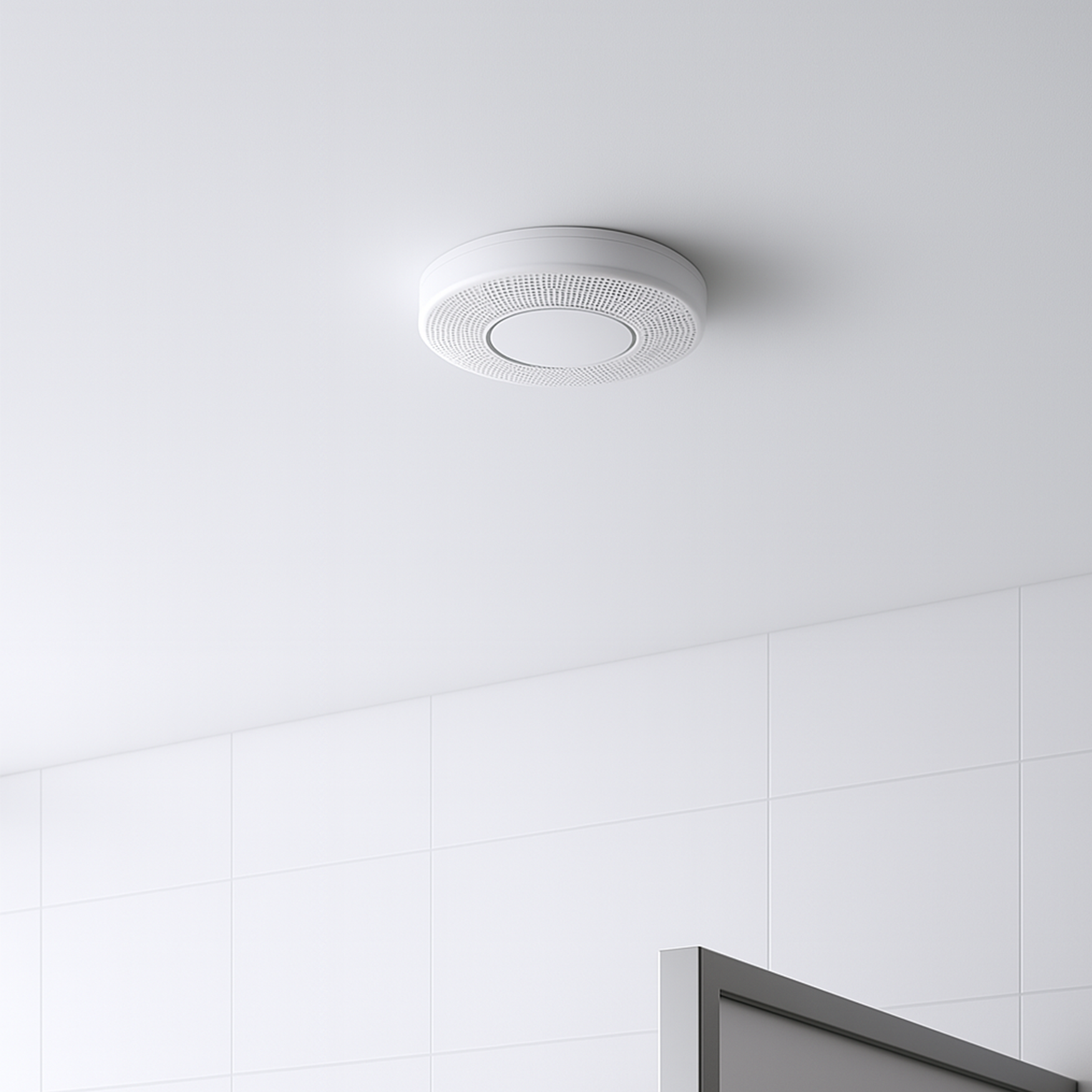
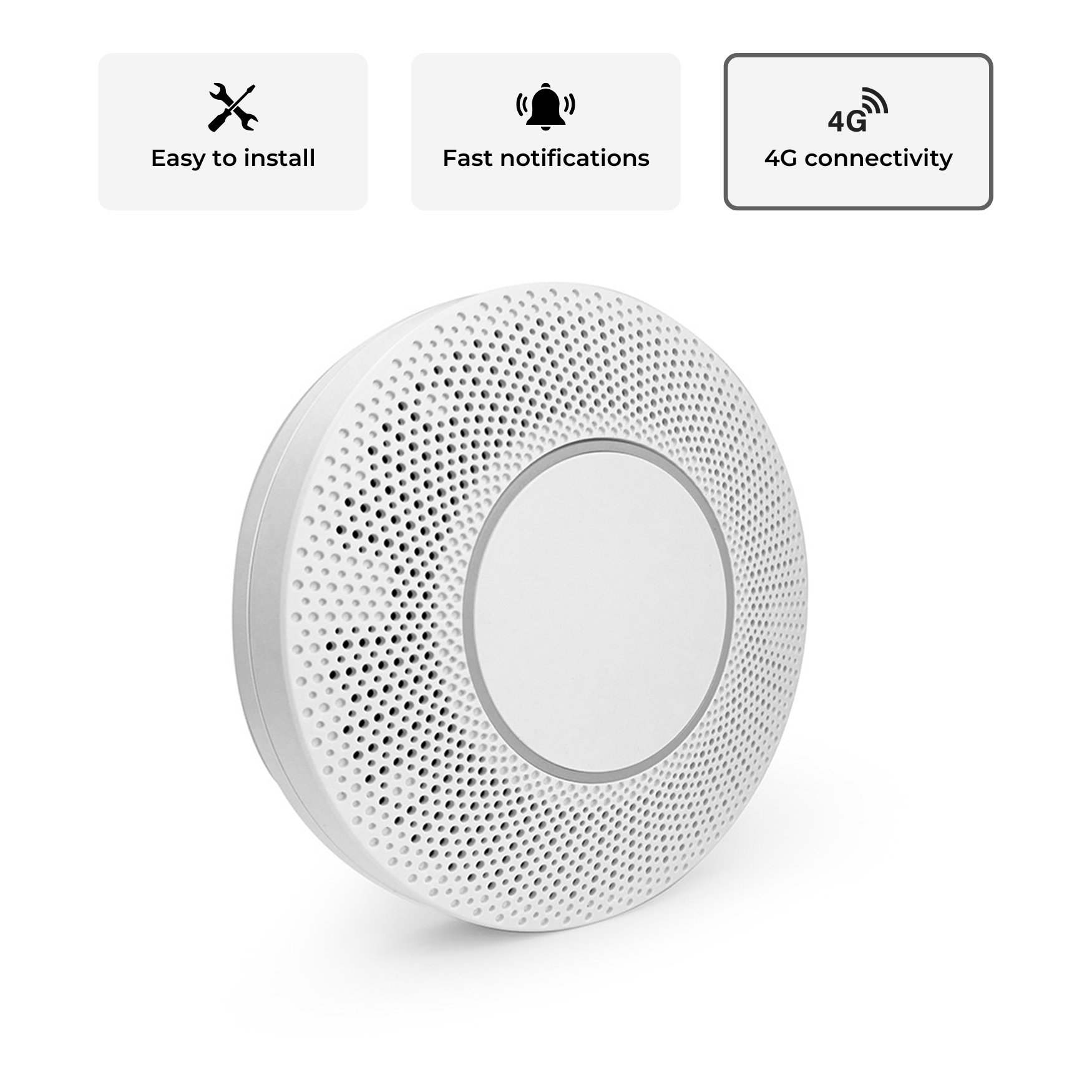
Vape Guardian sensors detect vaping, THC, Spice, over occupancy, loud noise and cigarettes without cameras, which matters in toilets where privacy is essential. The detection approach is designed to identify vaping accurately and avoid false positives, so staff attend alerts with confidence. Sensors are supplied with 'No Vaping' signage and notifications sent to staff, so the right adults can respond quickly.
The results reported by schools are significant. Schools report vaping incidents halved within two weeks and almost eliminated by week five. At Seaham High School, vaping in toilets is down around 95% since alarms were installed. Across the network, there are 2,400 sensors installed, 14,540 weekly alerts and 96% alert accuracy, with organisations in 27 countries relying on the system.
Detection also reduces the pressure on pupils who want to stop but face a social setting where vaping is normal. When toilets are no longer a place where pupils congregate to vape, the temptation falls. For a closer look at how these systems work in practice, see our guide to vaping detection for schools.
Writing a Policy That Supports Recovery
A vaping policy that includes a rehabilitation route is clearer for staff, fairer for pupils and easier to defend to parents. It should state the rules, the consequences and the support on offer in plain language.
Include these elements:
- A clear statement that vaping is not permitted on site or on school trips
- Graduated consequences that distinguish a first offence from repeated incidents
- A named lead for pupil support and a defined referral route
- Confiscation and disposal procedures, including treatment of suspected THC products
- A commitment to inform parents or carers and to offer education
- A review cycle so the policy keeps pace with new devices and trends
On legal context, schools should be careful about what is and is not in force. The Tobacco and Vapes Act gives government powers to make indoor places vape free, so schools should check the current position before describing any indoor ban as confirmed. Our guidance on UK school vaping laws is a useful reference for headteachers, and our vaping policy for schools article covers drafting in more detail.
Training Staff and Involving Parents
Rehabilitation only works if staff respond consistently and parents understand the approach. Both groups need short, practical preparation.
For staff, cover how to recognise devices and signs of dependence, how to hold a supportive conversation, when to escalate to the designated safeguarding lead and how to record incidents. Vaping safeguarding training for schools can help build this confidence across a whole team.
For parents and carers, communicate early and avoid blame. Many families are unaware of how much nicotine a vape can deliver or that their child is struggling. Share the school's approach, signpost NHS support and explain that the goal is to help the pupil stop, not simply to punish.
FAQ
What is the legal age to vape in the UK?
You must be 18 or over to buy vaping or nicotine products in the UK, and adults may not buy them on behalf of under 18s. Pupils at secondary school are therefore too young to buy vapes lawfully.
Is vaping safer than smoking?
Vaping is generally considered less harmful than smoking for adult smokers, but that does not mean it is safe for young people. The NHS says children and young people should not vape, and the longer term health risks are not yet known.
Why do people vape?
Adults often vape to stop smoking, while young people more commonly start through curiosity, peer influence, flavours and stress. Most vapes contain addictive nicotine, so occasional use can become a daily dependence.
Your next step is to review your current response to vaping incidents and check whether it offers every pupil a route to stop, starting with a trial of Vape Guardian Education as an alternative to exclusion. Pairing that learning with reliable detection in toilets and secluded areas gives your pastoral team the timely information it needs to intervene early. To see how this could work on your site, get a quote or book a 15 minute call with Vape Guardian, and our UK team will talk you through the options.



Share:
Supporting Teenagers to Stop Vaping: A Parent's Guide