

Vape detection and education for schools work best together: sensors alert staff to vaping in toilets and secluded areas as it happens, while a structured education programme addresses why pupils vape and helps them stop. Detection alone identifies the problem, and education alone struggles without evidence of where and when it occurs, so the two need to operate as one strategy.
For headteachers, safeguarding leads and site managers, the practical challenge is clear. Pupils vape in places staff cannot supervise constantly, disposable devices are easy to conceal, and exclusion often removes a young person from the very support they need. This guide sets out how to build a response that is measurable, proportionate and focused on keeping pupils in education.
Why Vaping in Schools Needs a Two Part Response
Vaping in schools needs both a technical response and an educational one because the behaviour is driven by nicotine dependence as well as opportunity. Removing the opportunity reduces incidents, but unless a pupil's dependence is addressed, the behaviour tends to move elsewhere.
The scale of youth vaping is well documented internationally. The CDC reports that 1.63 million US middle and high school students (5.9%) were current e-cigarette users in 2024. Among those users, 87.6% used flavoured products and 26.3% vaped daily. Daily use is a strong indicator of dependence, which is why a purely punitive approach rarely changes behaviour.
The same data shows a modest decline. Current use among US middle and high school students fell from 7.7% in 2023 to 5.9% in 2024, which suggests that sustained prevention efforts can shift behaviour. These figures are American, but the patterns they describe, such as flavoured products, frequent use and easily hidden devices, will be familiar to any UK safeguarding lead.
Disposable devices are a particular concern. The CDC found that disposables were the most commonly reported device type among young users (55.6%), and 21.8% were unsure what type they used. Small, brightly coloured and inexpensive, these devices are simple to pass between friends and carry into school unnoticed.
How Vape Detection Works in a School Setting
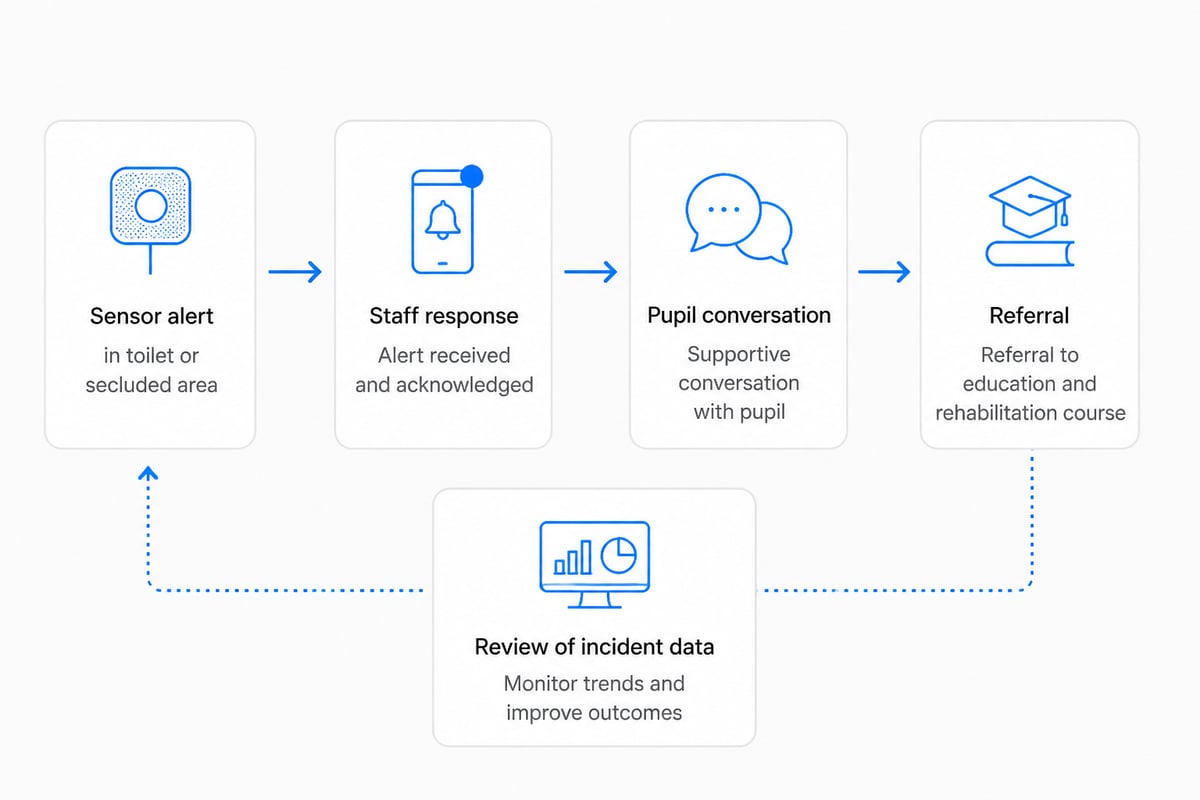
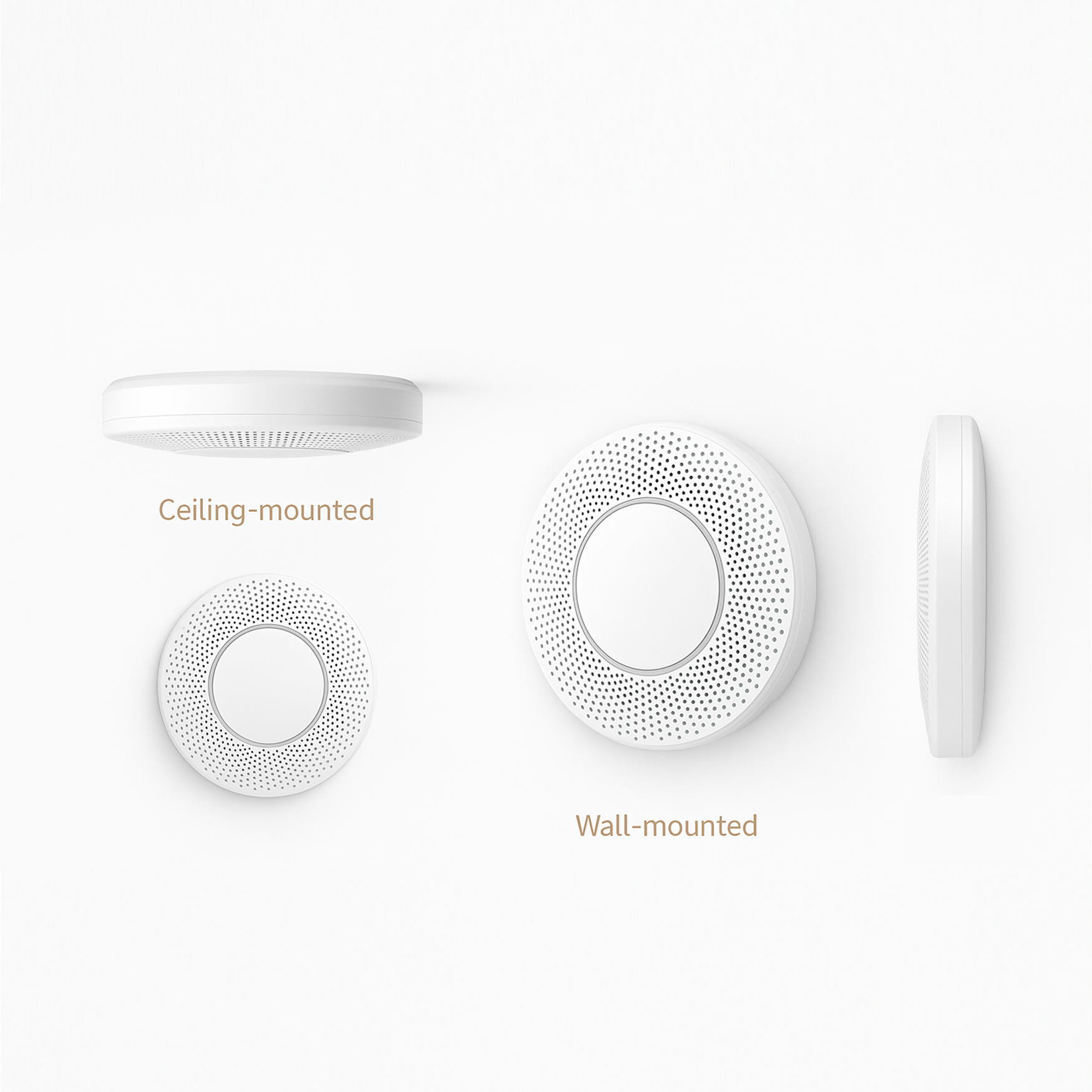
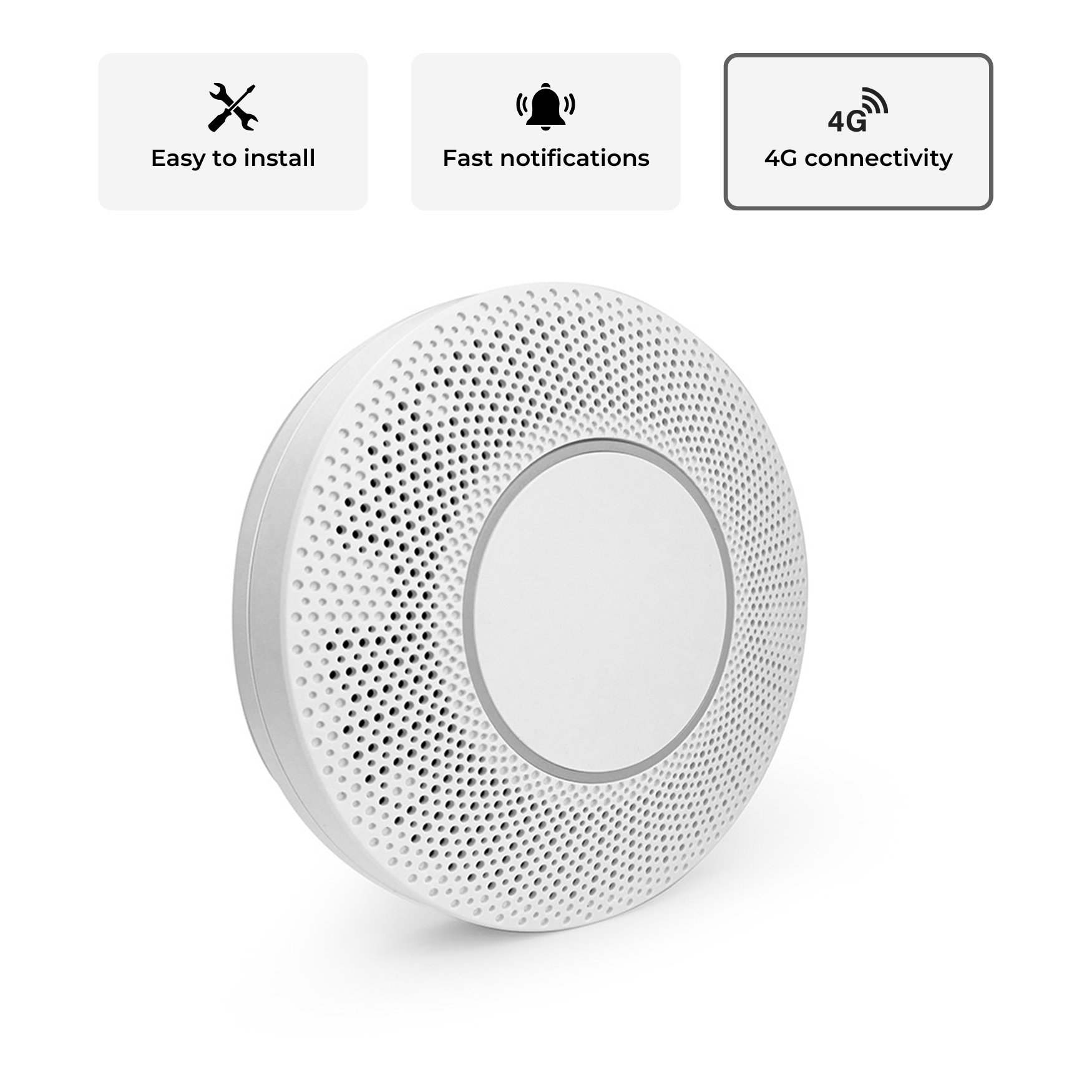
Vape detection in a school uses sensors installed in high risk locations to identify vaping aerosol and alert named staff in real time, so incidents can be addressed while they are happening rather than discovered afterwards.
The areas that matter most are the ones you cannot staff continuously:
- Pupil toilets, where vaping is commonly reported
- Changing rooms and locker areas
- Stairwells and corridors away from main routes
- Secluded outdoor spaces under a covered area
- Sixth form common rooms and study spaces
Sensors fitted in these spaces remove the reliance on staff happening to walk past at the right moment. They also protect staff from the awkward position of standing outside toilets, which raises its own safeguarding concerns. Because the technology uses no cameras, it avoids the privacy issues that make video monitoring unsuitable in washrooms.
For a closer look at how sensors perform in these spaces, see Vape Guardian's guide to vape detection for bathrooms.
What to Look for in a Vape Detection System
A good school vape detection system is accurate enough that staff trust every alert, simple enough to manage without specialist skills, and supported by people who understand both the technology and the vaping landscape.
Accuracy matters most. If alerts are frequently false, staff stop responding to them and the system loses its value within weeks. Vape Guardian uses a detection approach designed to identify vaping accurately and avoid false positives, and reports 96% alert accuracy across its installed base.
Other practical considerations include:
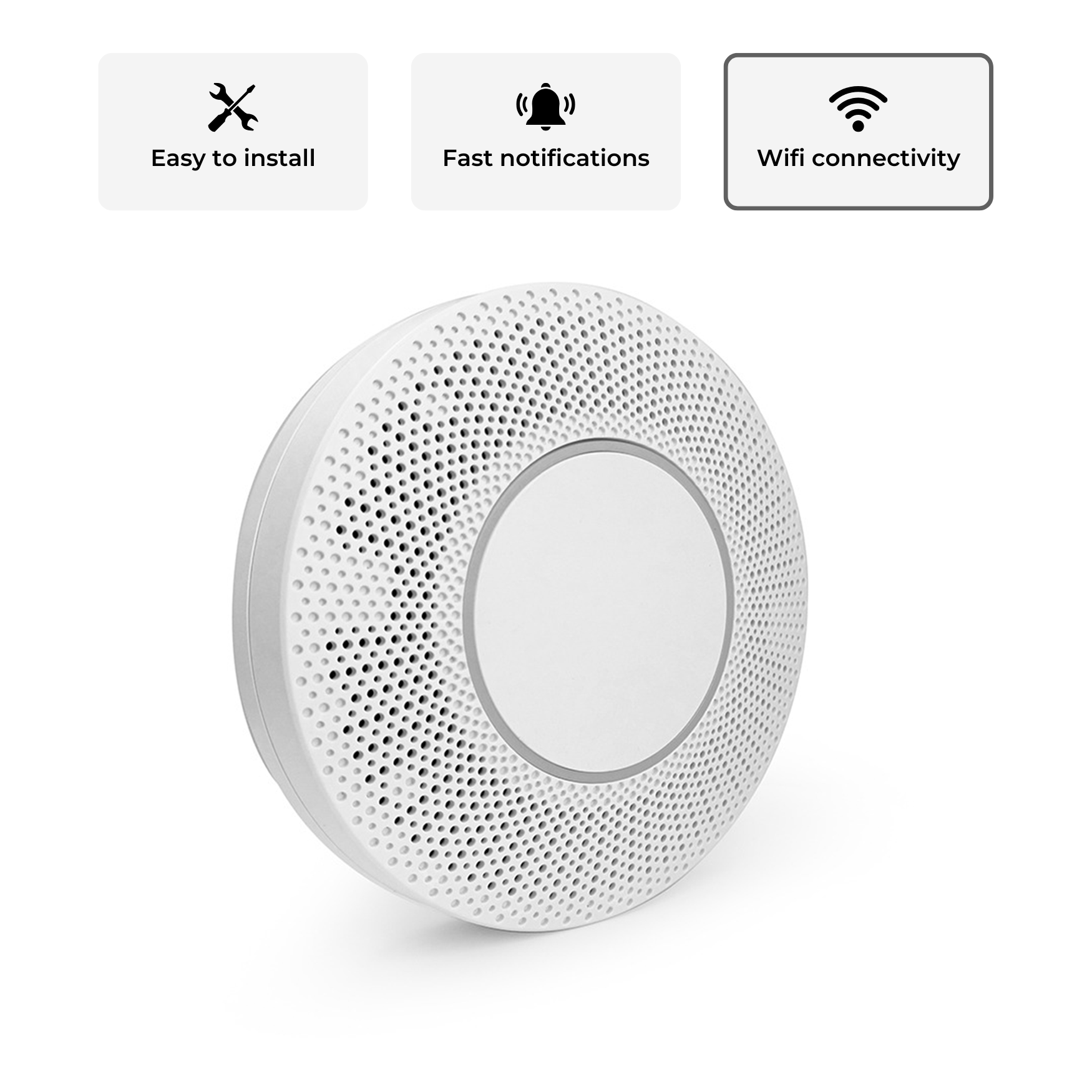
- Alert delivery. Notifications should reach the right staff immediately. Vape Guardian sensors can send alerts to as many staff as a school chooses, so notifications are not restricted to one or two people.
- Range of detection. Pupils may use more than nicotine. Vape Guardian sensors are designed to detect vaping, drug use and anti-social behaviour without cameras, which helps with more than vaping alone.
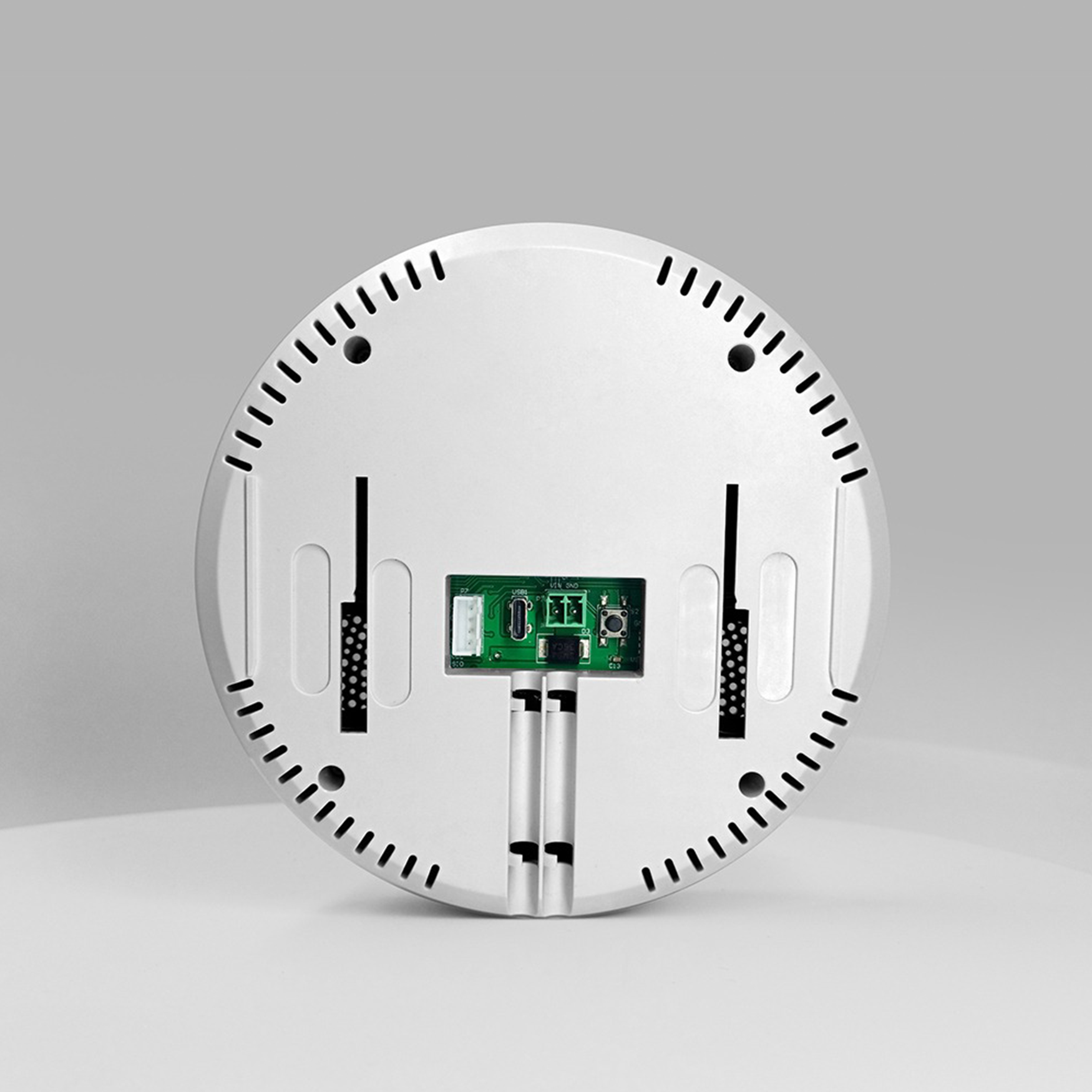
- Ongoing maintenance. Firmware updates are delivered over the air, so the system can keep pace as devices change.
- Support. A UK support team of software, hardware and vaping specialists is available to help with set up and day to day questions.
- Signage. Signage can be displayed alongside sensors, which supports deterrence as well as detection.
The Vape Detection System from Vape Guardian combines these elements in hardware and software designed and developed in the UK, giving schools one platform for detection, alerts and incident reporting.

For schools comparing options, the guide to vaping detectors for schools explains what to ask suppliers before you commit.
Evidence That Detection Reduces Incidents
Schools using sensors consistently report a sharp fall in vaping incidents once pupils understand that toilets and secluded areas are monitored, and the evidence from Vape Guardian installations supports this.
Vape Guardian reports that schools have seen vaping incidents halved within two weeks and almost eliminated by week five. At Seaham High School, vaping in toilets has fallen by around 95% since alarms were installed. With 2,400 sensors installed, around 14,540 weekly alerts and use by hundreds of organisations in 27 countries, the system has a broad operating record.
These results come from a combination of immediate staff response and visible deterrence. Pupils quickly learn that vaping is likely to be noticed, which changes the social calculation among peer groups. That shift creates the space in which education can take hold, because pupils are no longer vaping several times a day in school hours.
Why Education and Rehabilitation Must Sit Alongside Detection
Education and rehabilitation turn detection from a disciplinary tool into a route to behaviour change, because they address nicotine dependence directly rather than simply removing the place where it was fed.
Consider what happens without them. A pupil who vapes daily is caught, receives a sanction, and may be excluded for a period. The dependence remains, the cravings continue, and the pupil returns to school with the same need and a sharper sense of grievance. Exclusion also removes the structure and trusted adults that a vulnerable young person relies on.
Vape Guardian Education offers a student vaping course designed to be used as an alternative to exclusion. It gives schools a constructive response when a pupil is identified: instead of simply removing the young person, the school can refer them to a programme that explains the effects of vaping, addresses the reasons behind their use and supports them in stopping.
This approach has several practical advantages for a school:
- It keeps pupils in lessons and in contact with their teachers
- It gives pastoral staff a defined, repeatable process
- It reduces the repeat offending that follows sanctions alone
- It demonstrates a considered, proportionate policy to governors, parents and inspectors
Vape Guardian's own vaping education hub for schools brings together resources for staff, and its article on a vaping education programme for schools describes how to structure delivery.

Building a Vaping Policy That Joins Both Halves Together
An effective school vaping policy sets out what is prohibited, how detection is used, what happens when a pupil is identified, and how support is offered, so that every member of staff responds consistently.
A clear policy typically covers the following points:
- Scope and expectations. State plainly that vaping is not permitted on site, and that sensors are in use in specified areas.
- Alert response. Name who receives alerts, who attends, and how quickly. Delays erode deterrence.
- Pupil conversations. Provide a script for staff so that first conversations are calm, factual and supportive.
- Referral routes. Define when a pupil is referred to education and rehabilitation, and when wider safeguarding or health services are involved.
- Parental communication. Agree how and when families are contacted, and what information is shared.
- Review. Use incident data from the sensor platform to see where and when vaping occurs, and adjust staffing or education content accordingly.
The legal landscape is also moving. The Tobacco and Vapes Act gives government powers to make certain indoor places vape free, but no start date has been set, so schools should not wait for legislation before acting. A clear internal policy already provides what is needed. For more on the regulatory background, read about what the UK's new vape laws mean for public health and enforcement, and see the dedicated guide to vaping policy for schools.
Assigning Roles Across Your Leadership Team
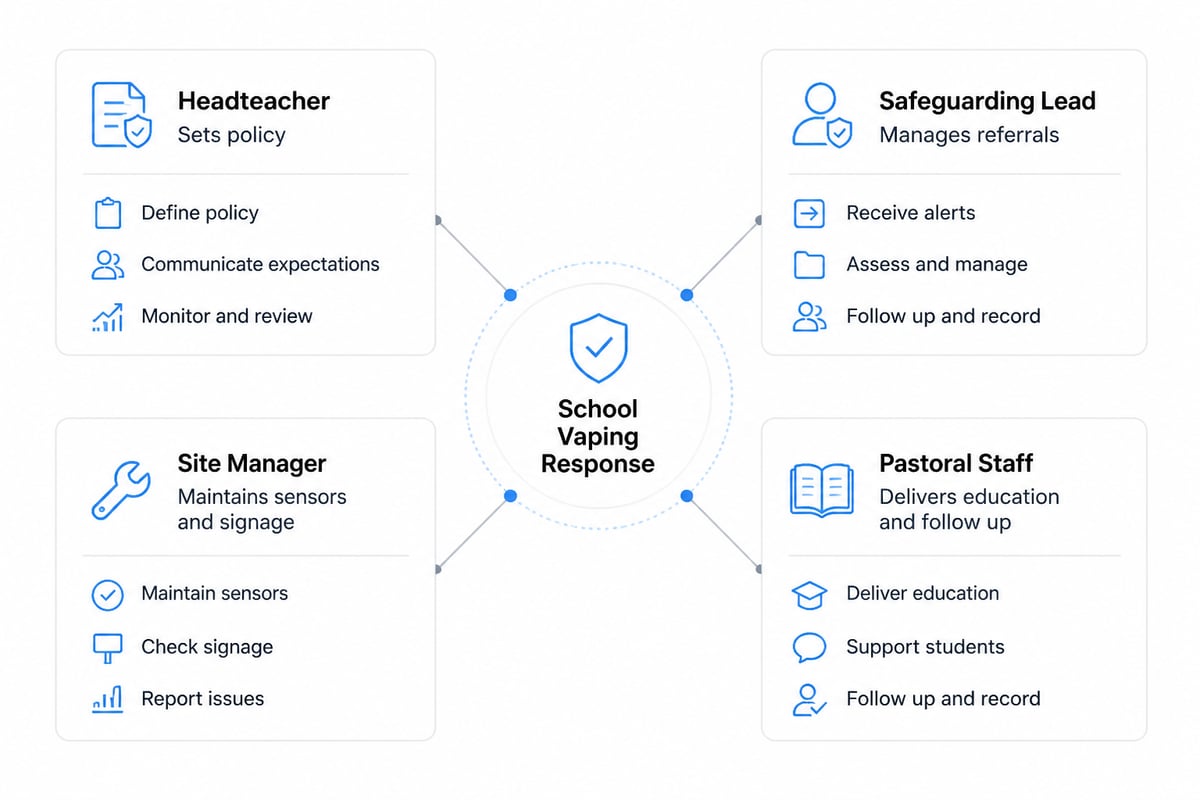
Detection and education only function reliably when responsibilities are shared clearly between the headteacher, safeguarding lead, site manager and pastoral staff.
Headteachers set the tone and approve the policy, including the principle that education and rehabilitation come before exclusion wherever appropriate. Safeguarding leads own the referral process and monitor patterns, such as repeat identification of the same pupils or signs that vaping is linked to other risks. Site managers handle installation, signage and routine checks, and are often first to attend alerts.
Pastoral and PSHE teams carry the educational work: running assemblies, supporting referred pupils and keeping content current. Vape Guardian publishes role specific information on vape detection and education that can help each of these groups understand their part. If your school wants wider context, the article on the irreversible harm warning on youth vaping is useful for staff briefings and parent communications.
A Practical Implementation Plan
Schools can move from concern to a working system in a few clear stages, with detection and education planned together from the outset rather than added later.
- Map hotspots. Review incident logs, staff observations and pupil feedback to identify the toilets and secluded areas where vaping is most likely.
- Install sensors and signage. Place sensors in priority locations and display "No Vaping" signs so the deterrent is visible.
- Agree the alert chain. Decide who is notified, who attends and how incidents are logged.
- Brief staff and pupils. Explain what the sensors do, what they do not do, and how the school will respond. Be clear that there are no cameras.
- Introduce education and rehabilitation. Set up the referral route to Vape Guardian Education so staff have a supportive alternative to exclusion ready from day one.
- Review monthly. Use the data to check whether incidents are falling, whether hotspots are shifting and whether any pupils need further support.
Throughout, keep communication with parents open and factual. Families are more likely to support a policy they understand, particularly when it offers help to their child as well as a consequence.
Measuring Success Beyond Incident Counts
Success is best measured by a fall in incidents combined by evidence that pupils who were identified have stopped vaping and remain engaged in school.
Useful indicators include:
- Weekly alert numbers by location and time of day
- Repeat identification rates for individual pupils
- Completion of education and rehabilitation courses
- Attendance and exclusion figures for referred pupils
- Staff confidence in the response process
- Pupil and parent feedback
Because the sensor platform records alerts, schools can present clear before and after figures to governors and trustees. Pairing those figures with course completion data shows that the school is both enforcing its rules and helping pupils change.
Your next step is to list the toilets and secluded areas in your school where vaping is most likely, then decide who should receive alerts and how a referred pupil will be supported. Vape Guardian can then help you put detection in place alongside a rehabilitation route through Vape Guardian Education, and its Vape Detection System is backed by a 100 day money back guarantee if you are not satisfied. To see what this would look like for your site, get a quote or book a 15 minute call with Vape Guardian, and the UK team will talk you through the options.




Share:
Vaping Education Course for Students: What Schools Should Teach
Supporting Teenagers to Stop Vaping: A Parent's Guide