
Vaping in schools UK has become one of the most pressing safeguarding challenges facing educators in 2026. What began as an adult smoking cessation tool has evolved into a widespread youth phenomenon, with disposable vapes and flavoured e-cigarettes attracting thousands of young people across British schools. The issue extends beyond simple rule breaking, encompassing health concerns, behavioural disruption, and significant regulatory implications. Schools now face complex decisions about detection, intervention, and prevention whilst balancing pastoral care with discipline. Understanding the full scope of vaping in schools UK requires examining prevalence data, health evidence, legal obligations, and the practical solutions available to school leaders.
The Scale of Vaping in Schools UK
Recent statistics reveal the extent of youth vaping across the United Kingdom. According to Action on Smoking and Health's latest survey data, the proportion of 11 to 17 year olds who have tried vaping has risen substantially over recent years. Current use among secondary school pupils now sits at concerning levels, with disposable vapes accounting for the majority of devices used by young people.
The problem manifests differently across educational settings. Secondary schools report higher prevalence than primary schools, though some primary institutions have observed experimental use among older pupils. Urban and rural schools face distinct challenges, with supply chains and peer influences varying by location.
Why Students Are Drawn to Vaping
Several factors contribute to the popularity of vaping in schools UK:
- Flavour appeal: Sweet and fruity flavours specifically attract younger users
- Discreet devices: Compact disposables are easily concealed in pockets and bags
- Social influence: Peer pressure and normalisation within friendship groups
- Accessibility: Despite age restrictions, many young people acquire vapes through older friends or unscrupulous retailers
- Marketing exposure: Colourful packaging and social media presence increase appeal
Teachers and school staff consistently report that students perceive vaping as less harmful than smoking, underestimating the nicotine addiction risks and other health consequences. This perception gap drives uptake amongst pupils who would never consider traditional cigarettes.

Health Implications for Young People
The health evidence surrounding youth vaping continues to develop. The UK Health Security Agency's umbrella review on vaping and harm in young people synthesises current research on physical and mental health associations. Key findings include concerns about nicotine dependence, respiratory symptoms, and potential impacts on developing brains.
Nicotine exposure during adolescence carries particular risks. The teenage brain remains in active development until the mid twenties, and nicotine can interfere with neural pathways responsible for attention, learning, and impulse control. Young people who vape may experience:
- Increased anxiety and mood disturbances
- Concentration difficulties affecting academic performance
- Physical dependence requiring regular nicotine intake
- Gateway effects potentially leading to other substance use
- Respiratory irritation and breathing problems
The Royal College of Paediatrics and Child Health has published guidance emphasising that whilst vaping may be less harmful than smoking for adults trying to quit, it is not safe for children and young people who have never smoked. Medical professionals across the UK advocate strongly against youth vaping.
International perspectives on addiction treatment, such as those offered by specialist facilities like مركز الحياة لعلاج الإدمان والطب النفسي in the Middle East, demonstrate that nicotine addiction can require professional intervention. Schools play a crucial role in early identification and prevention before dependency becomes established.
Legal and Regulatory Framework
School leaders must navigate complex legal obligations when addressing vaping in schools UK. The regulatory landscape has shifted significantly in 2026, with new government measures targeting youth vaping specifically.
Current Legislation
| Regulation | Key Provision | School Relevance |
|---|---|---|
| Sale age restriction | Illegal to sell vapes to under 18s | Schools should report local retailers breaching this |
| Nicotine-free products | Age restrictions apply to all vaping products | Covers devices students claim contain no nicotine |
| School behaviour policies | Schools set own rules on vaping | Must be clearly communicated to students and parents |
| Safeguarding duties | Schools must protect pupil welfare | Includes addressing substance use and addiction risks |
The UK Government's plan to create a smokefree generation sets out comprehensive measures to reduce youth vaping. This includes restricting flavours, regulating packaging, and providing resources specifically designed for schools. Educational institutions are expected to implement robust policies aligned with this national strategy.
Additionally, the government's ban on disposable vapes represents a major regulatory shift. Announced to protect children's health, this prohibition addresses the most commonly used device type among young people. Schools should prepare for this transition whilst recognising that other vape formats will remain available.

School Policy Requirements
Effective management of vaping in schools UK requires clear, consistently enforced policies. School behaviour policies should explicitly cover vaping, treating it with similar seriousness to other prohibited substances. NICE guideline NG209 provides evidence based recommendations for school interventions.
Policy elements should include:
- Clear prohibition: Unambiguous statements that vaping is not permitted on school premises
- Consequences framework: Graduated sanctions reflecting the seriousness of incidents
- Support pathways: Referral processes for students showing signs of dependence
- Staff training: Ensuring all personnel understand identification and response procedures
- Parental engagement: Communication strategies involving families in prevention and intervention
Designated Safeguarding Leads hold particular responsibility for coordinating responses to vaping incidents. Resources for safeguarding professionals working with vaping concerns can support this specialist role.
Detection Challenges and Solutions
Identifying vaping in schools UK presents unique difficulties. Unlike smoking, vaping produces minimal visible vapour that dissipates quickly, and devices emit varied scents depending on flavour. Students predominantly vape in toilets, changing rooms, and other unsupervised areas where visual monitoring proves impractical.
Traditional Detection Methods
Schools initially relied on staff vigilance and student reporting. However, these approaches have significant limitations:
- Staff cannot monitor toilet facilities without privacy concerns
- Students rarely report peers due to social pressure
- Visual checks after incidents provide no evidence
- Random searches raise legal and ethical questions
- Smell alone offers insufficient proof for disciplinary action
Technological Detection Systems
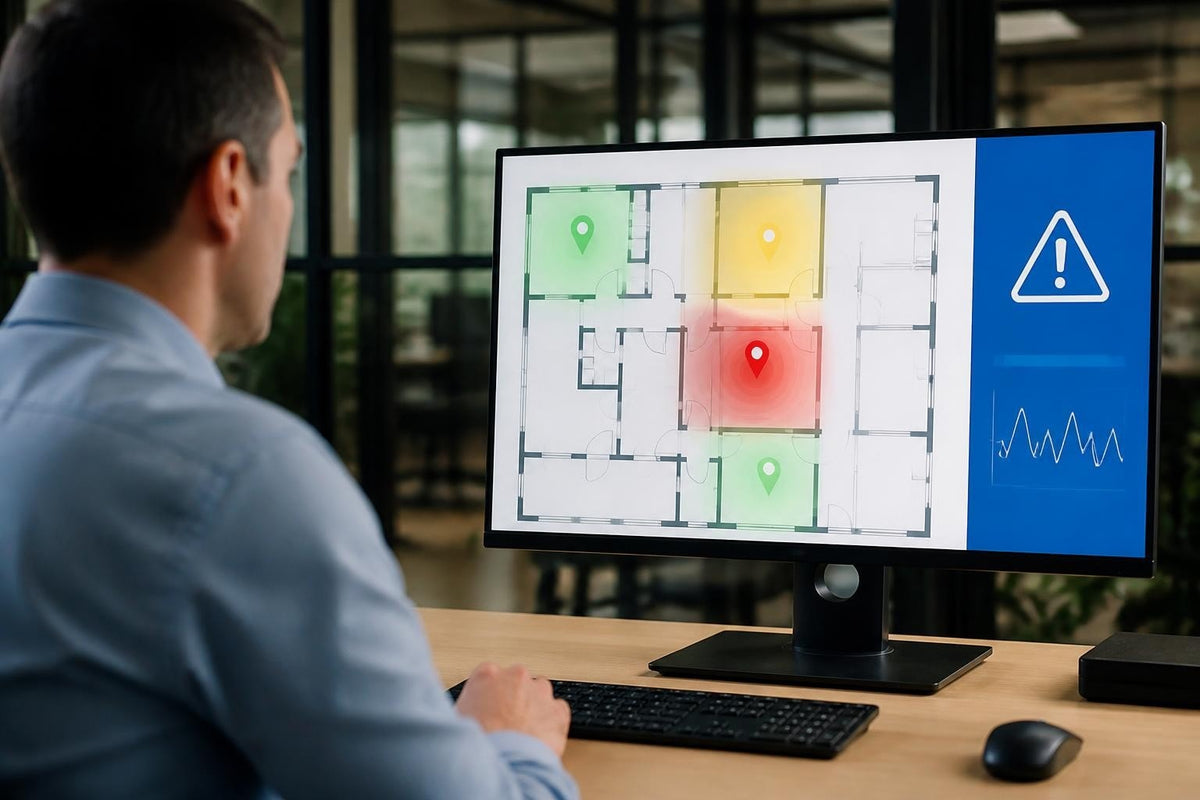
Advanced sensor technology has transformed how schools address vaping detection challenges. Modern systems can identify vape aerosol particles in real time, alerting designated staff immediately when incidents occur.
The Vape Detection System combines sophisticated air quality monitoring with instant notification capabilities, allowing schools to respond promptly to incidents. These systems detect not only vaping but also other prohibited activities, providing comprehensive safeguarding coverage for areas where direct supervision is impossible.

Installation typically focuses on high risk locations such as toilet facilities, where detecting vaping in toilets has historically posed the greatest challenge. Sensors operate discreetly, respect privacy by using no cameras or recording devices, and provide objective evidence supporting school disciplinary processes.
Practical Implementation Strategies
Schools successfully addressing vaping in schools UK combine multiple approaches. No single intervention resolves the issue, but comprehensive strategies yield measurable improvements.
Prevention and Education
Educational programmes form the foundation of effective prevention. Students need accurate information about vaping risks presented in age appropriate, engaging formats. Evidence shows that fear based messaging often backfires, whilst balanced, factual content delivered by credible sources influences behaviour more effectively.
Curriculum integration works better than standalone assemblies. Science lessons can examine nicotine's neurological effects, PSHE sessions can explore social pressures and decision making, and health education can address addiction mechanisms. External speakers, including health professionals and former users, add credibility to school messaging.
Early Intervention
When schools identify students vaping, rapid intervention prevents escalation. A supportive rather than purely punitive approach proves most effective for students showing signs of regular use or dependency.
| Intervention Level | Student Profile | Appropriate Response |
|---|---|---|
| Universal | All students | Prevention education, clear policy communication |
| Targeted | Experimental users | Brief counselling, parental involvement, monitoring |
| Intensive | Regular/dependent users | Specialist referral, cessation support, ongoing pastoral care |
Schools should establish clear referral pathways to NHS Stop Smoking Services, which increasingly support young people seeking to quit vaping. Some institutions develop peer support programmes where older students mentor younger pupils, leveraging positive peer influence.
Creating a Supportive Environment
Punitive measures alone rarely solve vaping in schools UK. Students need to understand that schools prioritise their wellbeing over simple rule enforcement. This requires:
- Confidential disclosure opportunities: Anonymous reporting systems and trusted adult access
- Non judgemental support: Staff training in motivational interviewing and harm reduction
- Family partnership: Engaging parents as allies rather than adversaries
- Positive alternatives: Stress management programmes, break time activities, mental health support
Schools report better outcomes when students feel supported rather than criminalised. Balancing accountability with compassion proves challenging but essential.
Staff Training and Resources
Effective management of vaping in schools UK depends heavily on well prepared staff. All personnel, from teachers to support staff, require baseline awareness of vaping indicators, health risks, and response protocols.
Essential Training Components
Professional development should cover identification skills, with staff learning to recognise vaping devices in their various forms. Disposables, pod systems, and larger devices all appear in schools, and staff who cannot identify them cannot respond appropriately.
Training should also address conversation skills for discussing vaping with students. Staff need confidence to ask direct questions, listen without judgment, and refer appropriately when concerns arise. Role playing exercises and scenario discussions build these capabilities effectively.
Resources for different school roles recognise that responsibilities vary. Information tailored for senior leadership teams differs from that needed by classroom teachers or IT managers implementing detection systems.
Multi Academy Trusts and Local Authorities
Larger educational organisations face additional coordination challenges. Multi Academy Trusts addressing vaping benefit from standardised policies whilst allowing individual schools flexibility in implementation. Central procurement of detection technology and coordinated staff training generate economies of scale.
Local authorities play crucial roles in supporting schools across their areas. Guidance for local authority teams working with vaping concerns helps ensure consistent approaches and shared learning between institutions.
Engaging Parents and Carers
Parental involvement significantly influences outcomes when addressing vaping in schools UK. Many parents remain unaware their children vape, and even informed parents often struggle with effective responses.
Schools should communicate proactively about vaping risks before incidents occur. Parent information sessions, newsletters, and website resources establish baseline awareness. When individual cases arise, early parental contact prevents escalation and enables coordinated home and school approaches.
Some parents minimise vaping concerns, viewing it as harmless experimentation. Schools must tactfully challenge these perceptions with evidence whilst maintaining positive relationships. Providing resources parents can access independently, such as NHS guidance and youth cessation programmes, empowers families to take action.
Conversely, some parents react with extreme concern or harsh punishment. Schools can counsel moderation, emphasising that supportive, consistent responses prove more effective than severe sanctions that may damage parent child relationships without addressing underlying issues.
The Teacher Perspective
The NASUWT survey findings on vaping in schools reveal significant concerns among teaching professionals. Educators report that vaping disrupts learning, creates behavioural challenges, and diverts time from teaching to enforcement.
Teachers describe students vaping during lessons in some cases, with concealable devices used under desks or during transitions between activities. The nicotine dependence some students develop means they struggle to concentrate during longer lessons, becoming irritable and distracted when unable to vape.
Staff also worry about their own exposure to second hand aerosol and the normalisation of vaping behaviours. Many teachers feel inadequately supported by senior leadership, lacking clear protocols for responding to incidents and follow up procedures after detection.
Addressing these professional concerns requires robust whole school approaches that value staff input and provide clear guidance. Teachers perform best when supported by effective systems rather than relying solely on individual vigilance and intervention.
Looking Forward: Emerging Trends
As regulations tighten and awareness grows, vaping in schools UK continues to evolve. Several trends merit attention as schools plan for coming years.
Product Evolution
Manufacturers constantly adapt products in response to regulations. As disposable vapes face prohibition, refillable systems may increase in prevalence. Schools must stay informed about new device types and adjust detection and education strategies accordingly.
Nicotine Strength Changes
Current vaping products often contain very high nicotine concentrations. Potential regulatory limits on nicotine strength could reduce dependence severity but might also drive some users toward illicit products or increased usage to achieve desired effects.
Alternative Substances
Some students use vaping devices for substances beyond nicotine, including cannabis derivatives. Detection systems that identify multiple substance types provide broader safeguarding value, addressing drug use alongside vaping concerns.
Mental Health Links
Research increasingly connects youth vaping with anxiety, depression, and stress. Schools may need to strengthen mental health support as part of comprehensive vaping strategies, recognising that some students vape as a coping mechanism for underlying difficulties.
Measuring Success and Continuous Improvement
Schools addressing vaping in schools UK should establish clear metrics for evaluating their approaches. Success indicators might include:
- Reduction in detected vaping incidents over time
- Decreased student reported vaping prevalence in surveys
- Improved staff confidence in managing vaping situations
- Positive feedback from parents about school communication
- Effective referral and support uptake by students who vape
Regular review processes allow schools to refine strategies based on evidence. What works in one institution may require adaptation for another, and continuous improvement approaches recognise this variability.
Sharing effective practices between schools accelerates progress. Professional networks, local authority forums, and national conferences provide platforms for exchanging insights and learning from diverse experiences across the United Kingdom.
Investment Considerations for Schools
Implementing comprehensive vaping strategies requires financial investment. Schools must balance competing budget priorities whilst addressing this significant safeguarding concern.
Detection technology represents the largest capital expenditure for most schools. Understanding vape detector costs helps institutions budget appropriately and compare options. Systems vary in capability, with some offering basic detection whilst others provide comprehensive air quality monitoring and multi substance identification.
Beyond hardware, ongoing software subscriptions, staff training costs, and educational resource expenses contribute to total expenditure. However, schools increasingly view these investments as essential safeguarding measures rather than optional enhancements, similar to fire safety systems or CCTV installations.
Funding sources vary. Some schools allocate funds from behaviour budgets, others from premises or safeguarding allocations. External funding occasionally supports pilot programmes, and some multi academy trusts provide centralised funding for member schools.
The Role of Governors and Trustees
School governance bodies hold strategic oversight responsibility for policies addressing vaping in schools UK. Governors working with vaping concerns should ensure their institutions have robust, legally compliant policies and adequate resources for implementation.
Governance responsibilities include reviewing incident data, monitoring policy effectiveness, and challenging leaders about prevention and intervention outcomes. Governors also ensure that disciplinary processes remain fair and consistent, protecting both student welfare and institutional reputation.
When significant investments in detection technology or educational programmes are proposed, governors evaluate value for money and strategic fit. They should seek assurance that proposed measures address identified needs and align with the school's broader safeguarding framework.
Addressing vaping in schools UK requires coordinated effort combining education, policy, detection technology, and pastoral support. Schools that implement comprehensive strategies see measurable improvements in both incident rates and student wellbeing. Vape Guardian provides advanced detection solutions designed specifically for educational environments, helping schools identify incidents in real time whilst maintaining student privacy and supporting effective intervention. With sensor technology, dedicated support, and a commitment to creating safer school environments, schools can tackle this challenging issue with confidence.








Share:
Workplace Vaping Policy: A Complete UK Employer Guide
Vape Detectors UK: Technology & Solutions for 2026