

The most effective way to help a student quit vaping is to combine a calm, non punitive conversation with a clear quit plan, support through withdrawal, and an environment that makes vaping harder to sustain. Punishment alone rarely ends nicotine dependence, so schools achieve better results when they pair firm boundaries with education and ongoing pastoral support.
For headteachers, safeguarding leads and site managers, the challenge is twofold. You need to help individual pupils stop, and you need to reduce the secluded spaces where vaping takes hold. This guide covers both, starting with the conversation itself.
Start With a Conversation, Not a Sanction
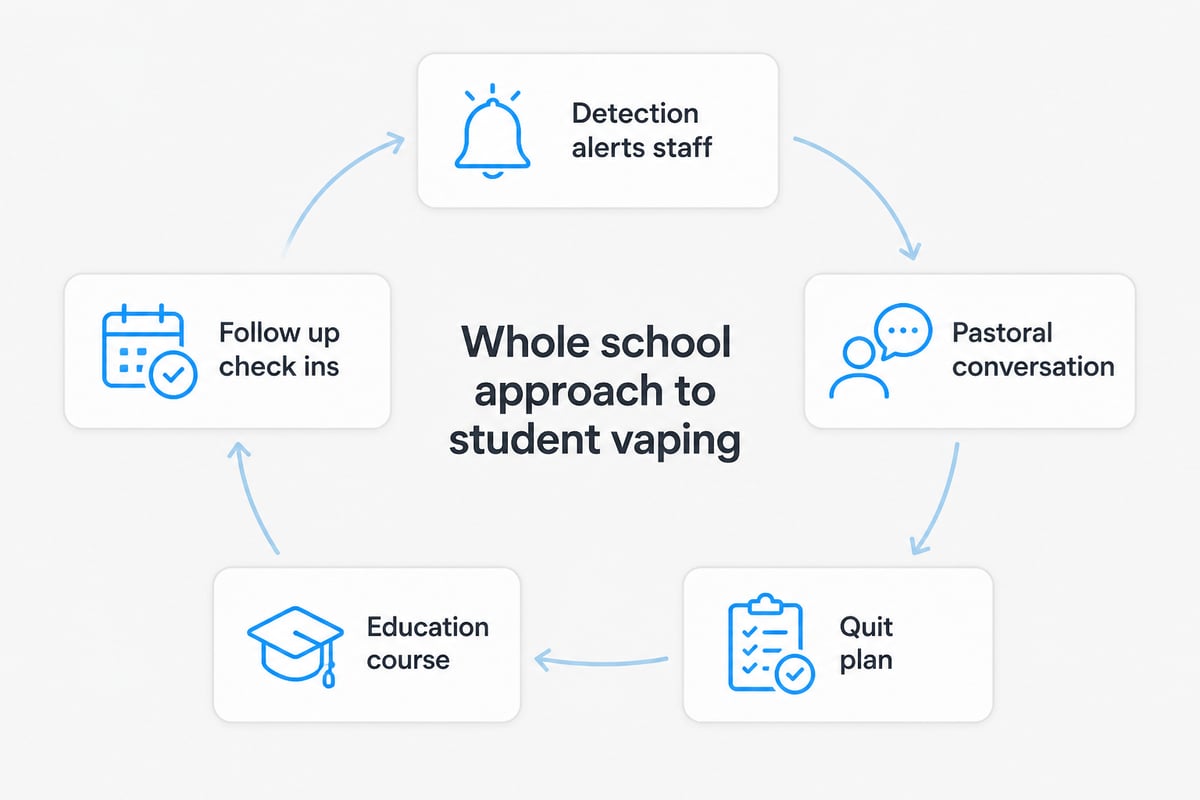
Begin by asking the student what they think about their vaping, because a young person who feels judged will usually stop talking. A short, private conversation with a trusted adult, ideally someone the student already has a good relationship with, gets better results than a formal disciplinary meeting.
A few principles help:
- Ask open questions. "How long have you been vaping?" and "What does it do for you?" invite honesty. Accusations close the conversation down.
- Find out what they want. Some students are already worried about their dependence. Others have no wish to stop. Your approach should match where they are.
- Keep the tone factual. Explain what nicotine does without exaggeration. Teenagers dismiss claims that sound inflated.
- Agree a next step. End with something small and specific, such as a follow up meeting in a week.
If a student does not want to stop, do not force the issue in that first meeting. Leave the door open, make clear that support is available whenever they are ready, and revisit the subject. Continued contact matters more than winning the argument on day one.
What Are the Common Symptoms of Nicotine Withdrawal?
Common symptoms of nicotine withdrawal include irritability, anxiety, difficulty concentrating, restlessness, disturbed sleep, increased appetite and strong cravings. They typically begin within hours of the last use and are most intense in the first few days before easing over the following weeks.
Staff who recognise these signs can respond with patience rather than treating them as misbehaviour. A student who is short tempered in lessons or unable to settle may be in the early stages of quitting, not being defiant.
Practical ways to support a student through withdrawal include:
- Allowing a short break or a walk when cravings are acute.
- Encouraging water, regular meals and physical activity.
- Reminding them that cravings pass, usually within a few minutes.
- Adjusting expectations for a few days if concentration is poor.
- Checking in with them briefly each day during the first week.
Share these symptoms with form tutors and pastoral staff in advance. A consistent response from adults across the school makes the first week considerably easier for the student.
How to Help a Student Quit Vaping: Building a Quit Plan
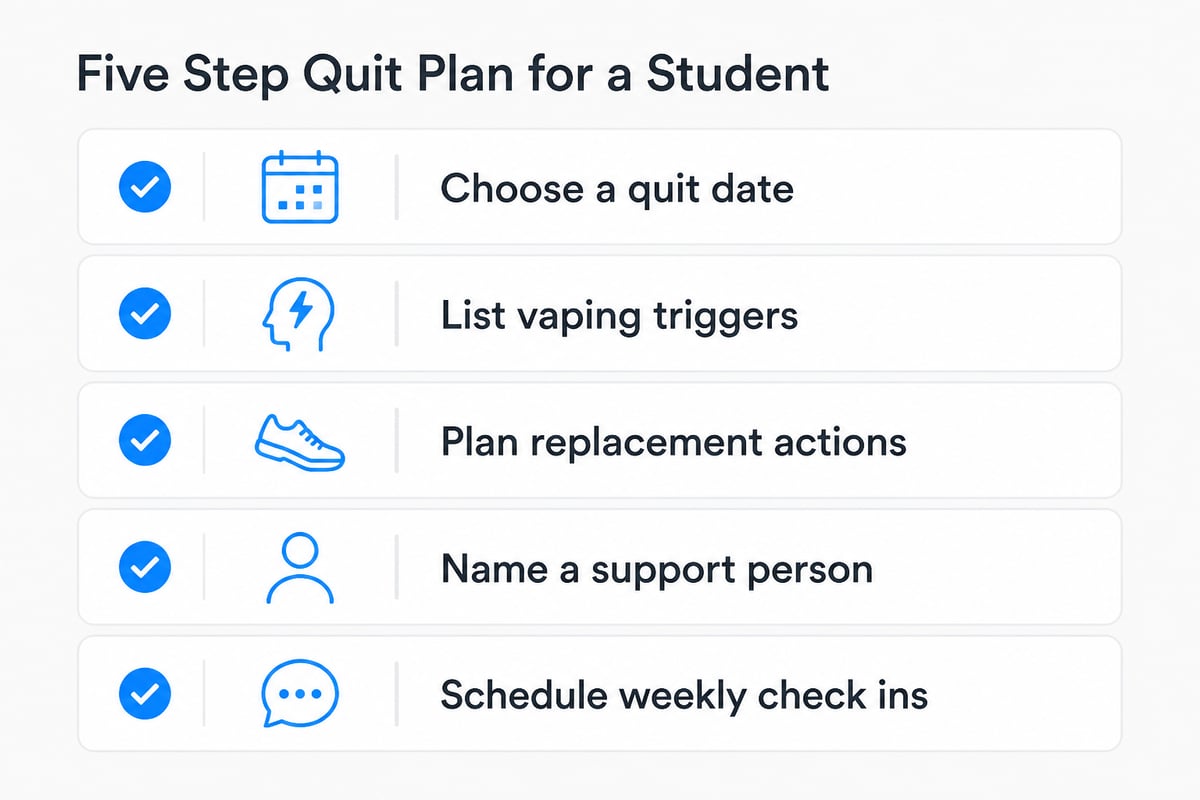
A workable quit plan sets a date, identifies triggers, names a support person and decides in advance what the student will do when a craving hits. Encourage the student to write it themselves, since a plan they own is far more likely to be followed.
Smokefree Teen recommends choosing a quit date within the next one or two weeks and avoiding a date likely to be stressful, such as a test day or big game. For a school setting, that means steering clear of mock exam weeks, key assessments and the days before a residential trip.
A good plan covers four elements:
- A quit date that is close enough to keep momentum but not clashing with pressure points.
- Known triggers. Stress, boredom, social situations and particular times of day all drive use. The Smokefree Teen guidance on understanding vaping triggers explains how to identify and manage them.
- Replacement actions. Chewing gum, drinking water, a short walk or a breathing exercise give the hands and mouth something else to do.
- A support team. This might be a parent, a friend, a tutor or a school nurse.
Teenagers often want practical, step by step help rather than general advice. The teen guide to quitting vaping walks through preparing to quit and building a support team, and is a useful resource to hand to a student directly.
Get Through the First Day and the First Fortnight
The first day without vaping sets the tone, so arrange extra contact on that day and be ready for a difficult afternoon. Many students find the first 72 hours the hardest, and the first fortnight is when most slips occur.
On quit day, agree who the student will go to if they feel overwhelmed. The first day without vaping advice suggests asking family and friends for support and contacting cessation experts, both of which translate well into a school setting.
Over the following two weeks:
- Hold a brief check in every day for the first week, then taper to twice weekly.
- Ask what was hardest and what helped. Specific feedback improves the plan.
- Praise effort and honesty, not only abstinence.
- Make sure the student has an agreed way to leave a lesson discreetly if a craving becomes unmanageable.
Discuss social triggers openly too. A student whose friends all vape will find it difficult to stay quit, and may need support in finding different places to spend breaktimes.
What to Do If a Student Slips
A slip is a common part of quitting and should be treated as information, not failure. Respond calmly, ask what happened, and help the student adjust the plan rather than abandon it.
Many students try several times before stopping completely. If a pupil admits to vaping again, resist the instinct to escalate straight to sanctions. Ask what the trigger was, whether it was stress, a social situation or boredom, and decide together what to change. Setting a new quit date within a week keeps momentum alive.
Where relapses become frequent, or the student appears heavily dependent, involve parents or carers and consider a referral to local stop smoking or young people's health services. Your school nurse or local authority public health team can advise on what is available in your area.
Which Support Services and Tools Actually Help?
Tailored, young person focused support has the strongest evidence, and text message programmes in particular have been tested in a large trial. A randomised trial published in JAMA involved US adolescents aged 13 to 17 who had vaped nicotine in the past 30 days and wanted to quit. At the seven month endpoint, teens receiving the tailored text message programme were more likely to report no nicotine use than the control group.
Reported quit rates were higher in the intervention groups than in the control group. These are US figures, and the programme itself is American, but they show that structured, personalised, repeated contact outperforms leaving a young person to manage alone.
For UK schools, the practical implications are consistent:
- Offer more than a single conversation. Regular, personalised contact is what the evidence supports.
- Involve the student in choosing the support, whether that is a staff mentor, a school nurse or a local stop smoking service.
- Signpost reputable resources rather than leaving students to search unreliable forums.
Nicotine replacement and other medication for under eighteens is a clinical decision. Staff should not advise on it directly. Refer the student to a GP, pharmacist or local stop smoking service, and involve parents or carers.
What Is the Best Way to Get Rid of a Vape?
The best way to get rid of a vape is to stop using it and dispose of it safely, ideally as part of the quit plan. Lithium batteries in vapes can be a fire hazard, so they should never go in ordinary household or school bins.
For a student, the symbolic act of handing over or disposing of their device can be a useful moment. Some will prefer to do it themselves at home. If your school confiscates vapes under its behaviour policy, store them securely and dispose of them through an appropriate electrical waste or battery recycling route, rather than the general waste. Check your local authority guidance for the correct process.
Avoid treating confiscation as the end of the matter. A student whose vape is taken without any follow up will often simply buy another, so pair confiscation with an offer of support.
Education and Rehabilitation as an Alternative to Exclusion
Exclusion removes a student from the very adults and routines most likely to help them, so education and rehabilitation deserve a central place in your response. Suspension for a vaping offence may also leave a dependent teenager vaping freely at home or elsewhere, with no structured support.
Vape Guardian Education is a 35 minute student vaping intervention course with six lessons and quizzes, designed with LifeLab at the University of Southampton. It gives schools a structured, repeatable way to educate a student about nicotine and vaping instead of defaulting to exclusion, and it sits comfortably alongside pastoral conversations and quit plans. You can read more about the approach in this guide to a vaping intervention course for students.
Used well, a course like this does three things:
- It gives the student accurate information without lecturing.
- It creates a consistent, documented response for every pupil, which supports fairness.
- It frees pastoral staff to concentrate on the conversations and follow up that only people can provide.
Reduce the Opportunity to Vape on Site
Helping individual students quit works best when the school environment is not working against them. If toilets and other secluded areas remain easy places to vape, a student trying to stay quit faces constant temptation and peer pressure.
Detection technology supports this by alerting staff when vaping occurs, so they can respond quickly and speak to pupils with a supportive purpose. Vape Guardian sensors detect vaping and air quality issues without cameras, which matters in sensitive areas like toilets. The company reports 96% alert accuracy across its installed sensors, and schools report vaping incidents halved within two weeks. At Seaham High School, vaping in toilets has fallen substantially since alarms were installed.
Detection should not replace support. The aim is to reduce opportunity and create a clear moment to offer help. For more on the approach, see these guides on how to stop vaping in school toilets and how to stop students vaping.
Also keep the wider legal context in view. Your school policy should be driven by your own duty of care rather than waiting for legislation. A summary of current expectations is available in this guide to UK school vaping laws and what headteachers need to know.
Involve Parents and Carers
Parents and carers should be told early, because home is where much of a student's quitting will happen. Approach the conversation as a partnership, and share what you have agreed with the student so the message is consistent.
Be honest with families about what is and is not known. Some parents may be unaware how common vaping is among pupils, and some feel guilty or angry. A calm, practical tone helps. Offer them the quit plan, the signs of withdrawal and the names of support services, and ask them to avoid punitive responses that could drive the habit underground.
If you need to give parents context, this overview of teenage vaping statistics can help show that their child is not alone, without minimising the risks.

FAQ
What can a student do instead of vaping?
Replacement habits work best when they address the reason for vaping. Chewing gum, drinking water, a short walk, breathing exercises or fidgeting with a small object can occupy hands and mouth, while sport and time with non vaping friends tackle the social side. Encourage the student to choose two or three options in advance.
Is there a best device or product for quitting vaping?
There is no single best device, and a student should not be encouraged to swap one nicotine product for another without clinical advice. Evidence in young people favours tailored behavioural support, such as regular, personalised contact. Any decision about nicotine replacement for under eighteens should be made with a GP, pharmacist or local stop smoking service.
How long does it take a student to stop craving nicotine?
Individual cravings usually pass within a few minutes, and withdrawal symptoms are generally strongest in the first few days. Many young people find cravings gradually less frequent over the following weeks, though triggers can bring them back, so continued support after the first fortnight is worthwhile.
Your next step is to agree a simple, consistent response across your staff, covering the opening conversation, a quit plan template and a named person for follow up, and to offer the Vape Guardian Education course as a rehabilitative alternative to exclusion. To make it easier for pupils to stay quit, you can also reduce the hidden spaces where vaping happens; Vape Guardian offers camera free detection backed by a UK support team and a 100 day money back guarantee, and you can get a quote or book a 15 minute call to talk through what would suit your site.









Share:
Vaping Safeguarding Training for Schools: A Guide
Vaping Education Course for Students: What Schools Should Teach