
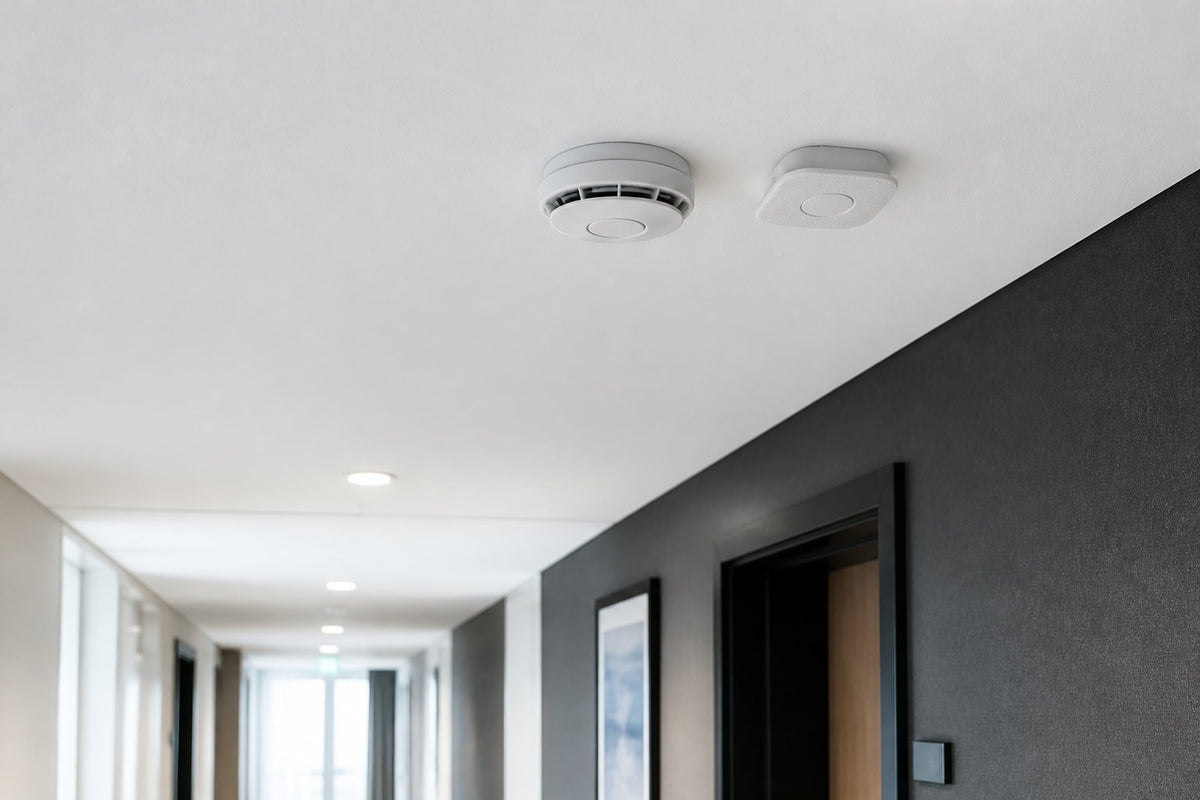
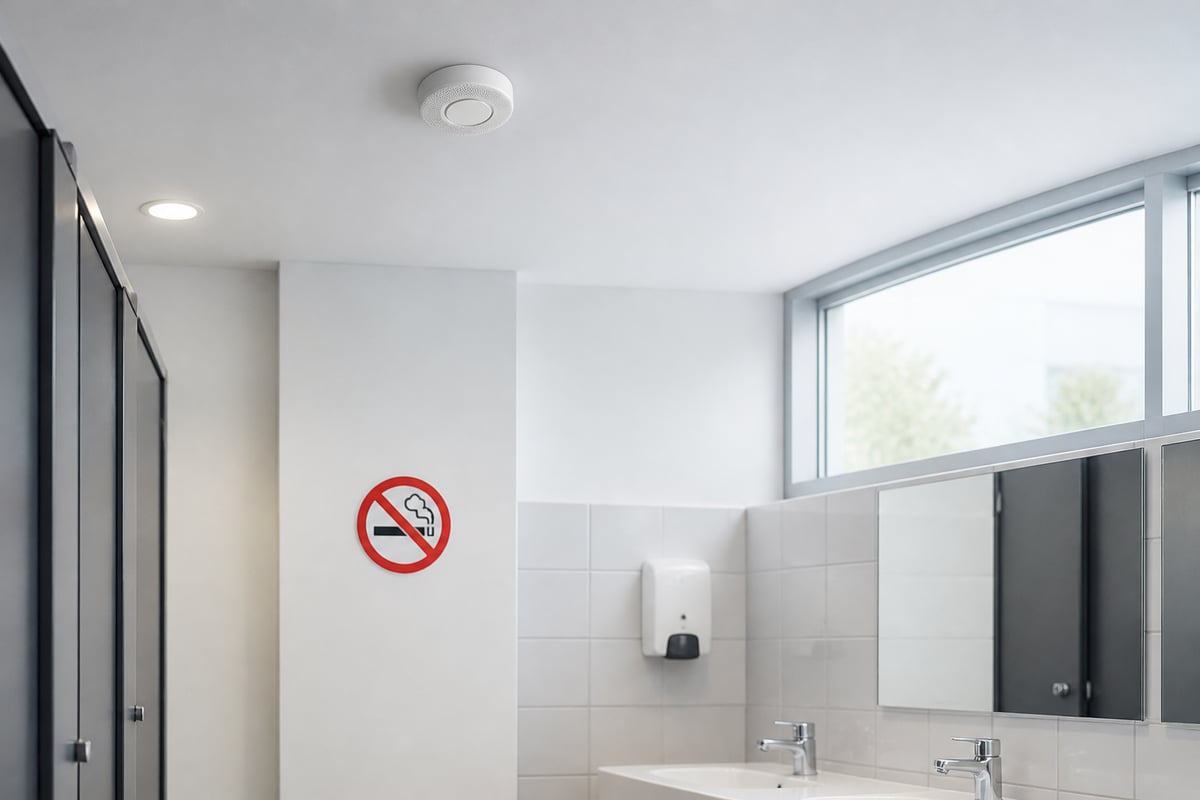
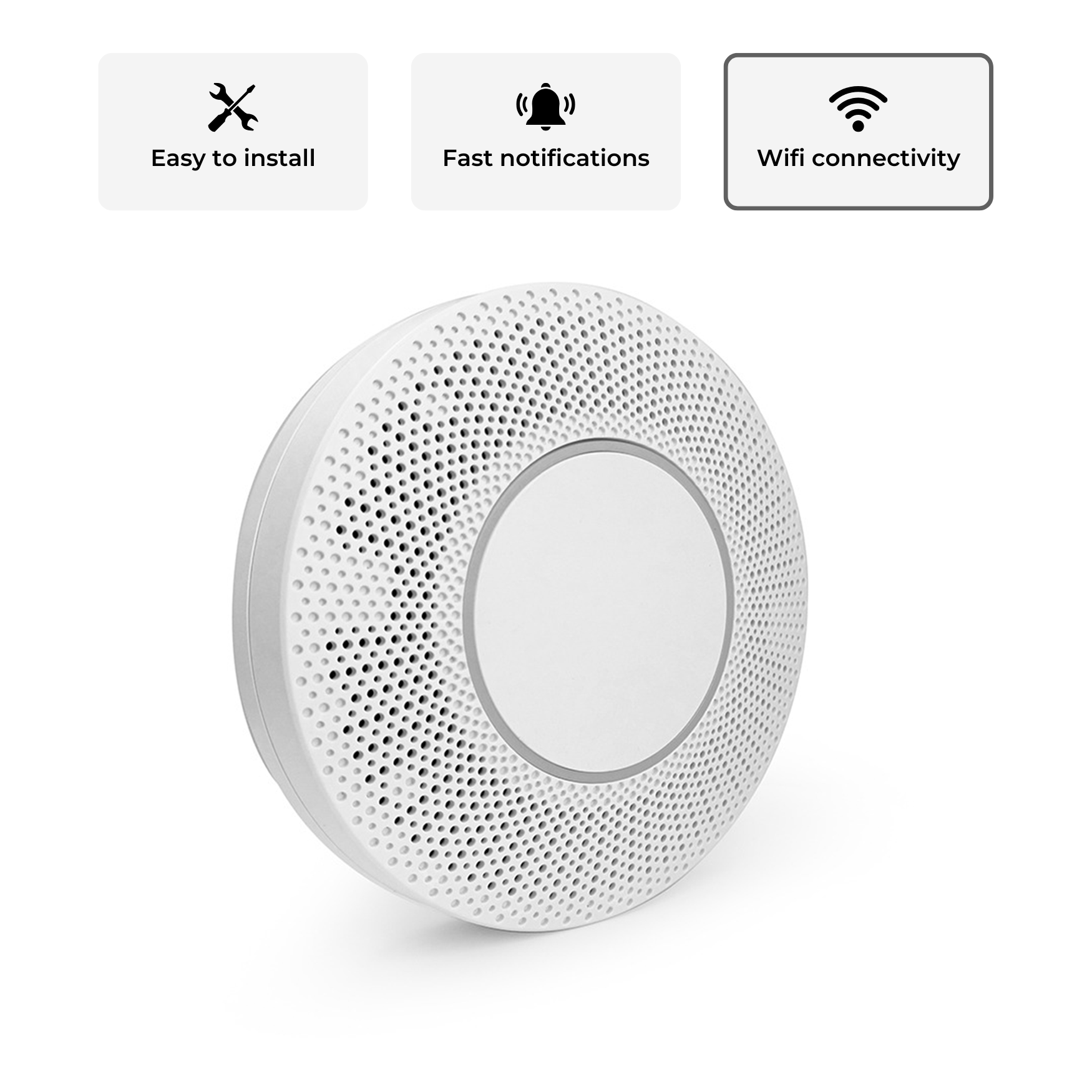
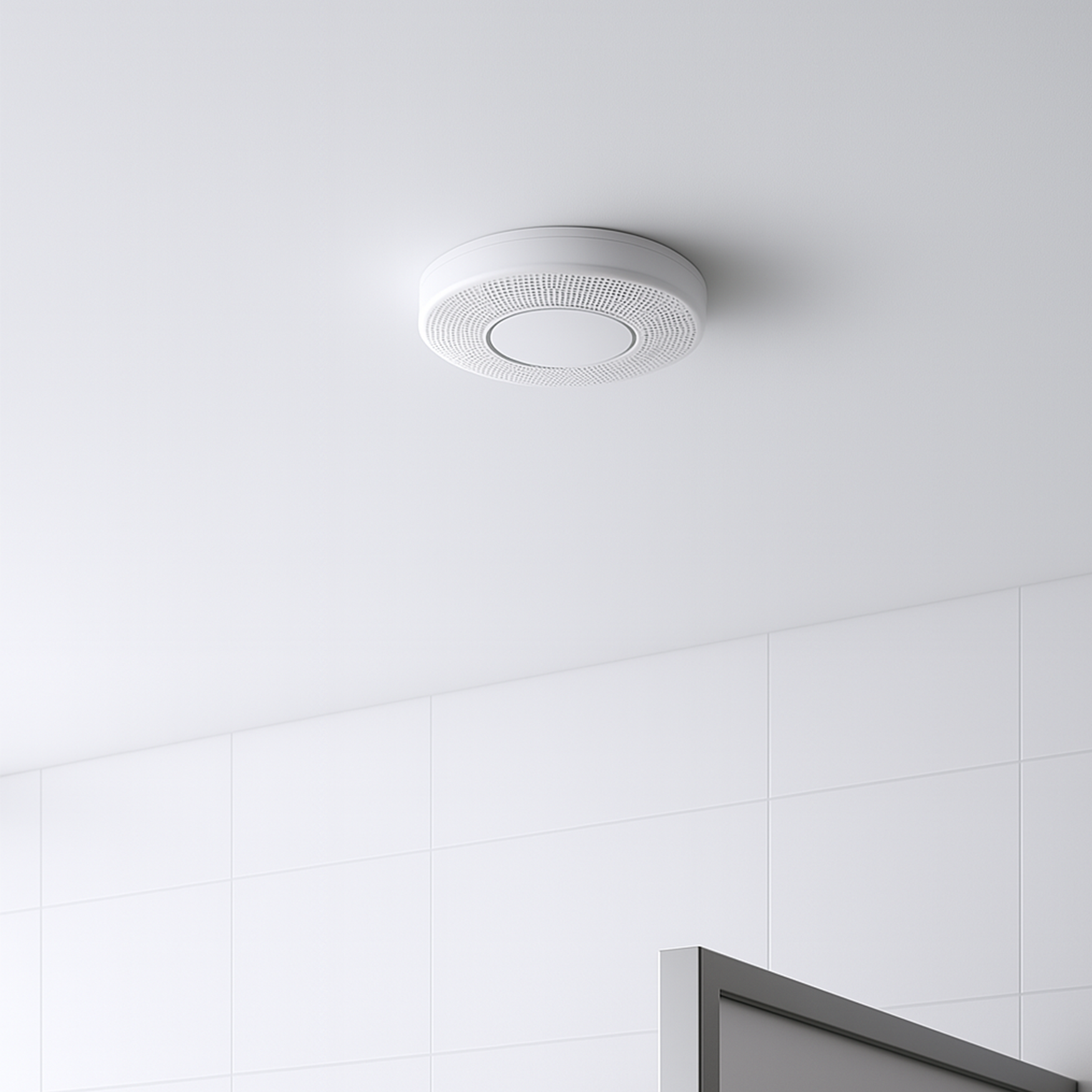
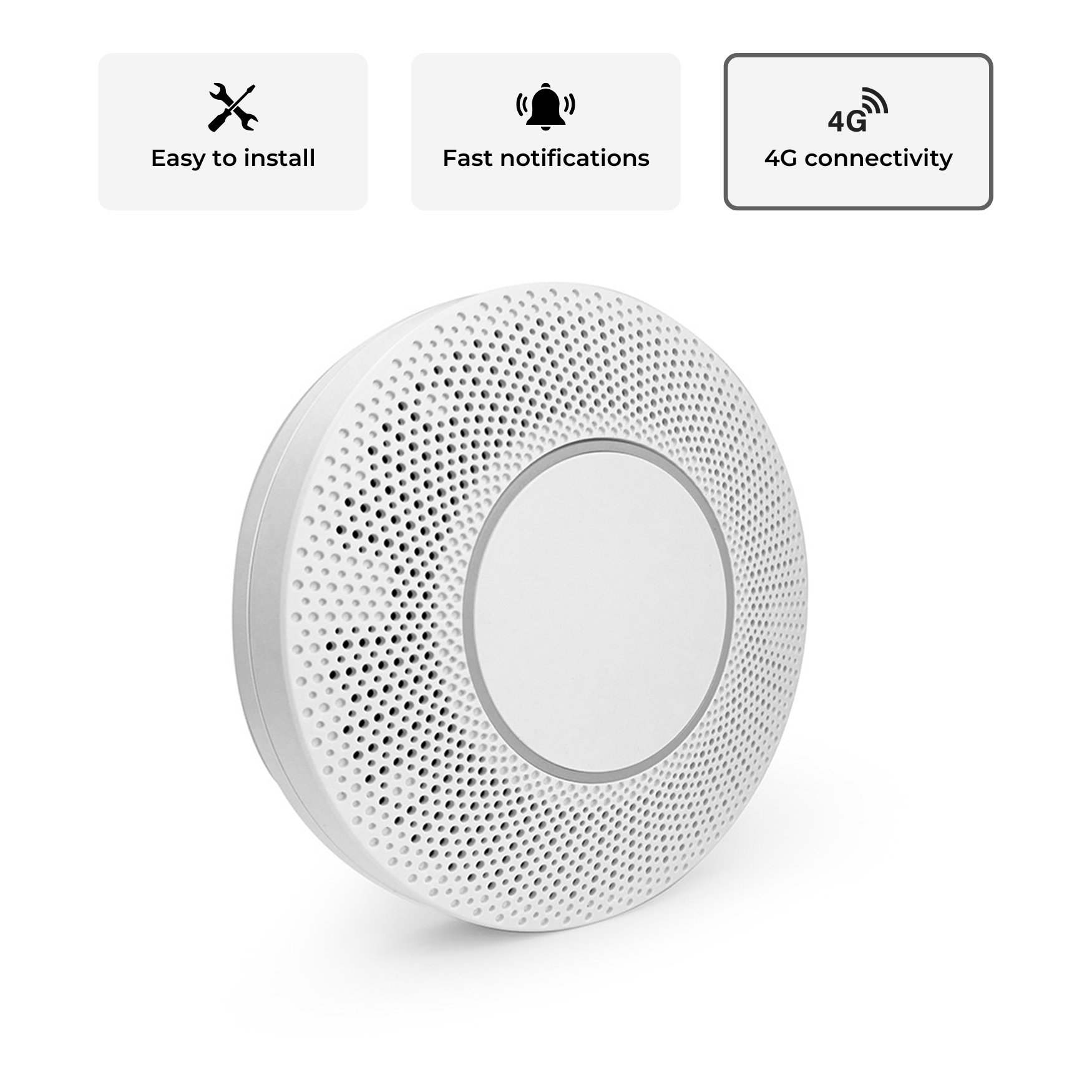
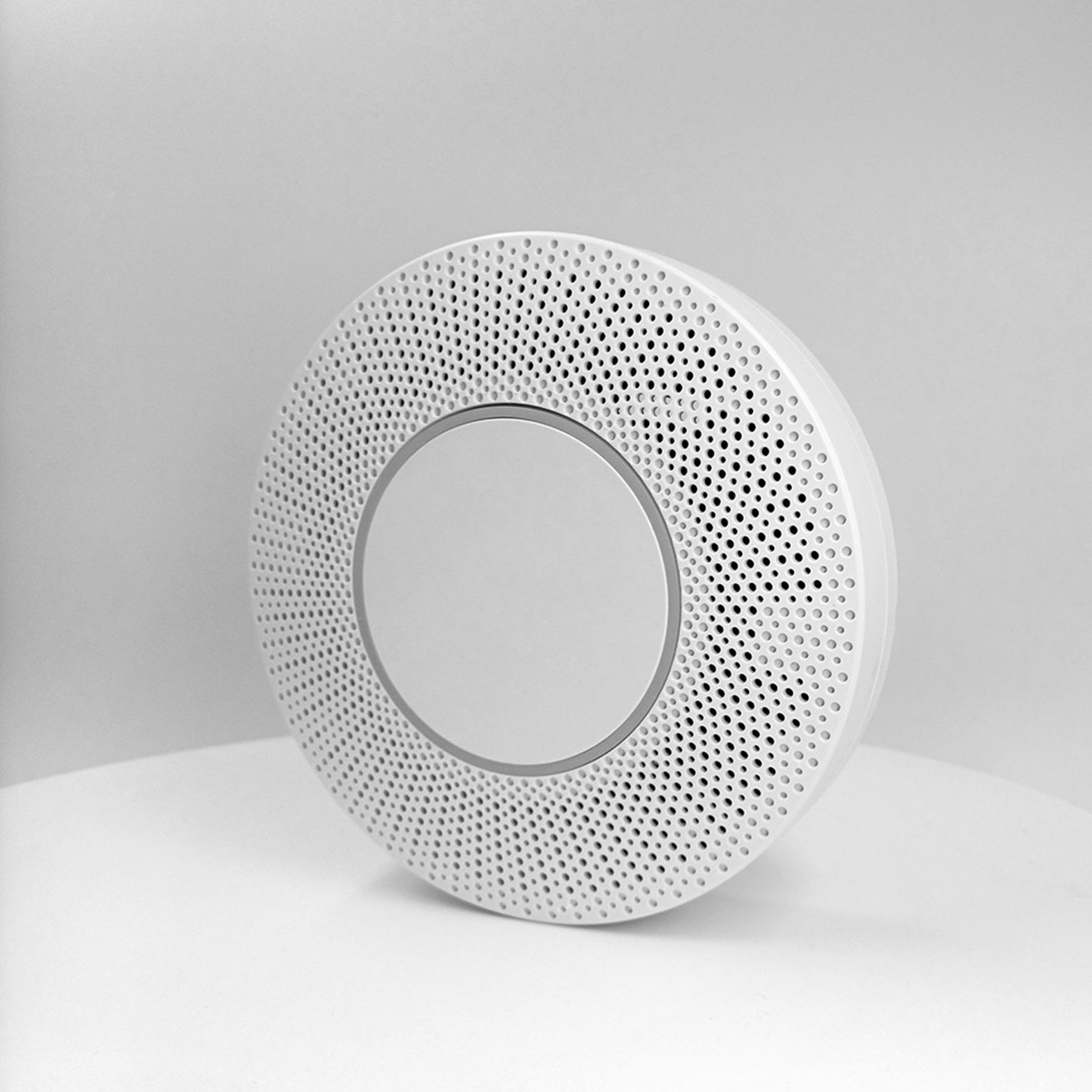
So, what do hotel vape detectors look like? Most are small, neutral coloured units, usually white or off-white, that resemble a compact smoke alarm or an indoor air-quality sensor. They sit on the ceiling or high on a wall, with small vents or slots in the casing, and often a tiny status light. Appearance varies between manufacturers, so the shape alone will not always tell you what a device does.
This guide is written for the people who manage buildings rather than book rooms: site managers, facilities and security leads at leisure venues, retailers, offices, schools and colleges. Hotels have dealt with indoor vaping for years, and the way they fit detectors offers a useful model for any building with toilets, corridors and enclosed spaces to protect.
What do hotel vape detectors look like?
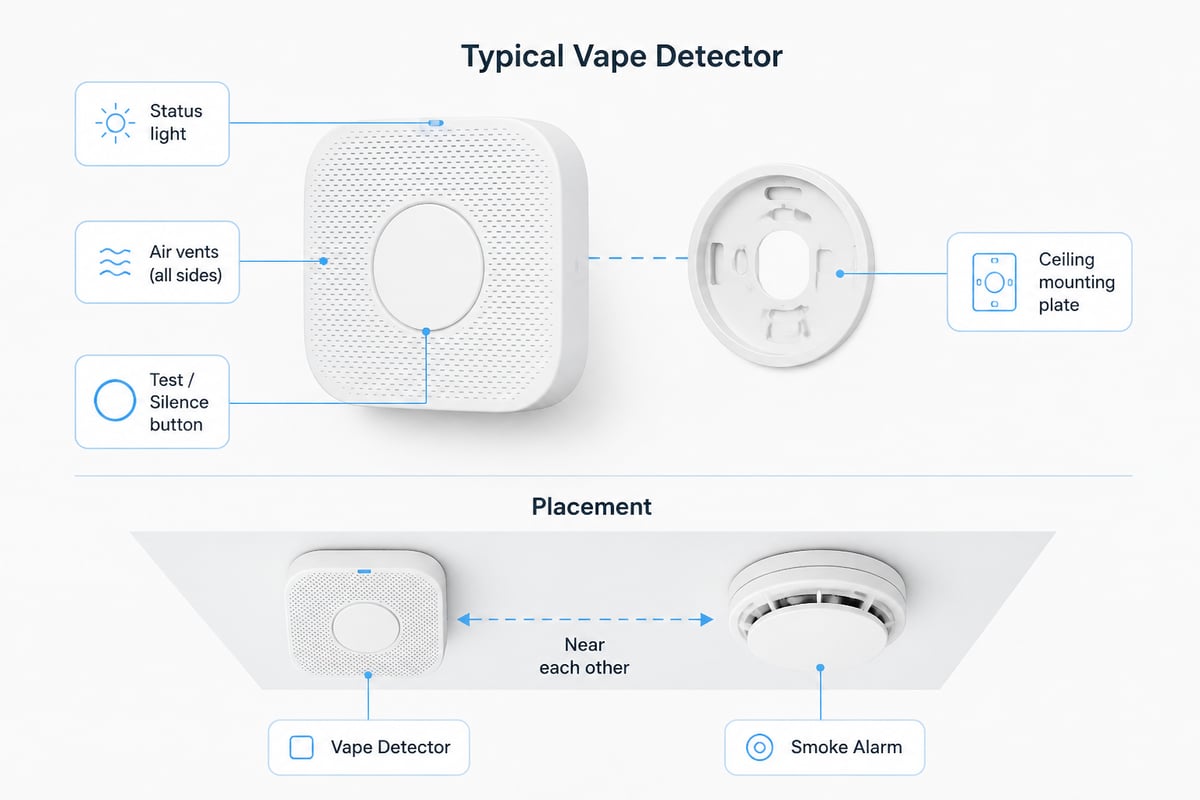
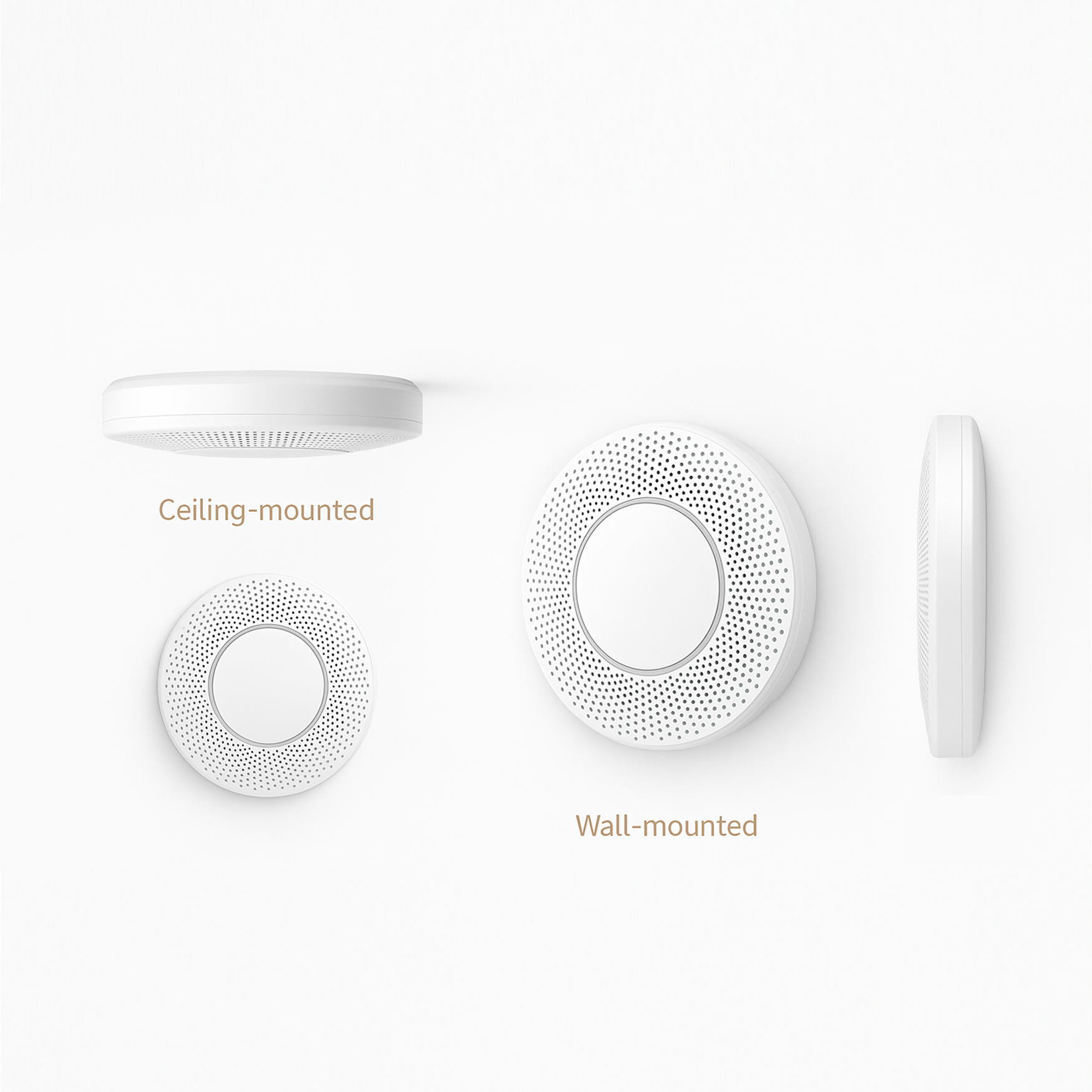
A hotel vape detector is typically a small, low profile unit, round or square, with a plain plastic casing designed to blend into the ceiling. According to VapeAnswers, examples are ceiling mounted or placed high on a wall, often in a neutral coloured casing with small vents, and looks alone may not identify the function of a device.
Typical visual features include:
- Size: usually palm sized or smaller, comparable to a standard smoke alarm
- Colour: white, cream or light grey, chosen to match hotel ceilings
- Casing: smooth plastic with perforations or slots that allow air to reach the sensors
- Indicator light: a small LED, which may be hidden or dimmed in guest areas
- Mounting: flush against a ceiling or fixed high on a wall by a bracket or screws
Some units are deliberately discreet. Others are fitted with signage nearby, because a visible deterrent is part of the policy for many operators.
How do vape detectors differ from smoke alarms?
A vape detector differs from a smoke alarm in what it measures, even though the two can look almost identical. A smoke alarm responds to combustion particles and is a life safety device. A vape detector analyses the air for the signature of aerosol from e-cigarettes and other substances, then sends an alert to staff.
The two are not interchangeable. The U.S. Fire Administration recommends hard wired smoke alarms and automatic fire sprinklers in each hotel guest room, with the sprinkler recommendation applying to buildings four or more storeys tall. Those fire safety devices must never be removed, covered or replaced by a vape sensor. Legal requirements reinforce this: Minnesota law, for instance, requires a conforming smoke detector in every hotel guest room used for sleeping, which must sound an alarm in that room when activated (Minnesota Office of the Revisor of Statutes).
There is also a practical point about false alarms. Vapour can trigger some optical smoke alarms, a risk discussed in this hospitality focused piece on handling customer vaping. A dedicated sensor lets a venue respond to vaping without relying on the fire system to do a job it was not designed for. Our explainer on whether smoke detectors can detect vape covers the distinction in more detail.
Where are vape detectors fitted in hotels?
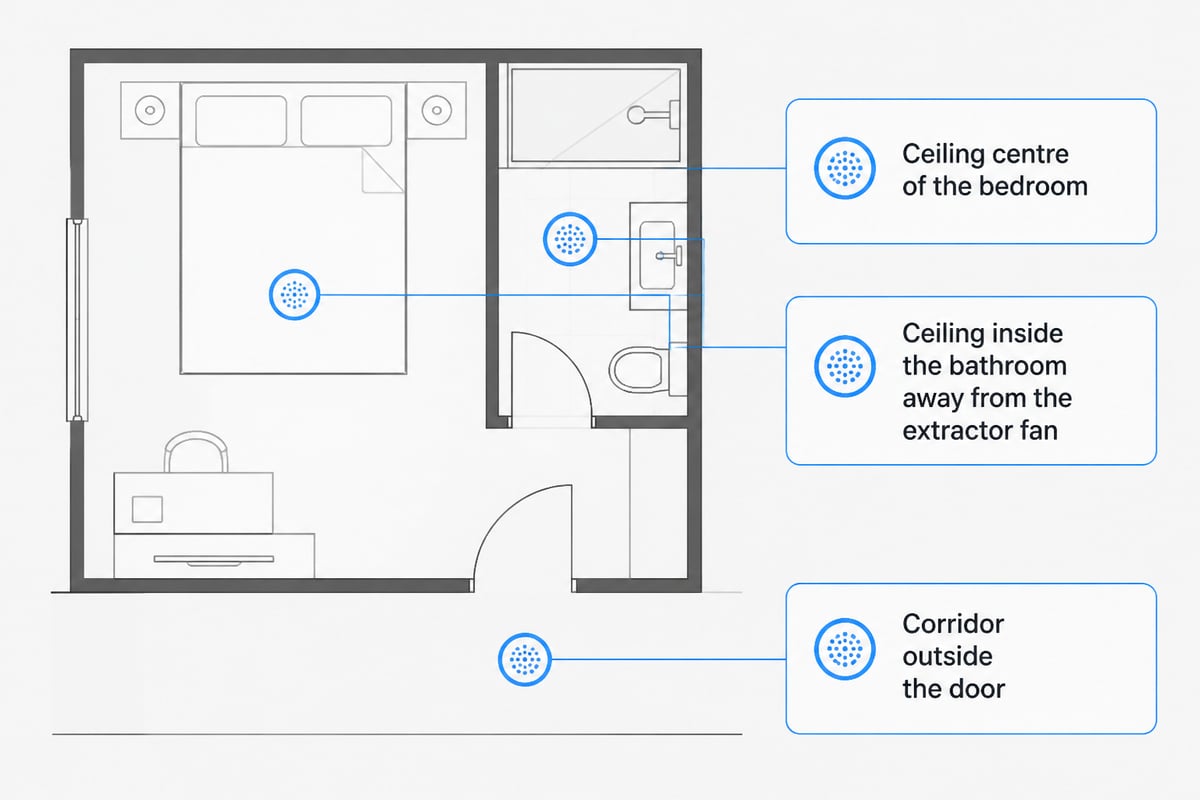
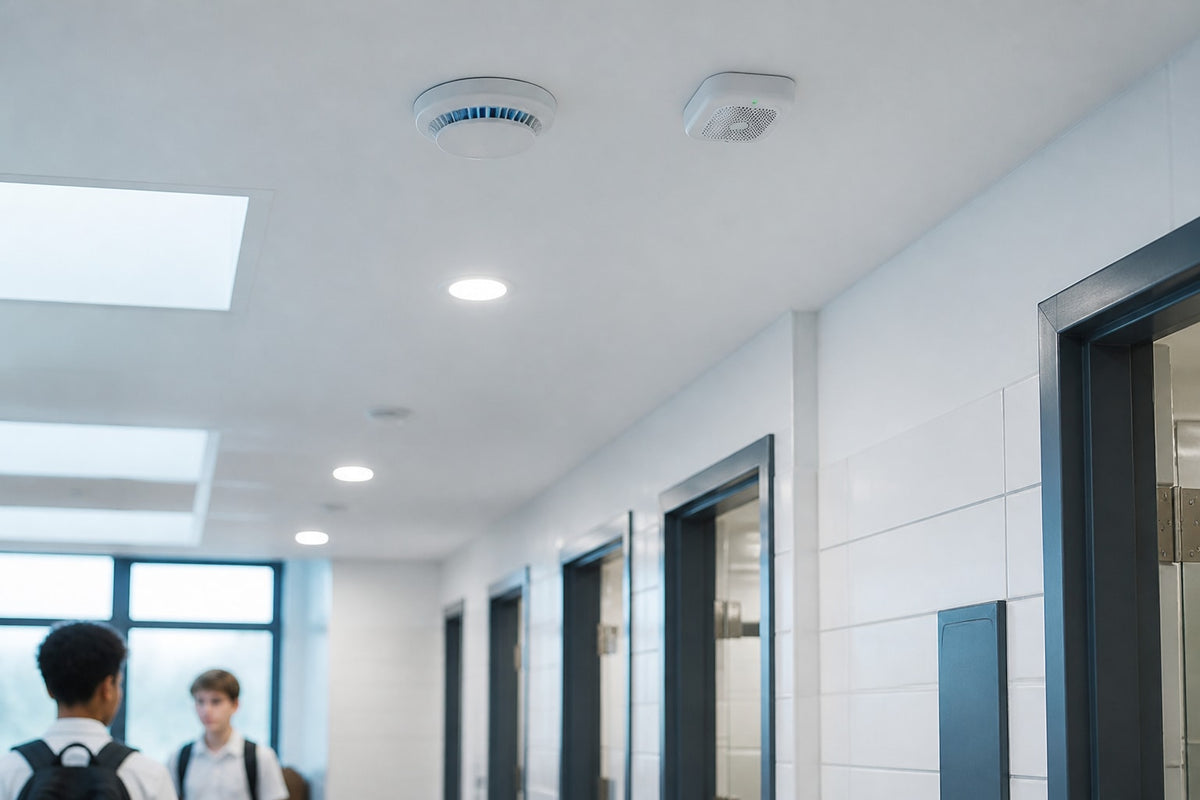
Hotels fit vape detectors where vaping is most likely to happen and where air can be sampled reliably, which means guest rooms, bathrooms, corridors, stairwells and other enclosed spaces. The aim is to catch an incident quickly enough for staff to respond before odour and residue spread.
Common locations include:
- Guest rooms and en suite bathrooms: the highest risk areas, often fitted on the ceiling near the centre of the room or close to the bathroom door
- Corridors and landings: useful for covering several rooms at once and catching vaping in transit
- Stairwells and fire exits: secluded spots where staff rarely pass
- Staff and back of house areas: toilets, changing rooms and storerooms
- Meeting rooms and event spaces: enclosed areas that fill quickly
Placement matters. Detectors work best away from extractor fans, windows and air vents, which dilute or divert the air being tested. Ceiling height, airflow and room volume all influence where a unit should sit, so a site survey is worthwhile before installation. For a hotel specific view, see our guide to vape detectors for hotels.
Can vape detectors be used in bathrooms?
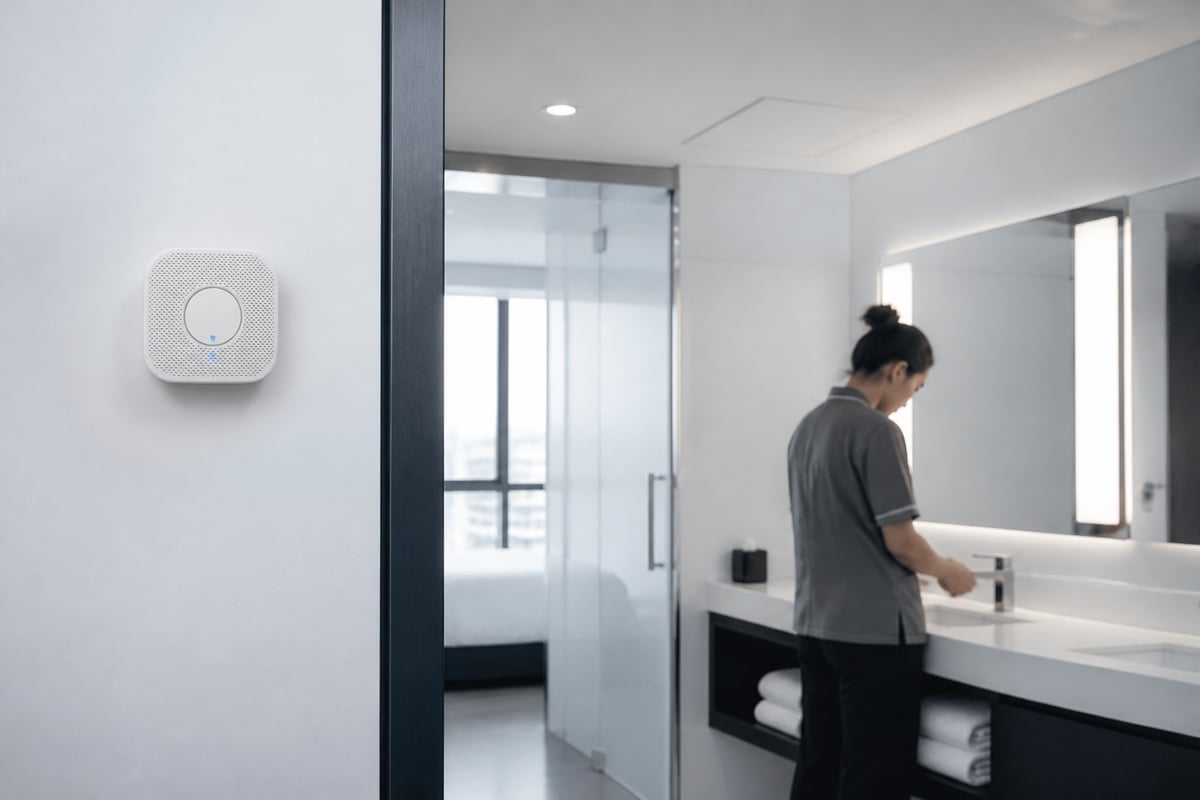
Yes, vape detectors can be used in bathrooms, and bathrooms are among the most common places to fit them. Toilets and en suites are enclosed, private and often unobserved, which makes them a frequent location for vaping in hotels, schools, cinemas and offices alike.
Cameras and microphones are not an option in these spaces, so privacy compliant detection is essential. Sensors that read the air rather than record people avoid that problem entirely. Steam and aerosol products such as hairspray and deodorant can challenge simpler devices, which is why detection logic matters as much as the casing. Our article on whether vape detectors work in bathrooms sets out the evidence and recommended practice, and the bathroom focused guide covers placement in more depth.
How do you know if a smoke detector has a camera in it?
You can tell whether a ceiling device contains a camera by looking for a lens, checking for a pinhole, and reading any label or model number on the casing. Genuine vape detectors and smoke alarms contain no camera, and a privacy first sensor should be able to confirm this in its documentation.
Practical checks:
- Look for a glass or dark circular lens, or a tiny pinhole in the casing
- Check for a visible brand and model number, then compare it with the manufacturer's specification
- Watch for unexplained blinking lights, particularly infrared red glows in a dark room
- Ask the venue directly, since reputable operators will state what each device does
For operators, transparency is the best policy. Clear signage explaining that sensors monitor air quality and do not record images or audio reassures guests, staff and visitors. Vape Guardian sensors detect vaping, THC, Spice, over occupancy, loud noise and cigarettes without cameras, which suits sensitive areas such as toilets and changing rooms.
What do hotels use to detect vaping?
Hotels use dedicated air monitoring sensors that identify the chemical and particle signature of vape aerosol, then notify staff by email, text or an app. Some also rely on housekeeping reports, odour checks and signage as supporting measures.
A modern sensor typically combines several readings, such as particulates and volatile compounds, and compares them against known patterns. The quality of that logic determines how often you receive false alerts. Vape Guardian's 10 point detection formula is designed to identify vaping accurately while avoiding false positives, and its sensors have reached 96% alert accuracy across its installed base.
For a UK venue, the practical questions are simple. Who receives the alert, how fast can they attend, and what happens next? Vape Guardian sensors are supplied with 'No Vaping' signage and unlimited notifications to unlimited staff, so the right people are informed without per user charges. You can read more about how the technology functions in our guide to how vape detectors work.
How do detectors cope with real world conditions?
Detectors cope with real conditions through good placement, calibrated detection logic and software that improves over time. Busy buildings produce steam, cleaning sprays, cooking vapour and air movement, all of which a sensor must tell apart from vaping.
Three points are worth checking before you buy:
- Detection accuracy: ask for evidence of how false positives are controlled
- Updates: firmware that improves over time keeps pace with new devices and products. Vape Guardian sends firmware updates over the air at no added cost
- Support: installation advice and ongoing help from people who understand vaping. Vape Guardian's UK support team includes software, hardware and vaping specialists
The system is designed and developed in the UK, with hardware and software built in house, which keeps development and support closely connected. Trust also matters at scale: Vape Guardian is trusted by hundreds of organisations in many countries.
Which type of venue gets the most from detection?
Venues with enclosed, unsupervised spaces get the most from detection, particularly schools, colleges, cinemas, leisure centres, retailers and offices. The lessons from hotels apply directly, because the problem is the same: vaping happens where staff are not looking.
Schools offer clear evidence. Schools using Vape Guardian report vaping incidents halving within two weeks and almost disappearing by week five. At Seaham High School, vaping in toilets has fallen by around 95% since alarms were installed. Network wide, the system generates many alerts each week, which shows how common the behaviour is when it goes unmonitored.
For education leaders, the policy context is changing. The Tobacco and Vapes Act gives government powers to make indoor places vape free, but no start date has been set, so planning now is sensible rather than waiting for a deadline. Our summary of UK school vaping laws outlines what headteachers should understand.
Detection works best as part of a wider approach. The Vape Detection System combines vape, drug and anti social behaviour detection hardware with software, so the alert reaches the right member of staff while the incident is still under way.
Is detection enough on its own?
Detection is not enough on its own, because an alert tells you that vaping has happened but not why a person is doing it. Pupils and young people in particular may be dependent on nicotine, and exclusion rarely addresses that.
Vape Guardian Education, available at vapeguardian.education, is a student vaping course built around rehabilitation and education. It gives schools and colleges a constructive response to pair with detection, as an alternative to exclusion. Alongside sensors, this helps safeguarding leads move from catching incidents to changing behaviour.
What does installation involve?
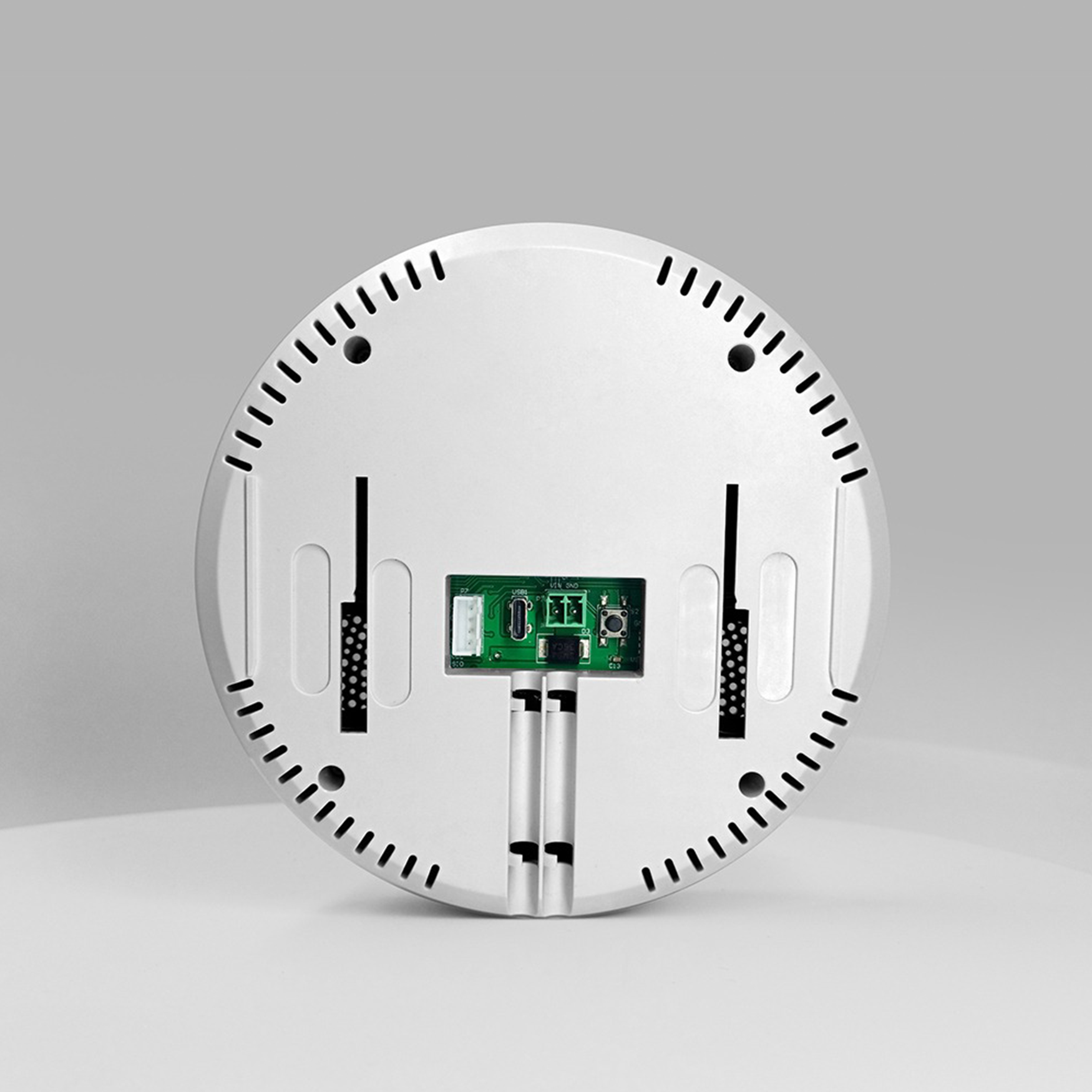
Installation usually involves a site survey, choosing mounting positions, fixing each unit to the ceiling or wall, connecting it to your network and setting up alert recipients. Accessories and fixings are available through the installation essentials collection.
Before committing, consider the whole cost, including subscriptions and support, rather than the unit price alone. Our vape detector cost breakdown helps you weigh this up. For current specifications, pricing and fitting requirements, please check Vape Guardian's product pages or contact the team directly. Buyers can also take advantage of a money back guarantee if they are not satisfied.
FAQ
How do I detect vape smoke at home?
At home, the simplest signs are a sweet or chemical smell, a light haze that lingers, and residue on windows or soft furnishings. A dedicated vape sensor is the only reliable way to detect it, because ordinary smoke alarms often fail to respond to vapour. Ventilation and a clear household rule are sensible first steps.
Can a standard smoke alarm detect vaping?
Sometimes, but not reliably. Heavy vapour can set off certain optical smoke alarms, though most vaping goes undetected by a standard alarm. A dedicated sensor is better suited to the task and keeps your fire safety equipment doing its own job.
Can you tell a vape detector just by looking at it?
Not always. Many look like smoke alarms or air quality monitors, with only small vents and a status light to set them apart. Checking the label, model number or signage nearby is more dependable than judging by shape.
Start by walking your site and listing the toilets, stairwells, corridors and changing areas where vaping goes unseen, since that map will shape any detector plan. Vape Guardian can help you turn it into a working installation, and the Vape Detection System is the place to begin if you want to see the hardware and software that sit behind it. To discuss your own premises, Vape Guardian can arrange a quote or a 15 minute call with the UK team.

Share:
Vape Sensors for Schools: Compare Top Detectors