

Effective PSHE lessons on vaping combine accurate health facts, honest discussion of why young people vape, clear information on the law and a route to support for pupils who are already using vapes. Lessons work best when they sit within a wider school approach, so that what pupils hear in the classroom matches what they experience in corridors and toilets.
This guide sets out what to teach at each stage, which activities hold pupils' attention and how to pair education with practical measures that make a vape-free site achievable.
What Should PSHE Lessons on Vaping Cover?
A well-planned vaping unit covers six areas: what vapes contain, the health risks, why young people start, the law, marketing and peer influence, and where to get help. Each area gives pupils something concrete to discuss rather than a general warning to ignore.
The core content should be factual and consistent with national health advice. The NHS states that most vapes contain nicotine, which is addictive, that vaping exposes users to some toxins, and that the longer term risks are not yet known. The same guidance is clear that children and young people should not vape. Vaping is less harmful than smoking, but it is not risk free and is intended as a quitting aid for adults who already smoke.
That last point matters in the classroom. Pupils will have heard that vaping is "safer than smoking" and will challenge a teacher who ignores it. The accurate position is that vaping can help an adult smoker quit, and that this has nothing to do with whether a non-smoking teenager should start. The NHS's vaping myths and facts page draws that distinction well and is a useful source when preparing your slides.
The key topics at a glance
- Contents: nicotine, flavourings, and the fact that pupils rarely know what is in the device they are holding
- Addiction: how nicotine dependence develops, including withdrawal, irritability and difficulty concentrating
- Health: short term effects such as throat irritation and coughing, and the honest statement that long term effects are unknown
- Law: the age limit, proxy purchasing and the status of illicit products
- Influence: social media, flavours, packaging and peer pressure
- Support: who to talk to in school and how to stop
How Should Lessons Differ by Key Stage?
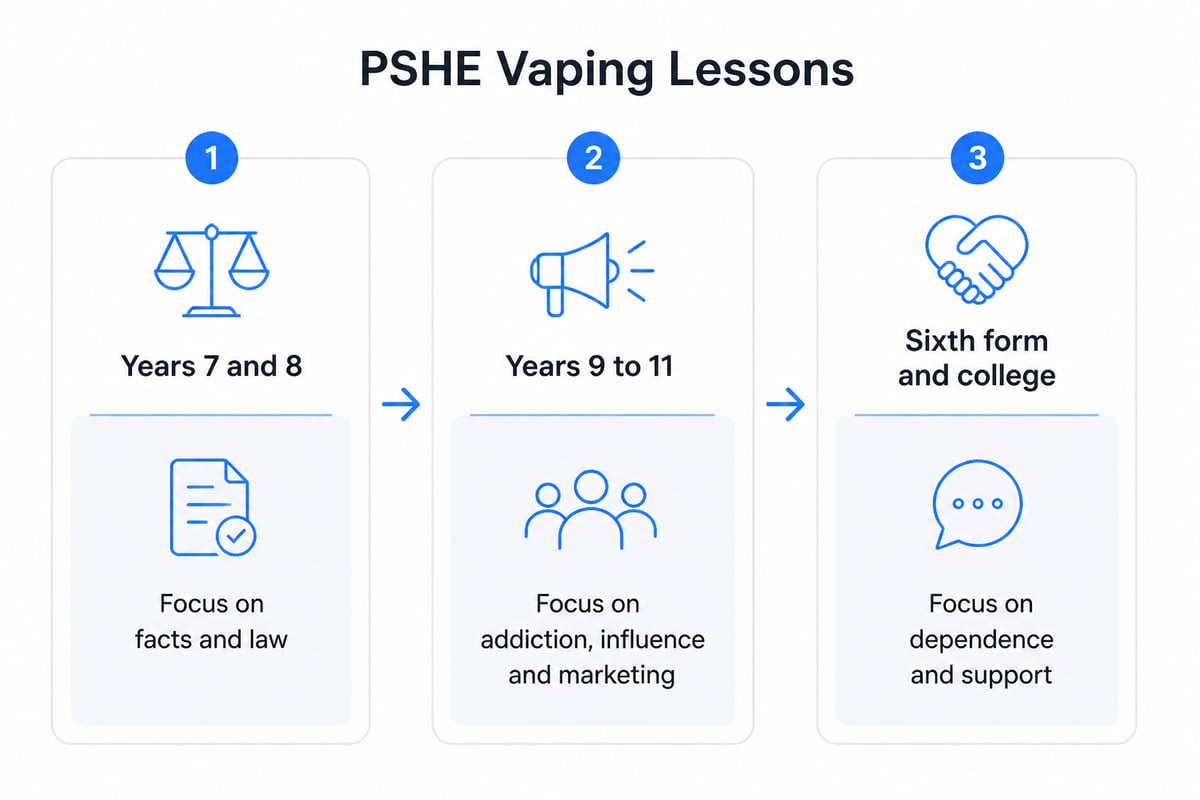
Lessons should shift from simple health messages in Key Stage 3 to autonomy, influence and addiction in Key Stage 4, and then to decision making and support at post 16. Pitching content too young or too old is the quickest way to lose a class.
| Stage | Main focus | Suggested approach |
|---|---|---|
| Years 7 and 8 | What a vape is, nicotine basics, the law | Short facts quiz, myth sorting, scenario cards |
| Years 9 to 11 | Why people vape, addiction, peer pressure, marketing | Role play, group discussion, analysis of adverts |
| Sixth form and college | Dependence, quitting, health claims, legal responsibilities | Case studies, access to cessation support, peer led sessions |
Years 7 and 8
Keep the focus on clear facts and a few memorable points. Pupils at this age are often curious rather than regular users, so the aim is to establish accurate knowledge before social pressure builds. A myth and fact sorting activity works well: give small groups a set of statements about vaping and ask them to place each under "true", "false" or "it depends".
Years 9 to 11
This is where lessons on vaping need the most care. Many pupils have either tried a vape or know someone who vapes daily. Moralising will close the conversation, so treat pupils as capable of weighing evidence. Ask why the products are marketed with sweet flavours and bright packaging, and who benefits when a teenager starts using nicotine.
Sixth form and college
Older students respond to autonomy and practical information. Cover dependence honestly, explain how cessation support works and make clear where confidential help is available. Students who are already addicted need a way to stop, and a lesson that only warns them off starting will not serve them.
Why Do Young People Vape, and How Do You Teach It Honestly?
Young people vape for a mix of curiosity, peer influence, stress relief and the appeal of flavours, and lessons are more convincing when they acknowledge these reasons openly. A class that feels judged will stop contributing, so start from understanding rather than disapproval.
National survey data shows why this matters. The 2025 ASH Smokefree GB Youth Survey included young people aged 11 to 18, and the Scottish Government's presentation of the results covers adolescent vaping, perceptions of harm and policy. Using figures like these in class shows pupils that the questions are being asked of people their own age, which makes the discussion feel less like a lecture.
Common reasons pupils give, and ways to respond to them:
- "Everyone does it." Use an anonymous poll to show that the real figure is usually lower than pupils assume. Perceived norms drive behaviour more than actual ones.
- "It helps me relax." Explain how nicotine creates a cycle of craving and temporary relief. Nicotine withdrawal can bring irritability and difficulty concentrating, which gives pupils a link between vaping and things they care about, such as sleep and exam focus.
- "They taste nice." Discuss how flavours are designed to appeal to new users and what that says about the intended audience.
- "It is not as bad as smoking." Acknowledge the truth in the statement, then separate adult quitting from teenage initiation.
Activities that work
Scenario cards, short video analysis and anonymous question boxes all encourage honest contributions. An anonymous box is particularly useful, since pupils will ask things they would never say aloud, such as how to tell a friend to stop or whether a particular symptom is normal.
What Do Pupils Need to Know About the Law?
Pupils need to know that it is illegal to sell vaping or nicotine products to anyone under 18, and illegal for an adult to buy them on behalf of someone under 18. This is a straightforward point, and it is confirmed by the NHS.
Include the following in a legal awareness session:
- The age limit and what proxy purchasing means for older siblings and friends
- Why illicit and unregulated vapes carry additional risk, since their contents cannot be assumed to match what is on the label
- The difference between what the law requires of retailers and what a school's behaviour policy requires of pupils
Be careful about what you claim regarding future legislation. The Tobacco and Vapes Act gives government powers to make certain indoor places vape free, but no start date has been set. Teach the law as it stands today, and tell pupils that rules may change.
For senior leaders reviewing policy alongside the curriculum, this overview of UK school vaping laws summarises what headteachers need to know.
How Can Education Replace Exclusion?
Education and support produce better outcomes than exclusion alone, because a pupil who is sent home still has a nicotine dependency and returns to school with the same problem. A rehabilitative route keeps pupils in lessons while addressing the reason they vape.
This is the gap that classroom PSHE cannot always fill. A single lesson reaches everyone in a year group, but a pupil who has been caught vaping needs something more targeted. Vape Guardian Education is a 35 minute student vaping intervention course made up of 6 lessons with quizzes, designed with LifeLab at the University of Southampton. Schools can use it as a structured response when a pupil is found vaping, so that the consequence is learning rather than lost time in education.
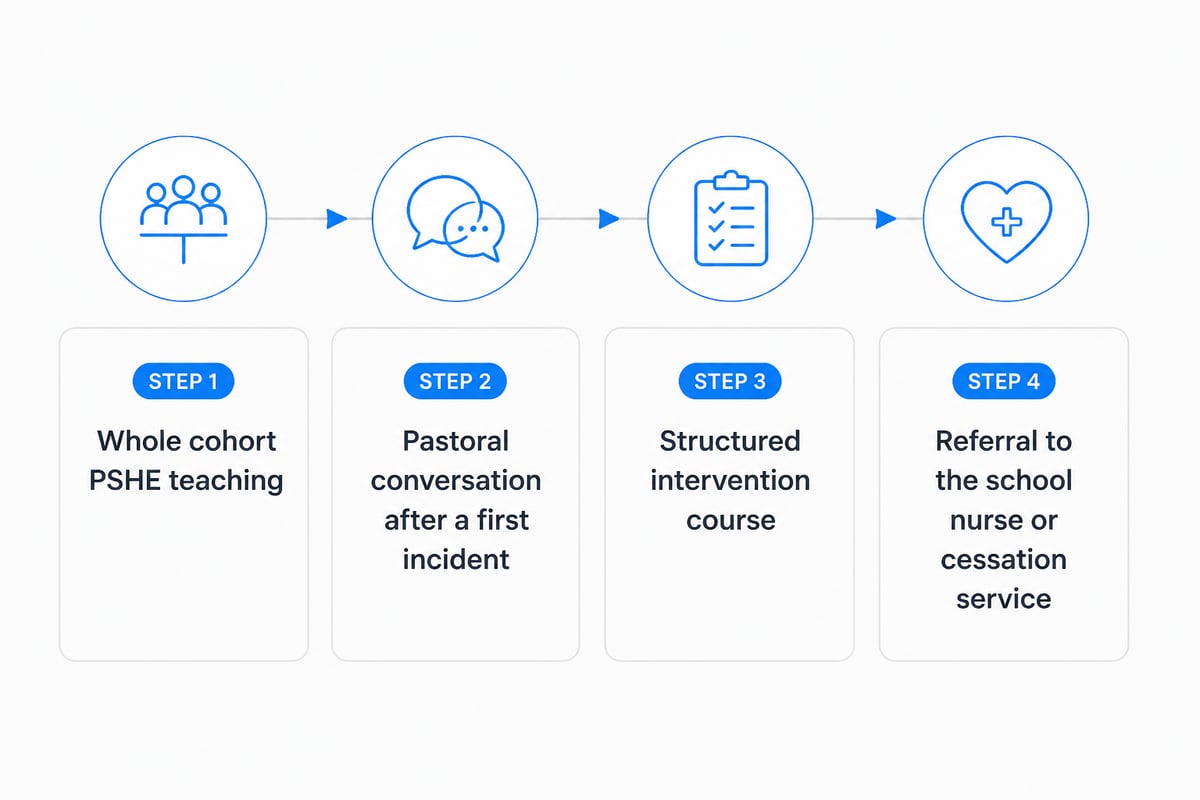
A sensible escalation pathway might look like this:
- General PSHE teaching for the whole cohort
- A conversation with a form tutor or pastoral lead after a first incident
- A structured intervention course for pupils who continue to vape
- Referral to the school nurse or local cessation service where dependence is evident
NHS Gloucestershire's page on youth vaping and school nurse support is a useful reference for pastoral teams building the final step of that pathway.
Why Do Lessons Need to Be Backed by Detection?
PSHE lessons on vaping are far more credible when the school environment reinforces them, because pupils notice quickly when a message in the classroom is not matched by enforcement in the toilets. If pupils can vape without consequence between lessons, the curriculum is competing against daily experience.
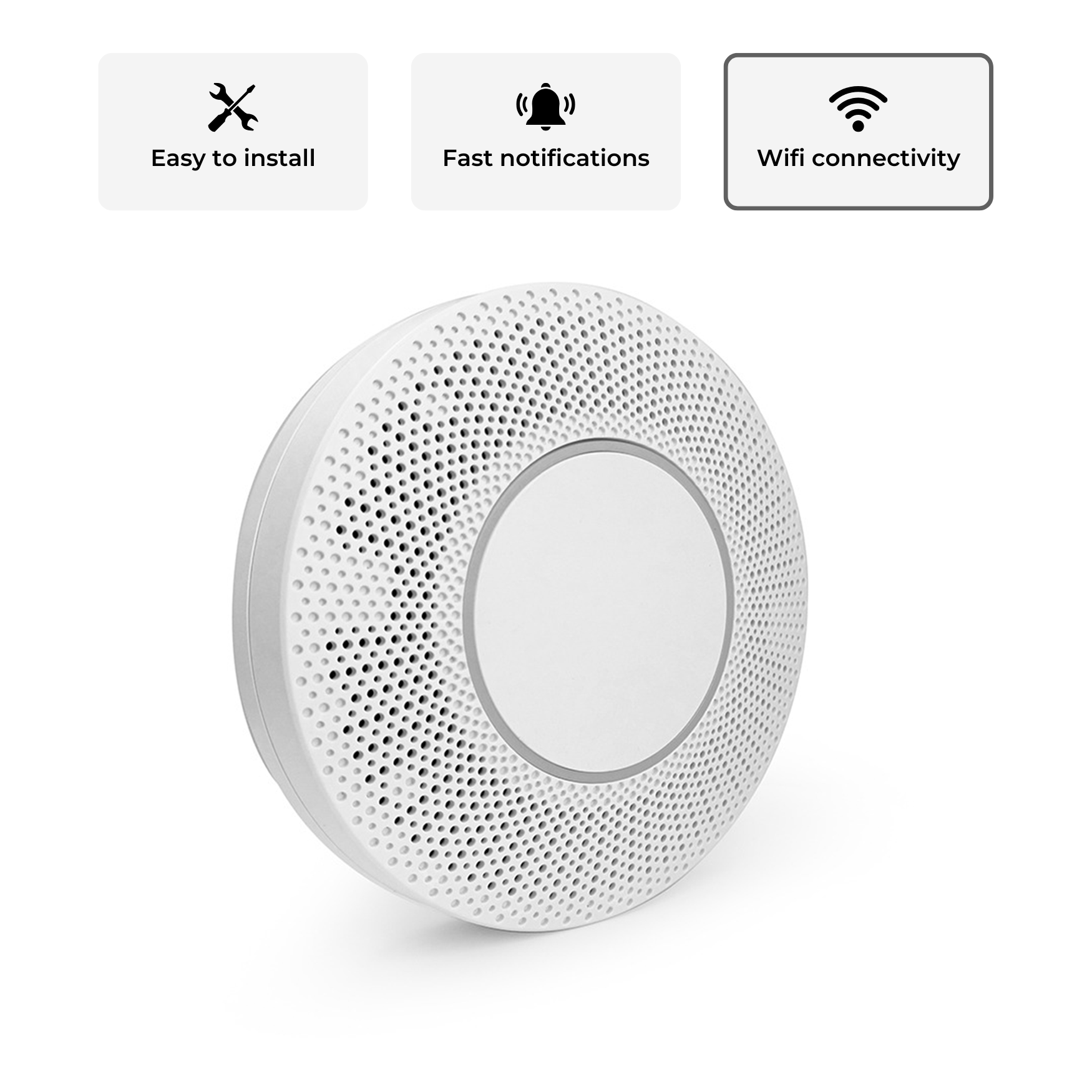
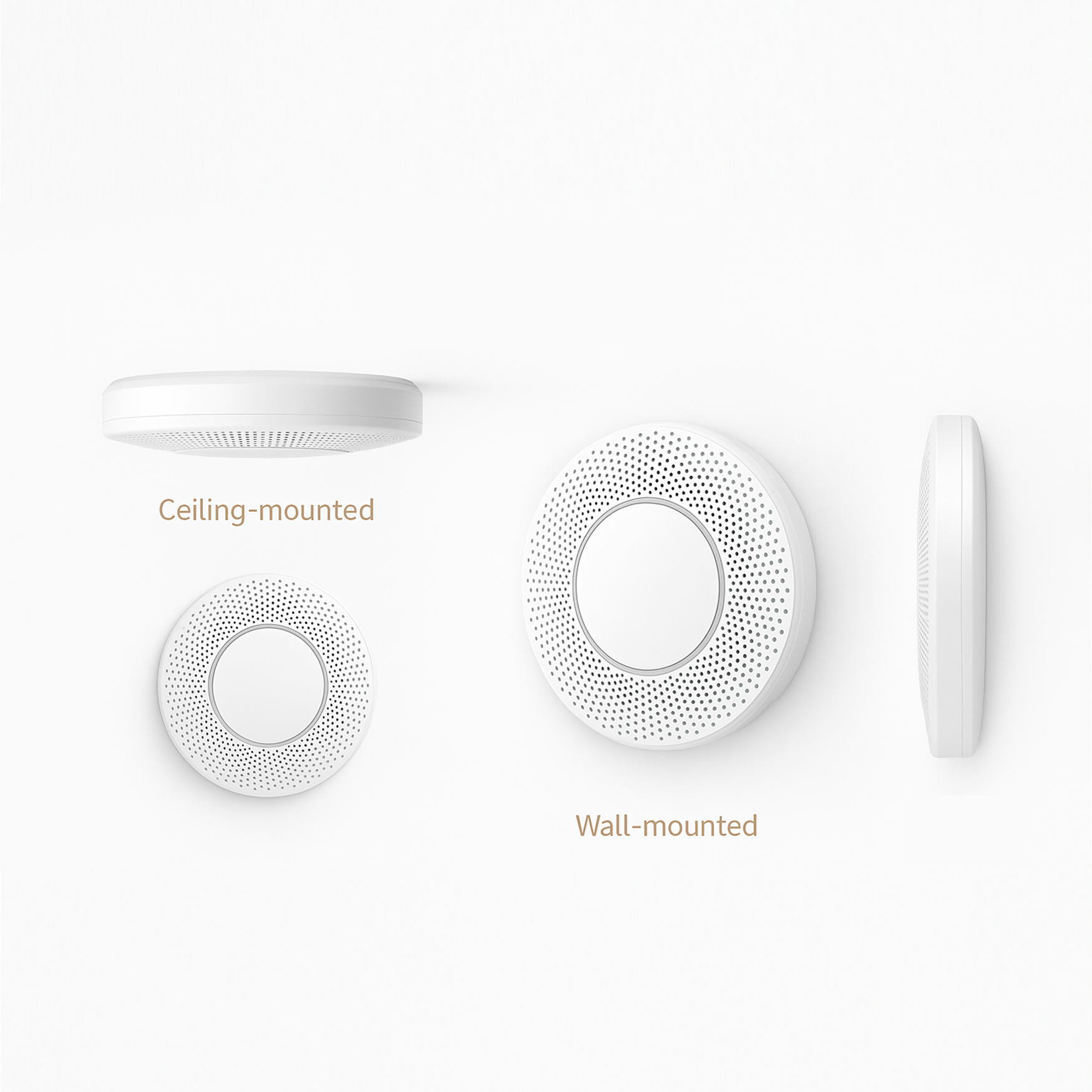
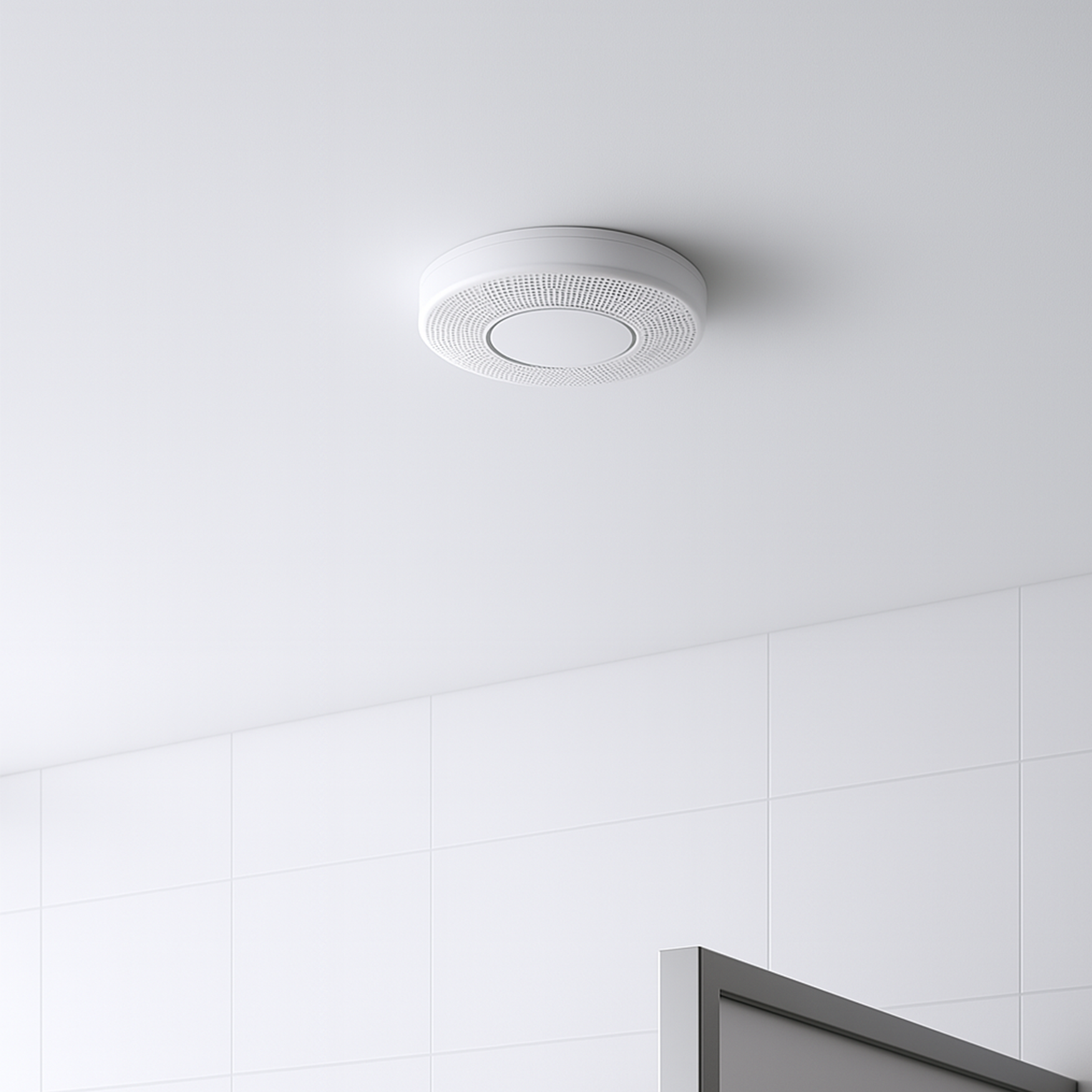
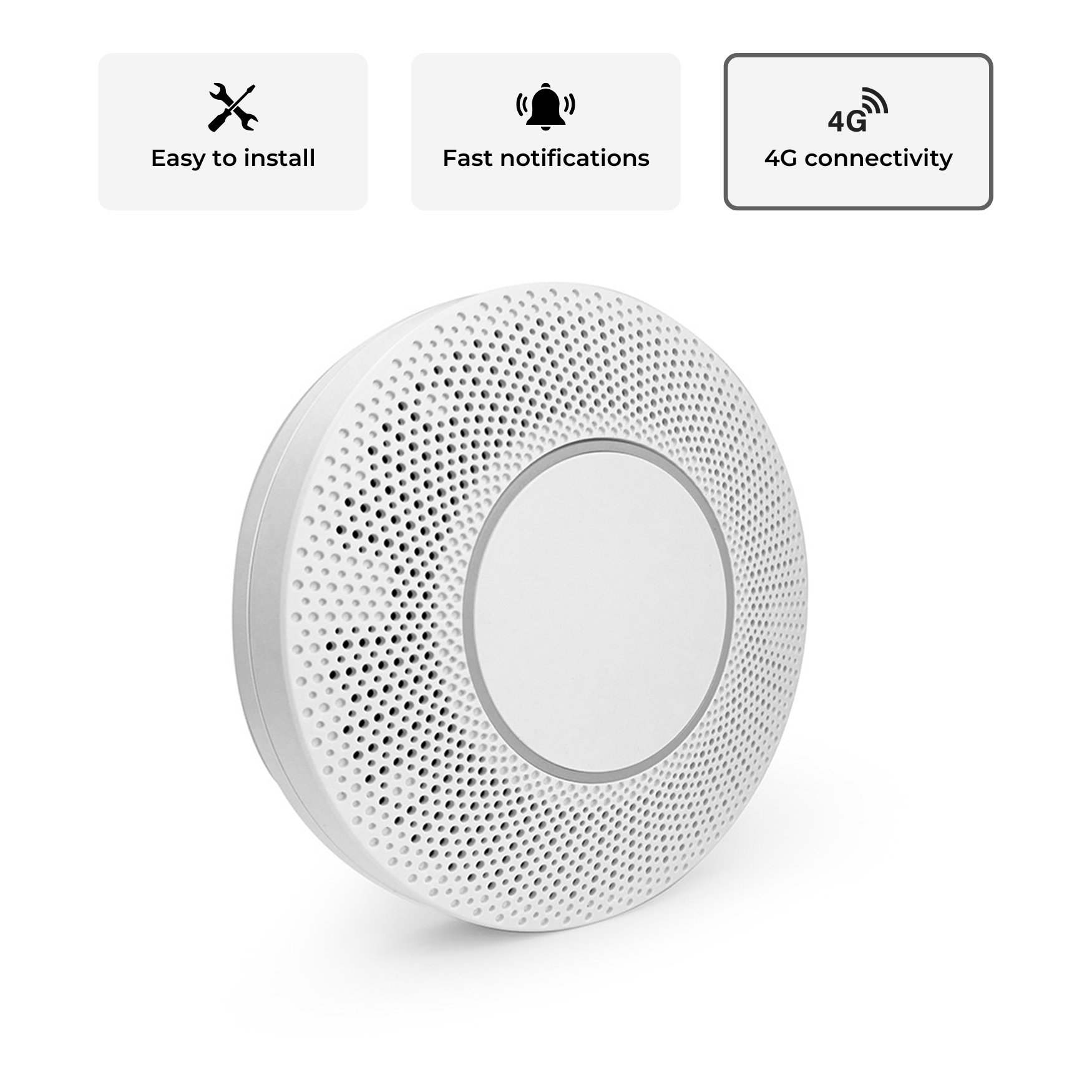
Toilets and other secluded areas are where most incidents occur, and they are the hardest places for staff to supervise. Posting a member of staff outside is not sustainable, and cameras are not appropriate in these spaces. Sensor based detection addresses this directly. Vape Guardian sensors detect vape substances without cameras and send real-time alerts so the right person can respond promptly, and the technology is also used to detect drug use and anti-social behaviour.
The results reported by schools are worth sharing with governors. Schools report vaping incidents halved within two weeks and almost eliminated by week five. At Seaham High School, vaping in toilets is down around 95% since alarms were installed. Vape Guardian has 2,400 sensors installed, with 96% alert accuracy, and is trusted by hundreds of organisations in 27 countries.
Detection and education are complementary. A sensor tells you where and when vaping is happening, which allows staff to respond early and offer support. The curriculum explains why it matters. For further reading on this combined approach, see this guide to helping schools tackle vaping and this practical overview of vaping detection for schools.
How Do You Handle Disclosures and Safeguarding?
Staff should treat a pupil's disclosure about vaping as a welfare matter first, with a clear process for escalating concerns to the designated safeguarding lead. Pupils will only ask for help if they believe the response will be supportive.
Consider the following points when preparing staff:
- Consistency: every adult should respond to a disclosure in the same way, so pupils know what to expect
- Confidentiality: explain the limits clearly, particularly where there are wider concerns such as substance use beyond nicotine or pressure from older peers
- Illicit products: vapes that have been bought informally may contain substances other than nicotine, so staff should be alert to signs of unexpected effects
- Parents and carers: agree when and how families are contacted, and prepare plain language information that does not assume prior knowledge
Where sensors flag substances such as THC or Spice, safeguarding leads can respond to a possible wider welfare concern, not just a behaviour breach. That context changes the conversation from sanction to support.
What Resources and Preparation Do Teachers Need?
Teachers need accurate source material, a shared scheme of work and time to rehearse difficult questions before standing in front of a class. Confidence matters, since pupils quickly sense uncertainty.
A practical preparation checklist:
- Agree the key facts with your PSHE lead, using NHS sources so that messaging stays consistent across year groups
- Prepare answers to the questions pupils will certainly ask, such as "is it worse than smoking?" and "why do adults vape if it is bad?"
- Decide in advance how the lesson will handle pupils who disclose current use
- Link the lesson to the school's behaviour and support policy, so pupils know what happens next
- Plan a follow up in tutor time, since a single lesson rarely changes behaviour
You may also find it useful to read about the dangers of vaping in secondary school when briefing colleagues, and to review how to stop vaping at school when connecting the curriculum to your wider strategy.

How Can You Measure Whether Lessons Are Working?
You can measure impact through a combination of pupil knowledge checks, anonymous surveys and incident data from across the site. No single measure tells the whole story, so use several.
- Knowledge quizzes before and after a unit show whether pupils have absorbed the key facts
- Anonymous surveys track attitudes and self reported use over time without putting pupils on the spot
- Incident logs show whether detected vaping is falling, and where it is concentrated
- Referral numbers to pastoral staff, the school nurse or an intervention course show whether pupils feel able to ask for help
Rising referrals can be a good sign. It often means pupils trust the school enough to come forward, which is exactly what a well designed approach to PSHE lessons on vaping should achieve.
Start by auditing where vaping happens on your site and what your current PSHE scheme says about it, so that your curriculum and your enforcement tell pupils the same story. Pair that with Vape Guardian Education as a supportive alternative to exclusion, and with sensors that detect vaping in toilets without cameras, backed by a UK support team of software, hardware and vaping specialists and a 100 day money back guarantee. To see how detection can sit alongside your teaching, get a quote or book a 15 minute call with Vape Guardian.



Share:
Vaping Intervention Course for Students: A School Guide